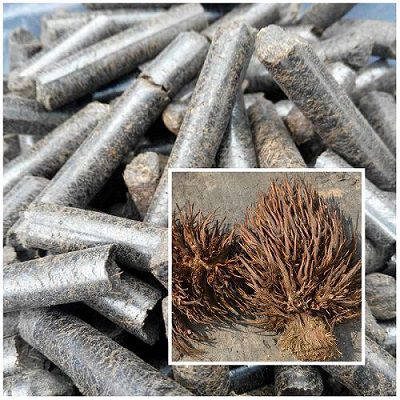
In the context of energy and materials transformation, the high-value utilization of lignocellulosic waste has become a research hotspot. Oil palm empty fruit bunches (OPEFB), as a major byproduct of the oil palm industry, have great development potential due to their rich lignocellulosic components that can be converted into biofuels or cellulose fibers. However, the complex three-dimensional structure of lignocellulose, particularly the content and distribution of lignin, greatly limits its degradation efficiency. Therefore, pretreatment is a crucial step in unlocking its value. Various pretreatment methods exist for oil palm empty fruit bunches, encompassing biological, physical, chemical, and physicochemical approaches. Among these, chemical pretreatment, due to its stable delignification efficiency and wide applicability, has become the most commonly used technical route. It mainly includes alkaline pretreatment, dilute acid pretreatment, and organic solvent delignification. Different methods have their own characteristics, and combinations of multiple methods can achieve efficient delignification.
Alkaline pretreatment is one of the most widely used methods in the chemical pretreatment of oil palm empty fruit bunches. Its core principle is to break the ester bonds between lignin and hemicellulose using alkaline reagents, promoting the depolymerization and dissolution of lignin, while simultaneously removing some hemicellulose. This exposes the cellulose structure and improves the accessibility for subsequent enzymatic hydrolysis. Commonly used alkaline reagents include sodium hydroxide and potassium hydroxide. Potassium hydroxide is particularly suitable because it aligns with the high potassium content of oil palm empty fruit bunches, enabling nutrient recycling. The advantages of this method are relatively mild reaction conditions, minimal damage to cellulose, and good preservation of the target product yield, making it suitable for large-scale application in biofuel production.
Dilute acid pretreatment, on the other hand, focuses on breaking down hemicellulose, indirectly achieving an auxiliary delignification effect. Using dilute acids such as sulfuric acid and hydrochloric acid under heating conditions, hemicellulose can be rapidly hydrolyzed to produce pentose sugars, disrupting the integrity of the lignocellulosic structure and loosening the bond between lignin and cellulose, facilitating subsequent separation. The outstanding features of this method are its fast reaction rate, significant improvement in raw material digestibility, and lower reagent costs, making it suitable for processes that prioritize the recovery of hemicellulose. However, it should be noted that dilute acids may cause corrosion to the equipment, and excessive acid can damage the cellulose structure; therefore, reaction conditions need to be strictly controlled.
Organic solvent delignification is a highly selective pretreatment method that uses organic solvents such as ethanol and acetone to selectively dissolve lignin under certain temperatures and pressures, achieving efficient separation of lignin from cellulose and hemicellulose. The advantages of this method include high delignification efficiency, the ability to recover high-purity lignin byproducts, and minimal damage to cellulose and hemicellulose, which is beneficial for the subsequent preparation of high-quality cellulose fibers or bio-based chemicals. However, the high cost of organic solvent recovery and the toxicity and flammability of some solvents limit its large-scale application, and it is currently more often used in the research and development of high-value-added products.
Single chemical pretreatment methods often have limitations; for example, alkaline pretreatment has limited effectiveness in removing hemicellulose, and dilute acid pretreatment can easily damage cellulose. Therefore, combining different chemical methods, or combining them with physical and biological methods, can achieve complementary advantages and significantly improve delignification efficiency. For example, removing hemicellulose with dilute acid first, followed by alkaline pretreatment to remove lignin, can significantly improve the subsequent enzymatic hydrolysis effect. In the future, by optimizing pretreatment process parameters and developing green and environmentally friendly chemical reagents, the chemical pretreatment technology of oil palm empty fruit bunches will develop towards efficiency, low cost, and sustainability, laying a solid foundation for its high-value utilization.
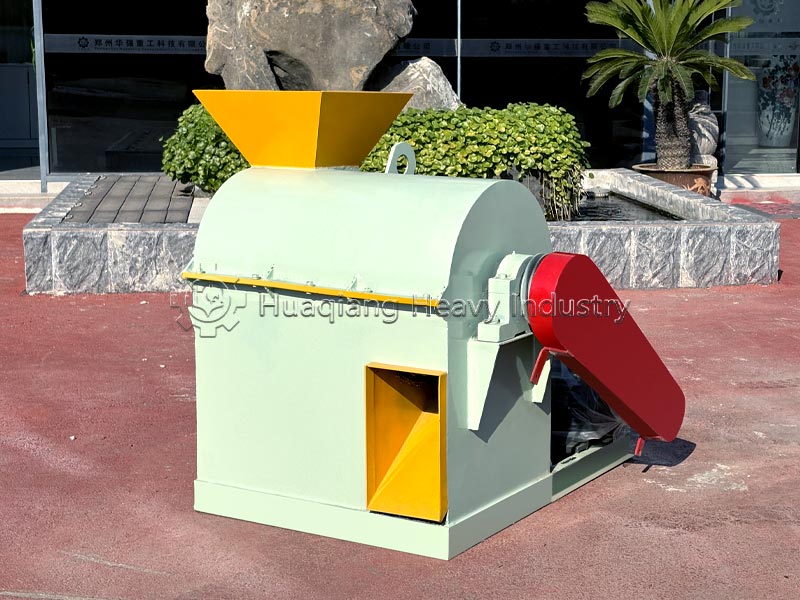
From Pretreatment to Pellet: The Fertilizer Production Pathway
Following effective chemical pretreatment, OPEFB becomes a valuable carbon-rich component for organic fertilizer. To be integrated into a commercial organic fertilizer manufacturing system, the processed fibers often require composting. This can be efficiently managed using a large wheel compost turning machine or a chain compost turning machine to aerate windrows, ensuring thorough biological stabilization. Once cured, this compost forms the base material for the granulation stage, a critical phase of organic fertilizer production granulation. The choice of granulation technology is diverse: for spherical granules, an organic fertilizer disc granulation production line is common, while an organic fertilizer combined granulation production line might integrate multiple shaping methods.
The selection of specific fertilizer raw material processing machinery and equipment depends on the desired final product form. For dense, cylindrical pellets, a flat die press pellet machine for sale offers an efficient extrusion solution. For operations seeking space and process efficiency, a new type two in one organic fertilizer granulator that combines mixing and granulation in a single unit can be highly effective. This integrated approach ensures that pretreated lignocellulosic materials like OPEFB are transformed into consistent, easy-to-handle fertilizer products with improved nutrient delivery and soil amendment properties.
This complete pathway—from chemical delignification and composting to precision granulation—demonstrates how agricultural byproducts can be systematically upgraded into standardized, high-value organic fertilizers, contributing to a circular economy in agriculture.