Fermentation composting technology for organic fertilizer is the core link in biofertilizer production, converting organic wastes such as animal manure, crop straw, and agricultural by-products into nutrient-rich, harmless organic fertilizer through microbial decomposition. Among the equipments required for biofertilizer production, compost turners—integrated with fermentation composting turning technology—are indispensable core devices. They directly determine the efficiency of fermentation, the quality of compost, and the stability of the production process. From traditional windrow composting to advanced trough-type aerobic fermentation composting technology, different turner types such as large wheel compost turner and chain compost turner adapt to diverse production needs, becoming the backbone of efficient composting.
Aerobic fermentation is the mainstream of organic fertilizer composting, and its core demand is sufficient oxygen supply, uniform material mixing, and temperature control—all of which rely on fermentation composting turning technology. In the fermentation process, microorganisms need oxygen to decompose organic matter, and the accumulation of organic materials will easily lead to anaerobic environments, producing foul odors such as ammonia and hydrogen sulfide, and inhibiting beneficial microbial activity. Compost turners solve this problem by regularly turning the material, breaking the compacted layer, increasing the contact area between material and air, and supplementing oxygen to maintain the vigorous activity of aerobic microorganisms. At the same time, turning can evenly distribute the heat generated by fermentation, avoiding local overheating that kills beneficial bacteria or local low temperature that stalls decomposition.
Different composting technologies match targeted turner equipment, and the large wheel compost turner is widely used in windrow composting systems. Windrow composting machine technology forms organic materials into long strips (windrows) for fermentation, and the large wheel turner moves along the windrows, using its large-diameter wheels to stir, turn, and loosen the material. It is suitable for large-scale open-air composting sites, with the advantages of high efficiency, wide operation range, and strong adaptability to material humidity. It can handle large volumes of materials quickly, making it the first choice for large farms and organic fertilizer factories with large-scale production needs.
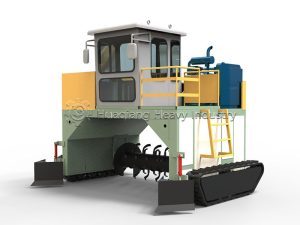
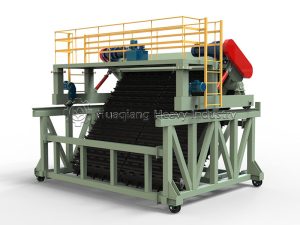
For more precise and efficient production, trough-type aerobic fermentation composting technology is paired with chain compost turners. This technology places materials in fixed troughs, and the chain turner moves along the troughs, using chain-type stirring components to deeply turn and mix the material. Compared with wheel-type turners, chain compost turners have stronger stirring intensity, can fully break up agglomerated materials, and ensure uniform oxygen and nutrient distribution in the trough. They are suitable for medium and small-scale production lines or occasions with strict requirements on compost quality, as they can better control fermentation parameters such as temperature, humidity, and oxygen content, improving the decomposition rate and nutrient retention of organic matter.
Beyond oxygen supply and mixing, compost turners play multiple key roles in the fermentation process. They help adjust the moisture content of the material—turning promotes the evaporation of excess moisture, preventing the material from being too soggy to ferment; at the same time, it can mix the raw materials evenly with auxiliary substances such as microbial agents and bulking agents, accelerating the start of fermentation. In addition, regular turning can promote the decomposition of harmful substances such as pathogens and weed seeds by maintaining a high fermentation temperature (55-65°C), ensuring the harmlessness of the final compost. Without efficient turning equipment, manual operation is not only time-consuming and labor-intensive but also unable to achieve uniform turning, leading to uneven fermentation and substandard compost quality.
As an important part of the equipments required for biofertilizer production, compost turners have been continuously upgraded with the development of fermentation composting technology. Modern turners are often equipped with intelligent control systems, which can automatically adjust turning frequency, speed, and depth according to real-time monitoring data of temperature, humidity, and oxygen in the material pile. This not only reduces manual intervention but also optimizes the fermentation process, further improving production efficiency and product stability. Whether it is the large-scale windrow composting with large wheel turners or the precise trough-type fermentation with chain turners, compost turners are the key to realizing industrialized, standardized organic fertilizer production.
In summary, fermentation composting turning technology and matching compost turners are the core of organic fertilizer fermentation composting technology. They ensure the smooth progress of aerobic fermentation through oxygen supply, mixing, temperature adjustment, and moisture control, laying a solid foundation for high-quality biofertilizer production. With the promotion of ecological agriculture, the application of efficient compost turners will become more widespread, contributing to the recycling of organic waste and the sustainable development of agriculture.