In numerous industries such as mining, building materials processing, chemical production, food processing, and pharmaceutical manufacturing, material grading and screening are crucial for ensuring production quality and efficiency. As a widely used material screening device, the vibrating screen, with its high screening capacity, precise grading effect, and wide adaptability, has become an indispensable core piece of equipment in the production processes of various industries. It achieves rapid separation of materials of different particle sizes through the vibration energy generated by a specific vibration device, providing qualified materials for subsequent production processes, helping enterprises improve production efficiency and ensure product quality.
The stable operation of the vibrating screen relies on a scientifically sound structural design. Its core structure consists of six key parts working together to form a complete screening system. The screening box is the core load-bearing component of the equipment, and the screen inside is the core element for material separation. Different screen sizes can be replaced according to different screening needs, precisely adapting to the separation requirements of materials of different particle sizes. The vibrating motor or exciter, as the “power heart” of the equipment, provides a stable vibration source for screening operations, driving the material to move on the screen surface through vibration, providing the basic power for screening. The support system utilizes springs or rubber shock absorbers, which not only stably support the screening box but also effectively buffer the impact of vibration on the ground and the main body of the equipment, extending its service life. The inlet and outlet form the material flow channel. After entering the screening box through the inlet, materials of different particle sizes, after screening and separation, are discharged from their respective outlets, ensuring a smooth and orderly screening process. The sealing device effectively prevents dust leakage during screening, maintaining a clean working environment and meeting environmental protection production requirements.
The working principle of the vibrating screen is based on the precise coordination of vibration energy and material movement to achieve efficient screening. Its core logic is to generate vibration through a vibrating motor or exciter, driving the screening box to perform linear or circular motion in three-dimensional space. When the material enters the screening box through the inlet, it undergoes a forward projectile motion along the screen surface under the action of vibration—this special motion mode ensures both uniform distribution of the material on the screen surface and full contact between the material and the screen mesh. During this process, materials smaller than the sieve apertures pass smoothly through the apertures, becoming the undersize product; materials larger than the apertures remain on the sieve surface, continuing to move forward as the oversize product, and are eventually discharged from the corresponding outlet, thus completing the separation of materials of different particle sizes. It is worth noting that the adjustment of parameters such as vibration frequency, amplitude, and sieve surface inclination angle directly affects screening efficiency and accuracy. Enterprises can flexibly adjust relevant parameters according to material characteristics (such as humidity, viscosity, and particle size distribution) and production requirements to achieve optimal screening results.
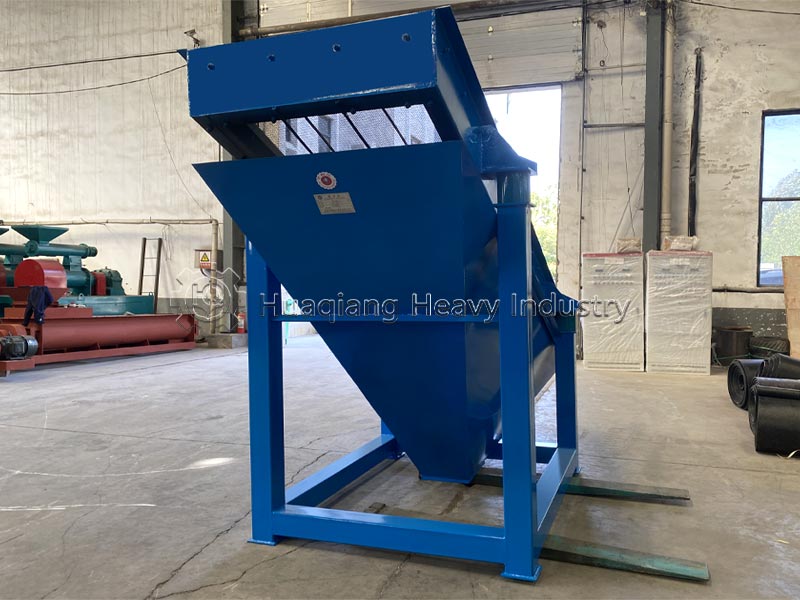
The unique structural design and working principle endow vibrating screens with many significant features, enabling them to adapt to the complex needs of multiple industries. High-efficiency screening is its core advantage; high-frequency vibration significantly increases material throughput, effectively improving production efficiency and helping enterprises increase capacity. High screening accuracy is achieved through precise matching of sieve aperture and vibration parameters, allowing for strict control of the screened particle size and ensuring the quality of materials in subsequent production. Its wide applicability is particularly outstanding; it can handle both dry and wet materials, and has good adaptability to different types and particle size ranges of materials. Meanwhile, vibrating screens boast a compact structure, small footprint, and ease of installation in various production sites. They are also simple to operate, convenient to maintain, and highly automated, effectively reducing labor costs. Furthermore, their sealed design provides excellent environmental performance, reducing dust pollution and aligning with the modern trend of green industrial production.
From ore grading in mining to raw material purification in the food industry, from precision screening of chemical products to impurity removal in the pharmaceutical field, vibrating screens, with their core advantages of high efficiency, precision, and flexibility, provide strong support for optimizing production processes across various industries. Against the backdrop of industrial production transforming towards higher efficiency, precision, and green practices, vibrating screens, with their irreplaceable screening value, will continue to play a vital role in more industries, becoming a key piece of equipment for improving the quality and efficiency of industrial production.
Critical Screening in Integrated Fertilizer Manufacturing
In the context of fertilizer production, the vibrating screen is an indispensable unit within any professional fertilizer manufacturing equipment line. It performs the critical final quality control by separating oversized and undersized particles from the finished granules, ensuring a uniform product. This is vital in both the npk fertilizer production process and organic fertilizer lines. For example, in an npk fertilizer production line, raw materials might first be blended in a npk bulk blending machine before granulation. The formed granules, whether from a disc granulation production line (using a disc granulator for shaping) or a roller press granulator production line (using a double roller press granulator), must be screened to meet size specifications.
Similarly, in an organic fertilizer production line or a bio organic fertilizer production line, the screening stage is equally crucial. The raw material may originate from a windrow composting machine, and after granulation—potentially via a disc granulator—the pellets are sized by a vibrating screen. The screened “fines” are often recycled back into the process, maximizing material utilization. Thus, whether it’s a dedicated npk fertilizer line or an organic system, the vibrating screen is the final arbiter of product consistency, directly impacting marketability and application performance.
Therefore, the integration of high-efficiency screening technology is non-negotiable in modern fertilizer plant design. It works in concert with granulation and blending equipment to deliver a polished, standardized final product that meets strict quality benchmarks.