The resource utilization of livestock and poultry manure has become a crucial link in modern ecological agriculture and the environmental protection industry. Through scientific granulation processes, manure can not only be transformed into high-value-added commercial organic fertilizer but also effectively solve environmental pollution problems. This article will systematically analyze the practical techniques for the entire process from fermentation pretreatment to granulation, providing enterprises with practical technical guidance.
Fermentation Pretreatment: The Foundation of Successful Granulation
Raw material ratio and adjustment are the first step in pretreatment. Pure livestock and poultry manure typically has a low carbon-to-nitrogen ratio (approximately 10-15:1), requiring the addition of auxiliary materials such as straw, rice husks, and mushroom residue to adjust it to the ideal range of 25-35:1. Simultaneously, the moisture content should be controlled at 55-65%; too high a moisture content can easily lead to anaerobic fermentation, while too low a moisture content will affect microbial activity.
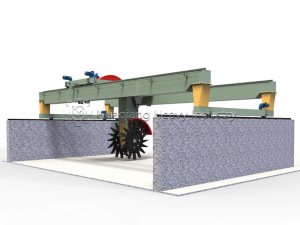
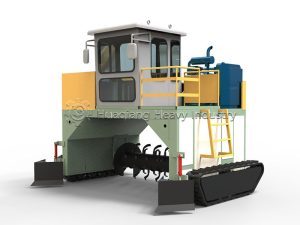
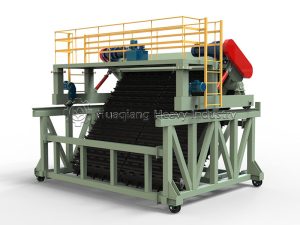
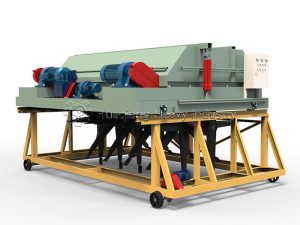
The high-efficiency fermentation process employs trough-type aerobic fermentation technology, with regular turning by a turning machine to ensure oxygen supply. Key control parameters include:
Temperature control: Reaching above 55℃ during the warming period (1-3 days), and maintaining 55-70℃ for 7-15 days during the high-temperature period.
Turning frequency: Twice daily during the warming period, once daily during the high-temperature period.
Maturity assessment: The material turns dark brown and odorless when the temperature naturally drops to room temperature.
In the deep processing stage, the matured material needs to undergo fine sieving to remove impurities before entering the drying stage to reduce the moisture content to 25-35%. Functional microbial agents and trace elements can be added simultaneously during this stage to enhance the product’s added value.
Crushing and Mixing: Ensuring Homogeneity of Granulation Raw Materials
The pre-treated material needs to be processed to a fineness of 40-80 mesh using a semi-wet material crusher. Key techniques include:
Using a multi-stage crushing process, first coarse crushing then fine crushing.
Real-time monitoring of material moisture content during crushing.
Installing an iron removal device to protect the crushing blades.
The mixing process uses a twin-shaft mixer to ensure uniform distribution of various additives. The coefficient of variation for mixing uniformity should be less than 5%, which is a key indicator for ensuring the quality of subsequent granulation.
III. Granulation and Molding: Process Selection and Parameter Optimization
The selection of granulation equipment should be based on the characteristics of the material:
Disc Granulator: Suitable for organic-inorganic compound fertilizers with added binders
Agitator Grinding Mill: Suitable for pure organic materials
Roller Extrusion Granulator: Suitable for high-fiber materials
Precise Control of Process Parameters:
Binder Addition: Bentonite 2-5%, Lignosulfonate 1-3%
Moisture Control: Material moisture content 25-35% during granulation
Mechanical Parameters: Disc inclination angle 35-50°, rotation speed 15-25 r/min
Practical Tips:
Use a staged water addition method, adding 70% water first, and then adding the remaining water via atomization.
Install a real-time monitoring system to dynamically adjust parameters.
Clean the granulation equipment regularly to prevent scaling.
Post-processing: Improving Product Quality
After granulation, the granules need to be dried at a low temperature (≤80℃) to reduce the moisture content to below 12%, and then cooled in a counter-current cooler. The screening process uses a double-layer drum screen. Qualified particles (2-4mm) enter the coating process; larger particles are crushed and reused, while fine powder is returned to granulation.
Coating options include:
Anti-caking coating: Talc or diatomaceous earth coating
Functional coating: Slow-release agent or microbial agent coating.
Aging treatment of 7-10 days is recommended before packaging to stabilize particle strength.
Key Points of Quality Control
Establish a comprehensive quality monitoring system:
Raw material testing: Heavy metals, moisture content, impurity content
Process control: Fermentation temperature curve, grinding fineness, granulation parameters
Finished product inspection: Particle size distribution, particle strength, nutrient content
Solutions to Common Problems
Insufficient particle strength: Increase binder dosage, optimize drying curve
Low pelleting rate: Adjust material moisture content, check grinding fineness
Severe equipment scaling: Optimize formula to reduce viscosity, increase cleaning frequency
Unstable production capacity: Ensure raw material consistency, perform regular equipment maintenance
VII. Innovative Development Trends
Current livestock manure granulation technology is developing towards intelligentization:
IoT monitoring systems achieve full-process automated control
New biological binders improve granulation efficiency
Low-temperature drying technology reduces energy consumption costs
Specialized formula development meets differentiated needs
Complete Industrial System for Manure Valorization
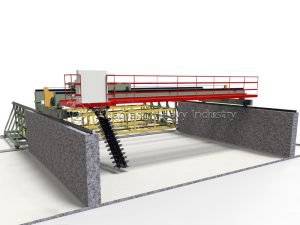
The described fermentation and pretreatment phase is executed by advanced fermentation composting technology for organic fertilizer. This organic fertilizer fermentation process is mechanized using equipment such as a large wheel compost turner or a windrow composting machine for open piles, or a double screws compost turning machine for efficient mixing. For intensive, controlled decomposition, trough-type aerobic fermentation composting technology is employed. This entire mechanized system, an agriculture waste compost fermentation machine, represents the application of modern fermentation composting turning technology.
Following successful curing, the compost enters the granulation phase as part of the complete equipments required for biofertilizer production. For precise blending of additives, a multiple silos single weigh static batching system can be used. The core fertilizer granulation technology can vary: a disc granulation production line is common for organic materials, while for larger scale operations, drum granulation may be chosen. The integration of robust composting equipment like the chain compost turning machine with downstream granulation technology creates a seamless, value-added production chain from waste to commercial fertilizer.
Therefore, transforming livestock manure into a standardized product requires a systematic approach that connects biological decomposition with mechanical processing. Each stage, from active composting to precise granulation, must be optimized to ensure the final product meets both agronomic and market standards.
Successful livestock manure granulation projects require a combination of scientific process flow and meticulous practical skills. Enterprises should, based on a grasp of the basic principles, continuously optimize and adjust process parameters according to their own raw material characteristics and equipment conditions. It is recommended to conduct small-scale and pilot-scale trials first to accumulate experience before expanding production. Through standardized operations and continuous improvement, not only can high-quality organic fertilizer products be produced, but also good economic and environmental benefits can be achieved, truly realizing the resource-based and value-oriented utilization of livestock and poultry manure.