In the field of small and medium-sized fertilizer production, the flat die press pelleting machine has become an indispensable core piece of equipment due to its unique advantages. This machine not only determines the upper limit of the production line’s capacity but also directly affects the quality stability of the final product. Mastering its speed control techniques, scientific selection methods, and applicable scenarios is key to improving fertilizer production efficiency.
The Art of Speed Control
Speed control of a flat die press pelleting machine is a technique that requires precise mastery. The equipment speed is typically set between 50 and 200 revolutions per minute (rpm), but this range needs to be fine-tuned according to specific circumstances.
Equipment specifications determine the baseline speed. For small equipment with a die diameter of less than 450 mm, the optimal operating speed is 80-150 rpm; for medium-sized equipment (die diameter 450-800 mm), it is advisable to control it at 60-120 rpm; while large equipment should be kept in a lower speed range of 50-90 rpm. This tiered setting ensures that the equipment operates under optimal load conditions.
Raw Material Characteristics Determine the Final Speed For livestock and poultry manure with high moisture content, the rotation speed should be controlled between 60-90 rpm to prevent excessive compression that could lead to temperature increases and nutrient loss. An organic fertilizer plant in Linyi, Shandong Province, has firsthand experience in this regard: when processing chicken manure using a 600mm diameter flat die pellet mill, they initially used 120 rpm, resulting in a pellet formation rate of only 65% and a rapid rise in equipment temperature. After adjusting the speed to 75 rpm, the formation rate increased to 82%, and the pellet moisture content stabilized at 28%. Finally, they optimized the speed to 85 rpm, achieving a production rate of 800 kg per hour, while the pellet strength fully met national standards.
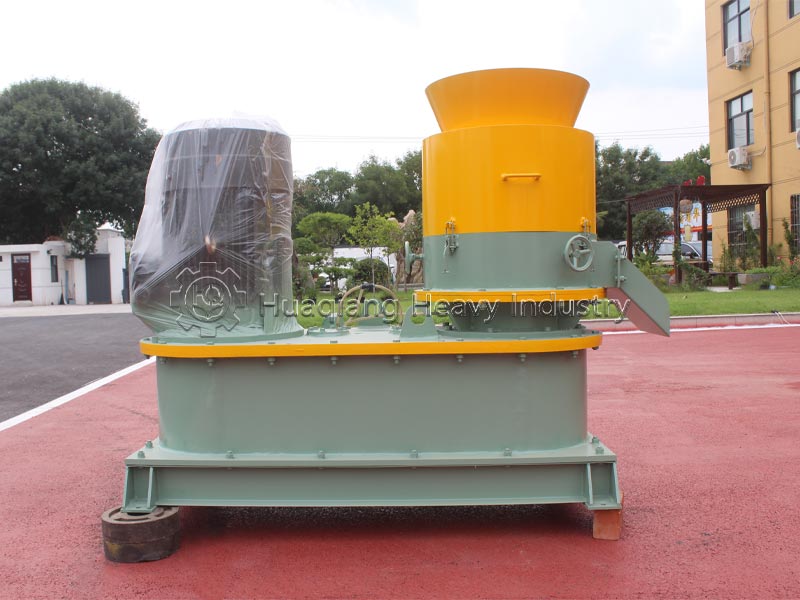
For materials with high fiber content, such as straw and mushroom residue, a medium rotation speed of 90-120 rpm is most suitable, ensuring adequate forming while avoiding excessive fiber breakage. When processing organic-inorganic compound materials, a rotation speed of 100-140 rpm can effectively balance forming efficiency and pellet hardness.
Practical Methods for Scientific Equipment Selection: Choosing the right equipment is the first step to success. Choosing the appropriate equipment specifications based on production scale is crucial. For small-scale pilot lines, a 300-400 mm die diameter is recommended, coupled with a 15-22 kW motor, achieving a theoretical output of 200-400 kg/hour. Small to medium-sized production lines utilize 450-550 mm dies, driven by a 30-45 kW motor, achieving an output of 500-800 kg/hour. Medium-sized production lines require 600-800 mm dies, equipped with a 55-75 kW motor, achieving a production capacity of 1-1.5 tons/hour.
The quality of key components determines equipment lifespan. Dies should be made of carburized alloy steel; high-quality dies can have a lifespan of 800-1000 hours. The die compression ratio should be selected based on raw material characteristics: a compression ratio of 1:6 to 1:8 is suitable for producing organic fertilizer, while a lower compression ratio of 1:4 to 1:6 should be used for compound fertilizers. Regarding pressure roller configuration, 2-3 standard pressure rollers ensure even pressure distribution, and pressure rollers with anti-slip textures significantly enhance material gripping ability.
On-site inspection is indispensable during the selection process. A customer in Zhoukou, Henan, summarized valuable experience: Always bring your own raw materials for at least 30 minutes of continuous trial operation; meticulously record the power consumption per unit output, controlling it within the range of 40-60 kWh per ton; check that the equipment’s no-load noise does not exceed 85 decibels, and the load noise does not exceed 90 decibels; simultaneously, examine the ease of mold replacement; for high-quality equipment, mold replacement time should not exceed 2 hours.
Applicable Fertilizer Types and Optimized Production: Flat die pellet mills perform excellently in organic fertilizer production, particularly suitable for processing livestock and poultry manure. A farm in Fuyang, Anhui, used this equipment to process chicken manure, achieving a 32% pellet moisture content and an 85% forming rate through the advantages of its low-speed, high-pressure design. For straw-based organic fertilizers, the equipment can adapt to different fiber lengths by adjusting the rotation speed. Typically, straw needs to be crushed to 3-5 mm, using a speed of 90-110 rpm, and adding approximately 10% binder.
Flat die pellet mills also perform excellently in the production of organic-inorganic compound fertilizers. A fertilizer plant in Nantong, Jiangsu Province, uses a process that blends 30-40% organic matter with nitrogen, phosphorus, and potassium (NPK) base fertilizers, strictly controlling the total moisture content to no more than 25%. It produces 12,000 tons of NPK (15-5-10) compound fertilizer annually, achieving good economic benefits.
Production optimization requires a systematic approach. In the raw material pretreatment stage, organic materials should pass through a 20-mesh sieve at least 90%, while inorganic materials should pass through a 40-mesh sieve at least 95%. Ideally, the moisture content of the raw materials before granulation should be controlled within the range of 22-28%. Depending on the characteristics of the raw materials, adding 2-5% bentonite or lignin as a binder can significantly improve the molding rate.
Daily equipment maintenance is equally important. The die holes should be cleaned after each shift to prevent blockages from affecting the next shift. The temperature of the pressure roller bearings should be checked regularly to ensure it does not exceed the safe range of 70℃. The lubricating grease should be replaced every 300 hours of operation, and the die wear should be fully inspected after 800 hours, with timely replacement to ensure product quality.
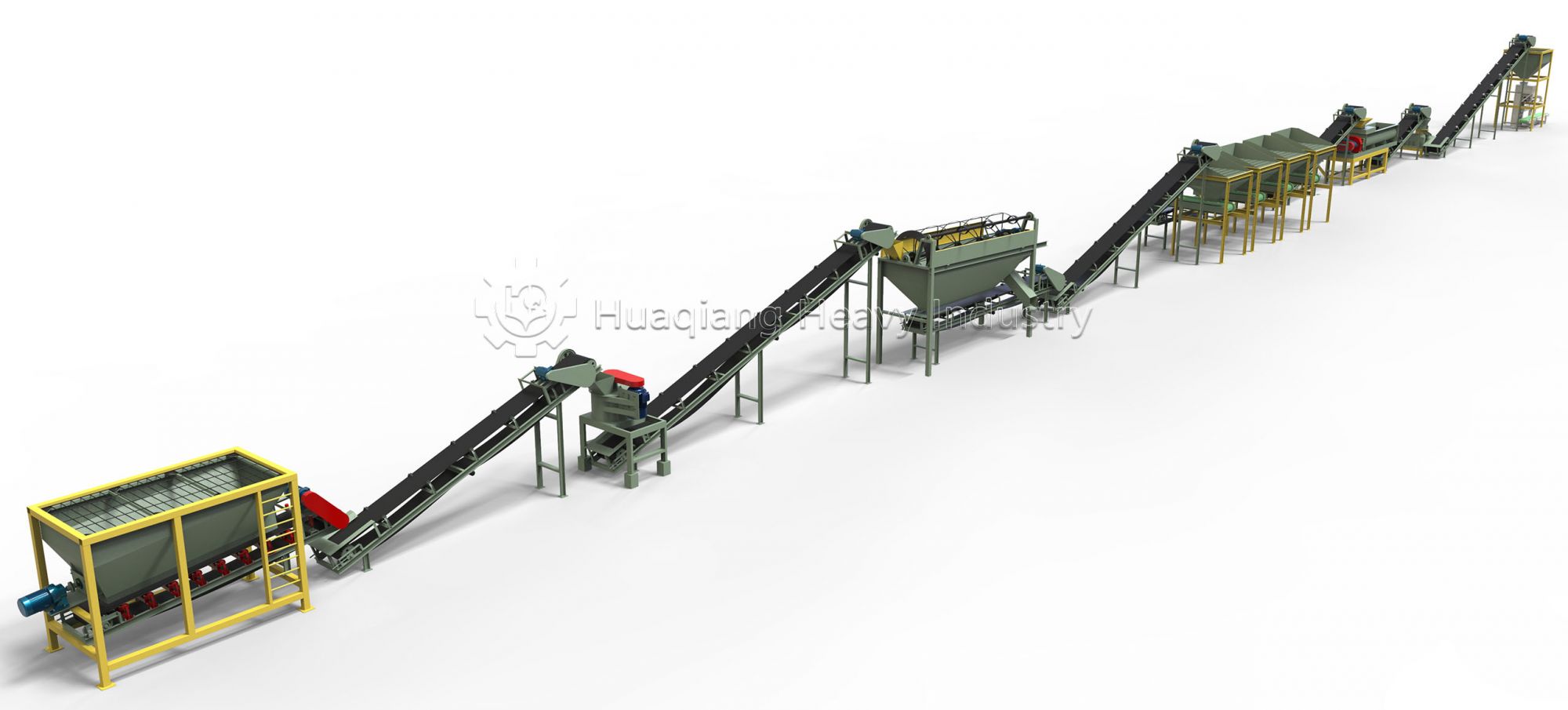
A fertilizer plant in Ganzhou, Jiangxi Province, provided a typical case study of economic benefits: they invested 180,000 yuan to purchase a flat die pellet mill and supporting equipment. The production cost included 48 yuan per ton of electricity and 3.5 yuan per ton of die wear. Based on an annual output of 6,000 tons, the investment payback period was only 9 months.
Technological Development Trends: Flat die pellet mill technology is developing towards intelligentization. New generation equipment is equipped with PLC control systems, capable of automatically adjusting speed and pressure for more precise process control. Modular design makes rapid die replacement possible; some advanced models have reduced die changeover time to less than 30 minutes. In terms of energy saving, the application of efficient transmission systems has reduced energy consumption by 15-20%, significantly lowering production costs.
With continuous technological advancements, flat die pellet mills will play a more extensive role in fertilizer production. For companies planning to invest in fertilizer production, a thorough understanding of equipment characteristics, combined with their own raw material conditions and market demands, and the selection of suitable equipment configurations will lay a solid technological foundation for their development. In the new era of green agricultural development, mastering advanced pelleting technology means mastering the core competitiveness of fertilizer production.
Advancements in Fertilizer Granulation and Compaction Technology
Building on the foundational role of the flat die pelleting machine in organic and compound fertilizer production, modern fertilizer production machine technology encompasses a broader spectrum of granulation methods to meet diverse market needs. While the flat die machine excels in small to medium-scale, low-speed compaction, large-scale NPK fertilizer manufacturing process often integrates more continuous and high-throughput systems. The roller press granulator production line, a type of fertilizer compactor, is particularly effective for highly powdery raw materials, utilizing extreme pressure to achieve fertilizer granules compaction without the need for binder liquids. This dry method is energy-efficient and ideal for moisture-sensitive formulations.
For operations requiring spherical granules, the disc granulation production line and rotary drum granulator are predominant. The disc granulator offers excellent control over granule size through adjustable tilt and rotation speed, suitable for organic-based blends. Conversely, the rotary drum granulator is a cornerstone of large-scale NPK manufacturing process, facilitating continuous coating and layering of particles in a tumbling motion, which produces uniform, hard granules. Each fertilizer compaction machine type—from the simple flat die to the complex rotary drum—serves a specific niche. The future lies in hybrid lines that intelligently combine these technologies, allowing a single fertilizer production machine technology platform to switch between compaction and agglomeration modes, thereby maximizing flexibility for producing both organic and mineral fertilizer granules with optimal physical properties and nutrient content.