In numerous industrial sectors such as cement calcination, chemical synthesis, metallurgical smelting, and building materials processing, cooling high-temperature materials is a crucial step in ensuring smooth subsequent production processes. The rotary drum cooler (also known as a gyratory cooler), as a core piece of equipment specifically designed for cooling high-temperature materials, has become an indispensable cooling tool in industrial production due to its efficient heat exchange capacity, stable operating performance, and wide adaptability. Through scientific heat exchange principles, it precisely cools high-temperature materials to a suitable temperature for storage, transportation, or further processing, providing solid support for enterprises to improve production efficiency and ensure product quality.
The stable and efficient operation of the rotary drum cooler stems from its scientifically designed structure, with each core component working in tandem to form a complete cooling system. The drum itself, the core of the equipment, houses a cooling device and lifting plates. This design is key to improving cooling efficiency—the lifting plates repeatedly lift and drop the material as the drum rotates, significantly increasing the contact area between the material and the cooling medium. The transmission device, composed of a motor, reducer, gears, and rollers, provides stable rotational power to the drum, ensuring uniform drum operation. The inlet and outlet respectively handle the entry of high-temperature materials and the discharge of cooled materials, ensuring smooth material flow. The cooling medium supply system provides air, water, or refrigerant, providing the necessary conditions for heat exchange. The support device uses a combination of rollers and support wheels to firmly support the drum, reducing frictional losses during rotation and ensuring stable operation. The sealing device effectively prevents leakage of cooling medium and materials, avoiding resource waste and improving cooling efficiency. Furthermore, the control system ensures a stable and efficient cooling process through precise control of parameters such as temperature and speed.
The working principle of the drum cooler is based on efficient heat exchange, with a clear process and rigorous logic. When high-temperature materials enter the drum through the inlet, the transmission device drives the drum to rotate slowly. During rotation, the lifting plates inside the drum continuously lift the material to a certain height before scattering it, creating a uniform curtain of material in a tumbling state. Simultaneously, the cooling medium supply system continuously inputs cooling medium into the drum, allowing the material and cooling medium to come into full contact and undergo direct heat exchange—the heat of the material is rapidly carried away by the cooling medium, thus lowering the temperature. The cooled material is discharged from the outlet under the driving force of the rotating drum; the cooling medium (such as hot air) that has absorbed heat is discharged through the exhaust port. The entire process is continuous and efficient, meeting the cooling needs of large-scale high-temperature materials.
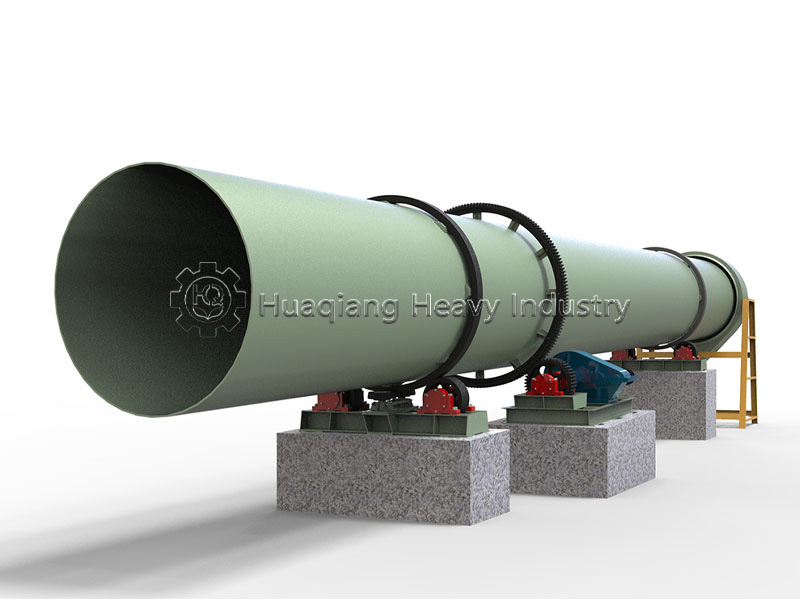
The unique structure and working principle of the drum cooler give it many significant advantages, making it adaptable to the complex needs of multiple industries. High cooling efficiency is its core competitiveness. Through direct heat exchange and the assistance of the lifting plates, the material is cooled evenly and quickly, while also having a large throughput, easily handling the cooling of large batches of high-temperature materials. It is highly adaptable, capable of handling various materials of different sizes and shapes, whether it be cement clinker, metallurgical slag, or chemical synthetic materials, achieving stable cooling. The equipment has a relatively simple structure, a reasonable layout of core components, is easy to operate, and has low maintenance costs, significantly reducing the operational and maintenance burden on enterprises. Compared with other cooling methods, the drum cooler consumes less energy, especially when processing large batches of materials, where the energy-saving effect is more significant. Furthermore, the equipment is highly flexible in operation; by adjusting parameters such as drum speed and cooling medium flow rate, the degree of cooling can be precisely controlled to adapt to the cooling needs of different materials. More importantly, the discharged heat medium has the potential for recycling and can be used to preheat other materials or for drying operations, further improving energy efficiency and aligning with the concept of green production.
From clinker cooling in the cement industry to slag cooling in the metallurgical industry, from synthetic material cooling in the chemical industry to finished product cooling in the building materials industry, the drum cooler, with its core advantages of high efficiency, stability, and energy saving, provides strong support for the smooth operation of production processes in various industries. Against the backdrop of industrial production transforming towards higher efficiency and greener practices, this multi-industry-compatible cooling core equipment not only improves enterprise production efficiency but also helps enterprises achieve energy conservation and emission reduction goals, becoming one of the important pieces of equipment driving high-quality industrial development.
Integrating Cooling into Modern Fertilizer Manufacturing
The rotary drum cooler exemplifies the importance of specialized thermal management in continuous industrial processes. Its role is equally critical within the fertilizer industry, where precise temperature control is essential for producing high-quality, stable products.
Specifically, in a complete npk fertilizer production line, the cooler is a vital piece of professional fertilizer manufacturing equipment. It is typically positioned after the granulation and drying stages within the npk fertilizer production process. For example, following disc granulation production line shaping by a disc granulator for shaping or compaction in a roller press granulator production line, the hot granules must be rapidly cooled to set their structure and prevent caking. This cooling stage works in synergy with upstream equipment like the npk blending machine and the fertilizer granulator. Similarly, in an organic fertilizer production line that begins with a windrow composting machine, a cooler ensures the stability of the final granulated product from a bio organic fertilizer production line. Thus, the drum cooler is an indispensable link that bridges high-temperature processing with final product packaging and storage.
Ultimately, by ensuring granules are cooled efficiently and uniformly, this equipment protects product quality and enables the reliable, large-scale output that defines modern fertilizer manufacturing.