Introduction: Nature’s Ultimate Recycling Station
In a corner of your garden or farm, a seemingly ordinary pile of fallen leaves, vegetable scraps, and kitchen waste is quietly hosting one of Earth’s oldest and most exquisite life cycles. This process—composting—is not mere decay but a grand biological transformation project orchestrated by billions of microorganisms. It magically converts discarded organic matter into “black gold”—humus, which not only nourishes plants but also improves soil. Understanding the science behind composting is to understand the wisdom of natural cycles, enabling us to more efficiently mimic and optimize this process, turning waste into treasure.
First Movement: The Four-Season Symphony of Microorganisms
If the composting process is likened to a symphony, then different types of microorganisms are the musicians, appearing on stage in strict sequence according to the “score,” collaborating to complete this movement of life.
Spring Overture: The Mesophilic Phase
When organic materials are mixed and piled, the “pioneer troops”—mesophilic bacteria and fungi (e.g., Bacillus, yeasts)—rapidly multiply. They prefer “fast food,” prioritizing the decomposition of simple organic compounds like sugars, starches, and proteins. Like lighting a bonfire, their rapid metabolism releases heat, raising the pile temperature from ambient to 40-50°C within 1-2 days. This phase primarily involves rapid energy release and breakdown of basic substances.
Summer Climax: The Thermophilic Phase
Temperatures exceeding 55°C mark the climax of the movement. The “specialist team”—thermophilic bacteria and actinomycetes—take the lead. They can break down the “tough bones” in plant fibers like cellulose and hemicellulose. This phase maintains high temperatures of 55-70°C for 5-7 days, ensuring the safety of the compost. The heat acts like natural pasteurization, effectively killing pathogens, parasite eggs, and weed seeds, achieving waste sanitization. Simultaneously, complex organic matter is further dismantled.
Autumn Settlement: The Cooling Phase
As the “tough bones” are largely consumed and food diminishes, thermophilic activity wanes, and the temperature begins to drop below 40°C. At this point, another group of mesophilic microorganisms returns, starting to process the most stubborn remaining substances like lignin, and using simple compounds produced earlier as “building blocks” to synthesize precursors of humus—a critical turning point from “dismantling” to “rebuilding.”
Winter Maturation: The Maturation Phase
Finally, the temperature stabilizes at ambient levels. Microbial communities dominated by actinomycetes become the “architects,” synthesizing stable, complex humic macromolecules from substances like amino acids and phenols. The pile becomes loose, dark brown, and emits a fresh earthy smell. The product at this stage is not just fertilizer but a “soil conditioner” that can long-term improve soil structure, water retention, and nutrient-holding capacity.
Second Movement: The Dance of Elemental Cycles
While microorganisms metabolize, elements like carbon and nitrogen also perform an intricate cycle dance.
Carbon’s Journey: Easily decomposable carbon (such as carbohydrates) serves as “fuel” for microorganisms, being oxidized into carbon dioxide and water, releasing energy to drive the entire process. Difficult-to-decompose carbon (such as lignin) is transformed into the core framework of humus, forming a stable soil organic carbon pool. The ideal initial carbon-to-nitrogen ratio (C/N) is 25-30:1, providing balanced “nutrition” for microorganisms. After maturation, the carbon-to-nitrogen ratio decreases to 10-15:1, meaning that carbon has been consumed, and nitrogen has become relatively enriched and fixed.
Nitrogen’s Fate: Organic nitrogen from proteins is broken down into ammonia. Under well-aerated conditions, nitrifying bacteria convert ammonia into nitrate, a form easily absorbed by plants. Some nitrogen is absorbed by microbes to become part of their bodies, eventually returning to humus upon microbial death, forming a slow-release nitrogen pool, avoiding the rapid loss typical of chemical fertilizers.
Third Movement: The Conductor’s Art of Control
To make this symphony harmonious and perfect, we need to play the role of “conductor,” controlling several key conditions:
- Air (Oxygen):Aerobic microorganisms need oxygen. Regular turning or forced aeration maintains pile porosity, preventing anaerobic conditions that cause odors.
- Moisture:Maintain 55-60% humidity, with a feel of “forms a ball when squeezed but breaks apart easily when dropped.” Too much water displaces air; too little halts microbial activity.
- Feedstock Mix:Combine high-nitrogen “green” materials (kitchen scraps, manure) with high-carbon “brown” materials (dry leaves, wood chips) at a volume ratio of approximately 1:2 to achieve an ideal C/N ratio.
- Pile Size:Sufficient volume (typically at least 1 cubic meter) helps retain heat, maintaining the thermophilic phase.
Conclusion: The Wisdom of Cooperating with Nature
The science of composting is essentially the acceleration and imitation of the material cycles in natural ecosystems. It requires no high-tech equipment yet contains the most exquisite biochemical principles. By understanding and respecting these principles, each of us can transform daily organic waste into precious resources that nourish the land, whether in our backyard or on a balcony. This not only reduces waste and carbon emissions but also allows us to directly participate in the great cycle of Earth’s life, experiencing the complete journey from waste to rebirth. Composting is a technique, a science, and, moreover, a philosophy of living in harmony with nature.
Scaling Up Nature’s Process: The Industrial Journey of Organic Fertilizer
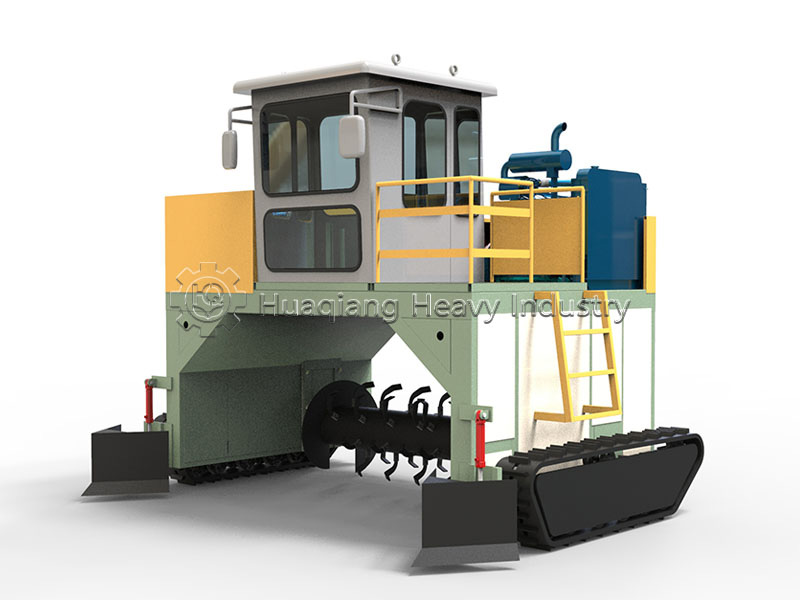
The profound biological principles of the organic fertilizer fermentation process are harnessed and scaled through modern fermentation composting technology for organic fertilizer. Efficient, large-scale organic fertilizer fermentation relies on specialized equipment to implement advanced fermentation composting turning technology. Key fertilizer making machine units in this stage include the trough-type compost turner and hydraulic trough compost turner for controlled environments, and the large wheel compost turning machine or windrow compost turner for outdoor windrows. These are essential equipments required for biofertilizer production, ensuring optimal oxygen and temperature control.
Following complete maturation, the compost enters the final processing stage. The stabilized organic matter is first dried, often using equipment like a drum organic fertilizer dryer, to achieve the proper moisture content for granulation. Then, advanced fertilizer granulation technology is applied, typically within a disc granulation production line. Here, a disc granulator for shaping transforms the compost into uniform, market-ready pellets. This entire integrated system, comprising various fertilizer production machine units, demonstrates how an understanding of natural microbial symphonies is translated into an efficient industrial process, turning abundant organic waste into valuable, high-quality fertilizers that support sustainable soil health on a global scale.