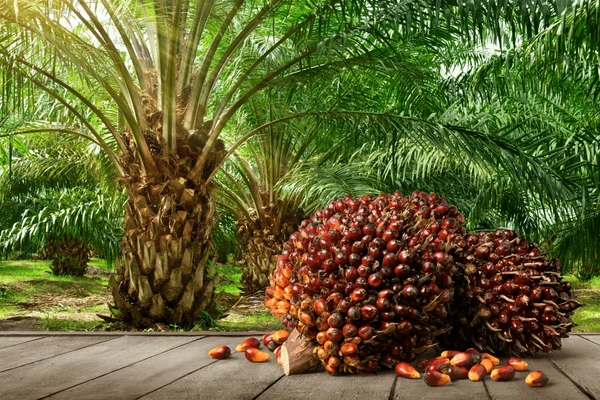
Malaysia is a core region for global palm oil production, and its processing generates a large amount of waste, including empty fruit bunches (EFB), palm oil mill effluent (POME), and oil palm defatted cake (OPDC). Traditional methods of handling these wastes often lead to serious environmental problems, such as water pollution and greenhouse gas emissions. To address this challenge, co-composting technology has emerged, aiming to transform these wastes into valuable organic fertilizers, achieving a transformation from “pollution source” to “nutrient source.”
Experimental Design and Methods
A systematic study was conducted at the composting plant of the FELCRA palm oil mill in Maran. The experiment used shredded EFB with a moisture content of 60% as the base material and set up four treatment groups: a pure EFB control group (1:0), an experimental group with an EFB to POME ratio of 1:2, an experimental group with a ratio of 1:3, and an experimental group with the addition of OPDC (EFB: POME: OPDC = 1:3:0.2). POME was used as a moisture regulator and auxiliary nutrient source, while nitrogen-rich OPDC was used to optimize the carbon-nitrogen ratio of the compost. During the experiment, the compost piles were turned weekly to ensure good ventilation and promote the activity of aerobic microorganisms.
Dynamic Changes in the Composting Process
After ten weeks of fermentation, all experimental groups successfully matured, exhibiting the typical characteristics of a deep brown color and earthy smell. Key physicochemical indicators revealed the dynamic patterns of the composting process:
pH Value: The pH value of all compost piles continuously increased, changing from a weakly alkaline to a strongly alkaline environment. This not only conforms to the natural law of alkali production during organic matter decomposition but also effectively inhibits the activity of pathogenic bacteria and weed seeds.
Temperature: In the early stages of fermentation, the temperature of the compost piles increased significantly due to the heat released by microorganisms decomposing organic matter. As fermentation progressed to the later stages, the temperature gradually returned to ambient temperature, indicating a decrease in microbial activity and the stabilization of the compost.
Carbon-Nitrogen Ratio: The carbon-nitrogen ratio of all experimental groups decreased significantly. This is because microorganisms consumed carbon as an energy source during the decomposition process, while nitrogen was retained more in the compost pile. The carbon-to-nitrogen ratio is a core indicator for measuring the maturity of compost, and its decrease indicates more thorough decomposition of organic matter.
Nutrient content: The nitrogen, phosphorus, and potassium content of the final compost product is significantly increased. This is due to the mineralization and decomposition of organic matter, which converts nutrients from complex organic forms into inorganic forms that are easily absorbed by plants, achieving nutrient enrichment and transformation.
Outstanding Performance of the Optimal Ratio Group
Among all treatments, the experimental group with EFB, POME, and OPDC mixed in a ratio of 1:3:0.2 performed the best and was identified as the optimal ratio scheme. Its advantages are reflected in several aspects:
First, the final carbon-to-nitrogen ratio of this group was 23.64, which falls perfectly within the ideal range for mature organic fertilizer (20-25). This is far superior to other experimental groups, indicating the highest degree of compost maturity. Such an ideal carbon-to-nitrogen ratio means that the compost will not compete with crops for nitrogen after being applied to the soil, which is beneficial for crop growth.
Secondly, the pH value of the compost reached 8.4, showing strong alkalinity. This characteristic not only meets the soil acidity and alkalinity requirements of most crops but also has good sterilization and weed control effects, improving the safety of the compost product.
In terms of nutrients, the nitrogen, phosphorus, and potassium content of this group’s compost reached 1.57%, 0.21%, and 0.65%, respectively. The nutrients are not only balanced but also significantly higher than the control group and the experimental group with only POME added, showing superior fertilizer efficiency.
The addition of OPDC was the key to success. As a high-nitrogen raw material, OPDC effectively neutralized the excessively high carbon-to-nitrogen ratio of EFB, providing sufficient nitrogen sources for microorganisms, thereby accelerating microbial metabolism and reproduction, shortening the composting cycle, and improving overall efficiency.
Value and Prospects of Technological Application
This research has significant technological application value. In terms of environmental benefits, the co-composting technology simultaneously processes three major palm oil processing wastes, greatly reducing environmental pollution caused by incineration, landfill, or direct discharge, especially avoiding the eutrophication of water bodies that may be caused by the direct discharge of POME, strongly promoting the palm oil industry towards a “zero-emission” goal.
The economic benefits are also significant. The high-quality organic fertilizer produced can be directly reused in oil palm plantations, replacing some chemical fertilizers and reducing cultivation costs. At the same time, the resource utilization of waste materials opens up new revenue streams for the company.
More importantly, this research provides a replicable and scalable waste management technology solution for global palm oil producing regions. By identifying the optimal ratio, it sets an example for the industry to achieve a win-win situation of environmental sustainability and economic viability, contributing valuable practical experience to the green transformation of global agriculture.
From Co-Composting to Commercial Fertilizer Production
The co-composting of palm oil wastes such as oil palm empty fruit bunch (EFB) demonstrates a high-value uses of oil palm empty fruit bunch, leveraging its unique oil palm empty fruit bunch composition for sustainable organic fertilizer manufacturing. The optimized fermentation process for EFB, POME, and OPDC is a prime example of efficient organic fertilizer fermentation. To scale this successful laboratory process, the stabilized compost must be integrated into a complete organic fertilizer production line. This requires specialized equipment to handle the industrial scale.
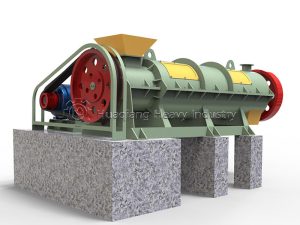
Efficient is critical for large-scale decomposition and is implemented using machines like the chain compost turning machine. Following complete maturation, the compost proceeds to granulation, where equipment such as a new type two in one organic fertilizer granulator can be used to mix and shape the material into uniform pellets. This entire system can be configured as a bio organic fertilizer production line to further enhance the product with beneficial microbes. This integrated approach closes the loop in palm oil production, transforming problematic waste into a valuable, market-ready soil amendment that supports the industry’s sustainability and circular economy goals.