In modern fertilizer production, granulation is a crucial process that converts powdered raw materials into uniform granules. The disc granulator and rotary drum granulator are two common types of equipment. Although they differ in design, they share similar basic requirements for raw materials. The selection and pretreatment of raw materials directly determine granulation efficiency, product quality, and equipment lifespan. When choosing between these two types of equipment, global fertilizer producers must pay special attention to particle size, moisture content, adhesiveness, and impurity control of raw materials to ensure stable and efficient production.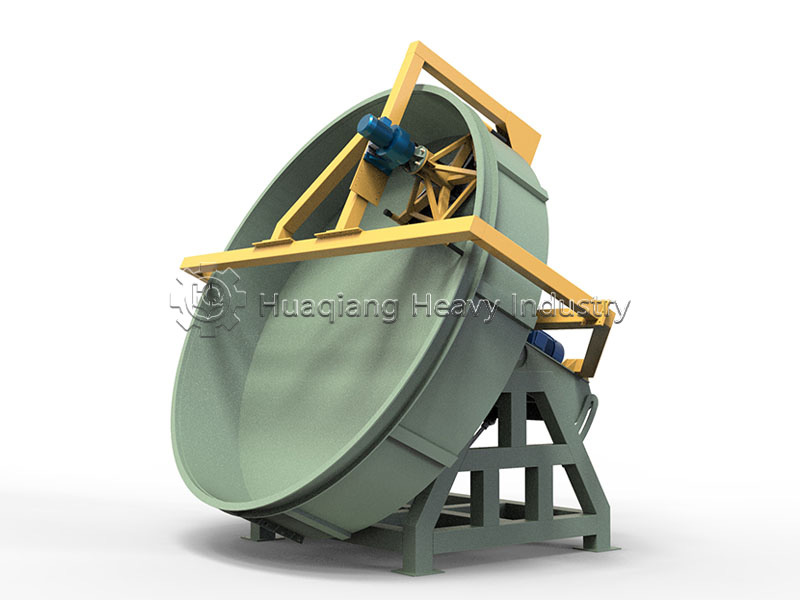
Core Common Requirements for Raw Materials
Whether using a disc granulator or a rotary drum granulator, raw materials must meet the following basic conditions:
First, the particle size of raw materials should be controlled within a fine range, generally recommended between 80 and 200 mesh (approximately 75–150 micrometers). Fine powdered materials provide a larger contact area between particles, facilitating stable bonding during granulation. Overly coarse particles (e.g., larger than 1 millimeter in diameter) or lumpy impurities can not only affect the uniformity of granules but may also cause equipment clogging or wear.
Second, the moisture content of raw materials is a critical factor for successful granulation. Typically, the base moisture content of raw materials should be maintained between 10% and 20%, with specific values varying depending on the type of fertilizer. If the moisture content is too low, granules may not form properly, requiring the addition of water or binders through the equipment’s spraying system. Excessive moisture, on the other hand, can lead to clumping and uneven granulation. Stable moisture content is essential for ensuring the strength and durability of the final granules.
Additionally, raw materials must possess a certain degree of natural adhesiveness or achieve the required bonding effect through the addition of binders. Completely non-adhesive inert powders (such as quartz sand) cannot be directly used for granulation. Commonly used binders include water, bentonite, starch, cellulose derivatives, and ammonium phosphate solutions. The choice of binder depends on the type of fertilizer: organic fertilizers often use bentonite, while compound fertilizers typically employ ammonium phosphate solutions.
Finally, the raw materials must not contain hard, sharp impurities such as metal fragments or stones. These impurities can not only scratch the inner walls of the equipment (especially the wear-resistant linings of discs and rollers), but may also damage transmission components and affect the normal operation of the equipment.
Types of Fertilizer Raw Materials Suitable for Use
Both disc granulators and rotary drum granulators are suitable for a variety of fertilizer raw materials, including organic fertilizers, inorganic fertilizers, and compound fertilizers.
Organic fertilizer raw materials primarily include decomposed and fermented livestock manure (such as chicken manure, cow manure), agricultural waste (such as straw powder, sawdust, rice husk powder, fungal residue, biogas residue, and distillers’ grains), and harmless-treated municipal sludge. These materials typically exhibit strong natural adhesiveness and generally do not require the addition of large amounts of binders during granulation. Forming is mainly achieved by controlling moisture content.
Inorganic fertilizer raw materials encompass nitrogen fertilizers (such as urea powder, ammonium chloride powder), phosphate fertilizers (such as superphosphate powder, monoammonium phosphate powder), and potassium fertilizers (such as potassium chloride powder, potassium sulfate powder). Compared to organic fertilizers, inorganic fertilizer raw materials have weaker adhesiveness and often require the addition of binders (such as water or ammonium phosphate solutions) for effective granulation.
Compound fertilizer raw materials are usually mixtures of organic and inorganic fertilizer powders, such as blends of urea, monoammonium phosphate, potassium chloride, and humic acid powder. Granulation of these materials requires precise adjustment of moisture content and binder dosage based on the mixing ratio to ensure granule strength and uniform nutrient distribution.
Differences in Raw Material Requirements Between the Two Types of Equipment
Although the two types of equipment share similar basic requirements for raw materials, there are subtle differences in their specific applications.
Disc granulators are better suited for processing raw materials with slightly higher viscosity and moisture content, such as well-rotted organic fertilizer. However, the moisture content of the raw materials should not exceed 22%, as excessive moisture will cause the raw materials to clump together on the inner wall of the disc, affecting the discharge efficiency.
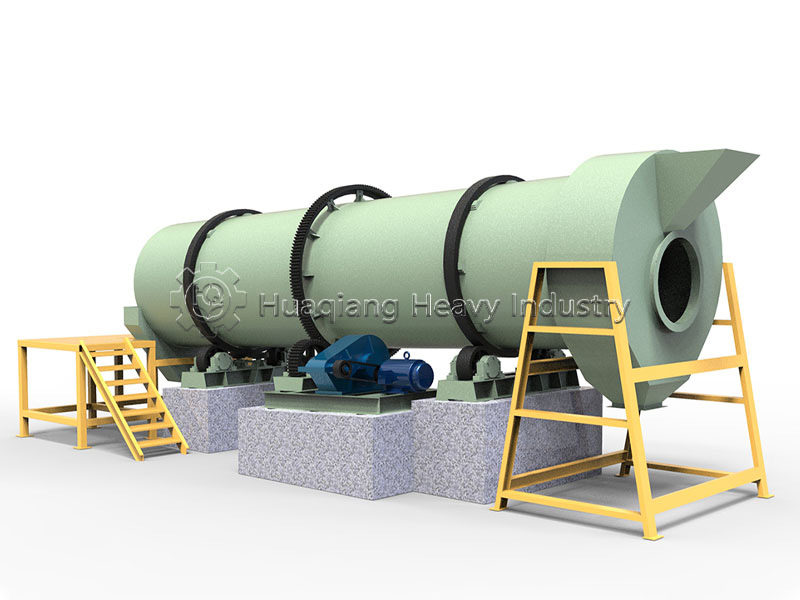
Rotary drum granulators have broader adaptability to raw materials and can handle mixtures with moderate adhesiveness, such as compound fertilizer raw materials. However, rotary drum granulators require greater uniformity in particle size to avoid the deposition of coarse particles inside the drum. By adjusting the rotation speed and tilt angle of the drum, the granulator can adapt to raw materials with different adhesiveness, enhancing granulation flexibility.
Key Steps in Raw Material Pretreatment
To ensure smooth granulation, raw material pretreatment is crucial. First, lumpy raw materials (such as decomposed organic fertilizers or caked inorganic fertilizers) must be processed through crushing equipment to achieve the required particle size. Second, drying or conditioning should be performed based on the moisture content of the raw materials: drying is necessary if moisture content is too high, while a small amount of water or binder can be mixed in advance if moisture content is too low. Next, screening is used to remove coarse particles and impurities, ensuring uniform particle size. Finally, for multi-material formulations, thorough mixing is required to ensure even distribution of nutrients and adhesiveness.
In summary, the selection and pretreatment of raw materials are fundamental to successful fertilizer granulation. Global fertilizer producers should scientifically establish raw material standards and pretreatment processes based on their product characteristics and equipment types to achieve efficient and stable production.
Wet vs. Dry Granulation: Raw Material Pathways
The choice between a rotary drum granulator and a disc granulator for wet granulation is distinct from the technology used in dry fertilizer granules compaction. Both wet methods require careful raw material preparation regarding particle size and moisture. However, the npk manufacturing process often incorporates a third pathway: dry granulation. This method utilizes a fertilizer compaction machine or fertilizer compactor as the core of a roller press granulator production line, which bypasses the need for liquid binders and is suited for different raw material properties.
Similarly, in the organic fertilizer manufacturing process, composted material can be shaped using either wet granulation (e.g., in a disc granulation production line) or dry compaction, depending on the product specification. This diversity in fertilizer production machine technology—from rotary drums for wet agglomeration to roller presses for dry compaction—highlights that raw material suitability is not a single standard but varies according to the chosen granulation principle. Understanding these distinctions allows producers to select the optimal system for their specific raw materials and final product goals.