Introduction: Solving an Industry-Wide Challenge in Wet Material Handling
In processes such as organic fertilizer production, agricultural waste treatment, and the resource utilization of urban wet waste, engineers frequently face a common challenge: how to process materials with high moisture content and viscous texture? Traditional dry crushers are highly susceptible to clogging when handling such materials, leading to a sharp decrease in efficiency and even equipment damage. Half-wet material crushers have emerged to address this need. This type of crushing equipment, specifically designed for processing materials containing a certain amount of moisture, is becoming a key piece of equipment in the pre-treatment stages of various industries due to its superior wet material processing capabilities.
I. Core Design: A Structure Born for Wet Materials
The design philosophy of the half-wet material crushers is fundamentally different from that of traditional dry crushers. Its core is a reinforced crushing chamber, internally equipped with specially designed and arranged crushing components—these may include high-strength blades, hammers, or toothed plates. These components do not simply “beat” the material but effectively decompose sticky, fibrous wet material through a combination of precise shearing, tearing, and grinding actions.
The most critical innovation lies in its anti-clogging design. The equipment is typically equipped with intelligent anti-clogging mechanisms, such as a transmission system with an instant reversal function. When sensors detect an abnormal increase in torque (potentially indicating a blockage), the system automatically commands the rotor to briefly reverse, releasing the jammed material, before resuming normal rotation. Additionally, the streamlined internal design of the crushing chamber, the application of special coatings, and optimized blade clearances all aim to minimize material adhesion and accumulation.
II. Working Principle: Three Steps to Efficient Crushing
The operation of this equipment is a continuous, efficient physical crushing process:
- Feeding and Initial Dispersion:The semi-wet material enters the crushing chamber through a wide feed inlet. At this stage, the rotating components first provide a certain degree of stirring and dispersion, preventing material clumping.
- High-Speed Shearing and Grinding:The material is captured by the high-speed rotating blades or hammers and flung towards the toothed plates or liners around the chamber periphery under enormous centrifugal force. During this process, the material is subjected simultaneously to impact force from the rotating components, shearing force between the material and fixed components, and friction and collision among material particles themselves. This multi-force action ensures effective crushing even for wet straw or kitchen waste with high fiber content and toughness.
- Sieving and Discharge Control: The crushed material then reaches the discharge area. If the equipment is equipped with a screening system, fine particles that meet the size standard will pass through the screen openings and be discharged, while larger particles will be retained in the crushing chamber and continue to be impacted until they reach the required size. Users can precisely control the particle size distribution of the final product by changing screens with different mesh sizes to suit different subsequent needs, such as composting, granulation, or direct field application.

III. Application Scenarios: A Cross-Industry Solution
The powerful adaptability of the half-wet material crushers makes it shine in multiple fields:
- Organic Fertilizer Production:Crushing mixed raw materials like livestock manure, wet straw, and biogas residue to achieve uniform particle size, greatly promoting the efficiency of subsequent aerobic fermentation.
- Agricultural Waste Treatment:Processing post-harvest materials with high moisture content like corn stalks and vine crops, creating conditions for feed processing, substrate production, or direct field return.
- Environmental Protection Industry:Crushing source-separated urban wet waste (kitchen waste) to reduce volume, homogenize the material, and provide ideal feedstock for anaerobic digestion or aerobic composting.
- Food and Chemical Industries:Processing food processing by-products or chemical intermediates with certain moisture content to meet specific process requirements for raw material particle size.
IV. Advantage Summary: Why Choose It?
Choosing a half-wet material crushers means opting for an efficient, stable, and low-maintenance solution for wet material processing:
- Excellent Anti-Clogging Performance:Fundamentally addresses the biggest pain point in wet material handling, ensuring continuous and stable operation of the production line.
- High Processing Efficiency:Powerful drive and optimized crushing mechanism ensure more material is processed per unit time.
- Easy Maintenance:Modular design and easily disassembled structure make routine maintenance tasks like blade replacement and internal cleaning simple and quick, reducing long-term operating costs.
- Flexible and Adjustable Product Size:Through simple configuration adjustments, it can produce materials of different fineness, making it a versatile and highly adaptable machine.
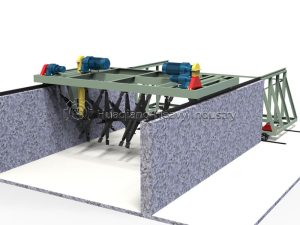
From Primary Crushing to Finished Granules: A Complete Organic Workflow
The half-wet material crushers is a vital first step in preparing heterogeneous organic waste for the organic fertilizer fermentation process. By breaking down high-moisture, fibrous materials, it creates a homogeneous feedstock ideal for efficient aerobic decomposition. This optimized fermentation composting technology for organic fertilizer is then implemented using advanced fermentation composting turning technology. Within a trough-type aerobic fermentation composting technology system, specialized turning equipment such as the chain compost turning machine, hydraulic trough compost turner, and large wheel compost turner ensure optimal aeration and temperature control.
Following complete stabilization, the composted material is integrated into the final production stage. The complete suite of equipments required for biofertilizer production then takes over. This often includes a disc granulation production line, which shapes the finished compost into uniform, market-ready pellets using equipment like a rotary drum granulator. This integrated system—from initial size reduction and optimized biological decomposition to final shaping—demonstrates a seamless industrial workflow for transforming challenging organic waste into valuable, high-quality soil amendments.
Conclusion
The half-wet material crushers is more than just a machine; it is a critical technological node connecting organic waste to resource recovery. It transforms troublesome wet, sticky materials into uniform raw materials that are easy to process further, clearing obstacles for multiple links in the circular economy. As global emphasis on the resource recovery of organic waste continues to increase, this efficient and reliable specialized crushing equipment will undoubtedly play an increasingly important role in sustainable agriculture, green industry, and urban environmental management, helping us more efficiently transform “waste” into “resources.”