Transforming organic waste into compost is a sustainable practice that turns waste into a resource that nourishes the soil. The core of this process lies in utilizing microorganisms to decompose organic matter, and the foundational technology that enables this is aerobic composting technology. This technology ensures efficient and environmentally friendly conversion by providing ample oxygen for microbial activity. Depending on the operation method, scale, and requirements, aerobic composting has evolved into several distinct types, each suited to different scenarios ranging from household use to industrial production.
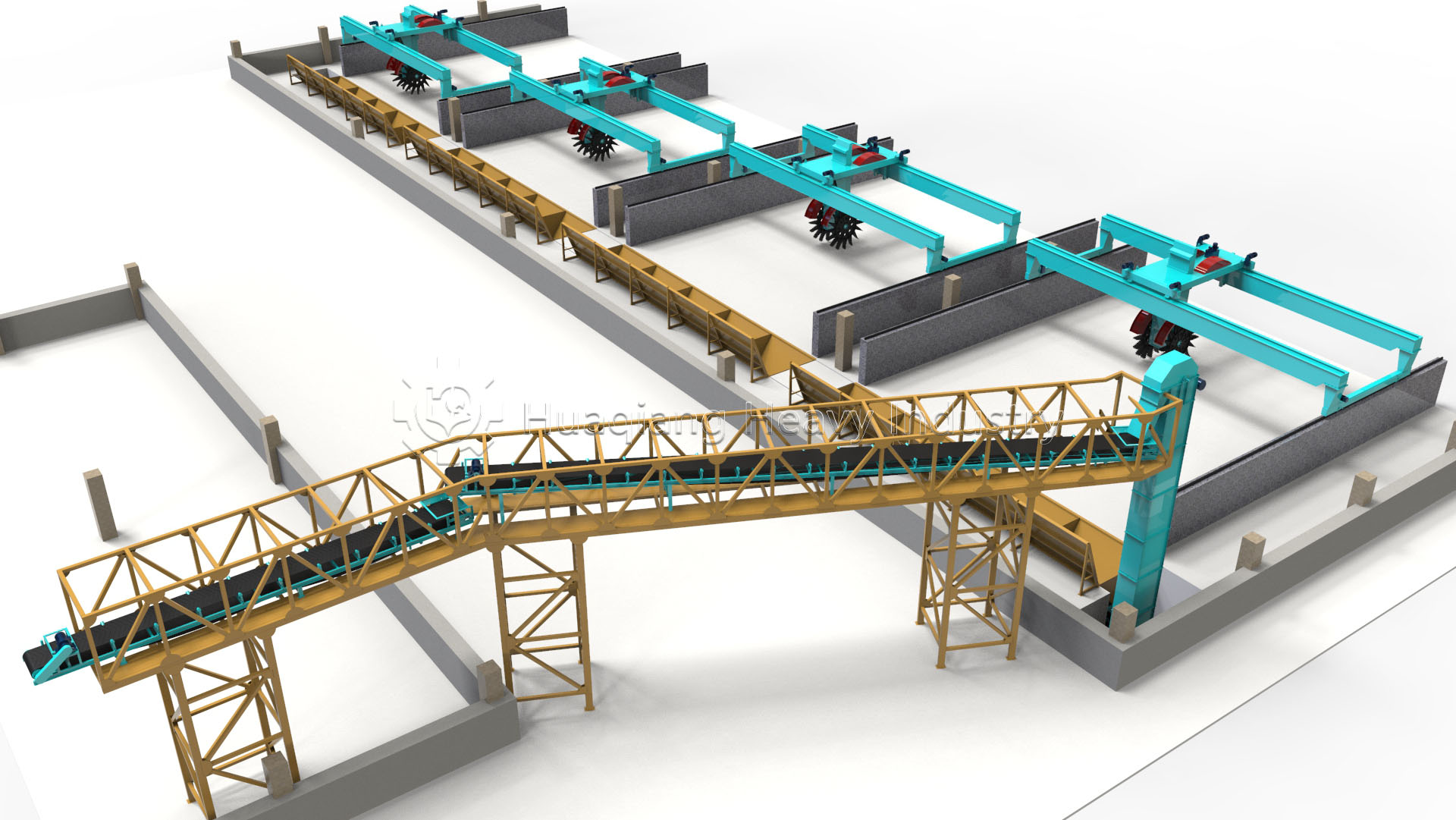
1. Static Windrow Composting: The Basic and Widespread Technique
This is the most classic and simplest form of aerobic composting. The method involves piling mixed organic waste (such as straw, livestock manure, and kitchen waste) into long, narrow windrows (typically 2-3 meters wide and 1.2-1.5 meters high). Oxygen is replenished through natural air convection or occasional manual turning. This approach requires minimal equipment and is perfectly suited for small to medium-sized farms, community gardens, or home gardening. Its main characteristics are flexibility and low cost, but the fermentation cycle is relatively long, taking 60 to 90 days for complete maturation without additional intervention. The cycle can be shortened to 30-45 days by adding commercial microbial inoculants and proper management.
2. Aerated Static Pile Composting: The Efficient No-Turn Solution
This is an intelligent upgrade of static composting. Perforated ventilation pipes are laid beneath the pile and connected to blowers, which actively pump or draw air through the pile to precisely control oxygen supply and temperature. The greatest advantage of this technology is that it eliminates the need for frequent turning while maintaining the pile at the optimal thermophilic temperature range of 55-65°C for an extended period. This ensures more thorough pathogen and weed seed destruction and improves maturation uniformity. It is particularly suitable for processing materials with high moisture content, such as food waste and sludge, and is widely used in small to medium-sized compost processing facilities.
3. In-Vessel (Channel) Turned Composting: The Industrial Standard for Scale
This is currently the mainstream process for commercial compost production, representing the model for large-scale, mechanized operations. Materials are placed in long fermentation channels or bays and are turned regularly and efficiently by dedicated rail-mounted or wheeled compost turners. The turning process mixes the materials, breaks up clumps, and provides thorough aeration. Combined with a ventilation system at the base of the channel, key parameters of the fermentation process (temperature, moisture, oxygen) can be tightly controlled. As a result, the fermentation cycle is significantly shortened to 15-30 days, producing stable, uniform finished products. This technology is ideal for processing large volumes of organic waste like livestock manure (in the tens of thousands of tons) and crop residues.
4. Reactor Composting: Enclosed State-of-the-Art Technology
This is the most advanced and intelligent composting technology. Organic waste is processed inside a fully enclosed reactor (such as a vertical silo or horizontal rotating drum). The entire process is automated and computer-controlled, allowing for precise regulation of aeration, temperature, humidity, and agitation frequency, creating a near-perfect environment for microbial activity. The results are an extremely short fermentation cycle (7-15 days), virtually no odor emissions, and the highest degree of sanitization and maturation. It can efficiently handle high-concentration organic waste like food waste and slaughterhouse by-products. However, the equipment and operational costs are high, making it primarily suitable for large urban organic waste treatment centers or high-standard fertilizer production plants.
5. Vermicomposting: Natural Biological Transformation
This is a unique and gentle biological conversion technology. It utilizes the digestive systems of earthworms (primarily Eisenia fetida) to break down organic waste. Pre-treated materials like kitchen scraps and manure are placed on worm beds. The earthworms consume and digest this material, excreting what is known as “black gold” — worm castings, a top-tier organic fertilizer that is crumbly, rich in humic acids and beneficial microorganisms. This technology consumes almost no energy and produces no secondary pollution. It is especially suitable for households, schools, and small communities to process daily kitchen waste. The resulting product has a mild fertilizer effect and is excellent for gardening and seedling cultivation.
Conclusion: Choosing the Right Aerobic Composting Solution
In summary, while anaerobic methods exist, aerobic fermentation composting technology for organic fertilizer remains the preferred, efficient, and scalable pathway for converting waste into valuable compost. The optimal technology choice hinges on processing goals, waste type, scale, and budget.
For effective implementation, selecting the right compost production machine is crucial. The core of the fermentation composting turning technology lies in reliable turning equipment. Options include the high-volume large wheel compost turner, the flexible chain compost turner, or the efficient trough-type compost turner for controlled trough-type aerobic fermentation composting technology. These machines, along with necessary pre-composting processing equipment, form the essential equipments required for biofertilizer production. Together, they ensure optimal aeration and decomposition, transforming organic waste into high-quality soil amendments.
From a backyard bin to an industrial facility, this scalable suite of aerobic technologies provides a complete solution, enabling organic resources to safely re-enter the ecological cycle and fostering a sustainable, circular relationship with our environment.