Introduction: The “Smart Food” for Plants That Transcends Traditional Nutrients
In modern intensive agricultural production, crop nutritional requirements are becoming increasingly precise and complex. While traditional fertilizers provide macronutrients like nitrogen, phosphorus, and potassium, they often fall short in terms of nutrient use efficiency, stress response, and quality enhancement. Amino acid fertilizer, a type of functional organic water-soluble fertilizer developed based on natural biomolecules, is sparking a “precision nutrition” revolution globally. It is not merely a carrier of nutrients but also a physiological regulator and health promoter for plants. Compared to conventional fertilizers, amino acid fertilizers mimic the most directly absorbable organic nitrogen form for plants. Leveraging the unique chemical properties of amino acids, they demonstrate significant advantages across multiple dimensions—increasing yield, enhancing stress resistance, improving quality, and nurturing soil—becoming a vital bridge connecting sustainable agriculture with high-quality production.
I. Core Mechanisms: Why is Amino Acid Fertilizer So Efficient?
The remarkable efficacy of amino acid fertilizers is rooted in their unique chemical and biological mechanisms. Amino acids are the basic building blocks of proteins and are themselves core molecules of life activities. When applied as exogenous fertilizers, they bypass the complex mineralization process in soil and are absorbed directly in a “prefabricated module” form recognizable by plants. This is the fundamental reason for their high efficiency.
- Direct Absorption and Rapid Response:Plant roots and leaf epidermal cells possess specific amino acid transporter proteins. Free amino acids (such as glycine, glutamic acid, proline, etc.) in the fertilizer can be directly absorbed through these channels without undergoing the lengthy decomposition and transformation by soil microorganisms. They are quickly incorporated into key physiological processes within the cell, such as protein synthesis and energy metabolism. This allows crops experiencing nutritional stress to show relief effects within 24-48 hours. The fertilizer effect initiation time is shortened by 5-7 days compared to traditional organic fertilizers requiring mineralization. This is particularly suitable for rescuing growth stagnation or chlorosis caused by nutrient deficiencies.
- Natural Chelation and Transport Masters:Each amino acid molecule contains at least one amino group and one carboxyl group, which are excellent natural ligands. In the soil, they act like “pincers,” firmly binding with cationic trace elements such as iron, zinc, manganese, and copper to form water-soluble, charge-stable amino acid-metal chelates. This process is crucial. It effectively prevents these trace elements from being fixed into insoluble precipitates (e.g., ferric hydroxide) in alkaline or high-phosphate soils. It ensures they remain in a plant-available form for root absorption and are efficiently transported to sites of demand via the xylem, increasing trace element utilization by 30%-50%.

II. Multifaceted Benefits: Multiple Guarantees from Yield Increase to Quality Improvement
Based on the above core mechanisms, amino acid fertilizers demonstrate comprehensive beneficial effects in field applications.
1. Driving Growth and Yield Formation
Amino acids are precursors for the porphyrin ring synthesis in chlorophyll molecules. Supplementing exogenous amino acids directly promotes chlorophyll biosynthesis, resulting in darker green, thicker leaves and significantly enhancing the light capture and conversion efficiency of photosynthesis. A higher photosynthetic rate means more carbohydrates (sugars, starch) are produced, providing ample “carbon skeletons” and energy for root development, stem thickening, flower bud differentiation, and fruit expansion. Simultaneously, amino acids can activate the activity of a series of key metabolic enzymes, such as nitrate reductase and glutamine synthetase, optimizing the nitrogen metabolism flow within the plant and facilitating the smooth transition from vegetative to reproductive growth, laying a solid material foundation for high yields.
2. Building a Robust Stress Defense System
Regarding abiotic stress, specific amino acids (e.g., proline, betaine) are important compatible solutes within plant cells. They effectively regulate cellular osmotic pressure, helping plants maintain cellular water and structural stability under drought, salinity, or low-temperature conditions, acting as “plant stress bodyguards.” Regarding biotic stress, amino acid application can serve as a signal to induce systemic acquired resistance in plants. It stimulates the synthesis of defense substances such as pathogenesis-related proteins and phytoalexins (e.g., phenolics, flavonoids), strengthening cell walls, thereby enhancing resistance to pathogens like fungi and bacteria and reducing reliance on chemical pesticides.
3. Comprehensively Enhancing Agricultural Product Quality and Value
Quality is the core of modern agricultural competitiveness. Amino acid fertilizers optimize metabolic pathways and directly participate in the synthesis of quality substances. They promote the accumulation of soluble sugars, vitamins, aromatic substances, and essential amino acids in fruits while reducing the content of organic acids (e.g., citric acid, malic acid), thereby significantly improving fruit sweetness, flavor, and nutritional density. Furthermore, they promote the synthesis of pigments like anthocyanins, leading to more uniform and vibrant fruit coloration; coordinate hormonal balance to improve fruit shape and reduce malformed fruits; and enhance peel toughness and cellular integrity, extending post-harvest shelf life and freshness, comprehensively increasing commercial rate and market value.
III. Eco-Friendliness: Nurturing Soil for Sustainable Use
The benefits of amino acid fertilizers extend not only to above-ground crops but also downward into the soil ecosystem. Amino acids are a high-quality, readily available carbon and nitrogen source for soil microorganisms. Their application significantly stimulates the proliferation and activity of beneficial microbial communities (e.g., phosphorus- and potassium-solubilizing bacteria, biocontrol bacteria), thereby accelerating the activation and cycling of the soil nutrient pool. The polysaccharides and other substances produced by microbial metabolism further promote the formation of soil aggregate structure, improving soil porosity and enhancing water and nutrient retention capacity. Long-term use helps alleviate issues like soil compaction and salinization, achieving a combination of “land use” and “land nurturing,” and promoting the health and sustainability of the agricultural ecosystem.
IV. Application Flexibility: Adapting to Modern Agronomic Systems
The high water solubility and biocompatibility of amino acid fertilizers allow them to integrate seamlessly into various advanced fertilization technologies. Whether it’s precision fertigation via drip or sprinkler irrigation for field crops, rapid foliar supplementation in orchards and vegetable bases, or root drenching for promoting root growth in flowers and seedlings, they can be applied flexibly. They are suitable for the entire crop growth cycle, with particularly pronounced effects when used for targeted supplementation during critical stages (e.g., root promotion in the seedling stage, flower preservation during blooming, sweetness enhancement during fruit expansion).
In summary, amino acid fertilizers represent the forefront of plant nutrition science moving towards greater precision, efficiency, and ecological harmony. They transcend the singular role of traditional fertilizers as “providers of mineral elements,” instead playing a quadruple role as a “nutritional supplement,” “stress resistance inducer,” “quality enhancer,” and “soil conditioner.” In today’s world facing resource constraints, climate change, and food safety challenges, promoting and applying functional biostimulants represented by amino acid fertilizers holds immeasurable strategic significance for building a resource-efficient, environmentally friendly, and high-output modern agricultural system, ensuring global food security and the supply of high-quality agricultural products. They are not only “smart food” for crops but also a key to unlocking the future of green agriculture.
Conclusion: The Strategic Role of Amino Acid Fertilizers
In summary, amino acid fertilizers represent a paradigm shift in plant nutrition, offering a sophisticated blend of direct nourishment, physiological regulation, and soil health promotion. Their role is integral to building efficient and sustainable modern agricultural systems.
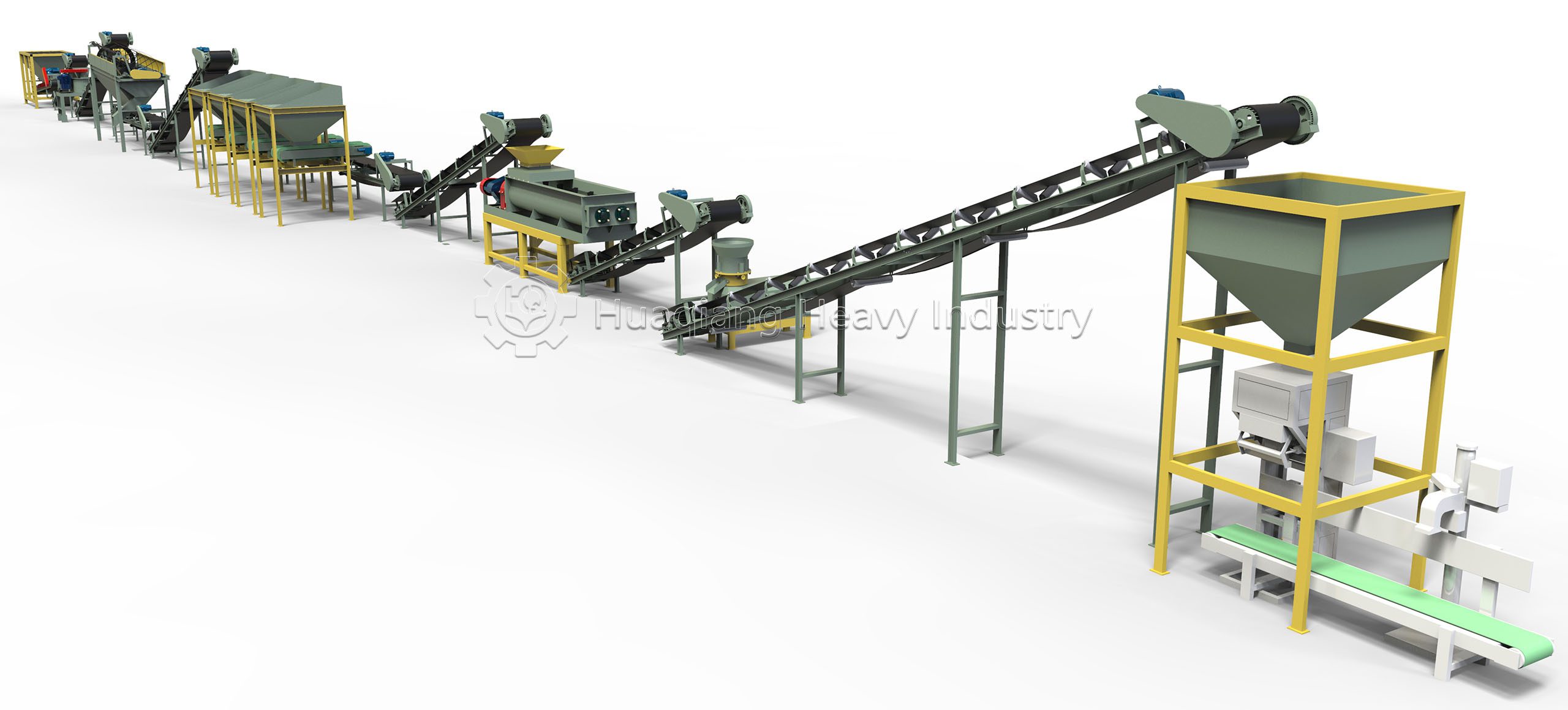
For manufacturers, integrating amino acids into a complete organic fertilizer manufacturing process creates high-value products. The production chain begins with high-quality raw material from organic fertilizer fermentation, optimized by fermentation composting turning technology using equipment like a chain compost turner or large wheel compost turning machine. The resulting mature compost can be processed into a bio organic fertilizer production line. To produce blended or compound fertilizers containing amino acids, granulation equipment such as a double roller press granulator in a roller press granulator production line, a rotary drum granulator for drum granulation, or a versatile new type two in one organic fertilizer granulator can be used. This process can be integrated into a larger npk production line to create comprehensive nutrient solutions.
Ultimately, amino acid fertilizers are not a standalone solution but a powerful component within a broader, technology-driven fertilizer ecosystem, enabling precise nutrition that supports both crop performance and long-term soil vitality.