In the organic fertilizer production process, the fermentation stage is the core technology, and the choice of equipment directly affects the product’s composting quality and production efficiency. Hydraulic compost turners and trench compost turners are currently the two mainstream technologies in the market, each possessing unique technological advantages and applicable scenarios. For production enterprises, choosing the appropriate equipment based on their own conditions is a crucial decision determining the return on investment.
Hydraulic Compost Turner: The Preferred Solution for Large-Scale Open-Air Fermentation
With its excellent mobility and powerful processing capacity, the hydraulic compost turner has become an ideal choice for large-scale organic fertilizer production projects. This equipment uses a fully hydraulic drive system and is equipped with heavy-duty tracked or tire-mounted walking devices, enabling it to move freely in open-air composting yards. Its turning depth can reach 1.2-2.0 meters, and a single unit can process 800-1500 tons per day, making it particularly suitable for large-scale production with a daily processing capacity of over 500 tons.
The significant advantage of this equipment lies in its high operational flexibility, eliminating the need for fixed fermentation tanks and offering strong site adaptability. During the turning process, the unique scattering design allows the material to fully contact with air, significantly improving oxygen exchange efficiency and shortening the fermentation cycle to 10-15 days. Huaqiang Heavy Industry’s customized solutions for special climatic conditions demonstrate its technological strength: the hydraulic compost turner designed for Russian clients is specially equipped with an anti-freeze hydraulic system and equipment preheating device, ensuring stable operation even in frigid environments, demonstrating the equipment’s adaptability to complex environments.
Trough-type compost turner: The professional choice for intelligent and environmentally friendly production. The trough-type compost turner adopts a track-mounted moving design, performing precise turning operations within a fixed fermentation trough, making it particularly suitable for small-to-medium-scale production and projects with high environmental requirements. The daily processing capacity of a single unit is between 300-800 tons, with a turning depth of 0.8-1.5 meters. Although the processing capacity is relatively small, it has significant advantages in process control.
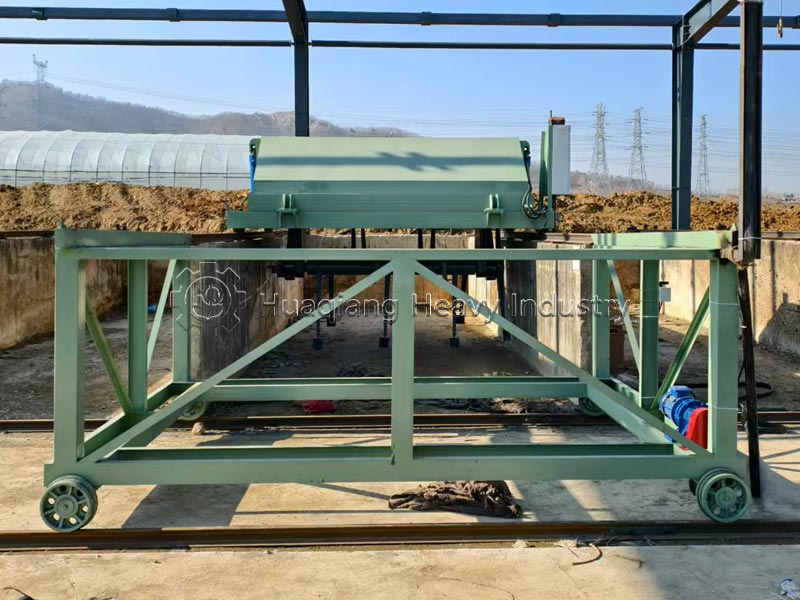
A prominent feature of this equipment is its excellent environmental performance. The enclosed or semi-enclosed operating environment effectively controls the diffusion of odors generated during fermentation, meeting increasingly stringent environmental standards. Meanwhile, the trough-type compost turner can be intelligently linked with auxiliary systems such as temperature control, ventilation, and deodorization, achieving a high degree of automation and significantly reducing manual intervention. In terms of energy consumption, this equipment is approximately 30% more energy-efficient than hydraulic compost turners, offering a significant advantage in operating costs. After adopting this solution, an organic fertilizer production line in Ukraine not only met stringent local emission requirements but also improved product quality stability through intelligent management.
Key Considerations for Selection Decisions
Production scale is the primary consideration. Large open-air composting sites are generally more suitable for hydraulic compost turners, whose powerful processing capacity and flexible operation modes can meet the needs of large-scale continuous production. For small and medium-sized workshops or projects with limited space, trough-type compost turners are more suitable, as their compact structural design and enclosed operating environment maximize the use of limited space.
Environmental requirements are another important consideration. For areas located near residential areas or with strict environmental standards, the enclosed design of trough-type compost turners effectively solves odor control problems. In relatively remote areas with less environmental pressure, the efficient operation mode of hydraulic compost turners may be more suitable.
Climatic conditions should also be taken into account in the decision-making process. In extremely cold or hot and rainy regions, the environmental adaptability of equipment is particularly important. Huaqiang Heavy Industry has accumulated rich experience in this area and can provide targeted solutions based on the climate characteristics of the customer’s location, ensuring stable operation of equipment in different environments.
The Value of Customized Solutions The needs of modern organic fertilizer production enterprises are increasingly diversified, and standardized equipment solutions often cannot fully meet individual needs. Customized services provided by professional manufacturers are particularly important in this context. From site planning and equipment selection to process optimization, tailor-made solutions can maximize equipment performance and improve return on investment.
For special raw material processing or specific product requirements, customized design further demonstrates its value. For example, for the production needs of high-fiber materials or special additives, professional equipment manufacturers can develop specialized equipment best suited to the customer’s production process by adjusting the turning mechanism and optimizing the control system.
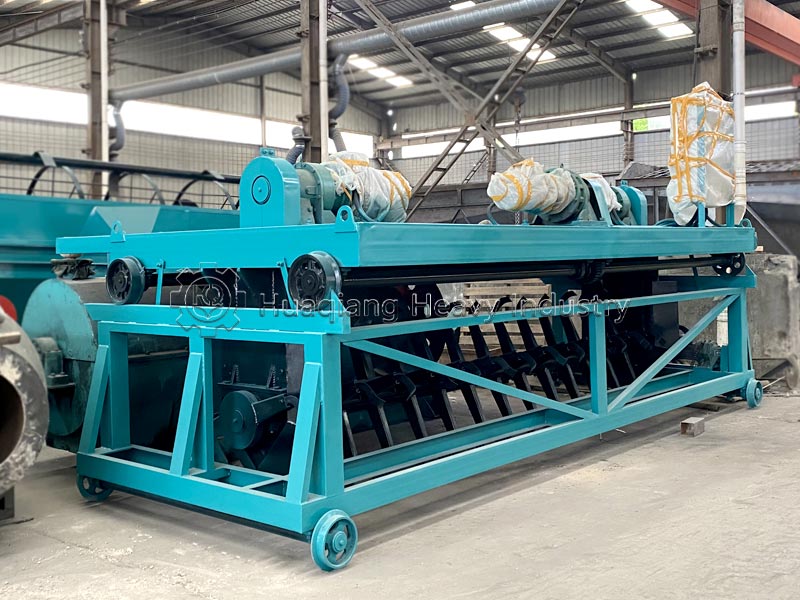
Future Development Trends and Selection Recommendations With technological advancements and increasing environmental protection requirements, both types of equipment are continuously developing towards intelligence and energy conservation. Hydraulic compost turners are gradually integrating automatic navigation and intelligent monitoring systems, while trough-type compost turners continue to innovate in automated control and energy recovery.
When selecting equipment, enterprises are advised to conduct a comprehensive techno-economic comparison, considering both initial investment costs and long-term operating expenses. On-site visits to similar projects and in-depth discussions with technical professionals will help in making more informed decisions. The final selected equipment should not only meet current production needs but also have room for expansion, allowing for future development.
Through scientific selection and professional customization, organic fertilizer production enterprises can obtain optimal technical solutions for the fermentation process, laying a solid foundation for producing high-quality products and achieving sustainable operations.
Complete System: From Composting to Formulated Granules
The choice between a hydraulic compost turner and a trough system represents a strategic decision within advanced fermentation composting technology for organic fertilizer. This fermentation composting turning technology can also be executed by other machines like a large wheel compost turner for windrows or a chain compost turning machine for robust mixing. The selected composting method, be it open-air or controlled trough-type aerobic fermentation composting technology, produces the stabilized compost that is the primary feedstock for downstream processing.
This cured compost enters the broader suite of equipments required for biofertilizer production. For creating complex blended or fortified products, the compost can be precisely combined with powdered mineral fertilizers and additives using a sophisticated fertilizer batching system like a multiple silos single weigh static batching system. The homogeneous blend is then granulated. Common granulation technologies include a disc granulation production line for gentle shaping or a rotary drum granulator for larger-scale production. This integrated approach creates a seamless value chain from raw organic waste to a commercial, nutrient-specific fertilizer product.
Therefore, the composting equipment is the foundational first stage in a multi-step manufacturing system. Its efficiency and output quality directly enable and constrain the capabilities of the subsequent batching and granulation stages, highlighting the importance of selecting the right composting technology for the overall production goal.