Introduction to Disc Granulators
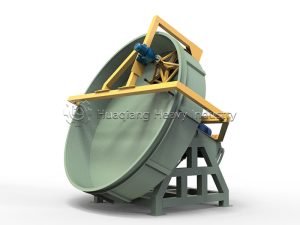
Disc granulators, also known as pan granulators, are essential equipment in modern industrial processing that transform powdered materials into uniform spherical granules. Through the combined action of gravity, friction, and binders in an inclined rotating disc, these machines efficiently convert fine powders into high-quality pellets suitable for various applications across multiple industries.
Working Principle
The operation of a disc granulator follows a precise mechanical process:
- Feeding Stage:Powdered raw materials are evenly fed into the rotating disc through a feeding system, forming a thin layer at the bottom.
- Wetting and Agglomeration:Liquid binders, water, or steam are sprayed onto the powder, creating surface moisture that enables particle adhesion.
- Rolling and Granule Formation:As the disc rotates, materials move in circular motion due to centrifugal force, gravity, and friction. Moist particles collide and adhere to each other, gradually forming spherical granules.
- Grading and Discharge:When granules reach the desired size (typically 2-6mm), they roll over the disc edge and discharge through the outlet, while undersized particles are recycled back into the system.
Key Applications
Disc granulators serve diverse industrial sectors:
- Fertilizer Industry:Production of NPK compound fertilizers, organic fertilizers, and bio-fertilizers
- Chemical Industry:Granulation of chemical raw materials and catalysts
- Mining and Metallurgy:Processing of ore powders and metallurgical additives
- Environmental Protection:Recycling of sludge and waste residues into usable granules
Major Advantages
- High-Quality Granules:Produces spherical, uniform pellets with excellent compressive strength and flowability
- Simple Structure:Low failure rate, easy maintenance, and straightforward operation
- Operational Flexibility:Quick adjustment of rotation speed, tilt angle, and liquid spray to accommodate different materials
- Energy Efficiency:15-30% energy savings compared to extrusion granulators
- Wide Adaptability:Handles materials with moisture content ranging from 10% to 25%
Limitations and Considerations
- Capacity Constraints:Single-unit capacity is lower than rotary drum granulators
- Material Adhesion:Excessive moisture or binder can cause material sticking to the disc surface
- Dust Generation:Requires dust collection systems for environmental compliance
- Material Requirements:Raw materials need to be ground to 80 mesh or finer
- Precise Operation Needed:Requires careful control of liquid spray and feeding rates
Equipment Specifications
Disc granulators are available in various sizes to meet different production needs:
- Small-scale units(0.8-1.5m diameter): Suitable for laboratories and small factories with capacity of 50-500 kg/h
- Medium-scale units(1.8-2.8m diameter): Ideal for small to medium fertilizer plants with capacity of 1-10 t/h
- Large-scale units(3.0-4.8m diameter): Designed for large production facilities with capacity of 10-50 t/h
Integrated Granulation Systems in Modern Fertilizer Manufacturing
The disc granulator serves as a cornerstone technology within various fertilizer granulation processes, particularly valued for producing high-quality spherical granules. In the complete npk fertilizer production line, this disc granulator machine often follows precise blending systems like the npk blending machine to transform mixed powders into uniform pellets. The comprehensive disc granulation production line integrates this equipment with drying, cooling, and screening systems to create a continuous production workflow for compound fertilizers.
While the disc granulator excels in many applications, modern fertilizer manufacturing utilizes diverse granulation technologies. The organic fertilizer production line typically incorporates windrow composting machine systems for initial processing before granulation, while the bio organic fertilizer production line adds microbial inoculation stages. Alternative technologies like the double roller press granulator form the core of specialized roller press granulator production line systems for specific material requirements. This diversity in fertilizer granulator technologies allows manufacturers to select optimal equipment configurations for different fertilizer types—from conventional NPK compounds to specialized organic and bio-fertilizers—ensuring efficient production of high-quality products that meet the precise requirements of modern agriculture.
Conclusion
Disc granulators represent a reliable and efficient solution for granulation processes across multiple industries. Their ability to produce high-quality spherical granules with relatively low energy consumption makes them particularly valuable in fertilizer production and material processing. While they have certain limitations regarding capacity and operational precision, their advantages in terms of granule quality, flexibility, and maintenance make them a preferred choice for many industrial applications worldwide.