In modern pellet production, the choice of pelletizer directly affects production efficiency and product quality. Flat die pelletizers and ring die pelletizers, as two mainstream technologies, each have unique design features and applicable ranges. Understanding their differences is crucial for companies to choose pelletizing equipment suitable for their needs.
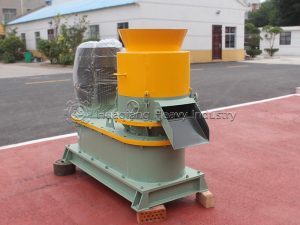
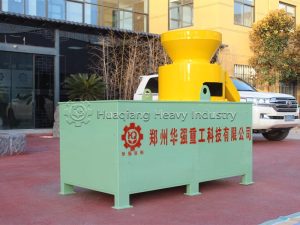
Fundamental Differences in Design Principles: Flat die pelletizers use a horizontally arranged disc-shaped die. When the pressure rollers rotate on the die surface, the material naturally falls into the pressing area under gravity. This design is relatively simple; the die is placed horizontally, and the pressure rollers rotate above the die, forcing the material through the die holes using vertical pressure. A small biomass fuel plant in Jiangsu uses this design; their equipment occupies only 5 square meters, making it ideal for workshops with limited space.
Ring die pelletizers, on the other hand, use a vertically rotating ring die design. The die is cylindrical and vertically installed, with an internal pressure roller system. During operation, the die rotates at high speed, and the material is fed into the pressing zone through a forced feeding system, where it forms pellets under the combined action of centrifugal force and pressure rollers. A large feed company in Henan uses a ring die pellet mill with a die diameter of 800 mm, capable of producing 10 tons of high-density feed pellets per hour.
Production Capacity and Scale Adaptability: Flat die pellet mills demonstrate unique advantages in small- to medium-scale production. For example, a family farm in Shandong uses a flat die pellet mill that can produce 300 kg of organic fertilizer pellets per hour, fully meeting the fertilizer needs of its 50-mu (approximately 3.3 hectares) orchard. The capacity of this type of equipment typically ranges from 80 to 1000 kg per hour, making it particularly suitable for small processing plants, farms, or research institutions.
Ring die pellet mills are the preferred choice for large-scale industrial production. A biomass pellet fuel plant in Guangdong with an annual production capacity of 200,000 tons is equipped with multiple ring die pellet mills, each with an hourly output of 8 tons. The capacity of this type of equipment can range from 800 kg to 20 tons per hour, meeting the needs of continuous, large-scale production. Actual operational data shows that, under the same energy consumption, the unit output of ring die pellet mills is typically 30%-50% higher than that of flat die pellet mills.
Pellet Quality and Raw Material Adaptability
The pellets produced by the two types of equipment differ significantly in physical properties. Flat die pellet mills produce pellets with relatively lower density and softer texture. A mushroom cultivation cooperative in Yunnan uses flat die equipment to produce mushroom substrate filler, producing pellets with moderate density, ensuring both air permeability and sufficient water retention. This characteristic makes flat die pellet mills particularly suitable for processing raw materials with high coarse fiber content.
Ring die pellet mills, on the other hand, can produce high-density, high-hardness, high-quality pellets. Test data from a feed company in Hebei shows that the feed pellets they produce using ring die pellet mills have a durability index of 97%, far exceeding the industry standard requirement of 95%. These high-quality pellets have an extremely low breakage rate during transportation and storage, making them particularly suitable for the production of commercial products. However, it should be noted that ring die equipment has stricter requirements for parameters such as particle size and moisture content of the raw materials.
Operating Costs and Maintenance Needs
From an investment and operational perspective, both types of equipment have their advantages. Flat die pellet mills have lower initial investment; a standard unit with a capacity of 500 kg/hour typically costs between 50,000 and 80,000 yuan. A startup in Zhejiang chose flat die pellet mills, which not only reduced initial investment pressure but also allowed existing maintenance workers to perform routine maintenance due to their simple mechanical structure.
While ring die pellet mills have higher initial investment, they offer advantages in long-term operating costs. A large-scale livestock farm in Hunan calculated that although the investment in ring die equipment is three times that of flat die, the die life is twice as long, and unit energy consumption is reduced by 25%, resulting in a lower total cost over three years. The company’s equipment manager stated that after professional training, their technical team is now able to independently complete most maintenance tasks.
Maintenance Convenience and Service Life
Flat die pellet mills have significant advantages in maintenance. Replacing the die and pressure rollers typically takes only 2-3 hours and requires no special tools. Maintenance records from an organic fertilizer plant in Jiangxi Province show that they perform routine maintenance monthly, each session taking only half a day with minimal production loss. This ease of maintenance is particularly suitable for small businesses lacking specialized maintenance teams.
Ring die pellet mills are relatively more complex to maintain, but have a longer lifespan. Equipment records from a large feed mill in Jilin Province show that their ring die has an average lifespan of 2000 hours, 2-3 times that of flat die pellets. Although each replacement requires a professional technician and takes about 8 hours, the significantly reduced replacement frequency makes the overall maintenance cost more economical.
Practical Application Case Analysis: In a small wood processing plant in the mountainous region of Sichuan, the owner chose a flat die pellet mill to process wood processing waste. The equipment is installed in a simple 30-square-meter workshop, operated by two workers working 8 hours a day, producing 2 tons of biomass pellets. Besides supplying their own drying equipment, the surplus pellets are sold to surrounding farmers, forming a successful small-scale circular economy model.
In contrast, a new energy company in Guangdong Province chose a ring die pellet mill system. They invested in and built a fully automated production line, automating everything from raw material feeding, crushing, drying to granulation and packaging. The entire line requires only six operators and has a daily output of 120 tons, primarily exported to Japan and South Korea. This highly efficient production model fully demonstrates the advantages of ring die pellet mills in industrial production.
Technological Development Trends
With technological advancements, both types of equipment are constantly being innovated and upgraded. The new generation of flat die pellet mills has significantly improved service life through optimized transmission systems and die materials. Ring die pellet mills have achieved breakthroughs in intelligent control, using sensors to monitor operating parameters in real time and automatically adjust feeding speed and pressing pressure, resulting in more stable product quality.
When choosing pelleting equipment in the future, companies should comprehensively consider factors such as production scale, raw material characteristics, investment budget, and technical conditions. For startups and small-scale producers, flat die pellet mills may be a more suitable choice; while for companies pursuing economies of scale and product quality stability, ring die pellet mills offer better long-term value. Regardless of the type of equipment chosen, operator training and technical support should be emphasized to ensure the equipment performs at its best.
Comparing Pelletizing Technologies Across Industries
The analysis of flat die versus ring die pellet mills for biomass and feed illustrates a broader principle of mechanical densification that is central to fertilizer production as well. In fertilizer fertilizer raw material processing machinery and equipment portfolios, extrusion-based shaping is a key technology. A flat die pelleting machine operates on a similar principle to a biomass flat die mill, producing cylindrical pellets from organic or blended materials. A more heavy-duty option for dry powders is the double roller press granulator, which is the core of a roller press granulator production line used in both npk fertilizer production line and organic systems for dry compaction.
This contrasts with other primary granulation methods. In organic fertilizer production, a common approach is the organic fertilizer disc granulation production line, which uses a disc granulator (a disc granulator for shaping) for gentle, spherical pellet formation via a tumbling action. The upstream feedstock for such a line often comes from a windrow composting machine (or windrow machine) like a double screws compost turning machine. For NPK production, the process typically starts with precise powder blending using a npk bulk blending machine before granulation. The choice between a disc granulator machine for wet agglomeration, a roller press for dry compaction, or a flat die for extrusion is a strategic decision based on raw material properties, desired capacity, and product specifications in both organic fertilizer production line and bio organic fertilizer production line setups.
Therefore, understanding the fundamental mechanics and trade-offs of different pelletizing technologies—whether for biomass, feed, or fertilizer—enables producers to select the most efficient and cost-effective shaping solution for their specific raw material and market needs.