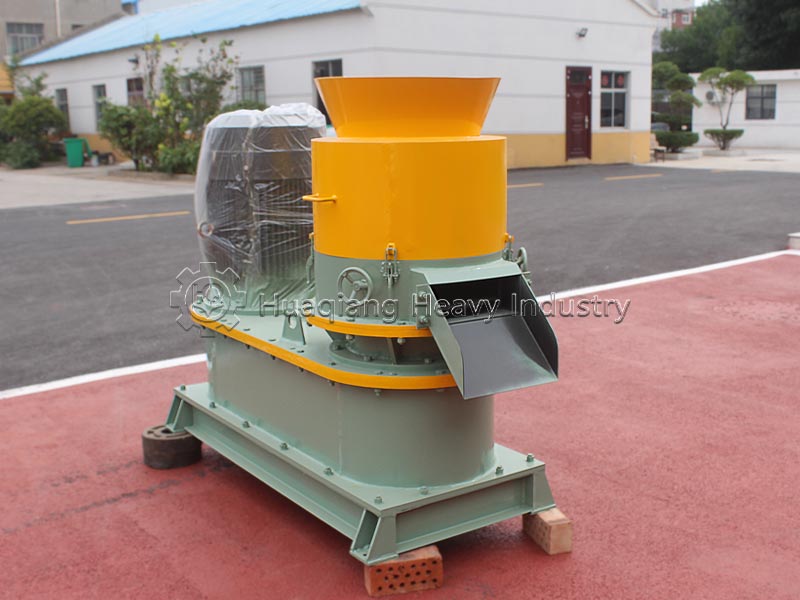
Flat die pelleting production lines play a vital role in modern industrial production, improving the efficiency of material storage, transportation, and utilization by processing powdered materials into uniform granules. This article introduces the production line’s capacity characteristics, applicable materials, working principle, and selection recommendations to help global readers gain a comprehensive understanding of this technology.
Production Capacity Overview
The hourly output of flat die pelleting production lines varies significantly depending on the model, configuration, and material characteristics. Common small production lines (such as those used in laboratories or small-batch production scenarios) typically have an hourly output between 0.08 and 0.3 tons, with a power configuration of approximately 5.5 to 11 kW. Medium-sized production lines are suitable for small to medium-sized farms or fertilizer plants, with an hourly output of 0.4 to 2.5 tons and a power configuration of 15 to 55 kW. Large production lines are used for large-scale production, with an hourly output of 2.5 to 5 tons and a power configuration of 55 to 75 kW. For extra-large customized production lines, the hourly output can even reach 8 to 20 tons, with power requirements exceeding 90 kW.
Key factors affecting production capacity include material moisture content, particle size, viscosity, hardness, as well as die orifice diameter and roller pressure. Generally, the material moisture content should be controlled between 15% and 25%, the particle size is preferably less than 2 mm, and the die orifice diameter commonly ranges from 3 to 30 mm. Proper control of these parameters helps improve pelleting yield and production efficiency.
Main Application Areas: Flat die pelleting technology is widely used in multiple industries. In the fertilizer industry, it is suitable for the production of organic fertilizers, bio-organic fertilizers, and compound fertilizers. Raw materials include livestock and poultry manure, straw, and humic acid, with a pelleting yield typically exceeding 95%, high particle strength, and low secondary pulverization rate. In the feed industry, this technology is used to produce livestock, poultry, and aquatic pellet feed, retaining nutrients while maintaining a temperature rise below 30 degrees Celsius during processing. In the biomass energy sector, flat die pelleting can compress raw materials such as sawdust and straw into high-density fuel pellets, facilitating storage and combustion. Furthermore, this technology is also suitable for the chemical and mining industries, such as the pelleting of activated carbon, catalyst carriers, and mineral powders, especially suitable for low-viscosity and heat-sensitive materials. Working Principle and Structural Features: The flat die granulator works by using a motor-driven reducer to rotate the flat die. Under centrifugal force, the pressure rollers adhere to the die, forcing the material into the die holes and extruding it into cylindrical granules. Finally, a scraper cuts the granules into uniform lengths. The entire process is carried out at low temperatures (typically below 30 degrees Celsius), making it suitable for processing heat-sensitive materials.
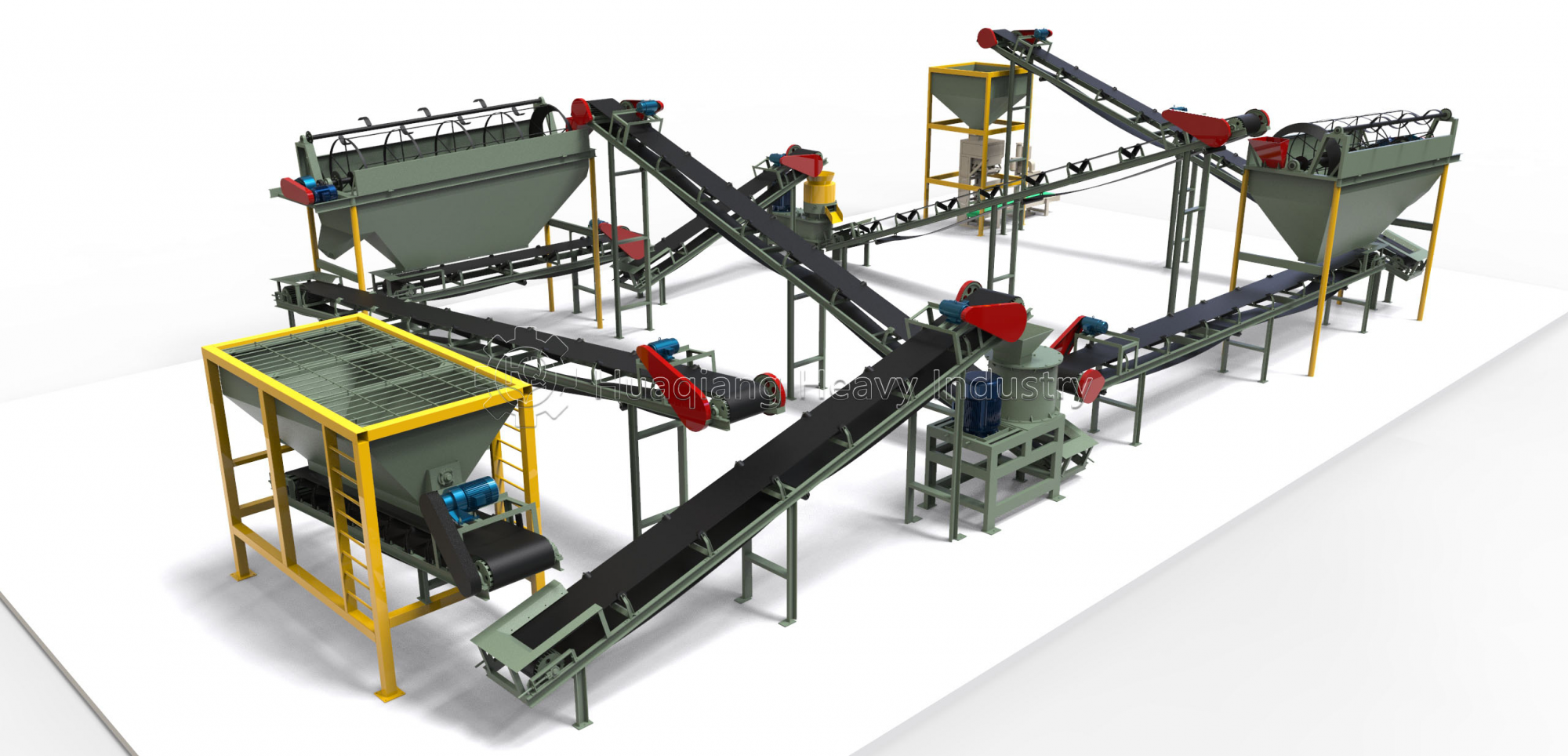
The core components of the production line include pretreatment equipment (such as crushers and mixers), the main unit (including the flat die, pressure rollers, and scraper), and post-processing equipment (such as coolers and screening machines). The flat die is typically made of alloy steel or carburized steel, offering high wear resistance. Particle diameter can be adjusted between 3 and 50 mm, with a granulation rate generally exceeding 95%. Compared to drying granulation technology, flat die pelleting can reduce energy consumption by approximately 40%.
Technical Advantages and Applicable Scenarios
The advantages of flat die pelleting technology include low-temperature processing, which helps retain the bioactivity and nutrients of the material; lower moisture requirements, reducing drying energy consumption; simple equipment structure, low maintenance costs, and convenient die replacement, adaptable to various pellet sizes.
This technology is particularly suitable for the large-scale production of organic and bio-fertilizers, especially composted materials and low-viscosity materials. It provides a low-cost pelleting solution in biomass fuel and feed production. For heat-sensitive or low-viscosity powders in the chemical and mining industries, flat die pelleting is also an efficient pelleting method.
Selection and Operation Recommendations
When selecting a flat die pelleting production line, capacity requirements, material characteristics, and target pellet sizes must be considered. It is recommended to calculate the hourly output based on daily production requirements and reserve 10% to 20% redundancy. For materials with a moisture content exceeding 25%, drying equipment may be required; coarse fibrous materials are suitable for large-roller mills. Common pellet sizes include 3 to 8 mm (for fertilizers) and 6 to 12 mm (for biomass fuels).
During operation, it is recommended to control the raw material particle size to below 2 mm and maintain the moisture content between 18% and 22%. Regularly check the wear of the flat die and pressure rollers, and replace them promptly to maintain a high pelletizing rate. Matching cooling and screening equipment can ensure pellet uniformity and storage stability.
A Brief Comparison with Ring die pelleting
Compared to ring die pelleting, flat die pelleting is more suitable for low to medium production capacity (typically not exceeding 5 tons/hour) and low-viscosity, heat-sensitive, or coarse-fiber materials. Die replacement is simpler, and maintenance costs are lower. Ring die pelleting is suitable for high-volume demands and high-viscosity materials, with a capacity of over 10 tons/hour, but die replacement is more complex. In terms of pellet shape, flat die pelleting primarily produces cylindrical pellets, while ring die pelleting can produce cylindrical or near-spherical pellets.
In summary, flat die pelleting production lines are a flexible, efficient, and energy-saving pellet manufacturing solution suitable for multiple fields such as fertilizers, feed, biomass energy, and chemical and mineral products. By making appropriate selections and operating in a standardized manner, users can achieve their production goals of high quality and low cost.
Conclusion: Integrating Granulation Technologies for Optimal Production
In summary, Flat die pelleting production lines offer a versatile, low-energy granulation solution ideal for small to medium-scale operations, particularly in the organic fertilizer manufacturing process. Their strength lies in processing heat-sensitive and low-viscosity materials at low temperatures, preserving vital nutrients and bioactivity.
For producers aiming for a diversified product portfolio, integrating a flat die line with other advanced fertilizer processing machine technologies creates a robust system. For instance, while a flat die line is excellent for organic granules, a disc granulation production line or roller press granulator production line might be better suited for high-volume npk manufacturing process requirements. Together with equipment like a rotary drum granulator or a drum granulator in a complete npk production line, manufacturers can leverage the full spectrum of npk fertilizer production technology to meet diverse market demands efficiently.
Ultimately, the strategic choice of granulation technology—whether flat die, disc, or roller press—should be driven by material properties, desired capacity, and final product specifications. By selecting the right system, producers can achieve high-quality granule production with optimal cost-efficiency and flexibility.