In the production processes of fertilizer, chemical, and food industries, precise and efficient packaging is crucial for ensuring product quality and improving distribution efficiency. As a targeted automated packaging device, the granular and powdered fertilizer packaging machine, with its precise metering capabilities and fully automated operation, has become a core piece of equipment for small bag packaging scenarios. It is widely adaptable to the packaging needs of granular loose materials and powdered materials, providing reliable support for enterprises to reduce costs and increase efficiency.
The granular fertilizer packaging machine is specifically designed for granular loose materials. Its core advantages lie in its high degree of automation, accurate metering, and comprehensive functions. The equipment features automatic feeding, employing a three-stage feeding mode (large, medium, and small), which can flexibly adjust the feeding speed according to packaging needs, balancing efficiency and accuracy. Simultaneously, it integrates core functions such as automatic tare, automatic error correction, and automatic zero-point adjustment, coupled with a robust anti-interference design, ensuring stable operation even in complex production environments. For abnormal situations during production, the equipment is also equipped with over-tolerance alarms, over-quantity correction, and power failure protection functions, further ensuring packaging quality and production safety. This comprehensive functional design makes it suitable not only for packaging various fertilizers such as organic fertilizers, compound fertilizers, and granular urea, but also for precisely matching the quantitative weighing and packaging needs of grain crops such as seeds, corn, and wheat, as well as granular materials in the chemical and food industries such as polyethylene and sugar.
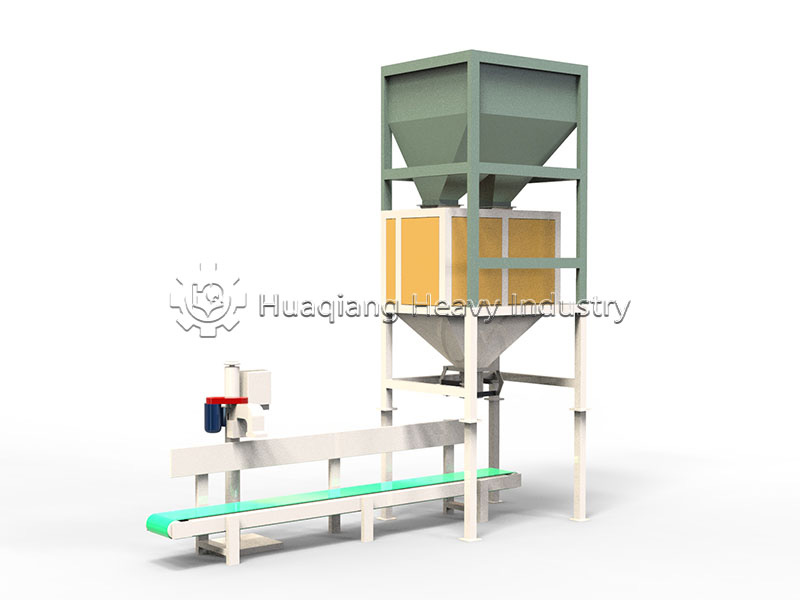
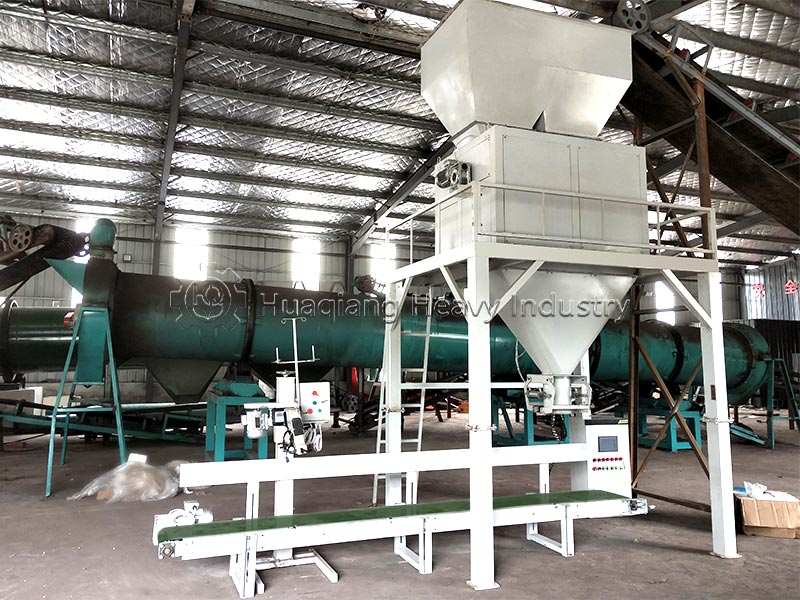
The powder fertilizer packaging machine focuses on the pain points of powder fertilizer packaging, achieving efficient and clean packaging through a professional structural design. Its core structure includes six major parts: a material feeding system, a weighing system, a packaging system, a control system, a conveying system, and a dust removal system. The feeding system uses a screw or vibrating feeder to ensure a uniform and stable supply of materials; the weighing system uses high-precision electronic scales, covering various types such as single scales, multi-scale scales, and loss-in-weight scales, ensuring accurate weight measurement for each package; the packaging system can complete integrated operations such as bag making, sealing, and cutting according to different packaging materials such as plastic film and composite film; and the PLC or microcomputer control system achieves fully automated control of the entire process, significantly reducing manual intervention. Crucially, the equipment’s dust removal system effectively collects dust generated during the packaging process, preventing material waste and maintaining a clean production environment, aligning with green production principles.
Whether granular or powdered fertilizer packaging machines, they all share the common characteristics of high precision, high automation, and wide adaptability. Their application not only significantly improves packaging efficiency and reduces labor costs but also ensures consistent product quality through precise weight control. From fertilizer packaging in agriculture to powder raw material encapsulation in the food industry, from granular material packaging in the chemical industry to quantitative dispensing of grain crops, this type of equipment, with its flexible adaptability and stable performance, has become indispensable equipment for small-bag packaging scenarios in various industries, providing a solid backend guarantee for large-scale production.
Packaging: The Final Stage in the Granulation Production Chain
The efficient packaging of fertilizer granules is the final, value-adding step in a comprehensive production line, but it is entirely dependent on the quality of the incoming granules. These granules are produced upstream by various fertilizer production machine technology pathways. For instance, in the npk fertilizer manufacturing process, granules might be formed in a rotary drum granulator through wet agglomeration. Alternatively, they could be produced via a roller press granulator production line, where a double roller press granulator or fertilizer compactor applies dry fertilizer granules compaction to form dense pellets. This contrasts with methods used in an organic fertilizer disc granulation production line, which shapes materials using a tumbling pan.
The choice of granulation technology—whether for the npk manufacturing process or organic production—directly impacts the physical properties of the granules, such as their size uniformity, hardness, and dust content. These properties are critical for the subsequent packaging machine’s performance, affecting its weighing accuracy, filling speed, and dust emission levels. Therefore, a well-integrated plant design ensures that the granulation process produces consistent, high-quality granules that flow smoothly into the packaging unit, maximizing the efficiency of the entire system from raw material to bagged product.
Ultimately, the packaging machine is the crucial interface between manufacturing and the market. Its precision and reliability finalize the value created by the upstream granulation equipment, delivering a standardized, ready-to-sell product to distributors and farmers.