NPK blended fertilizer quality control: Equipment empowerment in blending and granulation stages

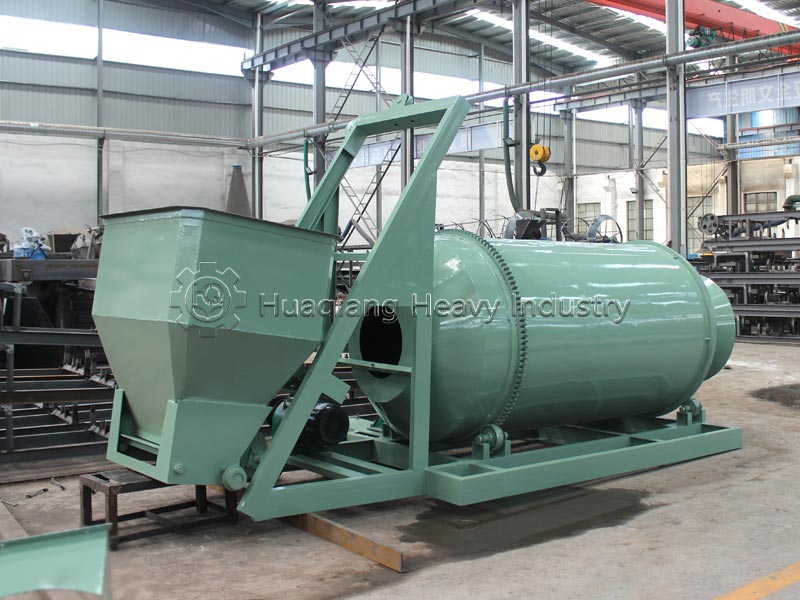
The core of NPK blended fertilizer’s market competitiveness lies in nutrient uniformity and granule stability. Achieving these two key indicators depends on precise control of the two crucial stages in the NPK blending fertilizer production line: blending and granulation. NPK blending machines and BB fertilizer mixers are responsible for establishing the foundation of nutrient uniformity, while NPK fertilizer granulators ensure granule formation quality. Together, they form the quality assurance system of the production line.

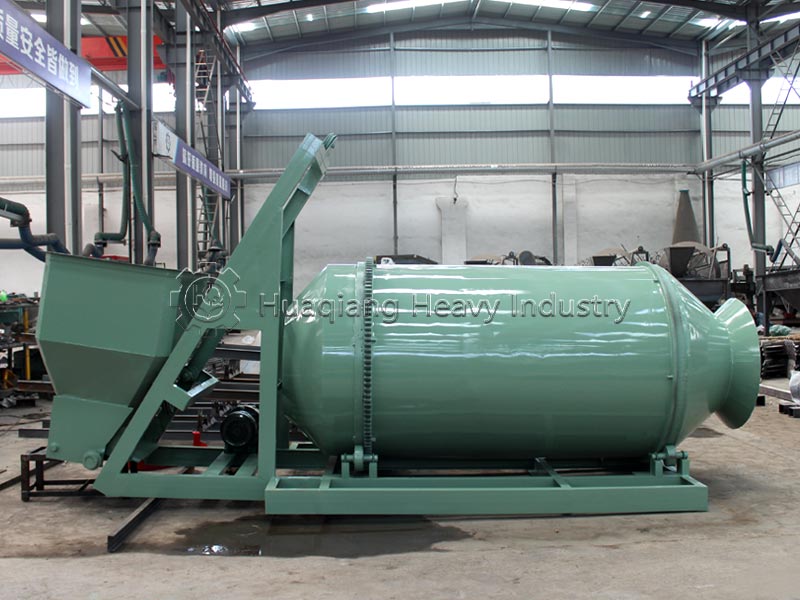
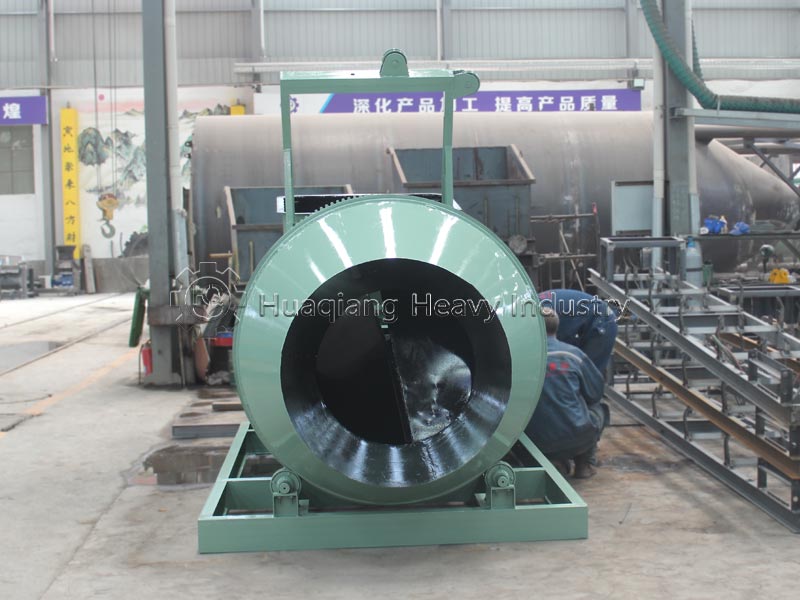
The blending stage is the “first line of defense” for nutrient uniformity. NPK blending machines and BB fertilizer mixers need to be selected according to production needs. For large-scale continuous production, NPK blending machines, with their large capacity and high speed, can achieve rapid and uniform mixing of nitrogen, phosphorus, potassium, and trace elements; small and medium-sized production lines or multi-batch, small-volume production are better suited to BB fertilizer mixers, which are flexible in operation and easy to adjust, allowing for quick switching between different formulation schemes, and the mixing uniformity meets conventional production requirements. Regardless of the equipment used, the principle of “fine materials first, then coarse materials, and layered feeding” must be strictly followed to avoid material segregation affecting uniformity.

The granulation stage determines the final quality of the granules. The NPK fertilizer granulator needs to be precisely matched with the blending effect of the preceding stage. After the uniformly blended materials enter the granulator, the granulation speed and pressure need to be adjusted according to the material’s moisture content and particle size characteristics to ensure that the produced granules meet the strength standards and have uniform particle size. If the blending in the preceding stage is uneven, even with precise granulation parameters, fluctuations in nutrient content of the granules will occur.

NPK blending fertilizer production line: Equipment selection and uniformity improvement

The core advantage of NPK blended fertilizers lies in their flexible nutrient ratio, and this advantage is achieved through the precise coordination of various blending and mixing equipment in the production line. Whether it’s a BB fertilizer mixer, an NPK blending machine, or a bulk blending fertilizer machine, the selection, suitability, and operating status of the equipment directly determine the nutrient uniformity and market competitiveness of the final product.

Equipment selection must match production needs. Small and medium-sized production lines are suitable for BB fertilizer mixers, which are easy to operate and have low energy consumption, meeting the needs of small-batch, multi-ratio blending, especially suitable for customizing special fertilizers for regional crops; large-scale production is more suitable for NPK blending machines, which have large mixing capacity and high mixing efficiency, and can ensure the full integration of nitrogen, phosphorus, potassium, and trace elements through a multi-stage mixing structure, adapting to a continuous production rhythm. Bulk blending fertilizer machines focus on the on-site blending needs of bulk materials, offering strong flexibility and effectively reducing packaging and transportation costs, suitable for direct supply to large planting bases.

Operational optimization is key to ensuring uniformity. Regardless of the equipment used, the feeding sequence and speed must be strictly controlled, following the principle of “fine materials first, then coarse materials; light materials first, then heavy materials,” to avoid material stratification; at the same time, the mixing speed and time should be adjusted according to the material characteristics to prevent over-mixing leading to material segregation, or insufficient mixing resulting in uneven nutrient distribution.

In summary, an NPK blending fertilizer production line needs to rationally select a BB fertilizer mixer or a bulk blending fertilizer machine based on production capacity and application scenarios, and optimize operating parameters to consistently produce high-quality blended fertilizers.

Key application points of BB fertilizer mixer and fertilizer granulator

NPK blended fertilizers are widely used in agricultural production due to their flexible nutrient ratios and adaptability to different crop needs. The coordinated operation and standardized procedures of the production line equipment directly determine product quality. Among these, the BB fertilizer mixer and fertilizer granulator play an indispensable role as core equipment.

The BB fertilizer mixer is a crucial link in the NPK blending fertilizer production line, ensuring uniform nutrient mixing. Since NPK blended fertilizers require precise proportions of nitrogen, phosphorus, potassium, and various trace elements, uneven mixing can lead to nutrient imbalances and affect fertilization effectiveness. During operation, it is important to follow the principle of “lighter materials first, then heavier materials; finer materials first, then coarser materials” to prevent material accumulation at the bottom of the equipment. Simultaneously, adjust the mixing speed and time according to the material characteristics to ensure sufficient dispersion and contact of all raw materials, preventing localized nutrient enrichment.

The fertilizer granulator determines the molding quality of the NPK blended fertilizer. After mixing in the BB fertilizer mixer, the materials need to be processed into granules by the fertilizer granulator. This not only facilitates storage and transportation but also reduces nutrient loss during application. During production, the granulator’s speed, pressure, and other parameters need to be adjusted based on the material’s moisture content and particle size.

Furthermore, all stages of the NPK blending fertilizer production line must be closely integrated. From raw material selection and BB fertilizer mixing to fertilizer granulation, every step requires strict parameter control. Only by ensuring stable equipment coordination can high-quality NPK blended fertilizers with uniform nutrients and regular granules be produced, providing strong support for high agricultural yields.

BB fertilizer mixer: Flexible productivity in the precision agriculture era

In modern fertilizer production, the BB fertilizer mixer is the core engine of the NPK blending fertilizer production line, characterized by physical blending, translating the concept of precise formulation into a uniform and high-quality finished product.

While there are many types of general-purpose fertilizer mixers, the BB fertilizer mixer is a specialized piece of equipment designed specifically for granular blending. Its unique structure allows for the uniform mixing of nitrogen, phosphorus, and potassium base fertilizers of different particle sizes and densities in a very short time, while minimizing particle breakage.

Compared to the chemical reaction route of traditional NPK fertilizer production lines, the NPK blending fertilizer production line centered on the BB fertilizer mixer exhibits unique advantages. It can quickly adjust the formula based on soil testing data, enabling flexible production of small batches and multiple varieties. This flexibility allows fertilizer processing plants to respond promptly to the personalized needs of different regions and crops, truly achieving precision fertilization.

In a complete NPK blending fertilizer production line, the BB fertilizer mixer works precisely in conjunction with the automatic batching system and conveying equipment. After precise metering, raw materials enter the mixing chamber, where they are efficiently mixed within a set time before being directly packaged or shipped in bulk. This compact design significantly shortens the conversion time from formulation to product.

With the increasing demands for precision fertilization in modern agriculture, the BB fertilizer mixer is playing an increasingly crucial role in NPK blending fertilizer production lines.

Precisely formulated NPK blending fertilizer production line

In modern agricultural production, bulk blended fertilizers, which flexibly meet customized needs, are playing an increasingly important role. The core of this efficient operation is a well-designed NPK blending fertilizer production line, which achieves the efficient conversion from multiple single-element fertilizers to a uniformly blended finished product through the coordinated operation of specialized equipment.

The value of the entire NPK blending fertilizer production line is primarily reflected in its “precision.” The production line can accurately measure the proportions of nitrogen, phosphorus, potassium, and micronutrients based on specific soil testing results and crop nutrient requirements. This precise formulation capability is the foundation for producing truly personalized bulk blended fertilizers.

In the core mixing stage of the production line, the performance of the BB fertilizer mixer is crucial. This equipment does not simply tumble; instead, through a scientifically designed mixing method, it ensures that granular raw materials of different sizes and specific gravities achieve a highly uniform physical mixture in a short time.

From a macroscopic process perspective, a complete NPK blending fertilizer production line integrates multiple modules such as automatic batching, efficient mixing, and finished product conveying. As the heart of the production line, the bulk blending fertilizer machine’s efficiency and mixing quality directly determine the quality of the final product. This systematic production method greatly improves production flexibility and efficiency, making small-batch, multi-formulation customized production possible.

Synergistic application of NPK fertilizer production lines and BB fertilizer mixers

NPK fertilizer production lines are crucial for compound fertilizer production. As a key piece of equipment, BB fertilizer mixers, when integrated with the production line, significantly improve overall production efficiency and product quality. NPK fertilizer production involves processes such as raw material crushing, mixing, granulation, and drying. The mixing stage directly impacts the nutrient balance of the final product, and BB fertilizer mixers are a perfect fit for this requirement.

In the production line, raw materials processed by the fertilizer crusher are delivered to the BB fertilizer mixer via a fertilizer conveyor. Upon startup, the drive system drives the mixing shaft and blades, evenly mixing nitrogen, phosphorus, and potassium, laying a solid foundation for the subsequent granulation process. Inhomogeneous mixing can result in significantly different nutrient distributions in the granulated fertilizer, impacting product quality.

The BB fertilizer mixer’s control system can be linked with the overall production line control system to synchronize parameters such as mixing speed and time, ensuring a smooth production process. After mixing, the uniform raw materials are discharged through the discharge port and sent to the granulator by conveyor. It works efficiently with subsequent equipment such as dryers and coolers to form a complete NPK fertilizer production chain, helping companies achieve large-scale, high-quality production.