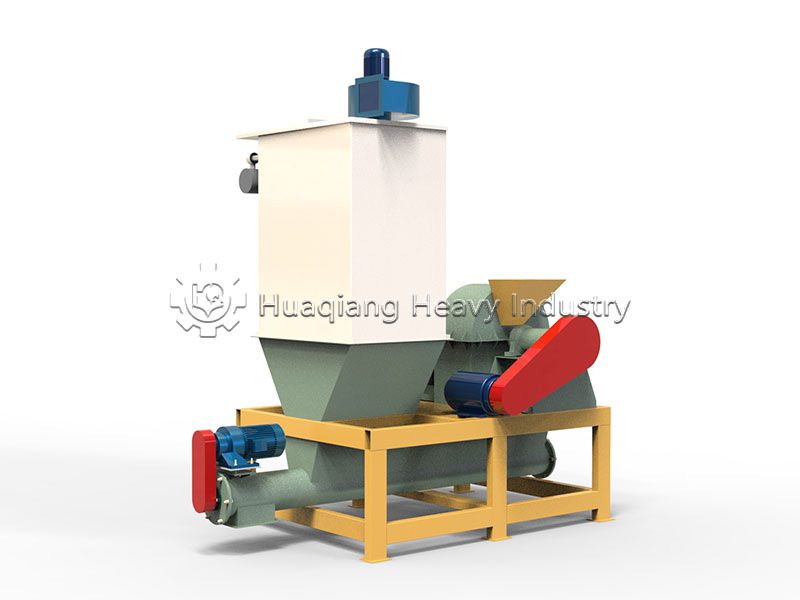
Cage crusher: The core hub in organic fertilizer production equipment systems
In organic fertilizer production equipment, the cage crusher is not merely a single crushing tool, but rather a core hub connecting raw material pretreatment and subsequent processing stages, occupying an indispensable and critical position.
Organic fertilizer raw materials come from diverse sources, including fermented livestock and poultry manure, straw and fungal residue, and sludge. These materials have varying characteristics, some being tough and others prone to clumping. They require fine crushing to meet the needs of subsequent granulation and mixing processes. The cage crusher can precisely adapt to various raw materials, crushing them to a uniform particle size, removing impurities and clumps, and providing standardized raw materials for subsequent equipment.
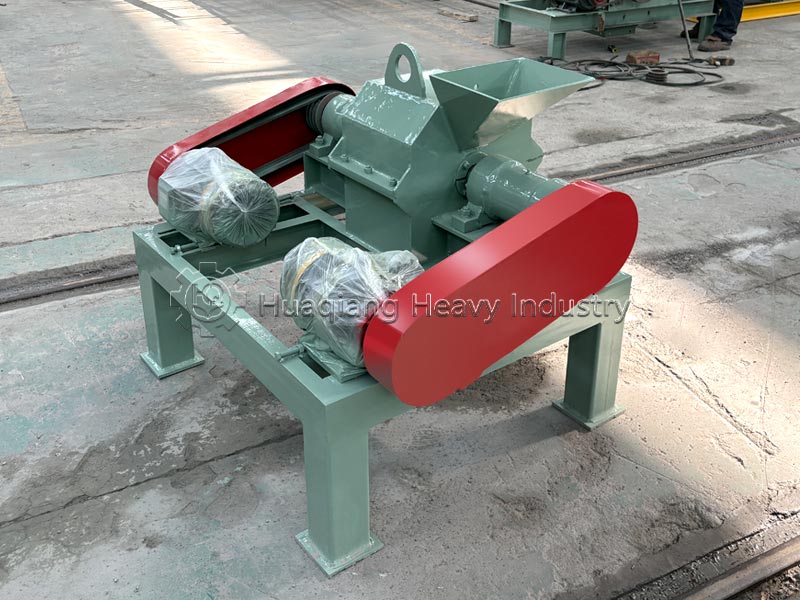
The cage crusher offers higher crushing precision and lower material loss, reducing nutrient loss while ensuring uniform particle size of the crushed raw materials, thus guaranteeing efficient molding in granulation equipment and uniform mixing in mixing equipment. The high-quality crushing effect improves the particle size and uniformity of nutrient release in the finished organic fertilizer product.
The cage crusher is adaptable to a wide range of moisture levels and features strong sealing, allowing it to handle raw materials from different pretreatment stages while reducing dust pollution. It works efficiently in conjunction with equipment such as compost turning machines and mixers. Its flexible parameter adjustment capabilities allow it to adapt to different production capacities, making it a versatile core piece of equipment for small, medium, and large-scale organic fertilizer production lines, supporting the smooth operation of the entire production process.