A three-step value enhancement process in organic fertilizer production lines

In modern organic fertilizer production, a complete production line not only needs to complete basic processing but also achieves significant value enhancement through refined processing.

After the materials have completed fermentation and mixing, the fertilizer compaction machine initiates the refined processing journey. It shapes loose powdery materials into uniformly sized granules using physical pressure. This process not only improves the physical properties of the product, making it easier to store and transport, but more importantly, it lays the morphological foundation for subsequent processing.

The extruded granules then enter the screening stage. The fertilizer screener machine, through a precise screening mechanism, strictly grades the finished product according to particle size specifications. Particles that meet the standards proceed to the next process, while products with unqualified particle sizes are returned to the previous process for reprocessing.
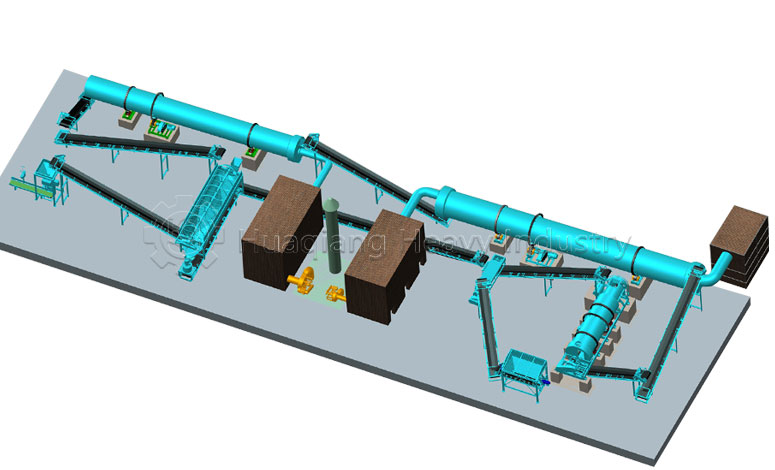
At the end of the entire organic fertilizer production line, the fertilizer coating machine plays a crucial role. This equipment effectively reduces clumping during storage by coating the granules with a special film material, while also enabling the slow release of nutrients. Products treated with coating not only have a brighter appearance but also significantly enhanced functionality and added value.

The coordinated operation of these specialized organic fertilizer production equipment demonstrates the high level of precision in modern fertilizer production. From the shaping process of the fertilizer compaction machine to the fine selection by the fertilizer screener machine, and then to the value-added processing by the fertilizer coating machine, each step contributes to the quality of the final product.
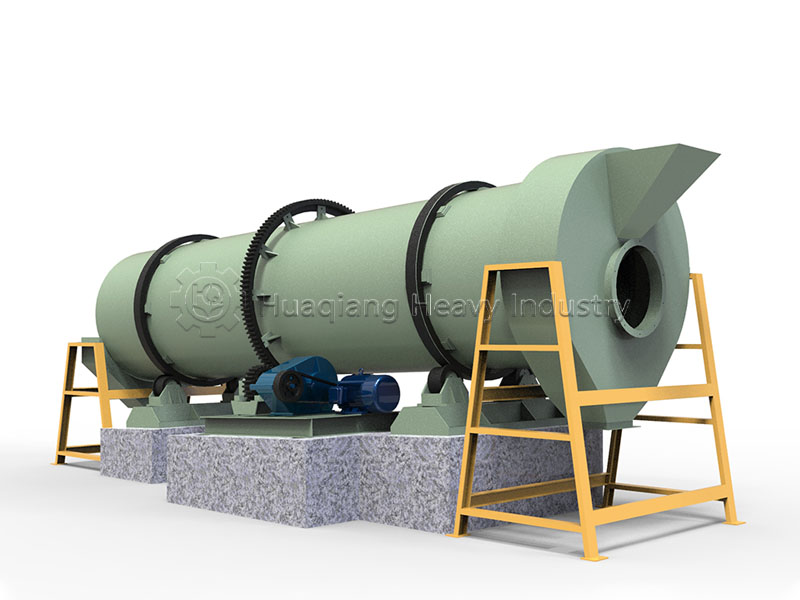
What is the working principle of an organic fertilizer disc granulation production line?

In the field of organic fertilizer production, the organic fertilizer disc granulation production line has become the preferred equipment for small and medium-sized enterprises due to its short process and low investment. So, how does this equipment transform loose organic raw materials into uniform granules?

The entire production line’s workflow revolves around the organic fertilizer disc granulator, the core equipment, and works in conjunction with a multi-bin single-scale static automatic batching system, belt conveyors, coating machines, and other equipment. First, after the raw material pretreatment stage, the multi-bin single-scale static automatic batching system precisely proportions the nitrogen, phosphorus, potassium, and organic raw materials according to production needs, ensuring that the nutrient content meets the 20%-48% standard. This step lays the foundation for granule quality.

Next, the proportioned raw materials are uniformly transported to the disc granulator via a belt conveyor. The disc granulator adopts a large-angle tilt design (usually 30°-50°). When the motor drives the disc to rotate, the raw materials inside the disc are subjected to the combined action of centrifugal force, friction, and gravity, constantly tumbling and colliding. At the same time, according to the moisture requirements of the raw materials, the equipment precisely sprays an appropriate amount of binder, allowing the raw materials to gradually agglomerate into small particles. As the disc continues to rotate, the small particles continuously adsorb surrounding raw materials, gradually growing into uniform granules of 2-5mm – this is the key to the disc granulation process.

After the granules are formed, unqualified fine powder is separated through a screening device at the bottom of the disc and returned to the granulation process. Qualified granules are then transported to the coating machine for surface treatment to improve granule stability and moisture resistance. Finally, they are transported via belt conveyor to subsequent stages, completing cooling, packaging, and other processes, ultimately becoming finished organic fertilizer products ready for shipment.