Drying and cooling: The core of quality assurance in fertilizer granule post-processing
Fertilizer granules after granulation often suffer from problems such as high moisture content, high temperature, and low strength, making them unsuitable for direct storage and transportation. In the post-processing stage of organic fertilizer production lines, the coordinated operation of dryers and coolers is crucial to solving these problems. They form a complete chain of “dehydration and shaping – cooling and strengthening,” directly determining the final quality of the fertilizer granules.
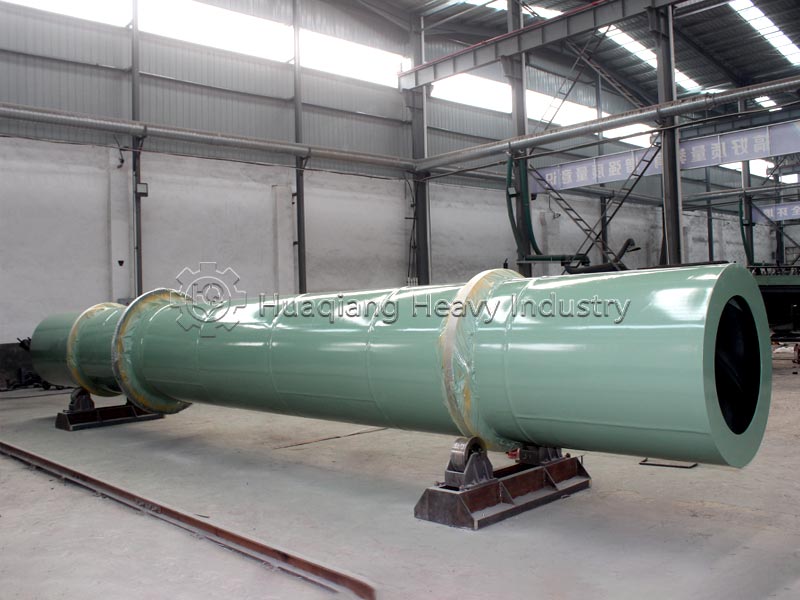
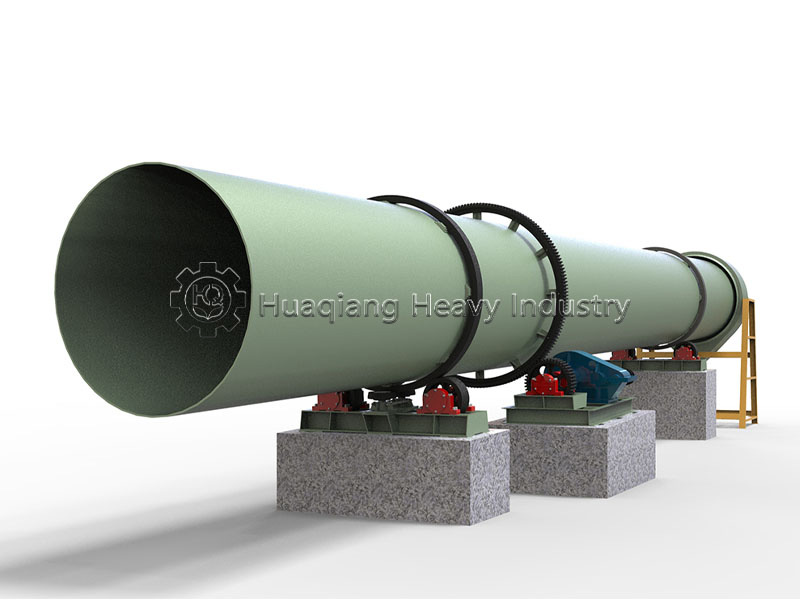
The drum fertilizer dryer undertakes the core task of “dehydration and shaping.” Granules fresh from the fertilizer granulator usually have a moisture content of 20%-30%, and need to be sent to the dryer to complete the drying process through a hot air circulation system: high-temperature hot air (60-80℃, adapted to the characteristics of organic fertilizer) fully contacts the granules, and with the help of internal baffles, ensures that each granule is evenly dehydrated, ultimately controlling the moisture content within the safe range of 12%-14%.
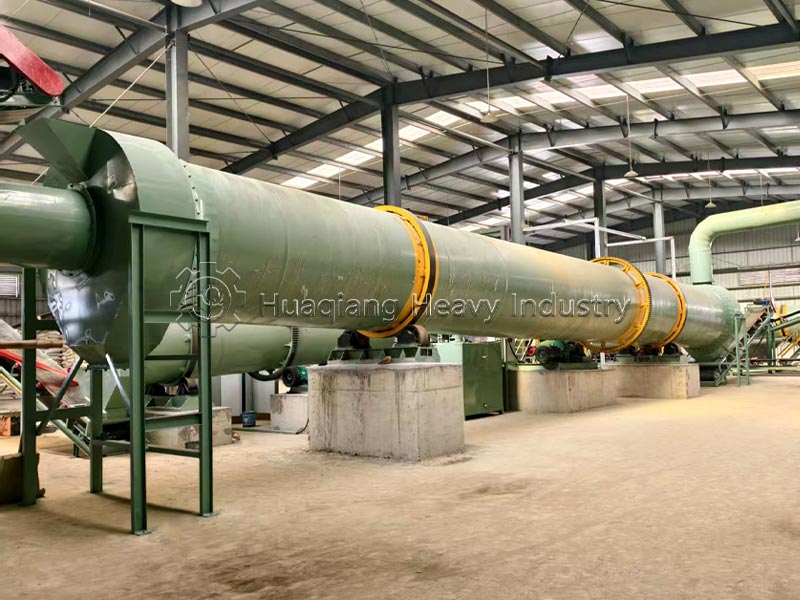
The drum fertilizer cooler connects the critical “cooling and strengthening” stage. The temperature of the dried granules can reach 60-80℃. If directly piled up, they are prone to re-moisturizing and clumping, and may even break due to thermal expansion and contraction. The cooler uses the principle of cold air heat exchange to quickly cool the high-temperature granules to near ambient temperature (temperature difference ≤5℃), and at the same time further tightens the granule structure during the cooling process, significantly improving the strength and hardness of the granules.
The core advantage of their combined operation lies in “process+quality complementarity.” During operation, it is necessary to match the capacities of the two machines, adjust the drying temperature and cooling air speed according to the granule size and raw material characteristics, and regularly clean the accumulated material inside the equipment to ensure smooth ventilation. As the “golden partners” in the post-processing of organic fertilizer production lines, their coordinated operation can increase the qualified rate of fertilizer granules to over 95%.