Core supporting equipment for bio-organic fertilizer production lines

Under the trend of green agricultural development, the intelligent and efficient operation of bio-organic fertilizer production lines has become a goal pursued by the industry. As a key piece of equipment in bio-organic fertilizer production, the fertilizer crusher’s performance directly impacts the final quality and production efficiency of organic fertilizers. Whether for the reuse of agricultural waste or large-scale organic fertilizer production, it plays an irreplaceable and crucial role.

The fertilizer crusher boasts strong adaptability, capable of processing various raw materials such as straw, livestock and poultry manure, and composted materials, perfectly addressing the shortcomings of traditional crushing equipment in handling wet and mixed materials. In the bio-organic fertilizer production line, it connects the raw material pretreatment stage, crushing large raw materials into uniform particle sizes. This not only increases the contact area between the material and microorganisms, improving subsequent fermentation efficiency, but also lays a solid foundation for the subsequent granulation process, avoiding problems such as poor particle formation caused by uneven raw material particle size.
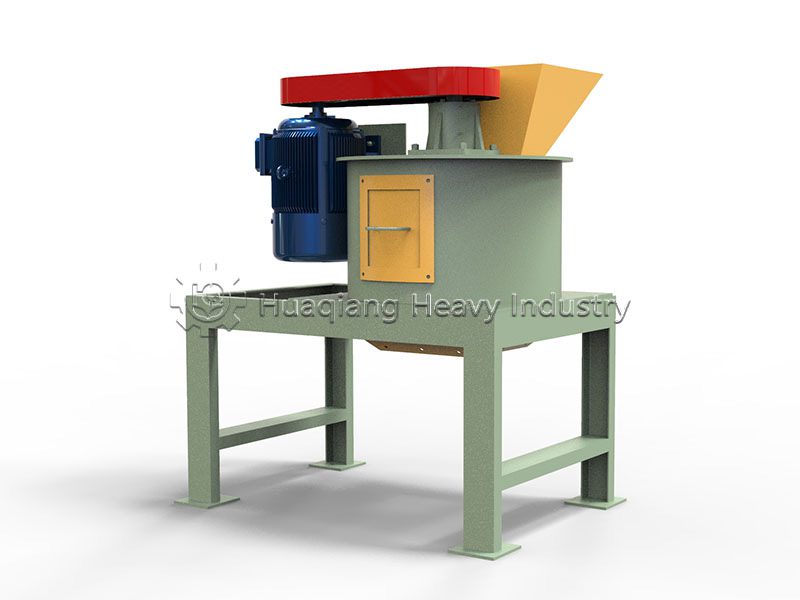
As one of the core pieces of bio-organic fertilizer equipment, it can be used in conjunction with chain crushershorizontal crushers, and other equipment, flexibly adapting to different production needs such as bio-organic fertilizer production lines and NPK fertilizer production lines. By adjusting crushing parameters according to different raw material characteristics, it can precisely control the output particle size, meeting the production requirements of various fertilizer products such as powder fertilizers and granular fertilizers.

For organic fertilizer production enterprises, a high-quality fertilizer crusher not only improves the overall production capacity of the production line but also offers the advantages of convenient maintenance and low energy consumption, helping enterprises reduce production costs.
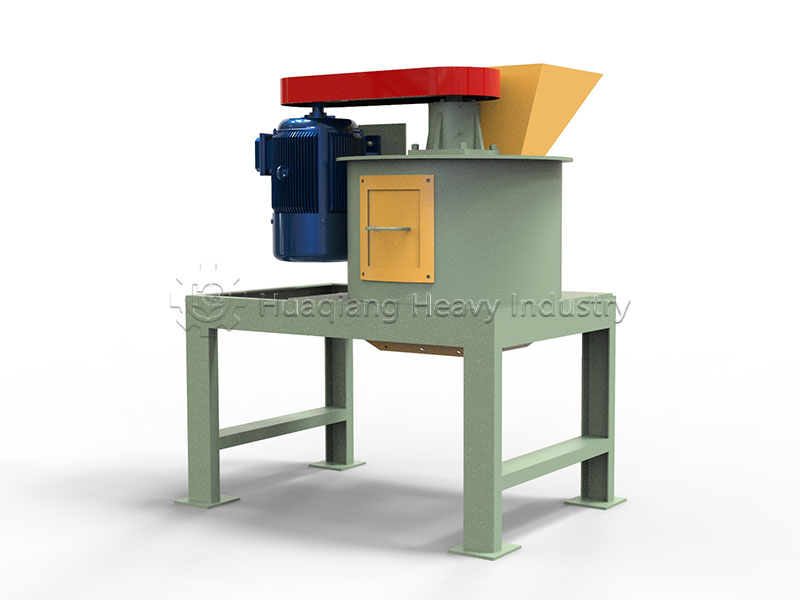
Why do horizontal crushers require special adaptations for bio-fertilizer production?

The core difference between bio-fertilizer production and conventional organic fertilizer and compound fertilizer production lies in the need to preserve the activity of the inoculant. Furthermore, the raw materials often consist of specialized materials such as fungus residue, traditional Chinese medicine residue, and fermented straw. This places special demands on grinding equipment: low temperature, pollution prevention, and precise particle size. Through targeted modifications, horizontal crushers have become the ideal choice for bio-fertilizer production.

1.Low-temperature crushing preserves inoculant activity

The functional bacteria in bio-fertilizer (such as Bacillus subtilis and phosphate-solubilizing bacteria) are not tolerant to high temperatures. Excessive frictional heat (above 45℃) generated during the grinding process can inactivate the bacteria. High-quality horizontal crushers optimize the impeller speed (to avoid excessive friction) and some are equipped with a “water-cooling jacket” to circulate cold water to remove heat from the chamber walls, maximizing inoculant activity.

2.Anti-residue design prevents cross-contamination

Bio-fertilizer production often requires switching between different inoculant formulations. If residual material from previous batches remains in the equipment, bacterial strains can mix. The horizontal crusher’s “fully open cleaning structure” solves this problem. The grinding chamber door can be fully opened, and the smooth, corner-free interior allows for quick cleaning without disassembling core components, reducing the risk of cross-contamination.

3.Precise Particle Size for Microbial Agent Mixing

Bio-fertilizer production requires uniform particle size (typically 1-3mm) after grinding. Uneven particle size results in incomplete mixing of the microbial agent and raw material, impacting fertilizer efficiency. The horizontal crusher can precisely control particle size deviation within ±0.5mm, providing a high-quality raw material foundation for subsequent microbial agent inoculation and mixing.