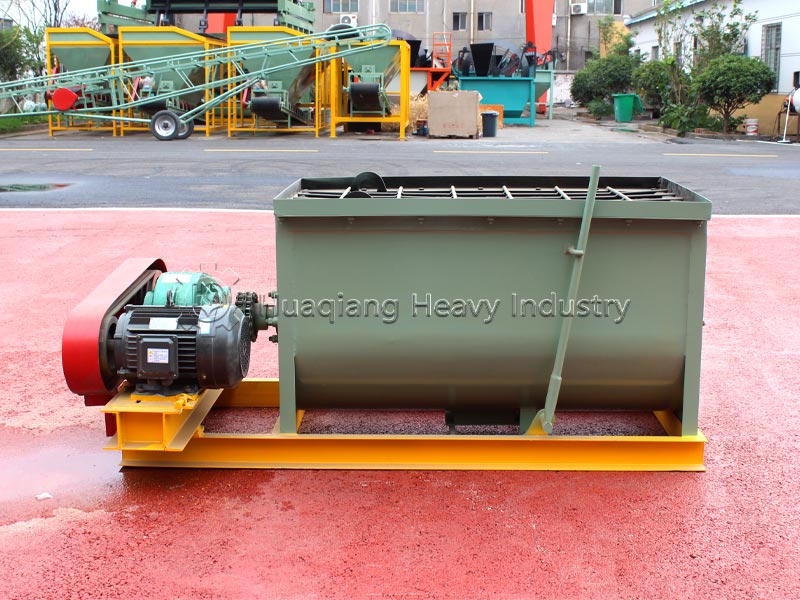
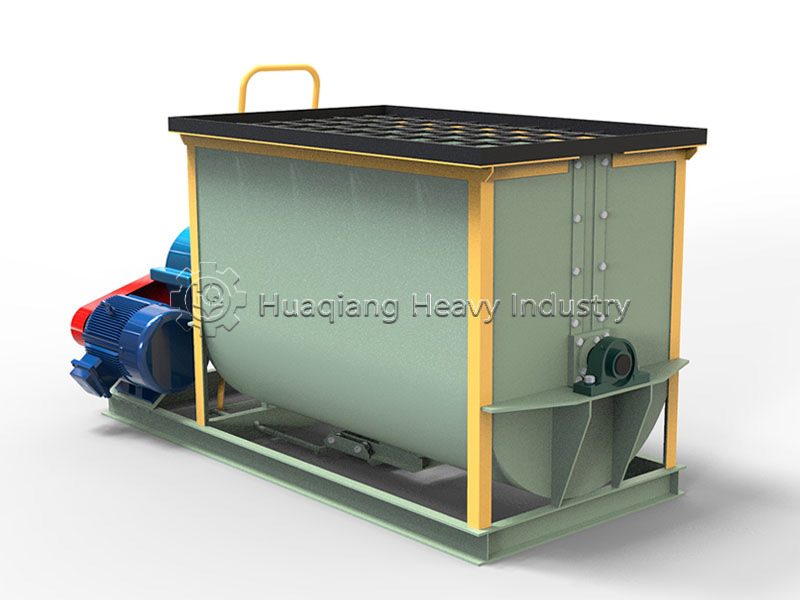
Comparison of fertilizer mixer selection: Double axis paddle mixers vs. Horizontal ribbon mixers
Double axis paddle mixers and horizontal ribbon mixers are commonly used raw material mixing equipment in the production of organic fertilizers and NPK compound fertilizers, both suitable for the pretreatment stage before fertilizer granulation. Due to structural differences, they differ significantly in their suitable application scenarios and mixing effects. Choosing the right model based on the NPK fertilizer production line capacity and raw material characteristics can improve granulation efficiency and facilitate the implementation of NPK compound fertilizer granulation technology.
Performance and Mixing Effect: Double axis paddle mixers use a staggered blade design, providing strong and fast mixing force. They are suitable for high-humidity and high-viscosity raw materials, achieving a mixing uniformity of over 95% with no dead corners, making them suitable for large-scale production lines. Horizontal ribbon mixers rely on a spiral belt for mixing, providing gentler force. They are more suitable for dry powder raw materials, but have a slower mixing speed and slightly lower uniformity, making them suitable for small and medium-sized plants or auxiliary material mixing.
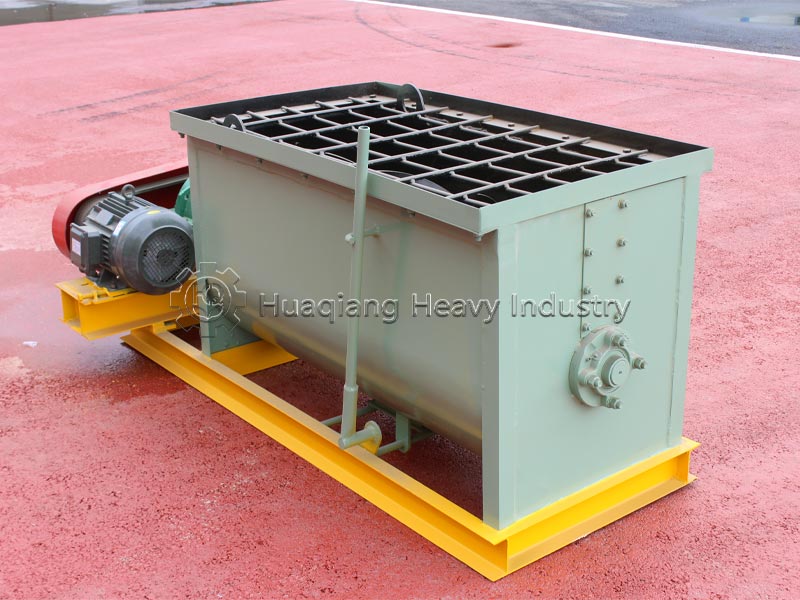
Energy Consumption and Maintenance: Double axis paddle mixers offer strong power but slightly higher energy consumption. However, their simple structure, wear-resistant and easily replaceable paddles make them suitable for continuous production, and their efficiency is even higher when linked with NPK fertilizer production lines. Horizontal ribbon mixers have lower energy consumption, but the spiral belt is prone to tangling with raw materials, making cleaning and maintenance more complicated. They are more suitable for intermittent production, but their maintenance costs are higher.
Selection Recommendations: For large-scale organic fertilizer and NPK compound fertilizer plants that process high-moisture raw materials and use fertilizer granulators for continuous production, double axis paddle mixers are the preferred choice. For small and medium-sized plants that process dry powder raw materials or do not have high uniformity requirements, horizontal ribbon mixers can be selected, balancing cost-effectiveness.