NPK fertilizer mixing technology: From homogeneous slurry to precision blending

In modern NPK fertilizer production, the mixing process is not merely simple stirring, but a core technology permeating the entire production process. It directly determines the uniformity of nutrient distribution, affecting the stability and fertilizer efficacy of the final product. From liquid to solid, from chemical to physical, the mixing process, in its diverse forms, supports the production quality of compound fertilizers.

In the initial stages of production, the chemical reaction itself is accompanied by deep mixing of raw materials. When the basic nitrogen, phosphorus, and potassium raw materials undergo chemical reactions under specific conditions, continuous mechanical stirring ensures sufficient contact between the reactants. The homogeneous slurry formed in this process lays the necessary physical foundation for subsequent granulation.

After chemical mixing, the materials enter the refined physical mixing stage. When the slurry or powder needs to be combined with other auxiliary materials, specialized fertilizer mixer machines, through scientifically designed motion trajectories, can achieve a highly uniform distribution of each component in a short time.
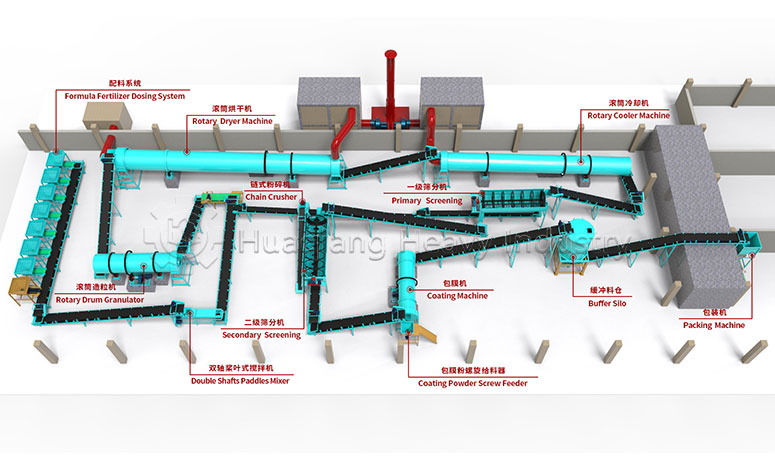
In another important branch of NPK fertilizer production—the production of physically blended fertilizers (BB fertilizers)—NPK fertilizer production technology exhibits different technical requirements. Faced with basic fertilizer granules of varying densities and sizes, the mixing process must achieve both uniform nutrient distribution and minimize granule breakage and separation. This targeted mixing technology enables the perfect coexistence of various granule types.

From mechanical stirring in the chemical reactor to the uniform distribution of the finished granules, the mixing process remains a crucial node in the NPK fertilizer production line. Its technological advancements not only improve the intrinsic quality of fertilizer products but also provide a reliable material foundation for the development of precision agriculture.
The Unsung Hero: Screw Conveyors in Modern Industry

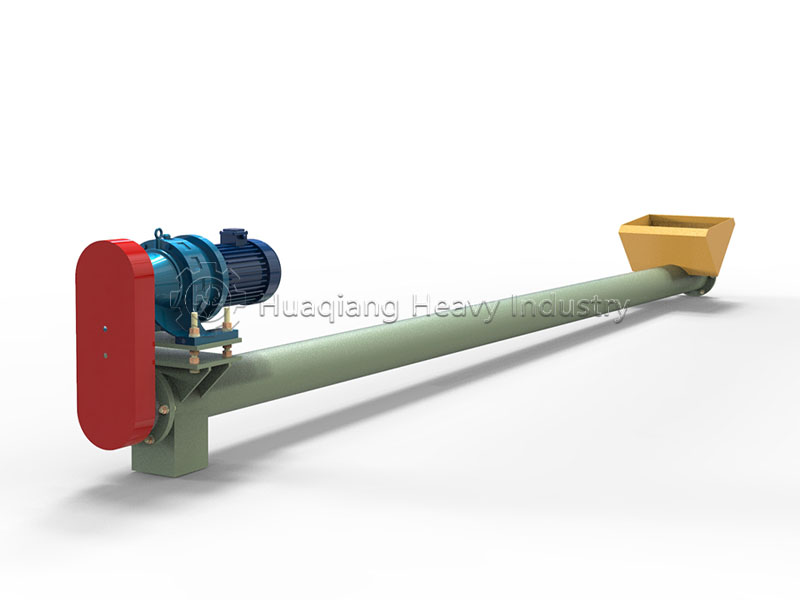
In the bustling world of material handling, screw conveyors quietly power industries we depend on every day – from the fertilizer that grows our food to the flour in our morning bread. Their role is particularly vital in modern npk fertilizer production technology, where they act as the indispensable arteries of the entire npk production line. These robust conveyors reliably transport raw materials to the npk fertilizer granulator and subsequently move the formed granules through drying and cooling stages. This seamless mechanized transfer is the backbone of the npk fertilizer production process, ensuring a continuous, efficient flow that directly impacts the consistency, quality, and overall output of the final fertilizer product.

Engineering Simplicity, Operational Brilliance

The screw conveyor‘s elegant design belies its tremendous utility. At its core, a rotating helical blade – the auger – works like a giant corkscrew within a sturdy trough. As the screw turns, it creates a powerful pushing action that moves materials with remarkable efficiency. This simple mechanism delivers extraordinary versatility, handling everything from fine powders to small aggregates with equal ease.

Why Industries Swear By Screw Conveyors

Walk through any modern processing plant, and you’ll discover screw conveyors working tirelessly. Their compact footprint allows installation in tight spaces where other conveyors wouldn’t fit. The fully enclosed design contains dust and prevents contamination – a game-changer for food and pharmaceutical applications. Maintenance crews appreciate the straightforward design with minimal moving parts, while plant managers value the energy efficiency and reliability that keeps production lines humming.

Custom Solutions for Every Application

Today’s screw conveyors are anything but one-size-fits-all. Manufacturers offer specialized variants for different industries: corrosion-resistant stainless steel models for chemical plants, heavy-duty designs for mining operations, and food-grade versions with polished surfaces for bakeries. The ability to operate at various angles – horizontal, inclined, or even vertical – makes them adaptable to virtually any plant layout. Advanced options include heated troughs for temperature-sensitive materials or multiple discharge points for precise distribution.

As industries continue to evolve, the humble screw conveyor remains a constant – not because it resists change, but because it adapts so well to it. This unassuming workhorse continues to prove that sometimes, the simplest solutions are the most enduring.