Can pesticides decompose in compost? Here are a few points to consider

Composting is an important way to utilize organic waste resources and a core part of organic fertilizer production lines. However, if raw materials carry pesticide residues, whether they can decompose in compost depends on factors such as the type of pesticide, the composting environment, and equipment control.

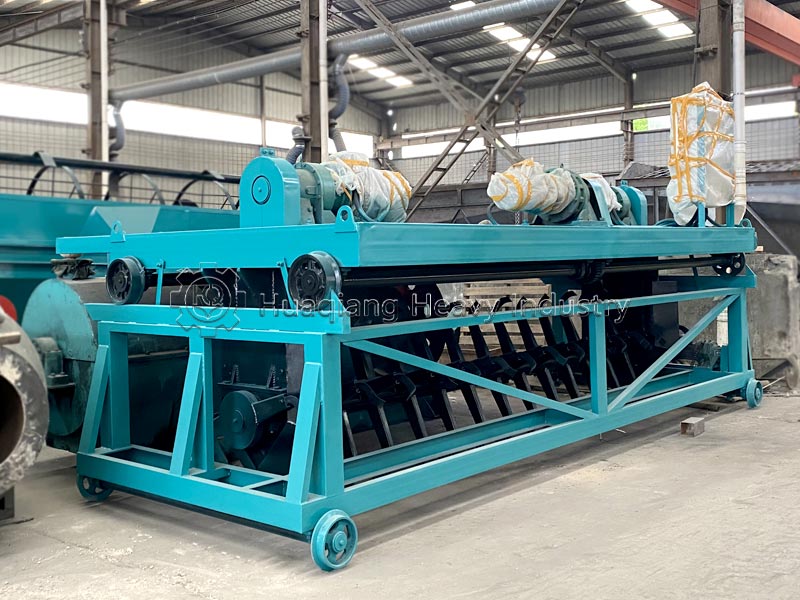
The composting environment is crucial for decomposition, and organic fertilizer compost turning machines can precisely control this environment. Microbial communities are active in compost. Turning machines maintain an aerobic environment and ensure a high temperature of 55-65℃ for several weeks through regular turning, aiding microbial metabolism and decomposition of some pesticides. Simultaneously, the turning machine can adjust the uniformity of the material, optimizing organic matter and pH conditions in conjunction with the production line’s process parameters, thus improving decomposition efficiency. In the absence of oxygen, not only is decomposition inhibited, but toxic intermediate products may also be produced.
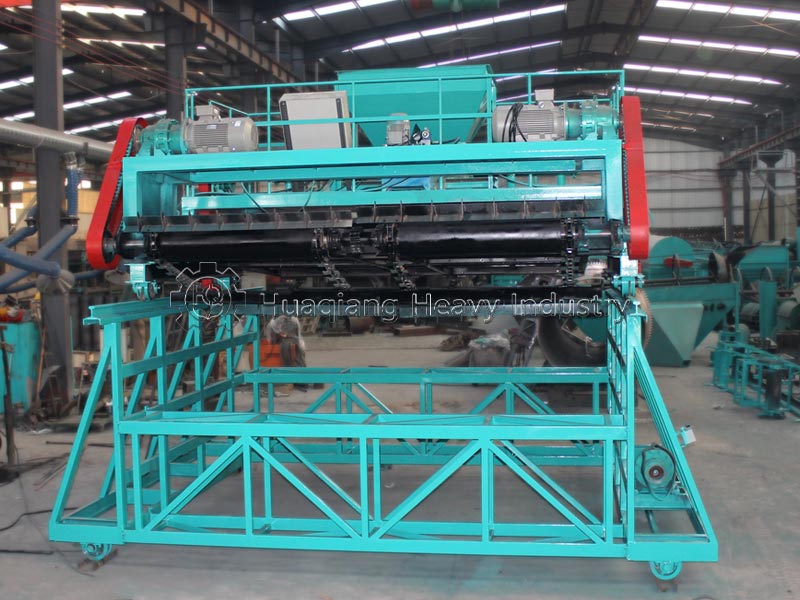
The type of pesticide determines the ease of decomposition. Organophosphates and pyrethroids, which are easily degradable, can be broken down into harmless substances by microorganisms under the suitable environment controlled by a compost turner, posing a low risk of residue. Organochlorines and other persistent pesticides, however, are structurally stable, heat-resistant, and resistant to degradation, making them difficult to completely decompose and prone to long-term residue.

Furthermore, high concentrations of residue can inhibit microbial activity and reduce the decomposition rate. Pesticides with prolonged residue time form stable bound states, making them even more difficult to degrade. This also places demands on the raw material testing process in organic fertilizer production lines.

It is recommended that organic fertilizer production lines prioritize the use of residue-free raw materials. If there are concerns about the raw materials, extending the high-temperature turning time and enhancing the aerobic environment through a compost turning machine can improve the degradation effect. Raw materials containing persistent pesticide residues must be strictly prohibited from being fed into the system to prevent the spread of contamination.
Is the organic fertilizer composting business profitable?

Driven by policies promoting green agriculture and the circular economy, the organic fertilizer composting business has attracted much attention due to its “turning waste into treasure” attribute. Whether it is profitable hinges on controlling costs, mitigating risks, and achieving a balance between ecological and economic benefits.

Multiple favorable factors support profit potential. Low raw material costs are a core advantage; livestock manure, straw, and other agricultural waste can be obtained for free or at low cost, reducing initial investment. Significant policy dividends are also evident, with many regions providing subsidies for resource utilization projects, coupled with fertilizer reduction policies, leading to a steady increase in demand for organic fertilizer. Processing organic fertilizer into granular fertilizer using organic fertilizer production equipment can further increase product premiums and broaden revenue channels.

Potential risks need to be carefully avoided. Raw material supply is affected by the livestock cycle and regional policies, potentially leading to supply disruptions or price increases; a lack of professional fermentation technology and organic fertilizer compost turning machines can easily result in product quality problems, affecting sales; improper handling of odors and leachate may also lead to penalties, increasing operating costs.

The key to profitability lies in optimizing operations. Establish diversified raw material channels and pair them with suitable organic fertilizer composting equipment to improve efficiency and shorten cycles; focus on niche markets to create targeted products. As long as risks are accurately controlled and needs are met, ecological advantages can be transformed into profit drivers, achieving sustainable development.

Is the crawler-type compost turning machine suitable for large-scale fertilizer production?

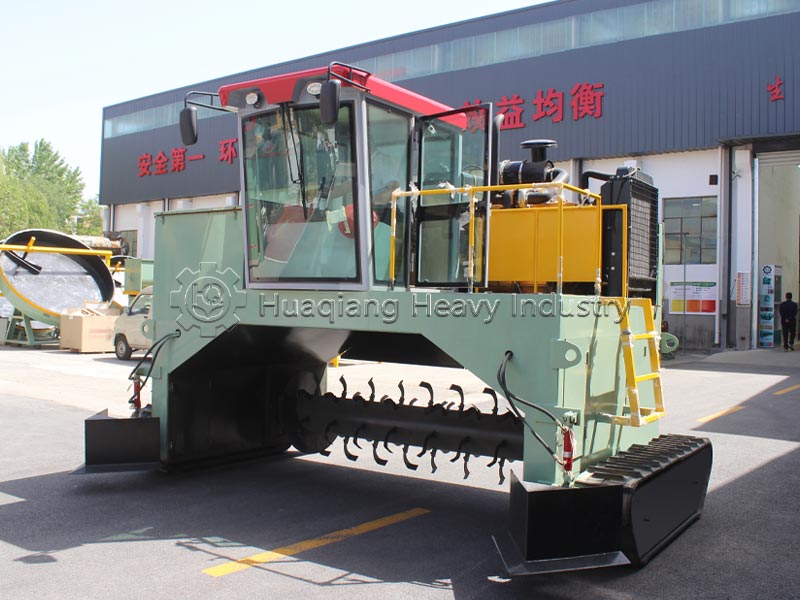
In large-scale fertilizer production, the operating efficiency and site adaptability of organic fertilizer compost turning machines directly determine fermentation capacity. Regarding the question of whether “crawler-type compost turning machines are suitable,” the answer is yes: their core advantages precisely match the needs of large-scale production, but they require scientific application in conjunction with the production scenario. By avoiding potential shortcomings, their value can be maximized.

The core advantages of crawler-type compost turning machines precisely address the pain points of large-scale production. First, they have strong site adaptability; the crawler design can easily handle wide open-air fermentation areas and uneven terrain, eliminating the need for laying dedicated tracks and significantly reducing site modification costs. Second, they have high operating efficiency; the wide turning mechanism covers a large area in a single pass and has strong continuous operation capabilities. The daily processing capacity of a single machine far exceeds that of smaller compost turning machine, matching the needs of large-scale raw material turnover. Third, they provide stable turning quality; deep turning ensures uniform oxygen supply to large piles, preventing anaerobic fermentation and ensuring the quality of fertilizer maturation, laying a solid foundation for subsequent processing.

With its high efficiency, stability, and strong adaptability, the crawler-type compost turning machine is an excellent choice for large-scale fertilizer production. As a key piece of organic fertilizer production equipment, by optimizing the operating mode in conjunction with the production layout and performing proper equipment maintenance, its full potential can be realized, contributing to improved efficiency and quality in the fermentation process and supporting the smooth operation of large-scale production.