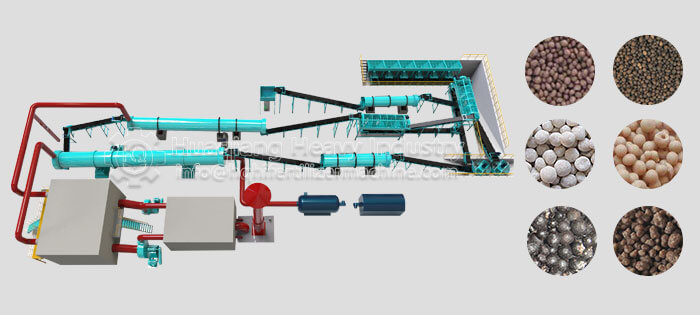
How to build a rotary drum granulation production line for fertilizer production?
Rotary drum granulation production lines are widely used in organic and compound fertilizer production due to their wide adaptability and excellent molding effect. Their construction requires following a scientific process, considering both production capacity requirements and environmental standards.
Preliminary Planning: First, clarify the production raw materials (such as organic fertilizer fermentation materials, NPK compound fertilizer raw materials) and production capacity targets. Determine the process route based on local environmental policies, such as whether drying and dust removal equipment are needed. Simultaneously, conduct a cost assessment, covering core expenses such as equipment procurement, site construction, and energy consumption.
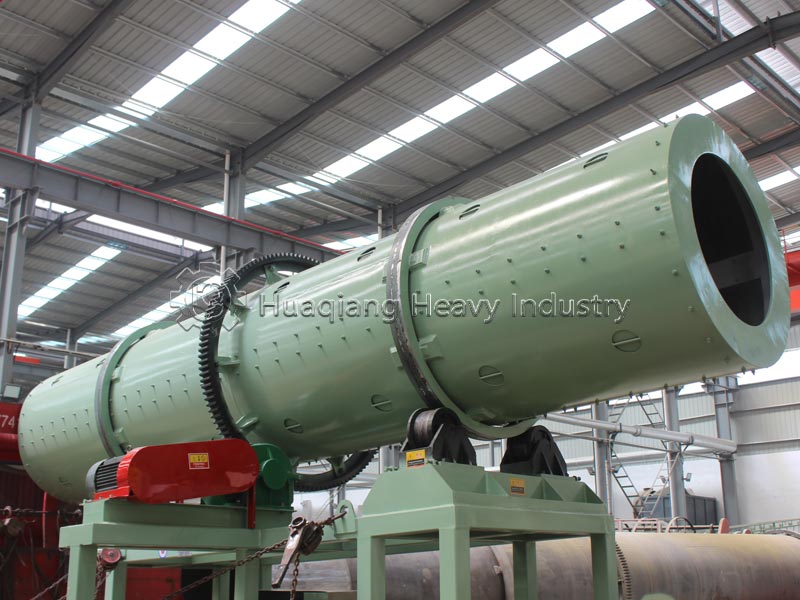
Equipment Selection and Matching: The core equipment, the rotary drum granulator, needs to be selected according to the characteristics of the raw materials, ensuring that parameters such as rotation speed and inclination angle meet the granulation requirements; supporting equipment needs to be precisely matched. The pre-treatment stage should include fertilizer crushers and screening machines to ensure the particle size of the raw materials. After granulation, dryers and coolers should be connected to optimize particle quality, and dust collection devices should be installed.
Site Layout and Installation: The site needs to accommodate sufficient spacing and operating space for the equipment. The ground should be treated with anti-slip and anti-corrosion coatings, and areas for raw material and finished product storage should be reserved; during installation, ensure the equipment’s levelness and sealing, especially the transmission system of the rotary drum granulator, to avoid vibration or leakage problems during operation. Also, rationally plan the pipeline layout to improve production efficiency.
Commissioning and Operation: First, conduct a no-load test run to check the stability of the equipment; then conduct a load test, optimizing the granulation effect by adjusting parameters such as raw material moisture and drum rotation speed. During the test run, record key data to establish a standardized production process and ensure stable mass production.