Solving the challenge of high-fiber cattle manure treatment: An efficient resource utilization solution

Cattle manure, due to its high fiber content, loose texture, and long decomposition cycle, is prone to resource waste and environmental pollution if treated directly. Compared to other livestock and poultry manure, the core of treating high-fiber cattle manure lies in “fiber breakdown first, followed by composting, and then granulation.”

First, pre-treatment and fiber breakdown to reduce subsequent difficulties. Coarse fiber is the core obstacle to treatment. The cattle manure must first be crushed using a high-power fertilizer crusher to reduce the fiber particle size to 3-5 centimeters, while simultaneously screening out stones, weeds, and other impurities. If the moisture content of the cattle manure is too high (exceeding 65%), dry materials such as straw and sawdust can be mixed in to adjust the moisture content to 55%-60%. This balances the carbon-nitrogen ratio (optimizing it to 25:1-30:1) and improves material aeration, paving the way for subsequent fermentation.

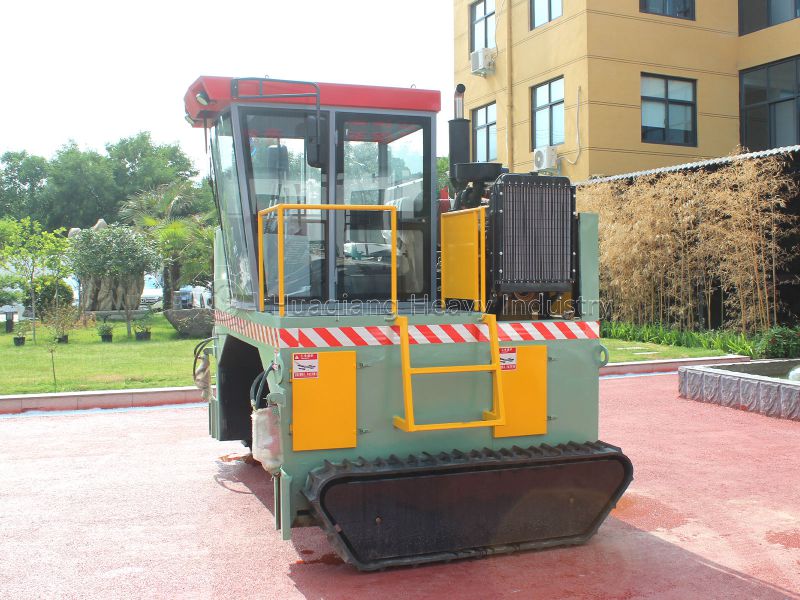
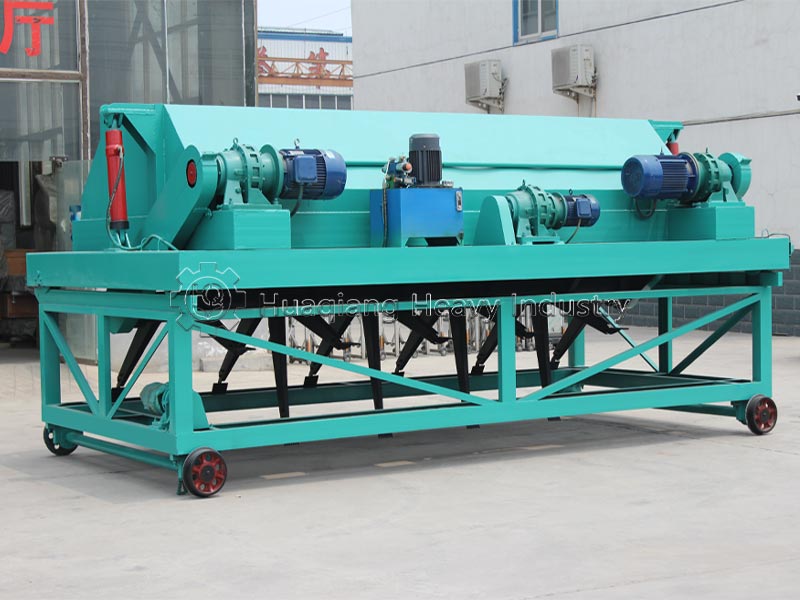
Second, enhanced fermentation and composting to degrade coarse fibers. A trough-type compost turner is used for deep turning and mixing. The powerful mixing force of the equipment ensures sufficient ventilation and oxygen supply to the compost pile, maintaining a high temperature of 55-65°C for 25-30 days. The high-temperature environment accelerates microbial activity, efficiently degrading coarse fibers and simultaneously killing pathogens and insect eggs. Specialized composting agents can be added during fermentation to further shorten the composting cycle and improve the degree of decomposition.

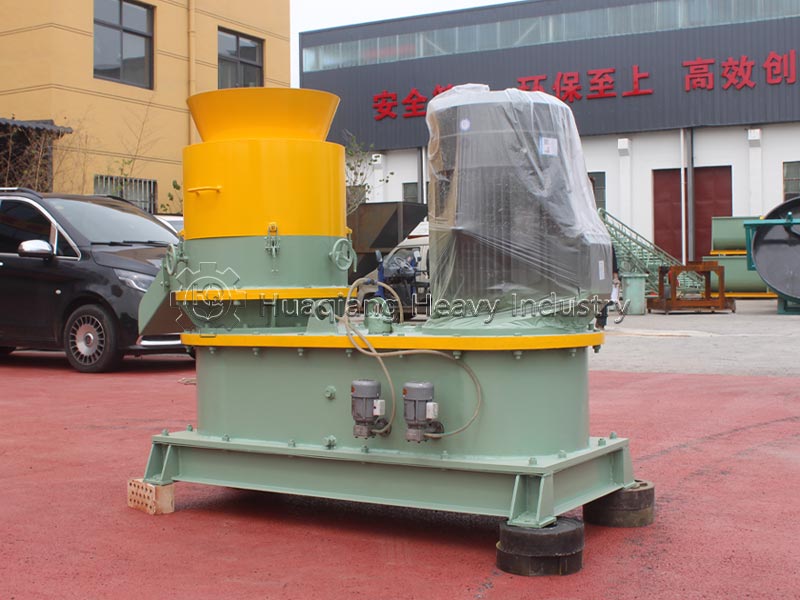
Third, shaping and processing to enhance utilization value. The composted cattle manure, with its coarse fibers largely degraded, can be fed into an organic fertilizer granulator(ring die or flat die pelleting machines are preferred, suitable for shaping loose materials) to form high-strength, uniformly sized granular organic fertilizer through extrusion or rolling.

This treatment plan can be implemented by assembling a fertilizer production line with equipment of corresponding specifications based on production capacity requirements. This not only completely solves the problem of treating high-fiber cattle manure but also transforms waste into organic fertilizer rich in organic matter.

How to improve the operating efficiency of trough-type compost turning machines?

Trough-type compost turners are core equipment in the organic fertilizer fermentation process, and their operating efficiency directly affects the composting cycle, maturation quality, and production efficiency. Many production scenarios experience problems such as insufficient turning, high energy consumption, and frequent equipment failures. However, these issues can be significantly improved through scientific and standardized operation and management.

First, ensure proper raw material pretreatment. The moisture content, particle size, and ratio of composting raw materials are fundamental. The moisture content of the materials should be controlled at 55%-60%, and a fertilizer crusher should be used to adjust the particle size of raw materials such as straw and livestock manure to 2-5 centimeters. Simultaneously, carbon and nitrogen sources should be mixed evenly in the correct proportions.

Second, standardize operating procedures and paths. During operation, a reasonable turning path should be planned, using a “reciprocating progressive” turning method to ensure that the material in each area is fully turned, avoiding missed or repeated turning. The speed of the trough-type compost turning machine should be controlled, and the rotation speed should be adjusted according to the width of the trough and the thickness of the material to ensure that the turning depth meets the standard (generally 30-50 centimeters).

Third, strengthen daily equipment maintenance. Regularly inspect key components of the compost turning machine, such as the blades, tracks, and transmission system. Replace worn blades promptly and tighten loose connections; add lubricating oil as required to ensure smooth operation of the transmission system.

Finally, accurately match the operating frequency. Adjust the turning frequency according to changes in composting temperature. During the high-temperature fermentation period (55-65℃), turning can be performed 1-2 times a day; when the temperature is below 50℃, the frequency should be appropriately reduced. Accurately matching the frequency can meet the oxygen demand of microbial fermentation without wasting energy due to excessive turning.