Basic knowledge of large-scale composting on dairy farms: From raw materials to maturity

Large-scale composting on dairy farms is a key path to the resource utilization of manure and alleviating environmental pressures. The core is the transformation of dairy cow manure into high-quality organic fertilizer through microbial fermentation.

Raw material ratio is a prerequisite for successful composting. The core raw material is fresh dairy cow manure with a moisture content of 70%-80%. It needs to be mixed with auxiliary materials such as straw and sawdust to adjust the carbon-to-nitrogen ratio and moisture content. The ideal carbon-to-nitrogen ratio is controlled at 25-35:1, and the moisture content is adjusted to 60%-65% (it should clump together when squeezed in the hand, with water seeping between the fingers without dripping). The auxiliary materials account for 30%-40%, which prevents the compost from smelling bad and provides sufficient energy for microbial activity.
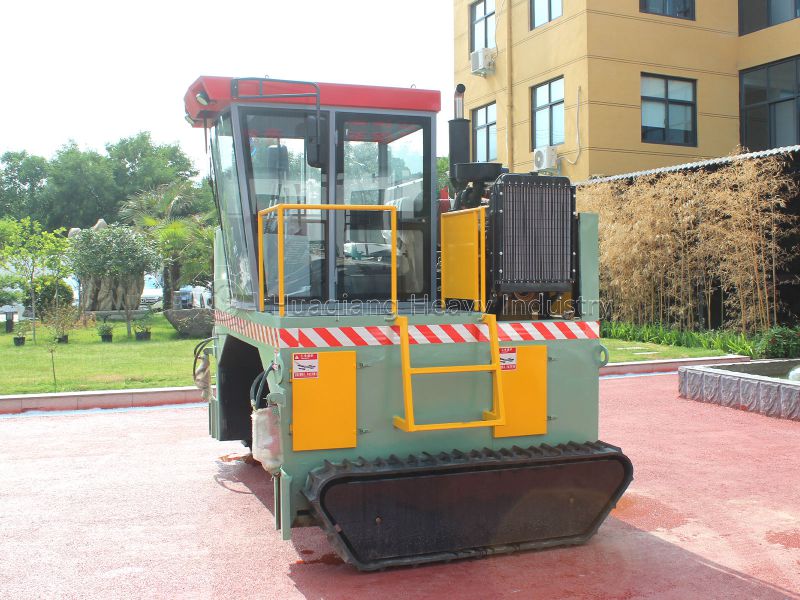
The fermentation process focuses on large-scale, efficient maturation, often using windrow compost turners or trough-type compost turners. The compost pile height is 1.5-2.0 meters and the width is 3-5 meters to ensure air permeability and heat retention. Fermentation is divided into three stages: First, the temperature is raised to 55℃ for 1-3 days, then maintained at 55-65℃ for at least 3 days to kill pathogens and insect eggs. Finally, the temperature is lowered to below 40℃, allowing microorganisms to continue decomposing organic matter. Regular turning and aeration throughout the process promotes uniform composting.

Quality control and final stages determine compost quality. The maturity standard is: temperature reduced to room temperature, dark brown color, no fecal odor, and organic matter content ≥30%. After screening and impurity removal, qualified material can be directly used as core raw material in organic fertilizer production lines to process into commercial fertilizer. Material not connected to the production line must be stored in a well-ventilated and dry place to prevent moisture absorption.
Core equipment for bio-organic fertilizer production lines adapted to complex working conditions

The raw materials for bio-organic fertilizer production often contain half-wet materials such as livestock and poultry manure and kitchen waste. These materials are highly viscous and difficult to process, and the fermentation process often faces challenges such as large piles and complex sites. The half-wet material crusher and windrow compost turner, as specialized equipment for bio-organic fertilizer production, are precisely adapted to these complex working conditions and are key to ensuring the stable and efficient operation of the bio-organic fertilizer production line.

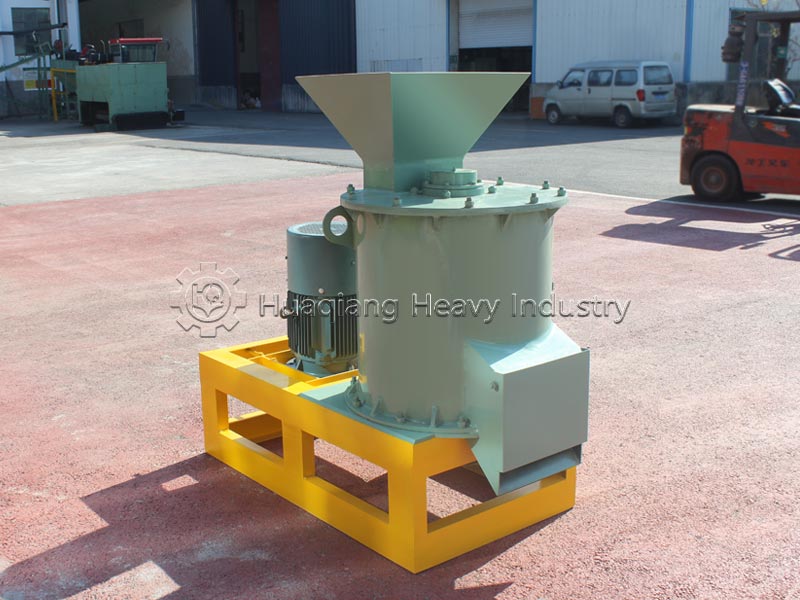
The half-wet material crusher is the core equipment for the pretreatment of half-wet raw materials. With its special blade structure and anti-sticking design, it can effectively overcome the problem of wet material adhesion, crushing half-wet raw materials with a moisture content of 30%-60% into uniform particles through shearing and extrusion. This not only prevents material clumping from hindering subsequent processes but also improves the uniformity of the mixture of raw materials and fermentation agents, laying the foundation for efficient composting. It is the ideal equipment for processing half-wet raw materials in bio-organic fertilizer production lines.

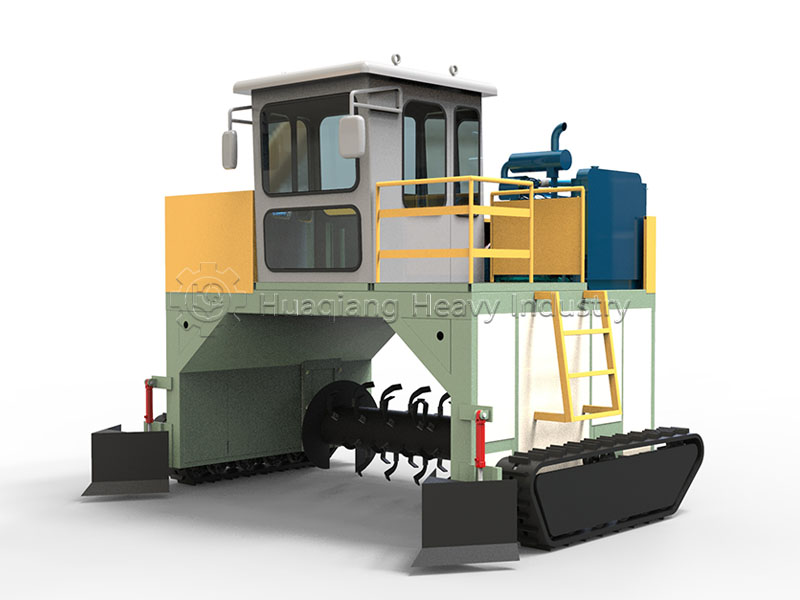
After pretreatment, the raw materials enter the fermentation stage, where the windrow compost turner demonstrates its unique advantages in adapting to complex working conditions. Its crawler-type walking structure can easily handle uneven fermentation sites and can deeply turn over large areas and high piles of material, breaking up compacted layers to ensure ventilation and aeration, and uniformly regulating the pile temperature to accelerate microbial decomposition and improve fermentation efficiency. In large-scale bio-organic fertilizer production lines, its flexible movement and efficient turning capabilities make large-scale fermentation smoother.

Working together, these two pieces of equipment precisely solve the industry pain points of half-wet raw material processing and large-scale fermentation, fully demonstrating the important role of bio-organic fertilizer equipment in improving the adaptability and efficiency of bio-organic fertilizer production lines.

Highly efficient and stable windrow compost turners safeguard the production of high-quality organic fertilizer

In a modern organic fertilizer fermentation plant, one of the most striking scenes is a windrow compost turner steadily moving between raw material piles. This is the starting point for the efficient and coordinated operation of organic fertilizer production equipment.

The significant advantage of the tracked design lies in its superior stability and maneuverability. Whether on soft piles or slightly muddy ground, the wide tracks effectively distribute pressure, preventing the equipment from sinking and ensuring continuous operation. This adaptability to complex environments makes it a reliable and solid foundation in organic fertilizer production lines.

In the family of compost turning equipment, in addition to windrow compost turners, there are also various other types, such as large wheel compost turners. Large wheel compost turning machines, with their unique rotating disc structure, also perform excellently in material mixing and crushing. The choice of equipment usually depends on the production scale, site layout, and raw material characteristics.

After the material has completed fermentation and maturation under the action of the windrow compost turner, the next step is for the organic fertilizer granulator to take over. These loose, powdery fertilizers are transformed into regular, compact granules in the granulator, greatly facilitating subsequent storage, transportation, and application.

From the turning and composting by the windrow compost turner to the shaping and granulation by the organic fertilizer granulator, each piece of equipment is an indispensable part of a modern fertilizer production system.