In modern agriculture and environmental protection, compost turners have become indispensable equipment for organic waste processing. Through scientific turning operations, this innovative machinery efficiently transforms livestock manure, crop straw, food waste, and other organic materials into high-quality organic fertilizer, achieving the dual goals of resource recycling and environmental protection.
Working Principle: Creating Ideal Conditions for Microorganisms
The core function of compost turners is to create optimal living conditions for microorganisms that decompose organic matter. First, mechanical turning provides adequate oxygen to the compost pile, which is crucial for successful aerobic fermentation. When the pile becomes compacted with poor ventilation, anaerobic conditions develop, leading not only to inefficient fermentation but also to the release of harmful gases like hydrogen sulfide.
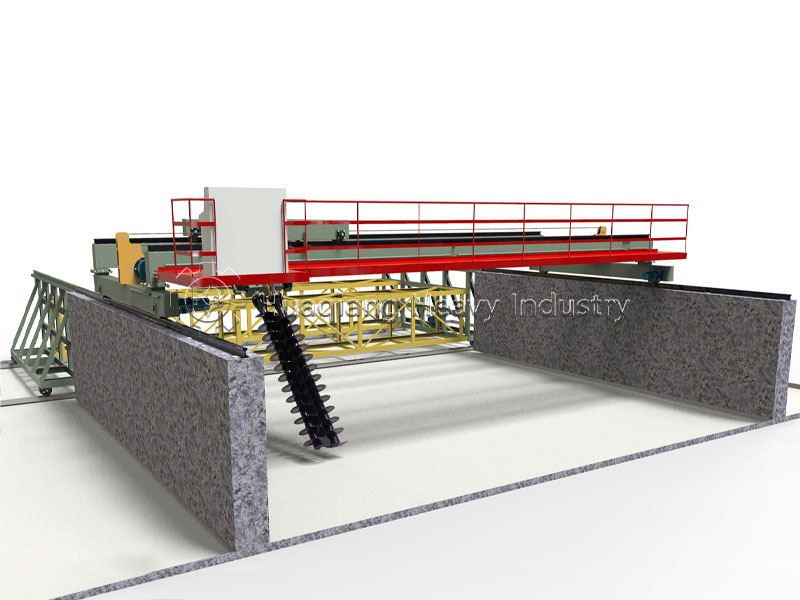
Using specialized blades or spiral structures, compost turners lift and break up the pile from the bottom, allowing air to fully penetrate the compost mass. This oxygen optimization ensures that aerobic microorganisms receive sufficient oxygen to maintain their efficient metabolic activities.
Secondly, by mixing materials from different temperature zones, compost turners maintain the entire pile within the ideal fermentation temperature range of 55-65°C. This temperature range effectively eliminates pathogens and weed seeds while protecting beneficial microorganisms from damage. Meanwhile, the mixing function ensures even distribution of moisture, carbon-nitrogen ratio, and microorganisms, preventing localized incomplete fermentation.
Multiple Benefits: Dual Improvement in Efficiency and Quality
Using compost turners can significantly reduce the traditional composting period from 3-6 months to just 15-45 days. This efficiency improvement not only speeds up organic fertilizer production but, more importantly, significantly enhances product quality. Organic fertilizer that undergoes uniform turning and thorough fermentation contains higher humus content, more balanced nutrient distribution, and is completely free from odors and harmful substances.
Environmentally, compost turners help solve the challenge of organic waste treatment. Livestock manure, food waste, and other organic materials achieve resource utilization through composting fermentation, with each ton of livestock manure producing 0.6-0.8 tons of high-quality organic fertilizer, reducing environmental pollution while creating economic value.
Agricultural Value: Promoting Sustainable Agriculture
Organic fertilizer produced using compost turners has significant effects on improving soil quality. Long-term application of organic fertilizer increases soil organic matter content, improves soil aggregate structure, and enhances soil water and nutrient retention capacity. This is particularly important for alleviating soil compaction problems caused by long-term chemical fertilizer use.
Beneficial microorganisms in organic fertilizer can regulate soil microecological balance and promote crop root development. This eco-friendly fertilization method aligns with the development trend of green agriculture, helping to reduce the use of chemical fertilizers and pesticides while promoting sustainable agricultural development.
Economic Benefits: Smart Choice for Large-Scale Production
Compared to traditional manual turning, compost turners offer clear advantages in economic benefits. A medium-sized compost turner can process the same volume of material as 50-100 laborers in a day, while ensuring better turning uniformity. This efficiency improvement makes large-scale organic fertilizer production feasible, providing economically viable solutions for livestock farms, organic fertilizer plants, and environmental treatment stations.
As global emphasis on sustainable agriculture and environmental protection continues to grow, compost turner technology is also continuously innovating and developing. In the future, intelligent and automated turning equipment will further optimize the composting process, making greater contributions to global organic waste treatment and resource recycling.
Advanced Composting Technology: Integrating Equipment and Process Optimization
Modern fermentation composting turning technology has revolutionized the organic fertilizer fermentation process, with specialized equipment playing a crucial role in optimizing biological transformation. The trough-type compost turner and hydraulic trough compost turner provide precise control for indoor operations, while the large wheel compost turner and windrow compost turner handle large-scale outdoor composting with exceptional efficiency. For challenging materials, the chain compost turning machine offers robust performance in breaking down dense organic matter.
These essential equipments required for biofertilizer production work in harmony to implement sophisticated fermentation composting technology for organic fertilizer, maintaining optimal temperature, aeration, and moisture levels throughout the composting cycle. The integration of these specialized turning machines with comprehensive fermentation management systems ensures efficient decomposition while preserving valuable nutrients and beneficial microorganisms. This technological synergy not only accelerates the transformation of organic waste into high-quality fertilizer but also supports the principles of circular economy and sustainable agriculture, creating a closed-loop system where waste becomes valuable resources for soil health and crop productivity.