In the era of emphasizing circular economy and sustainable waste management, trough-type compost turners have emerged as indispensable mechanized equipment in large-scale organic waste treatment systems. These specialized machines operate by traversing along fixed rails positioned above elongated fermentation troughs, leveraging rotating drums equipped with robust teeth or paddles to perform a suite of critical functions—lifting, breaking, mixing, and aerating diverse organic materials such as livestock manure, municipal sludge, crop residues, and even agricultural by-products like oil palm empty fruit bunches. By optimizing aerobic decomposition conditions, they enable the rapid and consistent conversion of organic wastes into stable, nutrient-rich compost, making them a cornerstone in organic fertilizer production, environmental waste treatment, and sustainable agriculture sectors.
The working principle of trough-type compost turners is a sophisticated integration of mechanical motion and biological decomposition, with each functional step meticulously designed to enhance composting efficiency. Aeration, the fundamental prerequisite for successful aerobic composting, is achieved through the machine’s rotating drum. Equipped with sharp, wear-resistant teeth or curved paddles, the drum penetrates deep into the compost pile—often reaching 1 to 1.8 meters in depth—lifting and turning over bottom-layer materials that are prone to oxygen depletion. This process fully exposes the organic matter to atmospheric oxygen, which is essential for fueling the metabolic activities of aerobic microbes (such as bacteria and fungi). By maintaining sufficient oxygen levels (typically 15-20% within the pile), the turners effectively prevent the formation of anaerobic environments that produce foul-smelling gases like hydrogen sulfide and methane, ensuring a odor-controlled composting process.
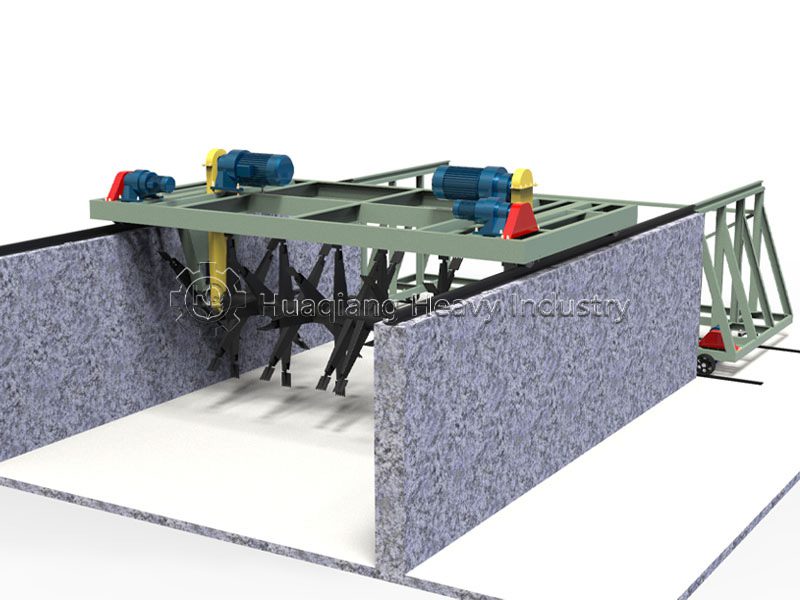
Mixing and breaking are equally crucial functions that guarantee uniform compost quality. During operation, the high-speed rotation of the drum (usually 25-40 revolutions per minute) shatters dense clumps and hard lumps in the compost pile, which are common in materials like fresh manure or dewatered sludge. Simultaneously, the turning action thoroughly blends different sections of the pile, eliminating uneven distribution of moisture (wet and dry spots) and temperature (hot and cool zones). This uniform mixing ensures that all organic particles are exposed to the optimal composting environment, avoiding incomplete decomposition caused by local deficiencies in oxygen, moisture, or nutrients. For instance, when processing a mixture of high-carbon crop straw and high-nitrogen poultry droppings, the turner ensures the carbon-to-nitrogen ratio (C/N) is evenly maintained at the ideal range of 25:1 to 30:1, a key factor in accelerating microbial decomposition.
Material movement and process control further enhance the continuity and efficiency of the composting process. As the trough-type turner travels along the rails at an adjustable speed (0.5-1.5 meters per minute), the rotating drum pushes the compost material backward slightly, ensuring that every particle in the long trough is sequentially turned and mixed. This continuous material circulation, combined with aeration and mixing, creates a stable composting environment where temperature is regulated between 55-65°C—a range that effectively kills pathogens, weed seeds, and insect eggs while promoting the decomposition of organic matter into humus. Moreover, many advanced models are equipped with intelligent monitoring systems that track real-time temperature and moisture levels in the pile. When moisture content deviates from the optimal 55-60%, the integrated sprinkler system automatically supplements water, further refining process control. Thanks to these optimized mechanisms, trough-type turners can shorten the composting cycle significantly, reducing the traditional 45-60 day process to just 7-10 days for mature compost production.
The applications of trough-type compost turners are diverse and far-reaching, addressing critical needs across multiple industries. In organic fertilizer production plants, they are widely used to convert livestock manure (cow dung, pig manure), poultry droppings, and crop residues (wheat straw, corn stover) into high-quality organic fertilizers, which enhance soil fertility and reduce reliance on chemical fertilizers. In environmental protection, they play a vital role in treating municipal sludge and food waste—processing these potentially polluting wastes into usable compost, thereby reducing landfill pressure and mitigating environmental pollution. In horticulture and landscaping, the compost produced with their assistance is used to improve soil structure in gardens, green belts, and horticultural fields, promoting healthy plant growth. Additionally, they find applications in biomass energy production, where they prepare organic materials for subsequent energy conversion processes, and in mushroom cultivation, facilitating the fermentation of substrate for agaricus growth.
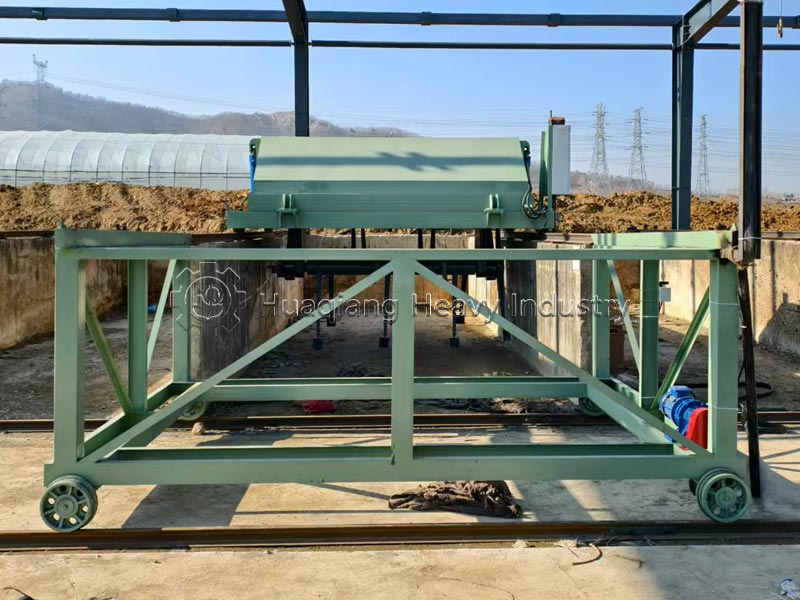
With their efficient performance, odor control capabilities, and versatile applications, trough-type compost turners have become an essential tool in advancing sustainable waste management practices. By bridging the gap between organic waste and valuable compost, they not only contribute to environmental protection but also support the development of a circular economy, making them indispensable in the global pursuit of green and sustainable development.
The Critical First Step in a Value-Adding Chain
The trough-type compost turner is a foundational piece of equipment that embodies advanced fermentation composting turning technology. It is specifically designed to execute trough-type aerobic fermentation composting technology, providing the controlled environment necessary for rapid and uniform decomposition. As a highly efficient agriculture waste compost fermentation machine, it accelerates the organic fertilizer fermentation process, transforming raw waste into stable, mature compost.
This machine is a core component within the broader suite of equipments required for biofertilizer production. While a hydraulic trough compost turner excels in this controlled trench system, other site layouts may utilize a self propelled compost production machine or a windrow compost turning machine for open windrows. The high-quality compost produced by these systems serves as the primary organic feedstock. To create a market-ready product, this compost is often further processed—it can be blended with other nutrients and shaped into uniform granules using equipment like a rotary drum granulator in subsequent processing stages. Thus, the turner’s role is to create the essential raw material that feeds the entire organic fertilizer manufacturing value chain.Ultimately, by ensuring efficient and hygienic decomposition, trough-type turners are not just waste processors; they are the vital first-stage enablers of a sustainable industry that converts organic waste into valuable soil amendments and biofertilizers.