In the wave of green agricultural development, organic fertilizer, with its ability to improve soil structure and enhance crop quality, has become a crucial support for sustainable agricultural development. The key step in organic fertilizer production—fermentation composting—relies heavily on the core equipment: the compost turner. From trough-type and wheel-type to chain-type compost turners, different types of equipment adapt to diverse production needs. Combined with scientific fermentation processes, they enable agricultural waste to undergo a remarkable transformation from waste to treasure.
The compost turner is the “soul equipment” in the organic fertilizer fermentation composting process. Its core function is to regulate the temperature, humidity, and aeration within the compost pile by turning it, creating a suitable environment for microorganisms to decompose organic matter. Currently, there are various types of compost turners on the market, suitable for different production scenarios: trough-type compost turners operate using a trough structure, offering deep turning depth and high efficiency, suitable for large-scale, continuous production; large wheel compost turners, with their large-diameter wheels, can move flexibly in open areas, suitable for large-area composting operations, especially for large farms or organic fertilizer plants; chain compost turners achieve turning through chain drive, providing good crushing of the compost pile, allowing for more uniform material mixing, and improving fermentation efficiency; windrow compost turners are specifically designed for windrow composting, offering convenient operation and suitable for small to medium-sized production scales.
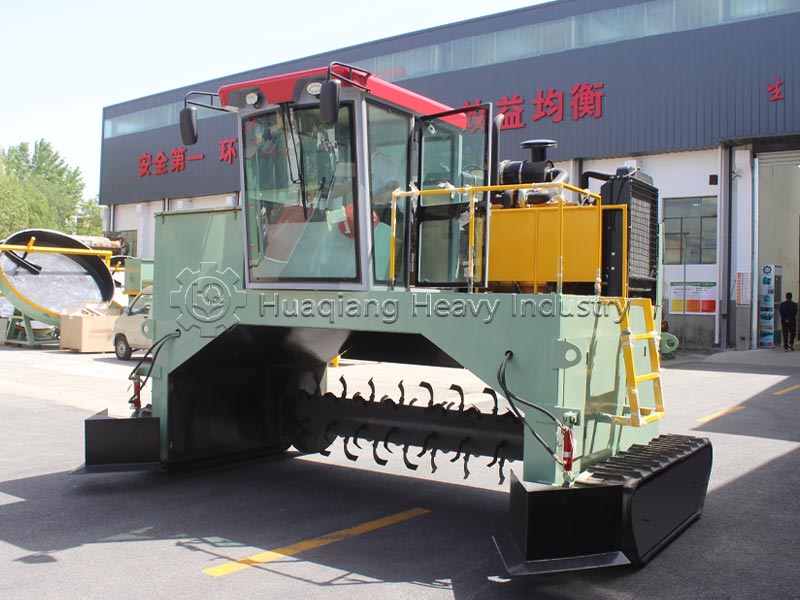
The production of high-quality organic fertilizer requires not only suitable compost turners but also scientific fermentation composting technology. Organic fertilizer fermentation is the process of microbial decomposition of organic materials, and fermentation composting turning technology is crucial to ensuring successful fermentation. In the early stages of fermentation, the compost turner thoroughly mixes organic materials such as straw and livestock manure with microbial agents by turning the compost pile. During the middle stages of fermentation, regular turning lowers the pile temperature, preventing high temperatures from killing beneficial microorganisms, while also replenishing oxygen to prevent the growth of anaerobic bacteria and the generation of foul odors. In the later stages of fermentation, turning promotes uniform decomposition and improves the quality of the organic fertilizer. Throughout the entire organic fertilizer fermentation process, the operating frequency and turning depth of the compost turner need to be dynamically adjusted according to the pile temperature and humidity. Generally, when the pile temperature rises above 55℃ and remains there for 3-5 days, timely turning to cool it down is necessary.
As a core component of the equipment required for biofertilizer production, the compost turner works in conjunction with subsequent equipment such as the disc granulation production line to form a complete organic fertilizer production chain. The material, after fermentation and decomposition by turning, is then processed into granular organic fertilizer by the disc granulator for easy storage, transportation, and application. It is worth noting that the application of fermentation composting technology not only solves the problem of agricultural waste pollution but also achieves resource recycling, aligning with the concept of green agriculture development.
With the improvement of agricultural modernization, the technology of compost turners is constantly iterating, and more intelligent, efficient, and environmentally friendly equipment is continuously emerging, driving the continuous upgrading of fermentation composting technology. Understanding the types of compost turners and fermentation processes can not only help us better understand the scientific principles of organic fertilizer production but also raise awareness of the resource utilization of agricultural waste, injecting more power into promoting the development of green agriculture.