When we purchase fertilizer, seeing uniform, round, and solid granules feels more reliable. The quality of fertilizer granules—including uniformity, hardness, water resistance, and nutrient stability—determines their effectiveness during storage, transportation, and application. So, what factors influence the quality of these small pellets? It primarily depends on four main aspects: raw material properties, processing parameters, equipment conditions, and post-treatment processes.
Raw Materials: The Foundation of Granule Quality
First, the moisture content of the raw materials is crucial. Moisture acts like the “binder” for the granules. If the material is too dry, particles have difficulty bonding tightly, resulting in loose, easily broken granules. If it’s too wet, the material can clump together or even clog the die holes of the equipment. Different types of fertilizer have their own optimal moisture content ranges.
Second, the particle size and distribution of the raw materials must also be uniform. Fine, even powder is more easily compacted into solid granules without gaps. If mixed with unprocessed coarse fibers or large particles, voids will form inside the finished product, leading to insufficient hardness and making them fragile.
Furthermore, the inherent binding ability and chemical composition of the raw materials are also key. Materials containing humic acid, peat, or starch have a natural “glue” effect that can enhance granule strength. Materials with poor adhesion, like urea or phosphate rock powder, require adding binders such as bentonite or molasses. At the same time, the chemical compatibility of different nutrient compounds must be considered. For example, mixing ammonium nitrogen fertilizer with alkaline fertilizer may produce gas or moisture, causing the granules to crack or powder during storage.
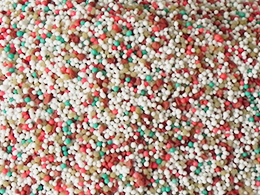
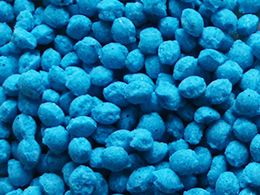
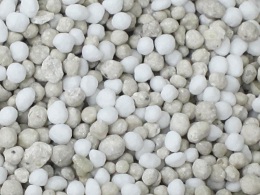
Processing: The Key Process Shaping the Granules
The processing stage is key to shaping the raw materials into granules. Different granulation methods yield granules with different characteristics. For instance, flat die extrusion granulation typically produces denser, harder granules, while drum granulation produces rounder but potentially less dense granules.
In extrusion-type granulators, the pressure level directly determines the compactness of the granules. Insufficient pressure results in loose granules; excessive pressure, while producing hard granules, accelerates equipment wear and increases energy consumption. The machine’s rotational speed also needs precise control—too fast shortens the material’s residence time in the die, leading to incomplete forming; too slow reduces production efficiency.
A stable feeding rate is another critical point for ensuring granule uniformity. Fluctuating feed amounts cause uneven “digestion” in the machine, producing granules of varying sizes and inconsistent quality.
Equipment and Post-Treatment: Safeguarding Quality
The condition of the equipment itself is crucial for the long-term, stable production of high-quality granules. The smoothness and wear of the die (or plate) directly affect the surface finish of the granules and the smoothness of discharge. Worn press rollers or uneven drum linings cause uneven force application, resulting in inconsistent granule density and size. Therefore, regular maintenance and replacement of wear parts are essential.
After the granules are formed, they need proper “care.” Drying is the first step, where temperature and time must be just right. Excessive temperature or prolonged drying causes granules to crack due to rapid water evaporation and leads to nutrient loss (especially nitrogen volatilization). Insufficient temperature or drying time leaves too much residual moisture in the granules, making them highly prone to moisture absorption and caking during storage. Typically, organic fertilizers are recommended to be dried at low temperatures of 60–80°C to protect organic activity.
Cooling and screening are the next steps. Timely cooling prevents hot granules from absorbing moisture, and screening removes oversized, undersized, and broken granules, ensuring uniform final product specifications. Sometimes, granules also undergo a coating process, where they are wrapped in an outer layer, such as kaolin or a polymer film. This can significantly improve their water resistance and nutrient slow-release properties.
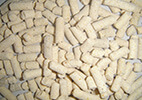
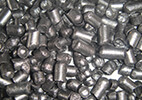
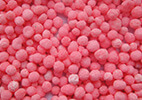
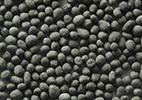
The Science of Granule Formation: From Compaction to Coating
Achieving high-quality fertilizer granules requires precise control throughout the production process, heavily reliant on advanced npk fertilizer production technology. The method of formation is critical; dry granulation processes utilize fertilizer granules compaction in a fertilizer compaction machine, while wet granulation employs methods like drum granulation using a rotary drum granulator. The choice of technology, such as implementing a roller press granulator production line for compaction or a disc granulation production line for shaping, is a key decision in the npk manufacturing process and overall fertilizer production machine configuration.
For specialized products, innovations like a new type organic fertilizer granulator may be integrated into a comprehensive npk production line or a dedicated organic line. Regardless of the chosen fertilizer compaction or wet granulation route, the synergy between material science, precise equipment operation, and controlled post-treatment determines the final granule’s hardness, uniformity, and nutrient stability. This integrated approach ensures that the finished product meets the rigorous demands of modern agriculture for efficient, reliable, and high-performing fertilizers.
Conclusion
The creation of a high-quality fertilizer granule is the result of precise control and systematic management. From the accurate formulation and pretreatment of raw materials, to the optimization of processing parameters, followed by proper equipment maintenance and strict post-treatment, every step is interconnected and collectively determines the final product’s quality. Understanding these factors not only helps producers enhance product competitiveness but also provides users with a better basis for selection.