On the path to sustainable living, home composting has become a key practice for reducing kitchen waste and creating natural fertilizer. However, traditional composting methods often struggle with “difficult” scraps like meat and dairy, and can produce odors when attempted indoors. It is in response to these challenges that Bokashi composting, a unique method originating from Japan, offers an efficient and clean innovative solution for urban dwellers and those with limited space.
In simple terms, Bokashi composting is an anaerobic fermentation process that utilizes specific Effective Microorganisms (EM) in an airtight container. Its core principle is not to let organic matter “rot” as in traditional composting, but to subject it to “lactic acid fermentation”—similar to the process of making pickles. This method can transform almost all types of kitchen waste, including fruit and vegetable scraps, meat, fish, dairy products, coffee grounds, and even small bones, into nutrient-rich pre-compost and a valuable liquid fertilizer.
How Does Bokashi Composting Work?
The beauty of Bokashi lies in its simple two-step process:
Step 1: Indoor Fermentation (Approximately 2-4 Weeks)
You will need a specialized airtight bucket, usually equipped with a tap. Each day, place your kitchen scraps into the bucket. For every layer of waste (about 5-10 cm thick), sprinkle a handful of “Bokashi bran” evenly. This bran is typically rice bran or wheat bran inoculated with Effective Microorganisms like lactic acid bacteria and yeast. Then, press the waste down firmly to remove as much air as possible and immediately seal the lid tightly to maintain a strictly anaerobic environment. The microbes get to work, fermenting the waste. During this period, you will need to drain the accumulated liquid from the tap at the bottom every few days; this is the nutrient-rich “Bokashi tea.” After about two weeks, when the contents emit a strong, sweet-sour or pickled smell (not a foul odor) and no more liquid is produced, the indoor fermentation stage is complete.
Step 2: Soil Transformation (An Additional 2-4 Weeks Required)
The material in the bucket still looks like food scraps, but it has undergone a fundamental change—it is now “pre-compost.” This is the most crucial aspect of the Bocasi composting method: it cannot be used directly as soil fertilizer. You need to bury this pre-compost in the garden soil, at the bottom of large flower pots, or mix it into a traditional compost pile. With the combined action of aerobic microorganisms in the soil, the pre-compost will completely decompose within 2 to 4 weeks, transforming into high-quality humus suitable for plant growth. Using pre-compost directly can actually damage plant roots.
Key Advantages and Products of Bokashi
Wide Applicability: Can process the full spectrum of kitchen waste, significantly reducing household garbage.
Fast and Clean: The fermentation process is quick, virtually odorless, and does not attract pests or flies, making it ideal for apartments and indoor kitchen use.
Dual Outputs:
Bokashi Tea: The collected liquid, when diluted (typically 1:100), is an excellent liquid fertilizer or foliar feed; the undiluted liquid can be used as a natural drain cleaner.
Finished Compost: After soil transformation, you obtain humus rich in nutrients and with excellent structure, which significantly improves soil health.
Conclusion
Bokashi composting is more like a “pre-treatment” system. It cleverly leverages the efficiency and cleanliness of anaerobic fermentation to overcome the limitations of traditional composting. It is particularly suitable for urban households with a small amount of outdoor space (for burying the pre-compost), serving as a perfect bridge connecting the modern kitchen to healthy soil. By transforming waste into resources, Bokashi not only nourishes the land but also puts into practice a wisdom of circular and regenerative living.
Scaling Up: From Household Fermentation to Commercial Production
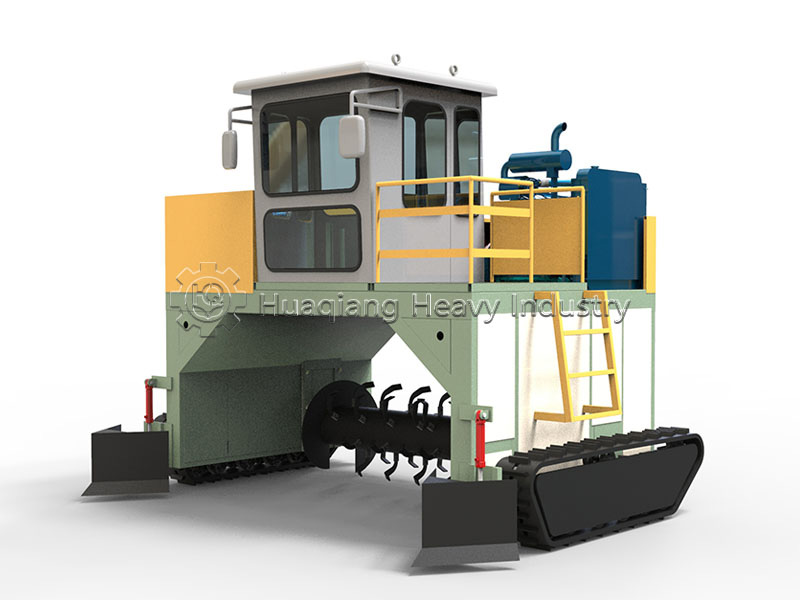
While Bokashi provides an efficient anaerobic pre-treatment for households, scaling this process for agricultural use requires integration with established aerobic systems. The material produced by Bokashi fermentation can serve as a high-quality input for the industrial organic fertilizer fermentation process. This transition to large-scale organic fertilizer fermentation utilizes advanced fermentation composting technology for organic fertilizer, which relies on fermentation composting turning technology implemented by equipment such as the trough-type compost turner, large wheel compost turner, or chain compost turner.
Following complete aerobic stabilization, the matured compost becomes part of the equipments required for biofertilizer production. To create a commercial product, it is processed using fertilizer granulation technology. A fertilizer production machine like a disc granulator for shaping is often used within a complete disc granulation production line to transform the compost into uniform pellets. This integrated approach demonstrates a complete pathway from decentralized waste processing to the manufacture of standardized, high-value organic fertilizers, connecting individual environmental action with the broader agricultural nutrient cycle.