Bokashi composting, a popular method for household kitchen waste management, is favored for its speed, odor-free process, and ability to handle a wide variety of organic waste, including small amounts of meat and dairy. However, this method is not without its flaws. A deeper understanding of its main challenges is crucial for determining whether it suits your household and living environment.
- The “Pre-Compost” Nature: Incomplete Decomposition
The most critical and often misunderstood aspect of the bokashi process is that the step completed in the bucket is not the final decomposition. After about two weeks of anaerobic fermentation, what you obtain is a “pre-compost” material. This matter may look similar to the original food scraps but has been pre-fermented by effective microorganisms (EM) like lactic acid bacteria and yeast.
This characteristic means the fermented product cannot be directly used as fertilizer or soil amendment for plants. It must undergo a second crucial step: either be buried in garden soil for at least 2-4 weeks, allowing soil microbes to complete the final breakdown, or be incorporated into a traditional aerobic compost bin/pile to further decompose as a microbe-rich “activator.” Skipping this step and applying the unfinished material directly to plant roots can harm plants due to its high acidity and active decomposition process, potentially “burning” roots and producing unpleasant odors in the soil.
- Space Requirements: Not Apartment-Friendly
The necessity of this second step directly limits the applicability of bokashi composting in certain living situations. For urban dwellers in apartments without private gardens, or even without large soil-filled planters, the instruction to “bury the pre-compost in soil” becomes exceptionally difficult.
While some individuals experiment with large pots or community gardens as a solution, this is not universally feasible. Without an appropriate site for final processing, the entire cycle cannot be completed. This makes bokashi composting better suited for homes with yards, vegetable plots, or easy access to community composting facilities, thereby restricting its widespread adoption in highly urbanized areas.
- Process Risks: Potential for Anaerobic Putrefaction
The success of bokashi relies on creating strict anaerobic conditions within a sealed container to promote the dominance of beneficial microbes like lactic acid bacteria. This process demands careful operation. After each addition of kitchen waste, the scraps must be firmly compressed to minimize air pockets, and the lid must be closed tightly immediately.
If the container is not airtight, if food residue is left on the seal, or if the lid is left open frequently for extended periods, air (oxygen) can enter. This can lead to the growth of harmful anaerobic putrefying bacteria (e.g., those producing hydrogen sulfide), causing the contents to rot and emit a pungent stench reminiscent of rotten eggs or decaying garbage, signaling a failed fermentation. Therefore, it requires users to maintain a degree of operational consistency and diligence.
- Ongoing Costs: Dependence on Specialized Bran
Unlike traditional composting, which relies on naturally occurring microbes, bokashi composting requires a special inoculant: bokashi bran (or bokashi spray). This bran is typically made from rice bran, molasses, and a specific mixture of effective microorganisms (EM), and it is essential for initiating and maintaining the fermentation process.
Users need to sprinkle a layer of bran each time they add waste, making it a continuous consumable that incurs long-term costs. Although it’s possible to make it at home, the process can be somewhat complex for many beginners. Furthermore, in some regions, commercial bokashi bran can be relatively expensive or difficult to obtain, adding to the barrier of entry and uncertainty.In summary, the main problems with bokashi composting can be outlined as follows: It is a two-step process, not a one-stop solution; it imposes requirements for final processing space; its success depends on strict operation to avoid putrefaction; and it necessitates ongoing access to a specialized fermenting inoculant.
Recognizing these issues is not to negate the method’s value—for households that can properly manage the second step and seek a fast way to process kitchen waste while recycling a broader range of food scraps, it remains an excellent choice. The key is to thoroughly assess whether you have the conditions and willingness to complete the entire process before adopting the bokashi method, thereby making the most sustainable choice tailored to your lifestyle.
Conclusion: Bokashi in the Organic Waste Management Ecosystem
While bokashi composting presents specific challenges for household implementation—primarily its two-stage nature and space requirements—it represents an important initial processing method within the broader organic waste management hierarchy. The fermented “pre-compost” it produces requires subsequent aerobic treatment to become stable fertilizer, which is where industrial-scale systems excel.
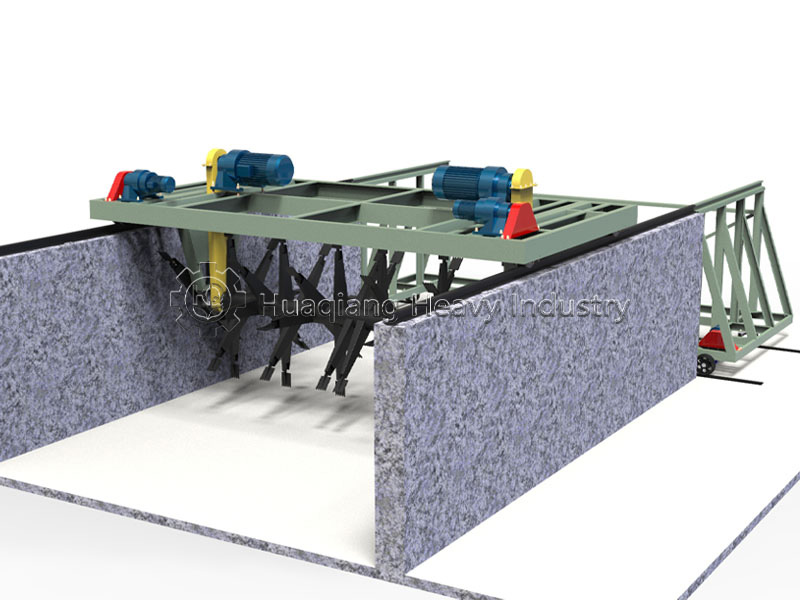
In commercial operations, the secondary processing stage that bokashi necessitates is efficiently handled by industrial fermentation composting technology for organic fertilizer. Systems utilizing specialized equipment like the windrow compost turning machine, trough-type compost turner, or large wheel compost turner apply advanced fermentation composting turning technology to rapidly complete decomposition. These machines, core to the equipments required for biofertilizer production, ensure proper aeration, temperature control, and homogeneous breakdown, transforming pre-fermented material into consistent, high-quality compost that can be further processed through a disc granulation production line if granular products are desired.
Thus, bokashi’s limitations at the household level highlight the complementary relationship between small-scale pre-processing and industrial-scale finishing technologies. For municipalities or farms integrating diverse waste streams, bokashi fermentation could serve as an effective pre-treatment stage before material enters centralized facilities employing robust turning technologies for final stabilization and product manufacturing.