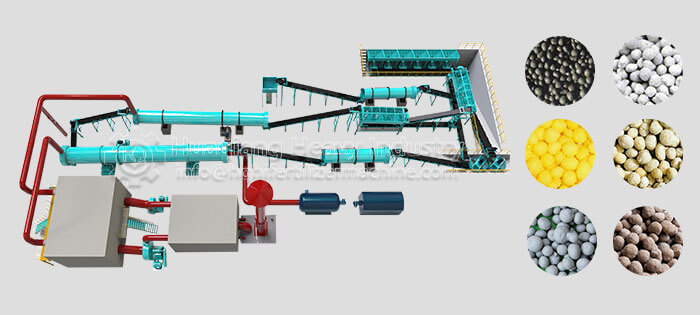
An NPK blending fertilizer production line is essentially a complete equipment system for processing bulk blended fertilizer (BB fertilizer). Its core function is to precisely and uniformly mix nitrogen, phosphorus, and potassium fertilizers with micronutrients according to a pre-set formula, producing customized blended fertilizers. It is a crucial production platform connecting raw materials with precise fertilization needs.
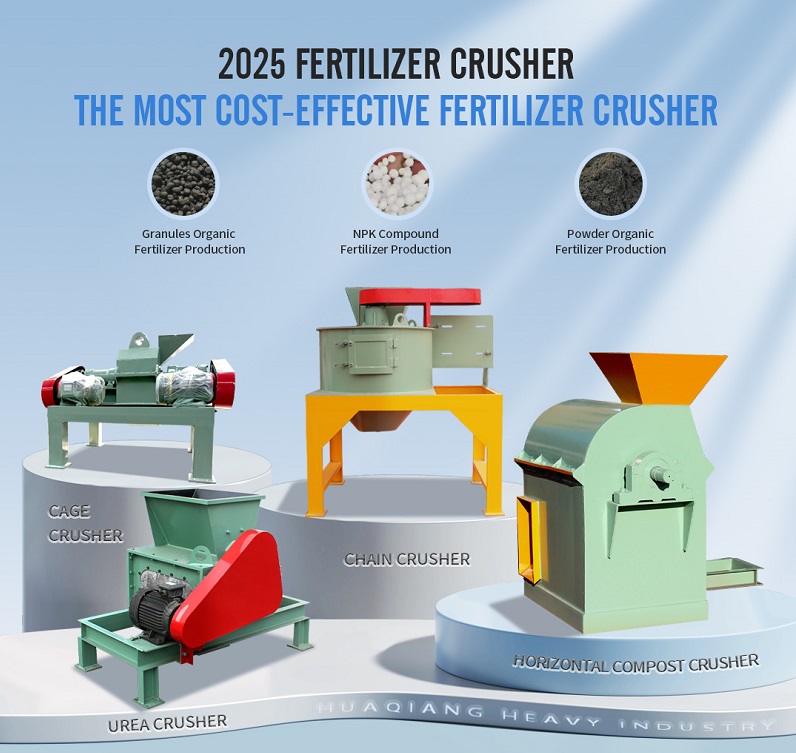
The production line operates through four core units. The raw material pretreatment unit is responsible for screening, crushing, and removing impurities from the single-element fertilizers, eliminating lumps and ensuring uniform particle size, laying the foundation for mixing. The metering and batching unit is the core, automatically adding materials according to the formula using precise weighing equipment, with an error controlled within ±1%, ensuring accurate nutrient ratios.
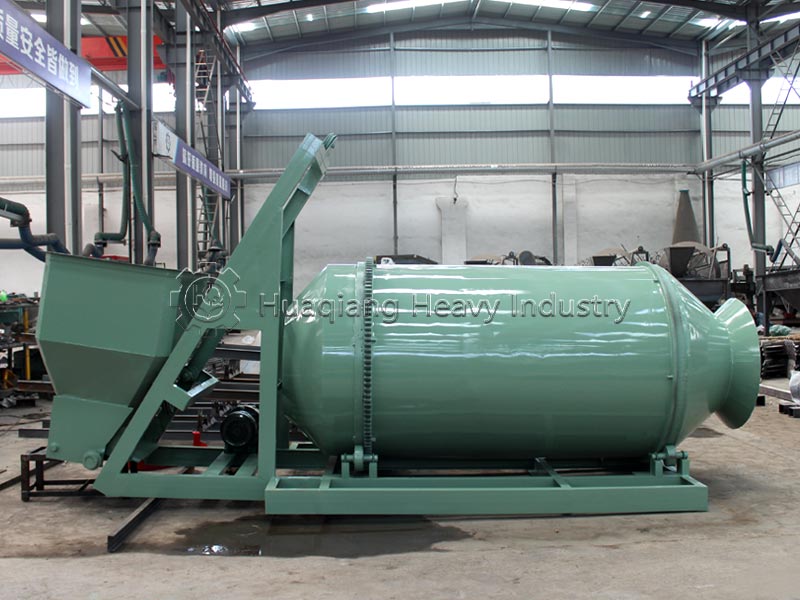
The mixing and finished product processing unit handles subsequent processes. The mixing process primarily utilizes double shaft paddle mixers or BB fertilizer mixers, employing strong convection principles to achieve rapid blending of raw materials, resulting in a nutrient variation coefficient of less than 3% and preventing localized nutrient enrichment. After screening to remove impurities, the finished product is packaged by fertilizer packaging machines or directly sent to bulk silos, adaptable to various storage and transportation scenarios.
Its core advantage lies in flexible production. Unlike the fixed formulas of compound fertilizer production lines, it can adjust the formula in real time based on soil data and crop nutrient requirements, quickly switching between different formulations. Furthermore, the level of automation in the production line can be configured as needed, catering to the production needs of both small and medium-sized workshops and large enterprises.
In summary, the NPK blending fertilizer production line is not a single piece of equipment, but a precise and flexible complete system. Through the collaborative efforts of its various units, it achieves integrated production, providing solid capacity support for precision fertilization in modern agriculture.
Nutrient deficiencies in crops gradually manifest through changes in the appearance of leaves, stems, and fruits, with different nutrient deficiencies showing distinct symptoms. Understanding these characteristics allows for timely fertilization to mitigate losses. Targeted fertilizers produced by equipment such as organic fertilizer production lines and NPK fertilizer production lines can be used for supplementation.
Nitrogen, phosphorus, and potassium deficiencies are the most common. Nitrogen deficiency causes older leaves to yellow first, spreading from the leaf tip to the petiole. The plants are stunted and weak, and the leaves are dull. High-nitrogen compound fertilizers produced by NPK fertilizer production lines can be used for supplementation. Phosphorus deficiency results in dark green or purplish-red leaves, which are more noticeable in new leaves. The root system is weak, the stems are thin, and the crops mature late with low fruit set. Potassium deficiency causes scorching and browning of the leaf margins, forming “scorched edges,” which are first seen in older leaves. Stems are prone to lodging, and fruit expansion is slow. Potassium fertilizers produced by specialized fertilizer production equipment can alleviate this.
Micronutrient deficiencies have specific symptoms. Iron deficiency causes new leaves to yellow first, with the veins remaining green, forming “green veins on yellow leaves,” commonly seen in acidic soils. Magnesium deficiency causes chlorosis between the veins of older leaves, resulting in patchy discoloration, followed by leaf shedding, affecting photosynthesis. Boron deficiency can lead to crops failing to set fruit, deformed fruits, and root tip necrosis, which is particularly significant for fruits and vegetables.
Diagnostic tips: First, observe the location of the deficiency (old leaves/new leaves), then observe the color changes, and make a comprehensive judgment based on the crop and soil conditions. It is important to note that nutrient deficiency symptoms can be easily confused with diseases, pests, and drought. Local fertilization and observation of growth can help confirm the diagnosis. Accurate fertilization requires professional equipment such as NPK fertilizer production lines to produce balanced fertilizers tailored to specific needs.
In today’s pursuit of sustainable agricultural development, organic fertilizers are highly favored due to their natural and environmentally friendly characteristics. They not only provide essential nutrients for crops but also improve the soil ecosystem, making them an ideal alternative to traditional chemical fertilizers. Below, we’ll take a closer look at five of the most commonly used and effective organic fertilizers, each with its own unique characteristics and irreplaceable role in agricultural production.
Compost: The Comprehensive Soil Improver
Compost is a black humus formed by microorganisms decomposing organic waste, often referred to as “black gold.” An ecological farm in the suburbs of Beijing has successfully utilized this technology: they mix 2 tons of daily kitchen waste with 3 tons of crop straw, and after 60 days of aerobic composting, transform it into high-quality organic fertilizer. Applying this compost to vegetable greenhouses increased soil organic matter content from 1.2% to 2.8% within two years, and vegetable yields increased by more than 25%.
Making high-quality compost requires mastering the art of carbon-nitrogen ratio balance. Typically, a mixture of three parts “brown material” (dried leaves, sawdust) and one part “green material” (kitchen waste, fresh grass) is used, maintaining appropriate moisture and turning the compost regularly to ensure oxygen supply. Mature compost has a fresh earthy aroma, and when the temperature drops to ambient temperature, it becomes an ideal choice for improving soil structure and providing comprehensive nutrition.
Manure: A Traditional Nutrient Treasure Trove
Manure, as one of the oldest fertilizers used by humans, is rich in nutrients. In the grasslands of Inner Mongolia, herders have traditionally used sheep manure for generations. They collect sheep excrement, compost it for 6-9 months, and produce high-efficiency organic fertilizer. Local experimental data shows that pasture yields are 30% higher in areas where sheep manure is applied than in areas where it is not, and the quality of the forage is also better.
Different animal manures have different characteristics: chicken manure has the highest nitrogen content, suitable for fast-growing leafy vegetables; cow manure has a balanced nutrient content and significantly improves soil; horse manure has a high calorific value, suitable for protected cultivation. It is important to note that fresh manure must be fully decomposed before use; otherwise, it may burn seedlings and spread diseases. A large chicken farm in Shandong Province has built standardized manure treatment facilities, processing 50,000 tons of chicken manure annually. The organic fertilizer produced is sold well in surrounding fruit and vegetable growing areas.
Bone Meal and Blood Meal: Targeted Nutritional Supplements
Bone meal is an excellent source of phosphorus and calcium, particularly suitable for flowering and fruiting crops. Flower plantations in Yunnan Province use bone meal extensively. Rose growers have found that applying bone meal during the bud formation stage results in larger, more vibrant flowers and extends the flowering period by about 15%. The phosphorus in bone meal promotes root development, while the calcium strengthens cell walls and improves plant disease resistance.
Blood meal, as a fast-acting, high-nitrogen fertilizer, is widely used in vegetable cultivation. An organic farm in Jiangsu Province used blood meal in its spinach cultivation, shortening the growth cycle by 7 days and resulting in thicker, greener leaves. The farm owner stated that compared to other organic nitrogen fertilizers, blood meal has a faster effect, typically showing noticeable results within 5-7 days after application. However, it’s crucial to control the dosage when using it, as excessive amounts may lead to nitrogen overload.
Earthworm Castings: A Living Factory for Microorganisms
Earthworm castings are hailed as the “King of Organic Fertilizers.” They are not only a high-quality fertilizer but also a rich source of microbial inoculants. An earthworm farming base in Guangdong processes 30,000 tons of agricultural waste annually, producing 10,000 tons of earthworm castings. Customer feedback shows that strawberry gardens using earthworm castings experienced a 2-degree increase in fruit sweetness, a 20% increase in yield, and a significant reduction in pests and diseases.
The magic of earthworm castings lies in its unique production process: during the digestion of organic matter, earthworms secrete a large number of beneficial microorganisms and growth hormones. In Fujian tea gardens, the use of earthworm castings not only increased tea production but, more importantly, significantly increased the amino acid content in the tea, improving tea quality. The nutrients in this fertilizer exist in a chelated state, making them easier for plants to absorb and utilize.
Other Specialty Organic Fertilizers
Besides the five main organic fertilizers mentioned above, some specialty fertilizers are worth noting. Fishermen in coastal areas process fish byproducts into fish milk fertilizer, which is rich in nitrogen, phosphorus, potassium, and various trace elements. In Zhoushan, Zhejiang, aquaculture farmers using fish milk fertilizer have seen their citrus fruits become fuller and juicier, with a 15% increase in vitamin C content.
Kelp powder, drawing nutrients from the ocean, contains unique plant growth hormones and alginic acid in addition to conventional nutrients. In Shandong’s kelp-growing regions, processing residues are processed into kelp powder for use in grape cultivation, effectively improving sugar accumulation and color development. Bat guano, a rare organic fertilizer, is highly valued in Southeast Asia; its balanced nitrogen, phosphorus, and potassium ratio makes it particularly suitable for high-end flower cultivation.
The Wisdom of Scientific Use: Selecting and using organic fertilizers requires a site-specific approach. First, soil testing should be conducted to understand the soil’s nutrient status and pH value. Second, appropriate fertilizer types and ratios should be selected based on crop needs. Finally, attention should be paid to application methods and timing. An organic farm in Hebei has established a complete fertilization record, documenting fertilizer usage for each crop and optimizing fertilization plans through data analysis.
The greatest advantage of organic fertilizers lies in their ability to continuously improve soil ecology. Soils treated with organic fertilizers over a long period exhibit richer microbial diversity, looser soil structure, and stronger water and fertilizer retention capacity. This improvement is gradual yet lasting, laying a solid foundation for sustainable agricultural development.
With increasing public awareness of food safety and environmental protection, the application prospects of organic fertilizers will become even broader. Future development trends include developing more diversified organic fertilizer products and establishing more scientific application systems, allowing these gifts from nature to better serve modern agricultural development and achieve harmonious coexistence between humanity and nature.
Industrial Granulation of Fertilizer Materials
While raw organic amendments like compost and manure are valuable, converting nutrient sources into consistent, dust-free granules for large-scale agriculture relies on advanced fertilizer granulation technology. In the npk manufacturing process, powdered raw materials are agglomerated into uniform particles. One primary method is the roller press granulator production line, which utilizes a fertilizer compactor (or fertilizer compaction machine) to achieve dry fertilizer granules compaction through extreme mechanical pressure, ideal for moisture-sensitive materials. This is a key component in the modern npk fertilizer manufacturing process. An alternative and widely used approach within the broader npk fertilizer production process is the disc granulation production line, where a rotating pan agglomerates moistened powder into spherical granules through a combination of centrifugal force and binding liquids. The choice between compaction and agglomeration technologies depends on raw material properties and desired final product characteristics, defining the efficiency and capability of the entire production system.