With the widespread adoption of environmental protection concepts, mushroom mycelium residue and traditional Chinese medicine residue can be transformed into practical granules for use in agricultural fertilization, biofuels, and other fields. The following are the key steps for efficient granulation.
Raw material pretreatment is fundamental. Fresh mushroom residue has a water content exceeding 70%, so it needs to be air-dried or oven-dried to 30%-40%, with frequent turning to prevent mold. Herbal medicine residue should be screened to remove impurities; hard lumps of roots and stems need to be crushed to a particle size of less than 5 mm using a fertilizer crusher. The two are mixed in a ratio of 3:1 or 2:1 (increasing the proportion of mushroom residue for fertilization, and increasing the proportion of herbal medicine residue for fuel), and a small amount of straw powder or bran is added to adjust the hardness and improve granulation stability.
The granulation process requires attention to operational details. Select a flat die pelleting machine or ring die pelleting machine, and preheat the mold to 60-80℃ before starting to prevent sticking. Feed the material at a uniform speed; if the granules are loose and easily broken, spray a small amount of water (not exceeding 2% of the total raw material); if the hardness is too high, reduce the moisture content. Regularly check the particle diameter and adjust the mold aperture to obtain standard 5-8 mm granules.
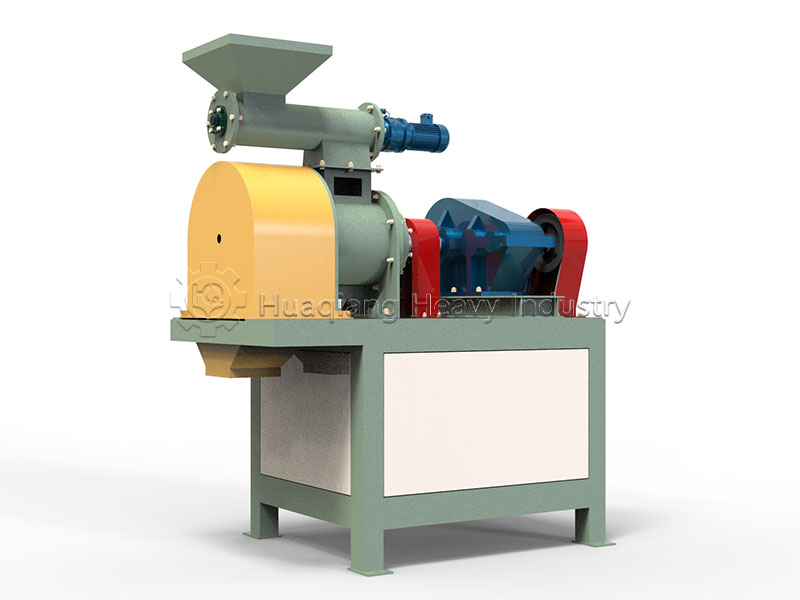
Finished product processing and application are also crucial. Newly made granules need to be spread out and cooled to room temperature, and then screened with a fertilizer screener machine to remove broken pieces (broken pieces can be returned to the machine for reprocessing). After cooling, pack them in sealed bags and store them in a dry and ventilated place; the shelf life is 6-8 months. In agriculture, they can be used directly as organic fertilizer to improve soil; they can also be used as feed additives for livestock and poultry (provided the herbal medicine residue is tested for harmful residues); and they can also be used as fuel, burning efficiently with low pollution.
This method not only achieves the resource utilization of waste but also reduces production costs. Whether for farmers or small processing plants, this method can be tried according to actual needs, truly achieving “turning waste into treasure.”