On farms, in small workshops, or on organic fertilizer production lines, you often see a compact and simple machine—the . It compresses various loose biomass raw materials, such as straw, sawdust, feed, and even animal manure, into dense, solid pellets. How does this machine actually work? And what are its unique advantages?
Working Principle: The Union of Pressure and Nature
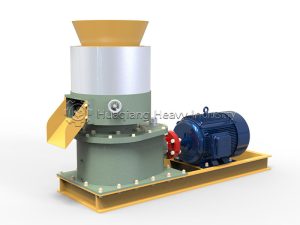
The core working principle of the flat die pelleting machine is clever and efficient. After the operator feeds the raw material into the hopper, the press rollers inside the machine begin to rotate, forcing the material against a flat die plate with many small holes. Under the high pressure and the heat generated by friction, the lignin in the biomass raw material (especially plant-based material) softens, acting as a natural binder that tightly bonds the material together. Finally, it is extruded through the small holes, forming uniform cylindrical strands. A cutter then chops these “strands” into pellets of standard length.
The entire process essentially mimics nature’s compaction process but greatly accelerates and standardizes it through mechanical force.
Core Features: Simple, Flexible, User-Friendly
The design of the flat die pelleting machine fully considers the practical needs of small-scale production, boasting several standout features:
Simple and Compact Structure: It mainly consists of a flat die, press rollers, a transmission device, and a feeding system. Its mechanical structure is straightforward, and it has a small footprint, making it very suitable for locations with limited space.
Wide Raw Material Adaptability: It can handle everything from agricultural waste (straw, rice husk) and feed ingredients (corn, soybean meal) to organic fertilizer materials (livestock and poultry manure). It also offers good tolerance for variations in particle size and moisture content (typically between 10%-20%).
Adjustable Pellet Specifications: By replacing the flat die plate with different hole diameters (commonly 2-12 mm), pellets of various sizes can be produced to meet different needs for feed, fuel, or fertilizer.
Easy Operation and Maintenance: Most models use manual or semi-automatic feeding, making them easy to operate. Daily maintenance primarily involves lubrication and cleaning, and core components like the flat die and rollers are also easy to disassemble and replace.
Relatively Low Energy Consumption: Compared to ring die pellet mills of similar output, small and medium-sized flat die mills have lower power requirements, helping to reduce operating costs for small-scale production.
Unique Advantages: The Ideal Choice for Small-Scale Production
Based on these features, flat die pelleting machines demonstrate significant advantages in small-scale application scenarios:
Low Investment Cost: The equipment itself has a relatively low manufacturing cost and an affordable price. It often doesn’t require complex supporting pre-processing equipment (like fine grinders), leading to a short investment payback period. This makes it ideal for individuals or small businesses with limited budgets.
High Flexibility and Mobility: Many models are designed with wheels, allowing them to be easily moved to the location of the raw materials for on-site processing. This avoids the high cost and hassle of transporting large volumes of loose raw materials (like whole bales of straw), enabling an efficient “bring the machine to the material” model.
Versatility: The same machine, by changing the die and adjusting parameters, can produce livestock feed, biomass fuel pellets, and organic fertilizer, greatly enhancing equipment utilization and economic value.
Reliable Pellet Quality: The produced pellets have uniform density and moderate hardness. They offer good palatability as feed, high combustion efficiency as fuel, and are easy to store and transport.
Granulation Equipment Spectrum: From Small-Scale to Industrial Production
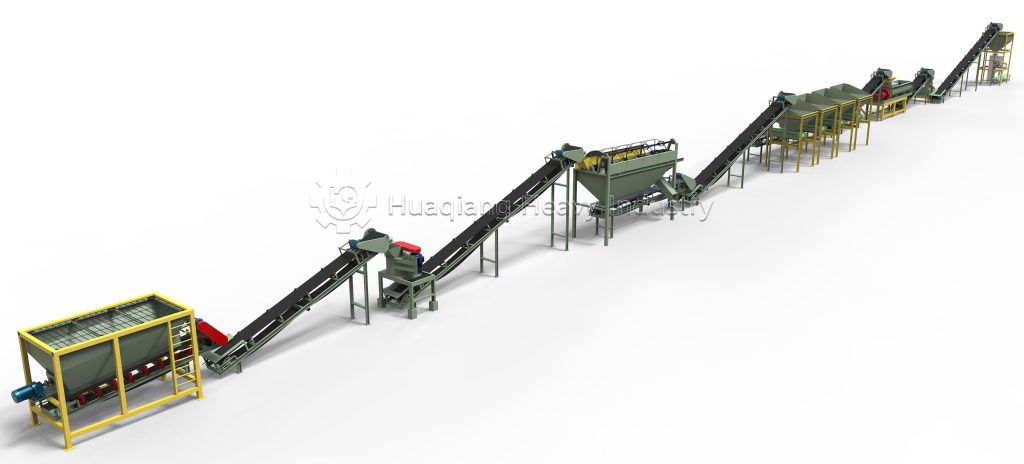
The flat die pelleting machine occupies a specific niche within the wide array of fertilizer granulation processes. It is an ideal solution for small-scale or on-site processing of organic materials, contrasting with the large-scale systems used for compound fertilizers. Industrial-scale npk fertilizer production line operations employ different core technologies, such as a disc granulator for shaping spherical pellets in a disc granulation production line, or a double roller press granulator in a roller press granulator production line for dry compaction.
For organic fertilizer, the production chain often begins with a windrow composting machine before the material enters a formal organic fertilizer production line or a bio organic fertilizer production line. These lines may use various fertilizer granulator types, including the disc granulator machine, depending on the product specification. The npk blending machine is a critical component in compound fertilizer lines for precise formulation before granulation. This diversity in equipment—from the simple flat die press to complex industrial systems—highlights how fertilizer granulation processes are tailored to scale, raw material, and final product requirements, ensuring efficient production across the entire spectrum of modern fertilizer manufacturing.
Conclusion
The flat die pelleting machine is like a “small but capable” workhorse. It may not have the staggering output of large ring die production lines, but with its low cost, high flexibility, ease of operation, and strong raw material adaptability, it plays an irreplaceable role in small-scale production, decentralized processing, and localized resource utilization. Whether it’s turning agricultural waste into valuable products or producing custom feed for one’s own farm, the flat die pelleting machine offers an efficient and practical solution.