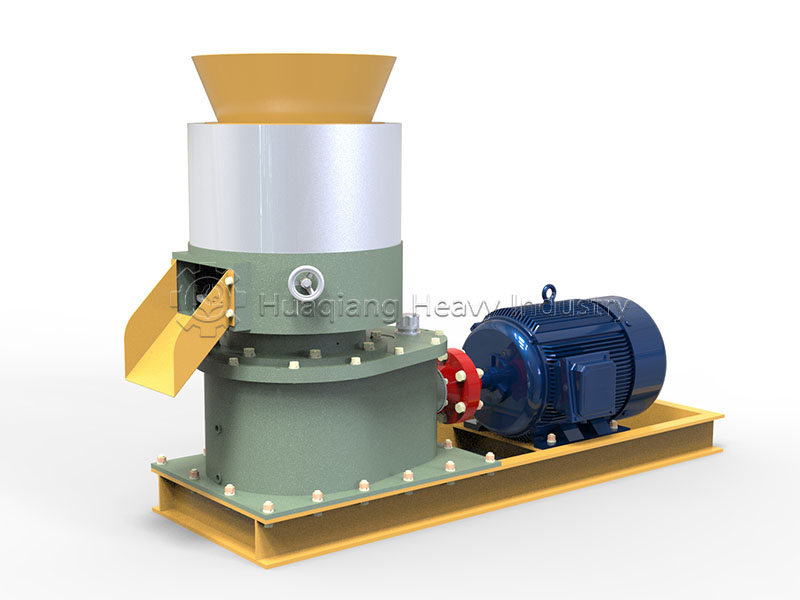
Vibration screener machine: The core equipment for efficient screening in fertilizer production

In the fertilizer production process, material screening is a critical link that determines product quality. Vibration screener machines, with their high efficiency and precision, have become the equipment of choice for many manufacturers. As a core material screening device, it is not only suitable for the entire fertilizer production process but can also be widely used in mining, building materials, chemical industry, and other fields, providing solutions for material classification in multiple industries.

The core advantages of the vibration screener machine lie in its “efficiency” and “precision.” Its vibrating motor generates high-frequency vibrations, allowing materials to quickly complete projectile motion on the screen surface. Materials smaller than the screen mesh are precisely separated, achieving both classification and impurity removal, significantly improving production efficiency. Considering the specific requirements of fertilizer production, the equipment can be adjusted by changing the screen mesh size and vibration parameters to adapt to different materials, such as granular materials produced by fertilizer granulators and mixed materials after mixing in fertilizer mixers. The screening accuracy far exceeds that of traditional equipment.

At the same time, the sealed design of the equipment is also a significant advantage, effectively reducing dust leakage during fertilizer production, meeting environmental protection requirements and protecting the workshop environment. Its compact structure requires a small footprint and can be flexibly integrated with different production lines, such as NPK fertilizer production lines and organic fertilizer production lines, reducing the difficulty of workshop layout.

For fertilizer companies, choosing a high-quality vibration screener machine can not only improve product qualification rates but also reduce material waste, contributing to efficient production. Whether processing coarse materials after being processed by a fertilizer crusher or conveying qualified finished products to a packaging machine, the vibration screener machine, with its stable performance, is an indispensable key equipment in the fertilizer production chain.

Disc granulation: A key to formation in modern organic fertilizer production equipment

In modern organic fertilizer production, transforming fermented and decomposed powdery raw materials into uniform granules is a crucial leap in enhancing the product’s marketability and practical value. This process relies heavily on specialized organic fertilizer production equipment, and the selection and application of the organic fertilizer granulator directly determines the final product’s shape and quality.

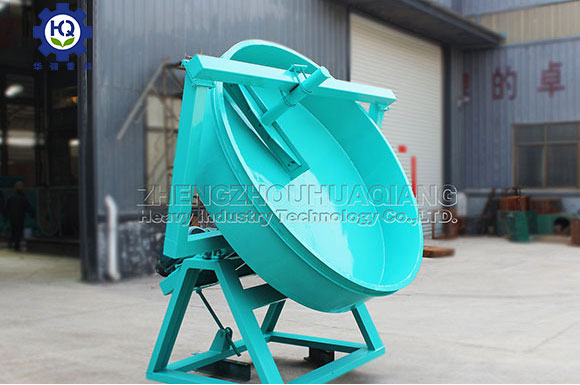
In the granulation stage, the diversity of equipment technology provides flexible production options. Among them, the organic fertilizer disc granulator is highly favored for its unique working principle and visualized granulation process. This granulation method boasts a high pelletizing rate, good granule strength, and particle size controllable by adjusting the disc’s tilt angle and rotation speed, making operation intuitive and maintenance simple.

However, high-quality granulation begins with high-quality raw material pretreatment. Before the material enters the organic fertilizer disc granulator or other types of organic fertilizer granulators, the fertilizer crusher plays a vital “gatekeeper” role. It finely crushes any lumps or agglomerates, ensuring that the raw materials entering the granulation process are uniformly fine and loosely textured.

From the fine pretreatment by the fertilizer crusher to the precise shaping by the organic fertilizer disc granulator, the close coordination of these core organic fertilizer production equipment forms a highly efficient chain in the back-end processing of a modern organic fertilizer production line, greatly promoting the large-scale application and industrial upgrading of organic fertilizer.

The synergistic approach of key equipment in organic fertilizer production lines

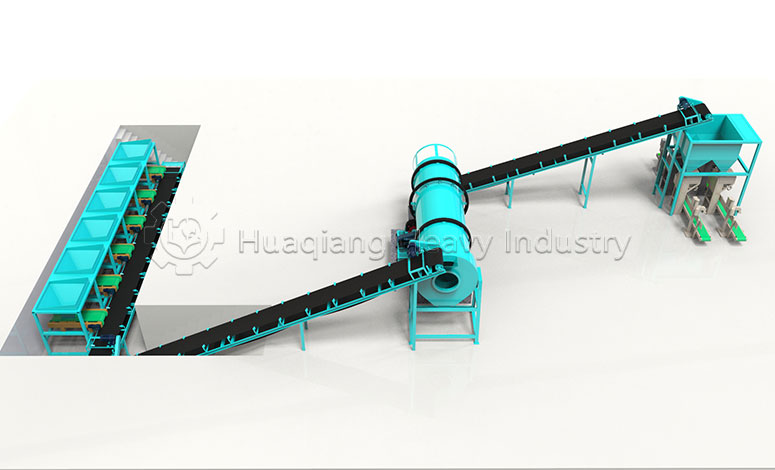
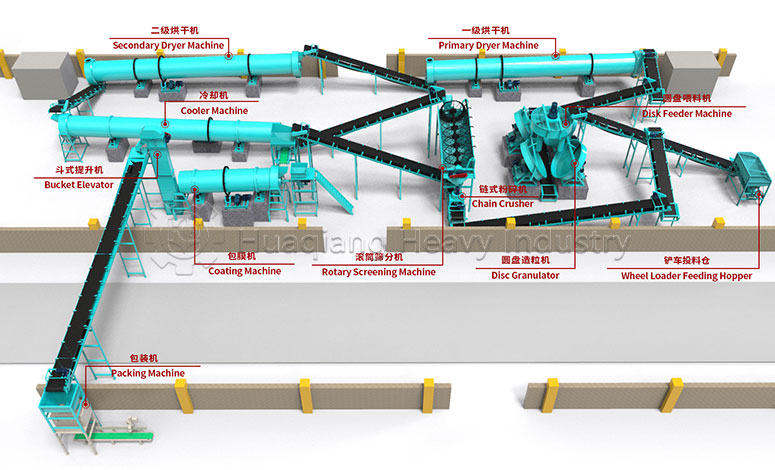
In modern organic fertilizer production, a complete production line achieves value enhancement from raw materials to finished products through the precise coordination of specialized equipment at each stage. This system transforms various organic wastes into high-quality organic fertilizers through a scientific process.

At the front end of the production line, the fertilizer crusher undertakes a crucial pretreatment task. It effectively breaks down lumps in the raw materials, ensuring the smooth progress of subsequent processes. The crushed raw materials are not only easier to mix evenly but also create favorable conditions for the subsequent fermentation process.

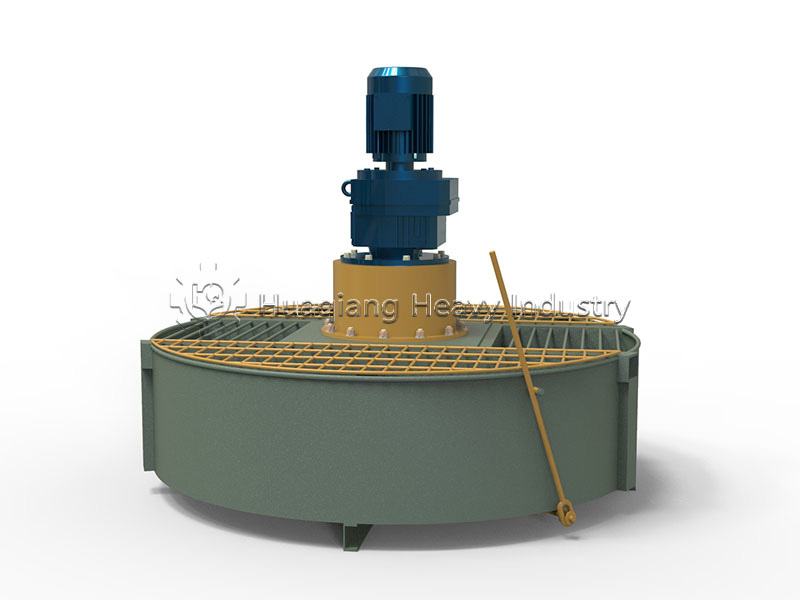
Next, the fertilizer mixer machine plays a key role. This equipment, through an efficient mixing mechanism, thoroughly mixes the raw materials of different components. This uniform mixing not only ensures a balanced distribution of nutrients but also guarantees the consistency of the fermentation process, laying a solid foundation for the production of high-quality organic fertilizer.

After the material has completed fermentation, the organic fertilizer granulator becomes the core equipment of the production line. Through unique molding technology, it transforms powdery materials into uniformly sized granular products. This transformation not only improves the product’s marketability but also gives it significant advantages in storage, transportation, and application.

The successful operation of the entire organic fertilizer production line relies on the precise coordination of each piece of equipment. From crushing and mixing to granulation, each step is closely linked, forming a highly efficient production system. This systematic production method not only ensures the stability of product quality but also greatly improves production efficiency.

A deep dive into fertilizer crusher: Structure, Principle, and Core Advantages

As a crucial piece of equipment in the fertilizer production process, fertilizer crushers play an indispensable role in the production of organic fertilizers, NPK fertilizers, and other fertilizers. To fully maximize their performance, a thorough understanding of their structure, operating principles, and core advantages is essential.

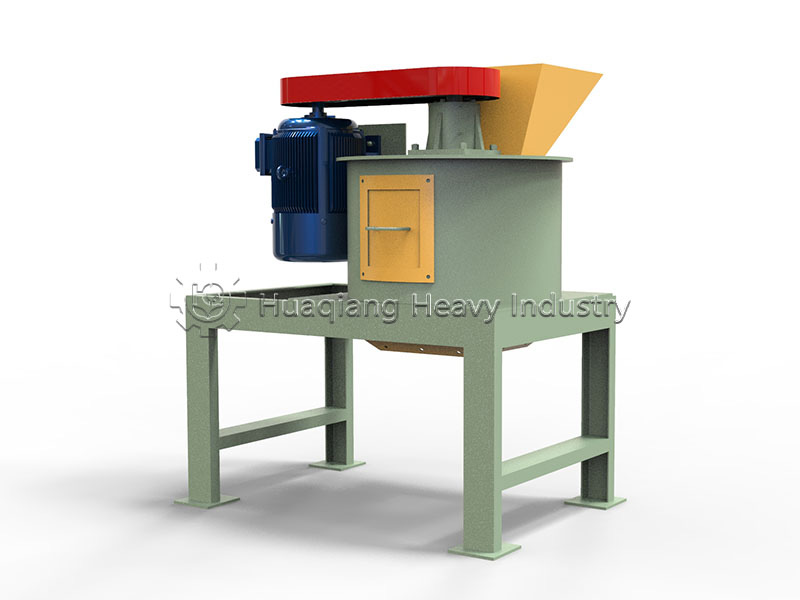
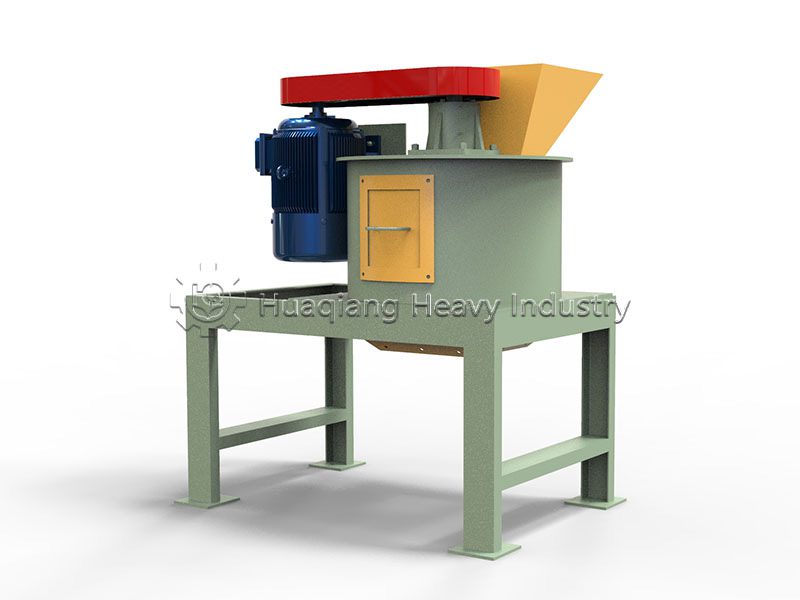
Structurally, a fertilizer crusher primarily consists of a crushing chamber, crushing components, a feed inlet, a discharge outlet, and a drive system. The crushing chamber provides space for material crushing. The crushing components within, such as the blades, hammers, and toothed plates, are the core components that directly act on the material. The drive system provides power to the crushing components, ensuring stable operation. Some fertilizer crushers are also equipped with a screening system to select the particle size of the crushed material to meet different production requirements.

The operating principle is based on a combination of impact, cutting, and grinding. After material enters the crushing chamber through the feed inlet, the high-speed rotating crushing components cut and grind the material. This, combined with intense collision and friction between the material and the crushing components, ultimately breaks the material into particles of the desired quality before discharging through the discharge outlet.

The core advantages of a fertilizer crusher lie in its high processing efficiency, adaptability, and ease of maintenance. It can quickly crush a variety of fertilizer raw materials, and its structural design facilitates routine maintenance and cleaning, significantly reducing production downtime and providing strong support for fertilizer manufacturers to increase production capacity.

Differences in materials processed by various fertilizer crushers

Fertilizer crushers are key equipment in fertilizer production, breaking down raw materials into particles suitable for further processing. Different types of crushers work differently based on material properties.

1.Chain Crusher
Mainly used for crushing high-moisture organic materials like livestock manure, sludge, and straw. It features high-speed rotating chains that strike materials, delivering effective crushing while resisting clogging. Ideal for high-fiber, high-moisture organic fertilizer raw materials.
2.Double Roller Crusher
Primarily crushes low-hardness materials into fine particles, such as dried organic fertilizer or compound fertilizer granules. It works by squeezing materials between two relatively rotating rollers to break them apart. Best for dry, brittle fertilizers—high-moisture materials may stick to the rollers.

3.Vertical Crusher
Suitable for finely crushing various fertilizer raw materials like bio-organic fertilizer, compost, and mineral fertilizers. Its vertical design uses high-speed rotating blades and a toothed ring to crush materials. This adaptable machine handles materials with different moisture levels and hardness.
4.Half-Wet Material Crusher
Designed for high-moisture, high-fiber materials like fresh manure, straw, and kitchen waste. With multiple blades, it efficiently cuts fibers and prevents clogging—making it ideal for organic fertilizer production.

In short, choosing the right fertilizer crusher requires considering multiple factors. The right machine boosts efficiency and cuts energy use.