What are the core differences between blended fertilizers and compound fertilizers?

Blended fertilizers and compound fertilizers are often confused, but they differ significantly in core dimensions such as production process and nutrient uniformity. Precise differentiation is necessary when choosing between them, based on specific planting needs. The core difference lies in: compound fertilizers are “synthesized first, then formed,” while blended fertilizers are “formed first, then mixed.” This fundamental difference determines their fertilizer efficacy characteristics and applicable scenarios.

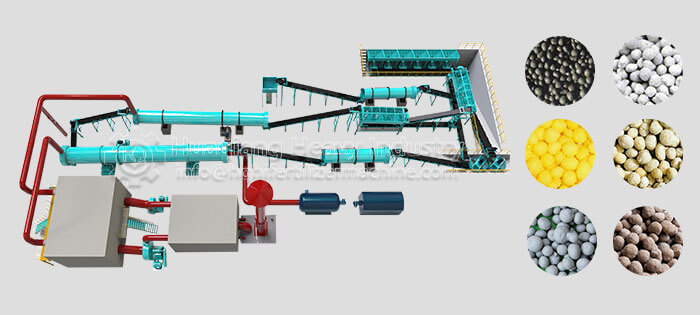
Different production processes and nutrient uniformity: Compound fertilizers require a dedicated NPK fertilizer production line. Nitrogen, phosphorus, potassium, and other raw materials undergo chemical synthesis reactions to form new compounds, which are then shaped by a fertilizer granulator. Nutrients are evenly distributed in each granule, with precise and controllable content. Blended fertilizers do not require chemical synthesis; they only need to be mixed evenly using a fertilizer mixer machine with two or more single fertilizers or compound fertilizers. The production process is simpler, but due to limitations in mixing accuracy, there may be localized uneven nutrient distribution.

Different fertilizer release and application scenarios: Due to the high degree of nutrient integration, compound fertilizers have a stable and long-lasting effect, suitable for the entire growth period of field crops such as wheat and corn, reducing the need for frequent topdressing. Blended fertilizers allow for flexible adjustment of nutrient ratios according to the specific growth stage of the crop. For example, a high-potassium blended fertilizer can be used during the fruit-swelling stage of fruits and vegetables for rapid nutrient replenishment. However, the fertilizer release is relatively scattered, and application timing needs to be controlled to avoid nutrient loss.Selection recommendations: For precise and long-lasting nutrient supply, suitable for large-scale mechanized planting, choose compound fertilizers; for flexible nutrient adjustment, targeted fertilization at specific crop stages, or small-scale planting scenarios, choose blended fertilizers.

Granular or powdered fertilizer? Choosing the right option for your needs

There is no absolute superiority between granular and powdered fertilizers; the best choice depends on the planting scenario, crop requirements, and fertilization method. The two forms differ in nutrient release rate, ease of application, and storage stability. Identifying the most suitable scenario is key to maximizing fertilizer efficiency and avoiding resource waste.

Granular fertilizers are processed on a fertilizer production line, shaped using core fertilizer production equipment such as fertilizer granulators. Their core advantages are “long-lasting, convenient, and stable.” The granular structure slows down nutrient release, providing a slow and steady supply of nutrients, which suits the needs of field crops (wheat, corn) throughout their entire growth cycle, reducing the need for frequent topdressing. They are less prone to dusting during application, making them suitable for mechanized sowing and fertilization, offering high efficiency and easy dosage control. They are also less likely to clump during storage and transportation, resulting in greater stability. However, a disadvantage is the slower initial nutrient release, making them unsuitable for the seedling stage when crops urgently need nutrients. Crushing the granules before use will destroy the slow-release structure.

Powdered fertilizers have a relatively simpler production process, requiring no granulation machine and can be produced using basic fertilizer production equipment. Their core advantages are “fast-acting, uniform, and flexible.” The fine particle size allows for a large contact area with the soil, enabling rapid dissolution and absorption of nutrients by the crops, making them suitable for the seedling and growth stages when crops urgently need nutrients. They can be evenly broadcast or dissolved in water for application, especially suitable for the precise cultivation of greenhouse fruits and vegetables. However, the disadvantages include easy dusting, difficulty in storage (prone to clumping during long-term storage), and difficulty in mechanized application. The rapid nutrient release also requires careful dosage control to avoid root burn and nutrient loss.

How to choose the right fertilizer granulator based on your production needs?

The selection of a fertilizer granulator directly impacts production efficiency, product quality, and overall costs. The key is to match the granulator to your specific production needs. Consider key dimensions such as fertilizer type, production capacity, and finished granule requirements.

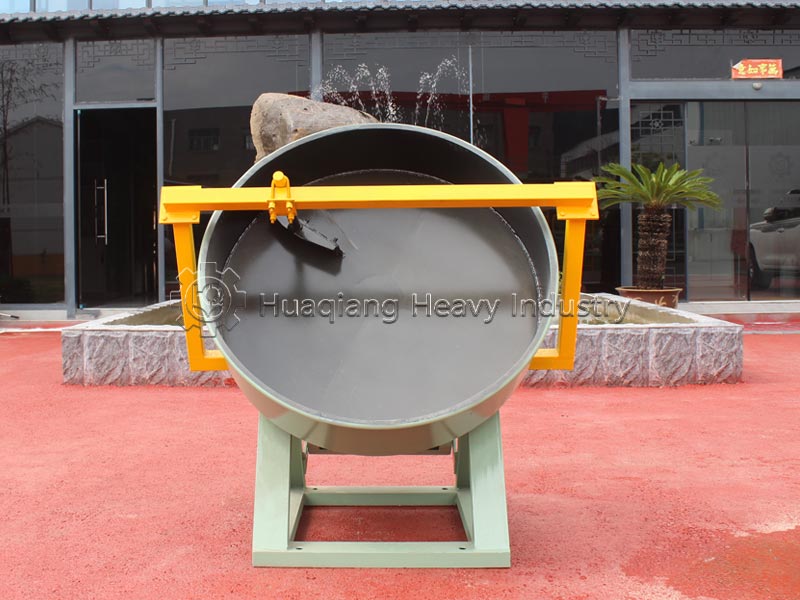
Prioritize based on fertilizer type. For organic fertilizers, rotary drum granulators or disc granulators are recommended. Both are suitable for fermented and composted organic materials such as livestock manure and straw. Rotary drum granulators are better suited for large-scale production, while disc granulators are suitable for small to medium-sized production capacities and scenarios requiring high granule uniformity. For compound fertilizers, consider rotary drum granulators or double roller press granulators. Rotary drum granulators are suitable for multi-material mixing and granulation, while double roller press granulators do not require additional water and are suitable for heat-sensitive and water-soluble raw materials.

Refine your selection based on production capacity. For small to medium capacities (50-200 tons per day), a disc granulator is a good choice due to its small footprint, simple operation, and low investment cost. For medium to large capacities (over 200 tons per day), a rotary drum granulator is recommended due to its strong continuous production capacity and high stability, and it can be integrated into a complete production line for automated operation. For small-batch trial production or processing of special materials, the flexibility of a double roller press granulator is more advantageous.

Consider finished granule requirements and costs. If high granule strength and uniform particle size are required, rotary drum granulators and double roller press granulators perform better; for high granule roundness requirements, a disc granulator is the preferred choice. Also consider energy consumption and environmental requirements, prioritizing models with good sealing and effective dust control to reduce future environmental investment. By considering all these dimensions, you can select a granulator that perfectly matches your production needs.

New type two in one organic fertilizer granulator: A revolution in efficiency for small and medium-sized fertilizer plants

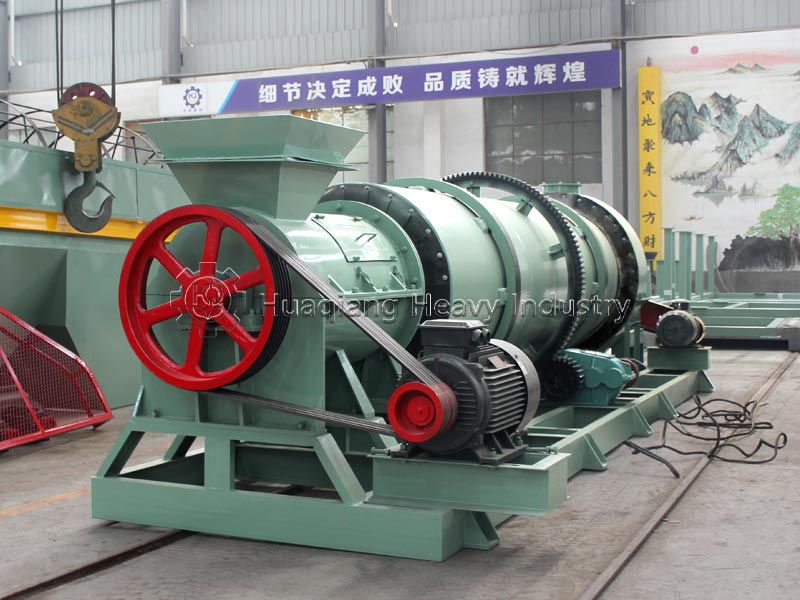
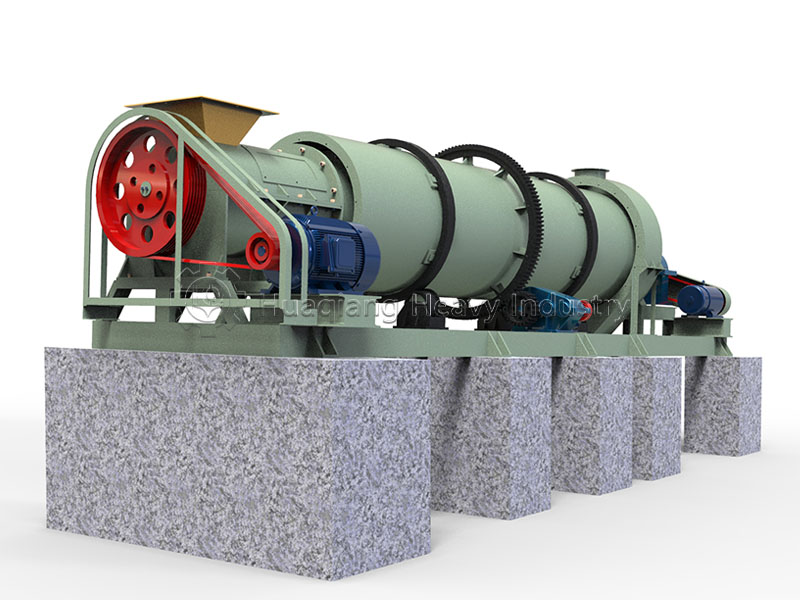
In the field of organic fertilizer production, equipment integration has become a key trend for reducing costs and increasing efficiency. The emergence of the new type two in one organic fertilizer granulator is fundamentally changing traditional production models. This equipment, which integrates mixing and granulation functions, not only solves the problem of high material transfer losses in traditional production lines but also becomes the preferred choice for small and medium-sized fertilizer plants seeking intensive production.

Compared to single-function fertilizer granulators, the two-in-one equipment seamlessly connects the mixing and granulation stages, eliminating the need for intermediate conveying equipment. Material loss rate is reduced from the traditional 5%-8% to 1%-2%, while saving 30%-50% of floor space. Its core advantage lies in its strong adaptability; whether processing livestock and poultry manure, straw, or other organic waste, or producing bio-organic fertilizers, parameters can be flexibly adjusted through the PLC control system without requiring large-scale equipment modifications.

In terms of production efficiency, a single machine can produce 1-5 tons of granular organic fertilizer per hour, an increase of 20%-40% compared to traditional separate equipment.  The granules have a sphericity of over 85% and a strength of 10-30N, meeting the transportation and application needs of farmland and orchards. Even more noteworthy is the 15%-25% reduction in energy consumption per unit of product, reducing the number of motors and labor costs, perfectly aligning with the current pursuit of low cost and high output in fertilizer plants.

For companies planning to expand their organic fertilizer production lines, this equipment can also be integrated with NPK fertilizer production lines to process organic-inorganic compound fertilizers. Today, more and more fertilizer plants are incorporating this two-in-one granulator into their production upgrade plans, promoting the resource utilization of organic waste while injecting new impetus into the development of green agriculture.

Drying and cooling: The core of quality assurance in fertilizer granule post-processing

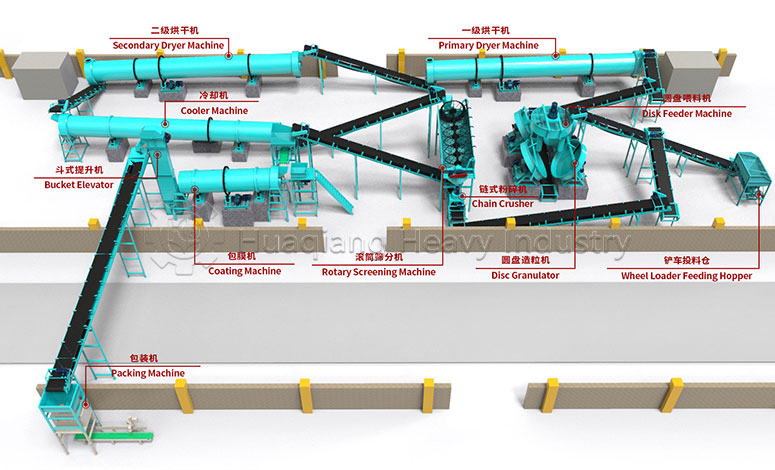
Fertilizer granules after granulation often suffer from problems such as high moisture content, high temperature, and low strength, making them unsuitable for direct storage and transportation. In the post-processing stage of organic fertilizer production lines, the coordinated operation of dryers and coolers is crucial to solving these problems. They form a complete chain of “dehydration and shaping – cooling and strengthening,” directly determining the final quality of the fertilizer granules.

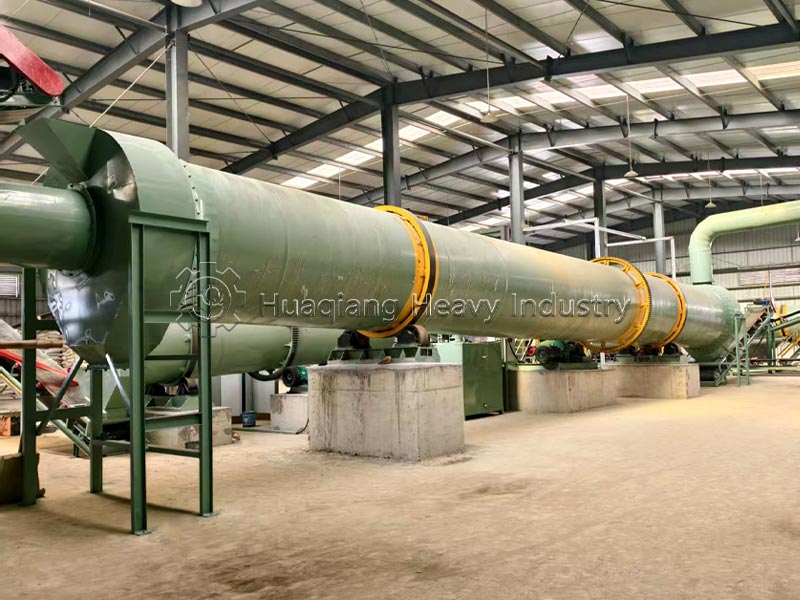
The drum fertilizer dryer undertakes the core task of “dehydration and shaping.” Granules fresh from the fertilizer granulator usually have a moisture content of 20%-30%, and need to be sent to the dryer to complete the drying process through a hot air circulation system: high-temperature hot air (60-80℃, adapted to the characteristics of organic fertilizer) fully contacts the granules, and with the help of internal baffles, ensures that each granule is evenly dehydrated, ultimately controlling the moisture content within the safe range of 12%-14%.

The drum fertilizer cooler connects the critical “cooling and strengthening” stage. The temperature of the dried granules can reach 60-80℃. If directly piled up, they are prone to re-moisturizing and clumping, and may even break due to thermal expansion and contraction. The cooler uses the principle of cold air heat exchange to quickly cool the high-temperature granules to near ambient temperature (temperature difference ≤5℃), and at the same time further tightens the granule structure during the cooling process, significantly improving the strength and hardness of the granules.

The core advantage of their combined operation lies in “process+quality complementarity.” During operation, it is necessary to match the capacities of the two machines, adjust the drying temperature and cooling air speed according to the granule size and raw material characteristics, and regularly clean the accumulated material inside the equipment to ensure smooth ventilation. As the “golden partners” in the post-processing of organic fertilizer production lines, their coordinated operation can increase the qualified rate of fertilizer granules to over 95%.

Key aspects of synergistic operation of core equipment in bio-organic fertilizer production

The production of high-quality bio-organic fertilizer relies on the efficient synergy of a complete set of bio-organic fertilizer equipment. From raw material composting to finished product molding, each stage is supported by dedicated core equipment.

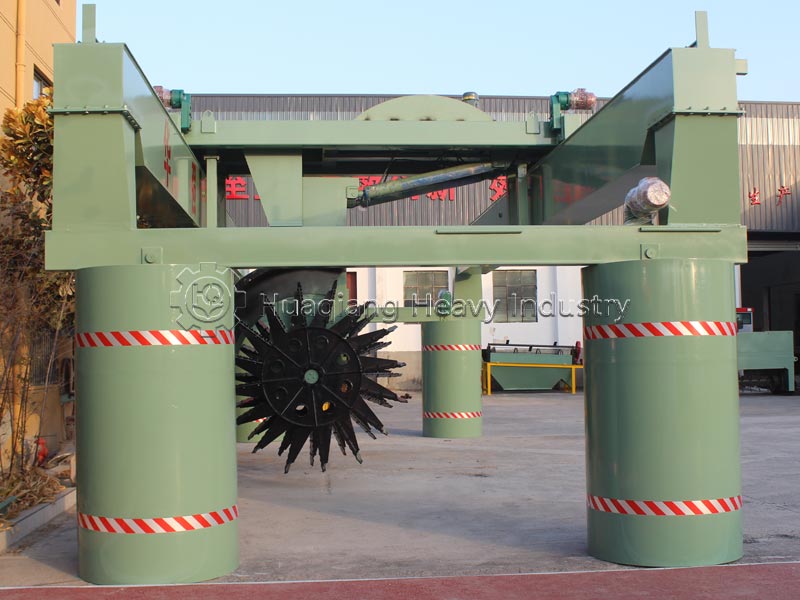
In the raw material fermentation stage, the large wheel compost turning machine plays a crucial role. Through the rotation and turning of the large wheel, it effectively breaks up the raw material piles, allowing the material to fully contact the air. This not only rapidly increases the fermentation temperature and inhibits the growth of harmful bacteria, but also ensures uniform composting of the raw materials, laying a high-quality foundation for subsequent production. Insufficient turning can easily lead to insufficient composting of raw materials, directly affecting the subsequent mixing and granulation effects.

The composted raw materials need to be precisely mixed by a fertilizer mixer machine. At this stage, the composted raw materials, beneficial microbial agents, and auxiliary materials are added to the equipment in proportion. Mixing ensures the even distribution of each component, preventing localized nutrient enrichment or deficiency. Uniform material mixing is an important prerequisite for ensuring the quality of subsequent granulation and a key step in improving the effectiveness of bio-organic fertilizer.

In the granulation stage, the fertilizer granulator is the core equipment, and the flat die pelleting machine, due to its strong adaptability, is a commonly used type in bio-organic fertilizer production. The flat die pelleting machine produces high-strength, uniformly sized granular products through mold extrusion. During operation, the pressure and speed of the flat die pelleting machine need to be precisely adjusted according to the moisture content and particle size of the mixed materials to ensure stable granule formation and reduce material waste.

Key application points of BB fertilizer mixer and fertilizer granulator

NPK blended fertilizers are widely used in agricultural production due to their flexible nutrient ratios and adaptability to different crop needs. The coordinated operation and standardized procedures of the production line equipment directly determine product quality. Among these, the BB fertilizer mixer and fertilizer granulator play an indispensable role as core equipment.

The BB fertilizer mixer is a crucial link in the NPK blending fertilizer production line, ensuring uniform nutrient mixing. Since NPK blended fertilizers require precise proportions of nitrogen, phosphorus, potassium, and various trace elements, uneven mixing can lead to nutrient imbalances and affect fertilization effectiveness. During operation, it is important to follow the principle of “lighter materials first, then heavier materials; finer materials first, then coarser materials” to prevent material accumulation at the bottom of the equipment. Simultaneously, adjust the mixing speed and time according to the material characteristics to ensure sufficient dispersion and contact of all raw materials, preventing localized nutrient enrichment.

The fertilizer granulator determines the molding quality of the NPK blended fertilizer. After mixing in the BB fertilizer mixer, the materials need to be processed into granules by the fertilizer granulator. This not only facilitates storage and transportation but also reduces nutrient loss during application. During production, the granulator’s speed, pressure, and other parameters need to be adjusted based on the material’s moisture content and particle size.

Furthermore, all stages of the NPK blending fertilizer production line must be closely integrated. From raw material selection and BB fertilizer mixing to fertilizer granulation, every step requires strict parameter control. Only by ensuring stable equipment coordination can high-quality NPK blended fertilizers with uniform nutrients and regular granules be produced, providing strong support for high agricultural yields.

How ring die pelleting machines empower the upgrade of organic fertilizer production lines?

Large-scale organic fertilizer production often faces three major challenges: insufficient production capacity to meet market demand, unstable granule quality, and a narrow range of suitable raw materials. The ring die pelleting machine, as a core piece of organic fertilizer production equipment, effectively addresses these problems, becoming a key factor in upgrading organic fertilizer production lines. Its performance advantages are particularly outstanding among fertilizer granulators.

Many organic fertilizer production lines encounter difficulties in raw material processing and low granulation efficiency when scaling up. The emergence of the ring die pelleting machine breaks this deadlock: it can directly process diverse raw materials pre-treated by organic fertilizer production equipment, whether high-fiber straw fermentation materials, high-moisture livestock and poultry manure, or organic-inorganic mixed raw materials. Through the precise interlocking and extrusion of the internal ring die and pressure rollers, it stably forms uniform granules without frequent parameter adjustments, significantly reducing operational difficulty.

Furthermore, the ring die pelleting machine offers superior adaptability within the production line. It seamlessly integrates with automatic batching systems, intelligent temperature-controlled dryers, and grading and screening machines, forming a fully automated operation chain—from raw materials entering the granulation stage to the output of qualified granules, requiring minimal manual intervention. This not only increases hourly production capacity but also avoids quality fluctuations caused by manual operation.

For organic fertilizer companies pursuing standardized production, the ring die pelleting machine is not just a simple fertilizer granulator, but a “core empowering equipment” for the organic fertilizer production line. It solves the efficiency and quality problems in large-scale production and broadens the range of raw materials that can be reused, allowing agricultural waste and industrial organic waste to be efficiently converted into high-quality organic fertilizer.

Flat die pelleting machine: The preferred equipment for small and medium-scale organic fertilizer production lines

In the field of organic fertilizer production, the efficiency and quality of the finished product of an organic fertilizer production line depend critically on the rational configuration of the organic fertilizer production equipment. The fertilizer granulator, as a core piece of equipment, is particularly crucial in this selection process.

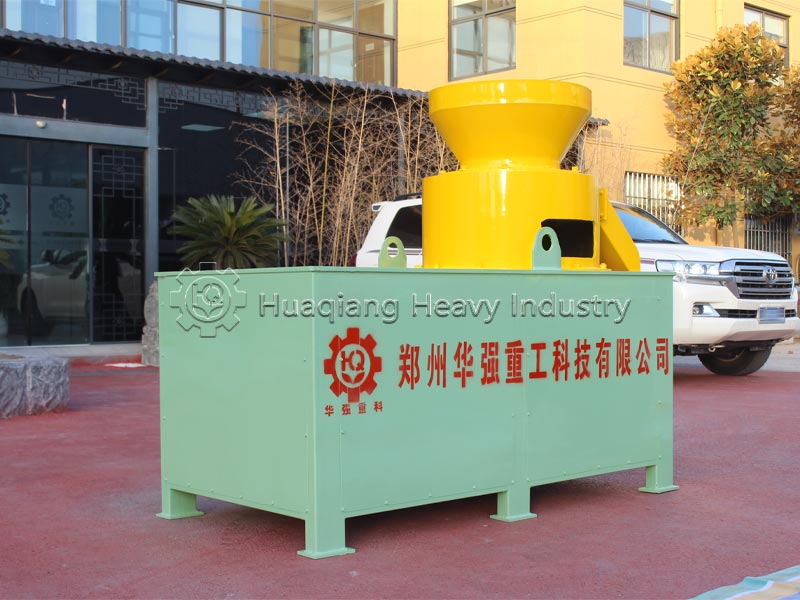
As one of the mainstream fertilizer granulators, the flat die pelleting machine plays a core granulation role in organic fertilizer production lines. Pre-treated organic raw materials such as livestock and poultry manure and fermented straw are fed into this equipment after being mixed and adjusted for nutrients by a fertilizer mixer machine. Through the extrusion action of the pressure roller and the flat die, the loose materials are compressed into columnar or flake-shaped granules, without the need for additional large amounts of water or binders, which perfectly suits the characteristics of organic fertilizer raw materials.

The flat die pelleting machine, as a practical organic fertilizer production equipment, has significant advantages. It has a compact structure and a small footprint, making it suitable for small and medium-capacity scenarios with limited space; it has a wide adaptability to raw material moisture content, capable of processing materials with a moisture content of 12%-20%, reducing energy consumption in the pre-treatment stage; it has a high granulation rate, and the finished granules have good strength, meeting the storage and transportation needs of organic fertilizers. In addition, it can be easily connected with supporting equipment such as fertilizer crushers, screener machines, and packaging machines, allowing for the rapid construction of a complete organic fertilizer production line.

Whether processing pure organic fertilizer or producing organic-inorganic compound fertilizer, the flat die pelleting machine can adapt to the needs with its flexible adjustment capabilities. It not only lowers the equipment investment threshold for small and medium-scale organic fertilizer production but also guarantees production efficiency and product quality, becoming an important equipment support for promoting the popularization of the organic fertilizer industry.

Double roller press granulator: Granulation equipment for NPK fertilizer production lines

NPK compound fertilizers, due to their balanced nutrients and suitability for various crops, have become the mainstream fertilizer in agricultural production. The core efficiency of an NPK fertilizer production line largely depends on the selection of the fertilizer granulator. Among them, the double roller press granulator, with its unique advantages, has become the preferred granulation equipment for many NPK production lines, helping to achieve efficient and low-cost granulation.

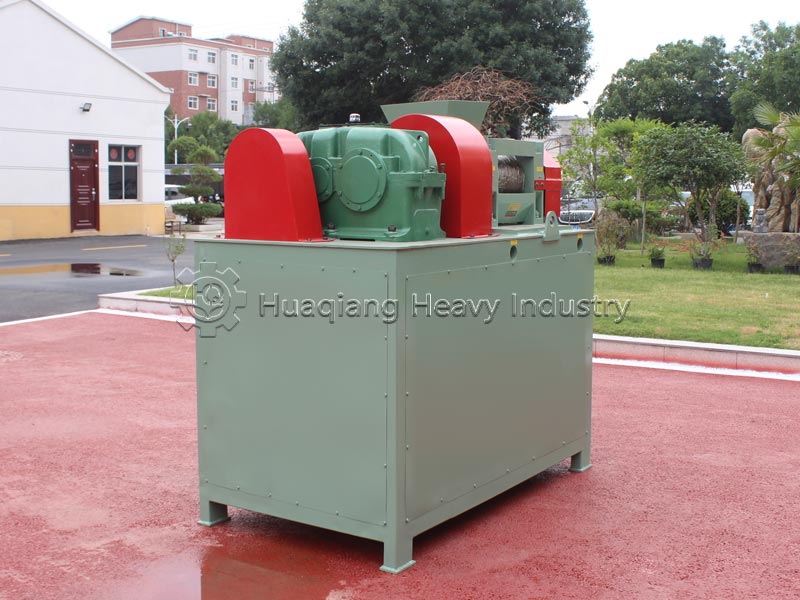
In an NPK fertilizer production line, the double roller press granulator is at the core. Pre-treated nitrogen, phosphorus, and potassium raw materials and fillers are uniformly mixed by a fertilizer mixer machine and then fed into this equipment. The pressure generated by the relative extrusion of the double rollers directly forms the material into granules, without the need for additional water or binders. This dry granulation method eliminates subsequent drying and cooling steps, significantly simplifying the NPK production line process and reducing energy consumption and production costs.

As one of the mainstream fertilizer granulators, the double roller press granulator has significant advantages in NPK production. It has strong adaptability to raw material moisture content, capable of processing materials with a moisture content of 8%-15%, avoiding the clumping problems that often occur in wet granulation; it has a high granulation rate, and the granules have high strength and are not easily broken, meeting the needs of NPK compound fertilizer storage, transportation, and mechanized fertilization. In addition, the equipment has a simple structure and is easy to operate, and can be easily connected with supporting equipment such as fertilizer screener machines and packaging machines, adapting to NPK fertilizer production lines of different scales.

Whether for small and medium-sized NPK production projects or large-scale production lines, the double roller press granulator can adapt to the needs with its flexible capacity adjustment capabilities. It not only improves the production efficiency of NPK fertilizers but also ensures the quality stability of the finished fertilizer, becoming an important equipment support for promoting the high-quality development of the NPK compound fertilizer industry.