High-efficiency NPK blending fertilizer production line: Behind precise proportioning

A modern NPK blending fertilizer production line is a combination of precision and efficiency. It no longer relies on heavy manual labor, but instead uses a series of specialized equipment to transform basic fertilizers such as nitrogen, phosphorus, and potassium into homogeneous products that meet specific needs.

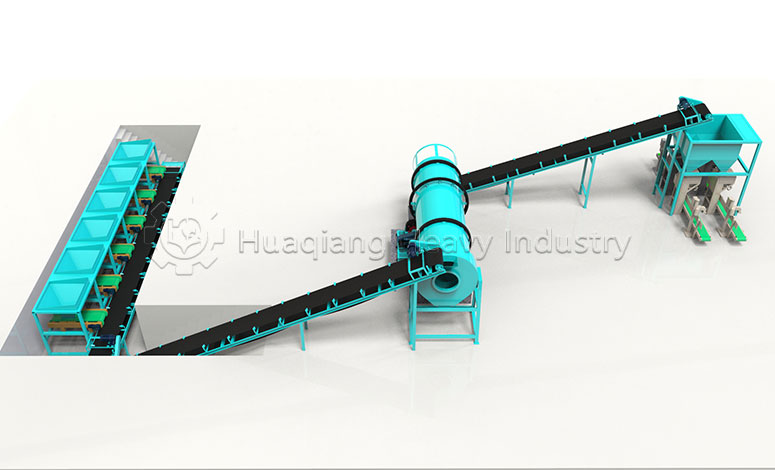
The production line begins with the feeding and conveying of raw materials. At the batching station, precise metering devices lay the first cornerstone for subsequent uniform mixing, ensuring the accuracy of the final product’s nutrient ratio.

Then, the raw materials enter the core of the production line—the NPK blending machine. This equipment is the soul of the entire process; it strives to ensure that every fertilizer granule contains essentially the same amount of nutrients, and its mixing quality directly determines the final quality of the fertilizer.

After the NPK blending machine has completed its mission, to further improve the consistency and stability of the product, the mixture sometimes undergoes a polishing or conditioning process. Following this, the finished product undergoes final metering and packaging through a high-efficiency bulk blending fertilizer machine.

Throughout the entire production line, the concept of a fertilizer mixer machine is often integrated into the broader category of mixing equipment. Whether used as a pre-mixing device for small amounts of trace elements or integrated into a more powerful NPK blending machine, the core concept of “stirring and mixing” remains constant.

In short, a well-configured NPK blending fertilizer production line achieves precise mixing through an NPK blending machine and efficient output through bulk blending fertilizer machines, demonstrating a direct response of modern fertilizer production to the demands of “precision agriculture.”

Rotary drum granulator: Core equipment for high-efficiency fertilizer production

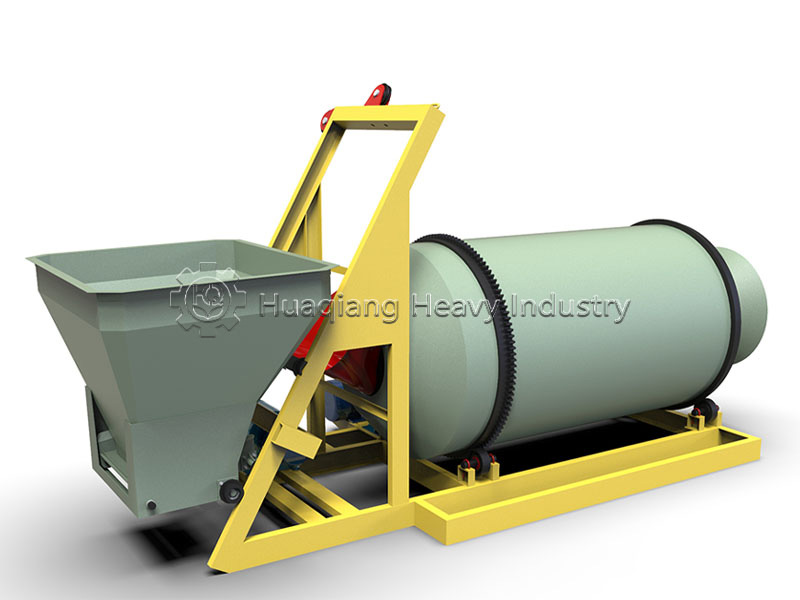
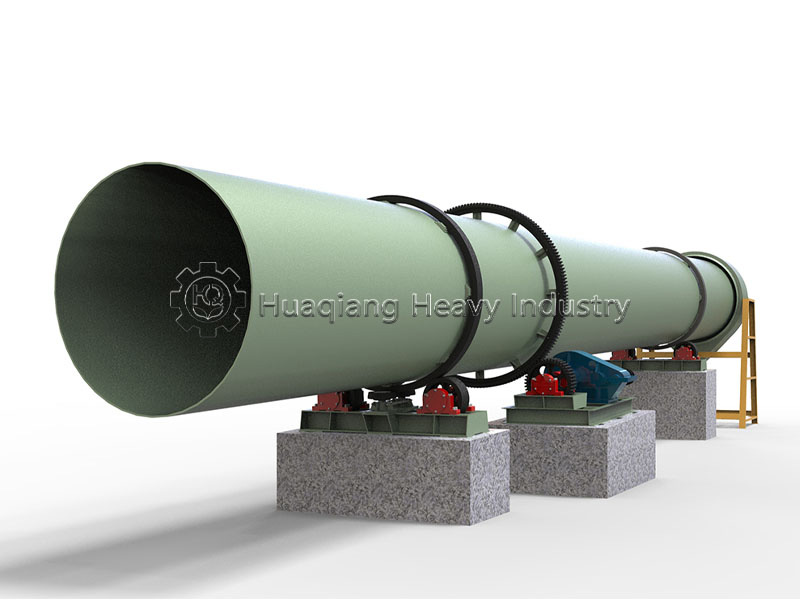
Stepping into a modern fertilizer production workshop, a large cylindrical device rotates smoothly—this is the rotary drum granulator. As a key piece of equipment in fertilizer production, it uses a unique rotary motion to aggregate powdery raw materials into uniform granules, becoming an indispensable part of fertilizer production.

In the NPK fertilizer production line, the rotary drum granulator plays a crucial role in connecting upstream and downstream processes. In the previous process, various raw materials are precisely proportioned and thoroughly mixed; here, the mixed material undergoes granulation to achieve an ideal physical form. This form not only facilitates subsequent packaging, storage, and transportation but also ensures the uniform release of nutrients during fertilizer application.

Unlike NPK blending machines, which simply perform physical mixing, the rotary drum granulator adds an appropriate amount of liquid phase component, forming granules that nucleate, grow, and compact during rotation. This process maintains the flexibility required for formulation in NPK blending fertilizer production lines while giving the fertilizer product better physical properties. The granulated fertilizer particles have higher strength and more uniform particle size, effectively reducing dust pollution during use.

In a complete NPK blending fertilizer production line, the process parameters of the rotary drum granulator need to be precisely adjusted according to the characteristics of the formula. The humidity and temperature of the raw materials, as well as the rotation speed and tilt angle of the equipment, all affect the quality of the final product. Modern rotary drum granulators have seen significant improvements in energy consumption control, automation, and product quality, providing a reliable guarantee for the production of high-quality compound fertilizers.

Rotary drum granulator: The art and efficiency of fertilizer granulation

In modern fertilizer production, the rotary drum granulator plays an indispensable role. Unassuming yet highly efficient, it transforms powdery raw materials into uniform granules, greatly facilitating fertilizer application and transportation.

In a complete organic fertilizer production line, the rotary drum granulator is often a core component. It is frequently connected to a fertilizer mixer machine. This equipment is responsible for thoroughly and uniformly mixing various raw materials, whether basic elements like nitrogen, phosphorus, and potassium, or materials rich in organic matter.

Once the uniformly mixed material enters the rotary drum granulator, the real transformation begins. As the drum slowly rotates, the fine powder particles, under suitable humidity and motion, adhere, encapsulate, and gradually grow like snowballs, ultimately forming uniformly sized granules.

The synergistic effect of this equipment is even more pronounced in the production of bio-organic fertilizers. Bio-organic fertilizer equipment is typically a system, not solely reliant on a single machine. From the fermentation and crushing of materials, to the mixing by the fertilizer mixer, and finally to the forming by the rotary drum granulator, each step is closely linked. The value of the rotary drum granulator in this process lies in its ability to effectively process organic materials, forming granules of moderate strength that are conducive to slow release into the soil.

How organic fertilizer production lines transform waste into fertile soil “Gold”?

Under the concept of circular agriculture, organic fertilizer production lines are quietly undergoing a transformation. They are no longer simple processing facilities, but rather a bridge for resource transformation, turning ubiquitous agricultural waste into valuable resources that nourish the land.

The entire production line begins with scientific proportioning and mixing. Here, the fertilizer mixer machine plays a central role. Through its unique structural design, it can uniformly mix raw materials of varying properties—whether it’s viscous livestock manure or dry straw powder—in a short time. This efficient mixing not only improves production efficiency but also ensures the stability of subsequent fermentation quality.

When the production line needs to meet more specific nutrient requirements, it demonstrates its strong compatibility. By introducing the proportioning concept of NPK fertilizer production lines, the system can precisely add elements such as nitrogen, phosphorus, and potassium, forming a perfect complement to organic matter. This scientific combination of organic and inorganic elements retains the advantages of traditional organic fertilizers in improving soil while compensating for their lack of rapid effectiveness.

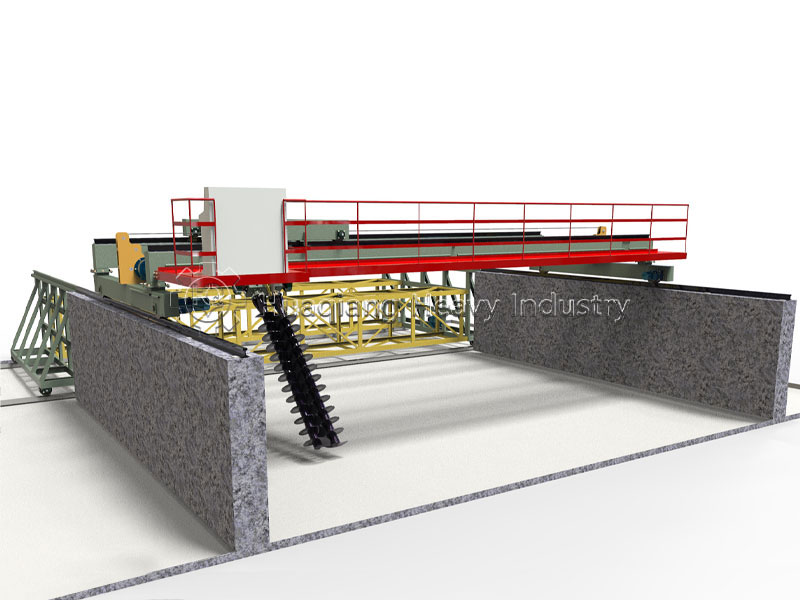
From the turning and ventilation during fermentation, to the precise temperature control during aging, and the shaping process in granulation, each stage reflects a deep understanding of the material’s properties. The final product is not just uniform fertilizer pellets, but a commitment to the health of the land.

This modern production line is redefining the value of “waste.” It allows agriculture to return to its cyclical nature, enabling nutrients to find a new home within the ecosystem.

Fertilizer mixer machines: Connecting fertilizer production line and quality

In the vast landscape of fertilizer production, the fertilizer mixer machine plays a silent yet crucial role. It doesn’t possess the power of a crusher, nor the shaping ability of a granulator, but it is the core element determining the homogeneity of the product.

Walk into any modern NPK fertilizer production line, and you’ll almost always find it in a core section. Various precisely measured nitrogen, phosphorus, and potassium raw materials, along with trace amounts of additives, are fed into it. Whether it’s the powerful agitation of the twin-screw agitation or the uniform tumbling of the horizontal drum, the goal is crystal clear: to fuse materials of varying shapes and densities into a uniform, nutrient-rich mixture in the shortest possible time.

When the scene shifts to a bio-organic fertilizer equipment array, the fertilizer mixer machine takes on a more nuanced role of “harmonizing.” The materials processed here are more complex—fermented organic matter, livestock manure, peat moss, or microbial residue, all with varying moisture content and loose textures. The mixer needs to provide gentler and more sustained agitation here to ensure that the organic raw materials come into full and even contact with the appropriate amount of functional microbial agents, nitrogen-fixing and phosphorus-solubilizing bacteria, and other microbial communities, avoiding localized over-concentration or under-concentration of the microbial community.

Therefore, whether it’s an NPK fertilizer production line pursuing precise chemical ratios or a bio-organic fertilizer equipment emphasizing biological activity, the mixer is an indispensable “link.”

NPK blending machines: The unsung hero of high-efficiency fertilizers

In modern fertilizer production, the NPK blending machine plays a crucial role. It is not only the core equipment of the NPK blending fertilizer production line but also a key factor determining the final fertilizer quality.

A typical NPK blending fertilizer production line constitutes a complete system from raw material input to finished product packaging. In this system, the fertilizer mixer machine, with its unique design and efficient operation, ensures the uniform distribution of various nutrients. Its rational structural design enables nitrogen, phosphorus, potassium, and trace elements to achieve ideal mixing effects in a short time.

The advantages of this specialized mixing equipment are obvious. It can handle raw materials in different forms, whether granular or powdered, achieving thorough mixing. The unique internal stirring device, through scientific movement, causes convection and diffusion of materials within the container, avoiding stratification or segregation.

In practical applications, the performance of the fertilizer mixer machine directly affects the efficiency of the entire production line. Its stable operation ensures production continuity, while the uniform mixing effect lays a good foundation for subsequent processes. This not only improves product quality but also optimizes production efficiency.

With the continuous improvement of agricultural demands, NPK blending machines and the blending fertilizer production lines they are used in are developing towards greater intelligence and precision. These specialized machines, through continuous optimization, consistently provide reliable support for agricultural production.

Detailed explanation of the mixing process in an NPK blending fertilizer production line

In the production of NPK blended fertilizer, the mixing process is the core link that determines the quality of the final product. Its goal is to uniformly blend basic fertilizers such as nitrogen (N), phosphorus (P), and potassium (K) from different sources, ensuring that each fertilizer particle has a consistent nutrient ratio.

1.Raw Material Pretreatment is Fundamental

The physical properties of the raw materials are crucial before they enter the fertilizer mixer machine. The particle size of each elemental fertilizer must be highly matched; this is a prerequisite for achieving uniform mixing and preventing nutrient separation (segregation) during subsequent transportation and use. Moisture content also needs to be strictly controlled to prevent material agglomeration.

2.Efficient Mixing is Key

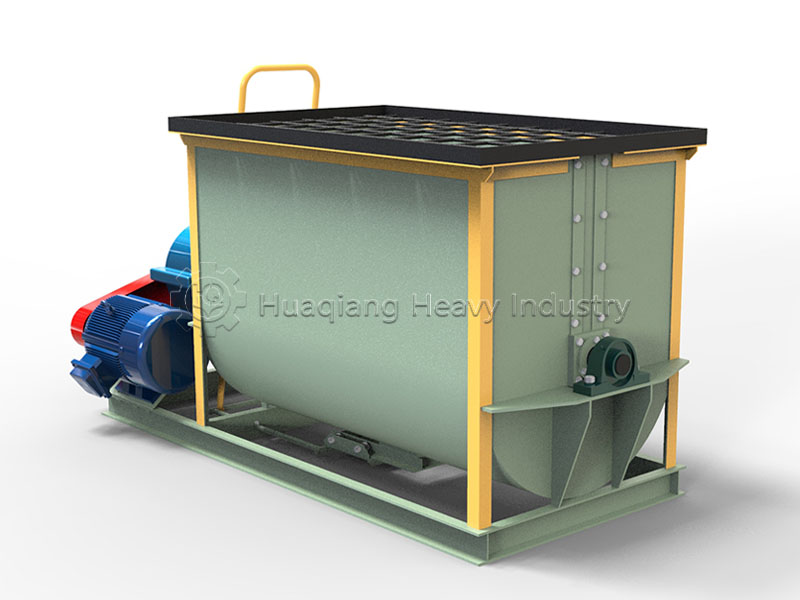
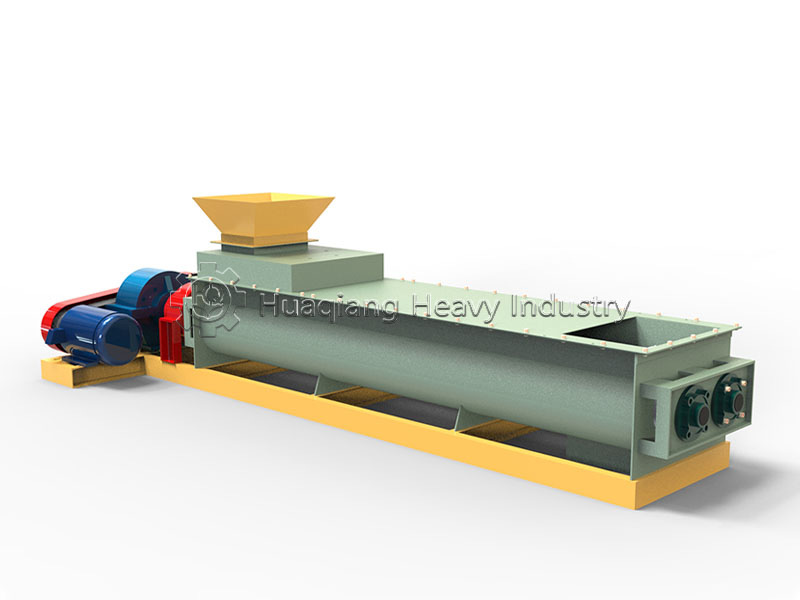
The core equipment is a double axis paddle mixer. When the material enters, two shafts rotating at specific angles and speeds drive the paddles, causing the material to undergo multi-dimensional composite motion within the machine. This includes both radial circular motion and axial lateral movement. This intense convection, shearing, and diffusion action can thoroughly interweave the various raw materials in a very short time (usually 2-4 minutes).

3.Precise Control as a Guarantee

The entire mixing process is precisely controlled by an automated system. Parameters such as feeding sequence, mixing time, and main unit load are monitored and recorded in real time. This precise control eliminates human error, ensuring the stability and reproducibility of each batch of product.

In short, the seemingly simple mixing process is actually the culmination of science, technology, and experience. It ensures that the NPK blending fertilizer production line can accurately deliver its nutrient formula, laying a solid foundation for balanced crop nutrition.

NPK fertilizer production line: Targeting precise nutrients from diverse materials

NPK fertilizers can be formulated with nitrogen, phosphorus, and potassium nutrients according to crop needs, becoming “customized” fertilization solutions for agriculture. The core capability of this NPK fertilizer production line lies in its flexible handling of diverse materials.

First and foremost is the “difference” in the form of raw materials. The nitrogen source for NPK may be granular urea or powdered ammonium chloride, the phosphorus source is often lumpy monoammonium phosphate, and the potassium source is mostly free-flowing potassium chloride granules. The production line must first use crushing and grinding processes to grind the lumpy phosphorus source into fine powder, and then adjust the different forms of nitrogen and potassium raw materials into a homogeneous intermediate to avoid “particle clumping and powder settling” during subsequent mixing, ensuring that each nutrient is evenly distributed.

Secondly, there are the “special” physical and chemical properties of the materials. Some nitrogen sources tend to clump after absorbing moisture; for example, urea will harden into lumps when damp. Phosphorus sources have lower corrosivity, while potassium sources need to be protected from high temperatures to prevent nutrient loss. This requires the NPK fertilizer production line to “prescribe the right medicine for the right disease” during processing.

Finally, there is the “flexibility” of the material ratio. Different crops require different NPK ratios; for example, rice needs high nitrogen and low potassium, while fruits and vegetables need high potassium and low phosphorus. The production line needs to use a precise metering system to adjust the input of each raw material according to the formula at any time during material processing. In short, the NPK fertilizer production line“Strength” lies in the meticulous handling of diverse materials.

Fertilizer mixer machines lay a solid foundation for bio-organic fertilizer equipment

In the entire operation of bio-organic fertilizer equipment, the fertilizer mixer machine, seemingly a “basic link,” is actually a “hidden hero” that determines the final fertilizer effect and production efficiency.

The core objective of bio-organic fertilizer equipment is to transform organic waste such as straw and livestock manure into ecological fertilizer rich in beneficial bacteria through harmless treatment. The uniformity of raw material mixing directly affects the fermentation effect and nutrient balance. The fertilizer mixer machine perfectly addresses this key requirement: through the rotational action of its multi-dimensional mixing structure, it breaks down the physical differences between raw materials, achieving uniformity in carbon-nitrogen ratio, humidity, and microbial distribution across the entire process.

The mechanical mixing of the fertilizer mixer machine ensures that every component of the raw material is fully in contact. This not only provides a “homogeneous substrate” for the fermentation stage of the bio-organic fertilizer equipment but also allows microbial agents to adhere evenly to the organic materials, significantly improving microbial activity and composting efficiency, and shortening the fermentation cycle.

As the “quality gatekeeper” in bio-organic fertilizer equipment, the fertilizer mixer machine ensures the nutrient balance and fermentation quality of ecological fertilizer through precise mixing, making every step of the transformation of organic waste into high-quality fertilizer more controllable and efficient, and providing solid support for the large-scale development of green agriculture.

The synergistic code between BB fertilizer mixers and NPK fertilizer production lines

In the wave of “on-demand fertilization” in modern agriculture, BB fertilizer mixers and NPK fertilizer production lines are not independent entities. Their synergy allows NPK fertilizers to move from “standardization” to “customization,” adapting to the nutrient needs of different crops.

The core value of the BB fertilizer mixer lies in its “uniformity control.” Targeting the physical characteristics of nitrogen, phosphorus, and potassium fertilizers (or additives containing micronutrients), it uses the staggered operation of multi-directional mixing paddles, combined with anti-caking devices, to ensure that raw materials of different particle sizes and specific gravities are thoroughly mixed in a sealed chamber, laying the foundation for “precision fertilization.”

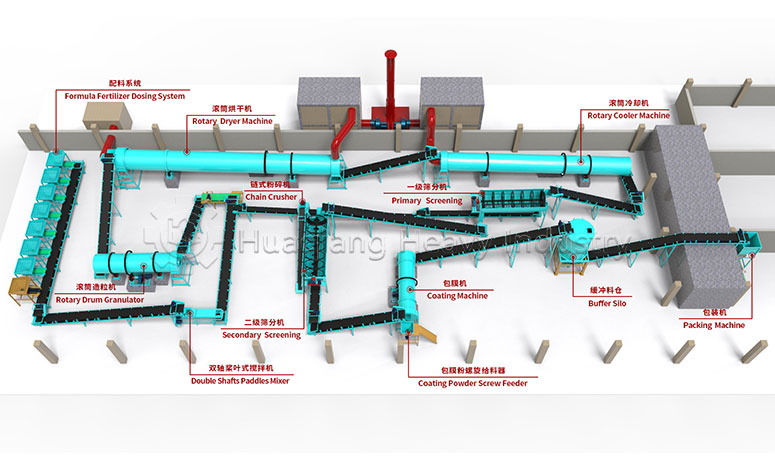
The NPK fertilizer production line, on the other hand, is the complete chain that translates “precise proportioning” into “standardized products.” From raw material screening and automatic metering to the core mixing stage of the BB fertilizer mixer, and then to subsequent granulation, cooling, and packaging, the entire production line is connected through automated processes, avoiding errors and efficiency bottlenecks caused by manual operation.

The synergy between the two also addresses the “single-formula pain point” of traditional NPK fertilizers. Through flexible formula adjustments on the production line, coupled with the precise mixing of the BB fertilizer mixer, it’s possible to quickly switch between specialized NPK formulas for different crops such as wheat, corn, fruits, and vegetables. This meets the needs of large-scale production while reducing fertilizer waste and soil nutrient imbalances.

From “precise mixing” to “closed-loop process,” the linkage between the BB fertilizer mixer and the NPK fertilizer production line ensures that NPK fertilizer production maintains both “quantity” and “quality,” better meeting the modern agricultural demands for “efficiency, precision, and environmental protection.”