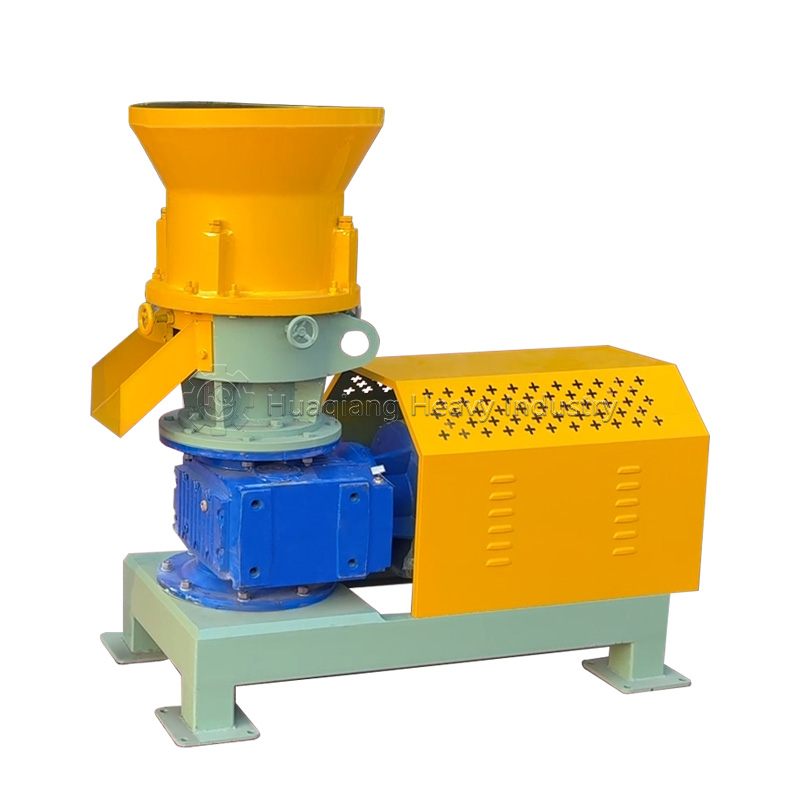
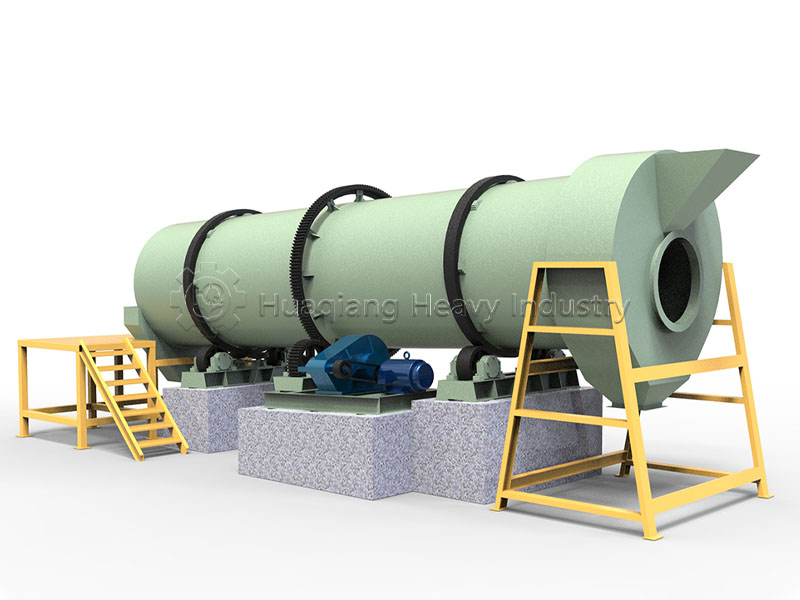
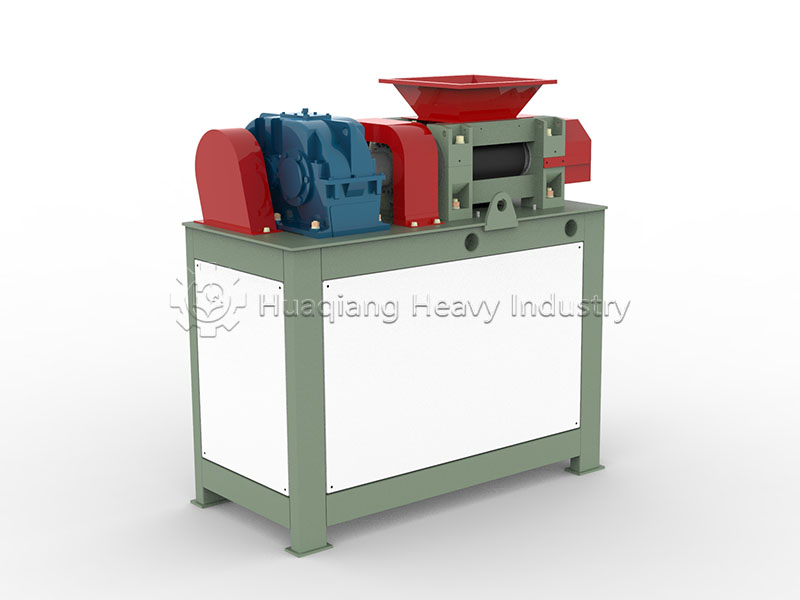
Ring die granulator: Core equipment for efficient granulation in the fertilizer industry

Due to its unique granulation advantages, the ring die granulator has become a key choice for many fertilizer companies to improve production efficiency, providing strong support for the large-scale, standardized production of granular fertilizers.

The core competitiveness of the ring die granulator lies in its excellent molding effect and stable production capacity. Its core component, the “ring die,” efficiently converts a variety of raw materials, such as organic fertilizer and compound fertilizer, into granular products through precise die hole design and uniform extrusion force.

Furthermore, the ring die granulator’s adaptability meets the diverse production needs of the fertilizer industry. Whether processing high-moisture organic fertilizer raw materials or compound fertilizer formulations with varying nitrogen, phosphorus, and potassium ratios, the equipment can adapt to different raw material characteristics by adjusting parameters such as the ring die speed and extrusion pressure, easily achieving mass production.

For fertilizer companies, the ring die granulator is not only a production equipment but also a vital tool for enhancing product competitiveness. Against the backdrop of the growing agricultural demand for efficient, high-quality fertilizers, the ring die granulator will undoubtedly continue to play a key role in driving the fertilizer industry towards higher-quality production models.

Rotary drum granulators promote the resource utilization of organic waste, achieving “waste-to-fertilizer”

This “waste-to-fertilizer” resource utilization approach not only meets the needs of green development but also provides high-quality organic fertilizer for agriculture. In this process, the rotary drum granulator, with its adaptability to diverse organic waste types and efficient granulation capabilities, serves as a crucial bridge between “waste” and “qualified organic fertilizer.”

The core value of the rotary drum granulator lies primarily in its inclusive treatment of diverse organic waste types. For high-fiber waste such as straw, the rotary drum granulator uses the slow tumbling of its tilted drum, combined with the action of its lifting plates, to thoroughly mix the pulverized straw with a binder, evenly dispersing the fibers and gradually entrapping them into granules. This achieves a granulation rate exceeding 80%.

For high-moisture waste (30%-40%) such as poultry and livestock manure, the equipment uses a built-in ventilation device to regulate the humidity within the drum, achieving simultaneous “granulation and initial dehydration.” This eliminates the need for additional dehydration equipment, reducing processing steps and energy consumption. Even when processing food waste with complex composition, the rotary drum granulator’s flexible mixing design prevents impurities from clogging and ensures uniform granule shape.

Rotary drum granulators also enhance the commercial value of organic waste fertilizer. Ungranulated organic waste has a dispersed fertilizer effect, easily clumps, and is expensive to transport and store. However, the granulated organic fertilizer produced by a rotary drum granulator not only maintains a moisture content below 15%, facilitating long-term storage, but also allows for standardized granules to be created by adjusting the die aperture, meeting market demand for organic fertilizer that is easy to apply and has stable fertilizer effect.

Key considerations for fertilizer coating machine selection

When selecting a coating machine, fertilizer companies should consider their own production needs and focus on three key factors to avoid mismatching the equipment with their production.

First, consider compatibility with the particle characteristics. For large fertilizer particles (diameters over 5mm), a wide-channel coating machine with an anti-sticking guide structure is recommended to prevent particle accumulation and blockage within the channel. For particles with high moisture content (above 12%), a conveyor assembly with an anti-stick coating is preferred. For organic fertilizer particles containing fibrous impurities, it is also important to confirm whether the coating machine is equipped with a pre-filter to prevent impurities from entanglement with mechanical components.

Second, consider capacity compatibility. For small-scale production (daily production capacity under 50 tons), a batch coating machine can be selected, offering flexible batch adjustments and suitable for producing a variety of fertilizers in small batches. For large-scale production (daily production capacity over 100 tons), a continuous machine is recommended to ensure that the conveyor speed is synchronized with the material feed rate.

Finally, consider the compatibility of the coating material. If using PE film, confirm that the equipment’s heat-sealing temperature range covers 100-130°C. If using functional coating materials (such as films containing anti-caking agents), check that the equipment’s tension system supports low-tension adjustment to avoid film breakage and impacting performance. Additionally, pay attention to the equipment’s adaptability to film widths and whether it can be flexibly adjusted to accommodate different packaging specifications, minimizing material waste due to film mismatches.

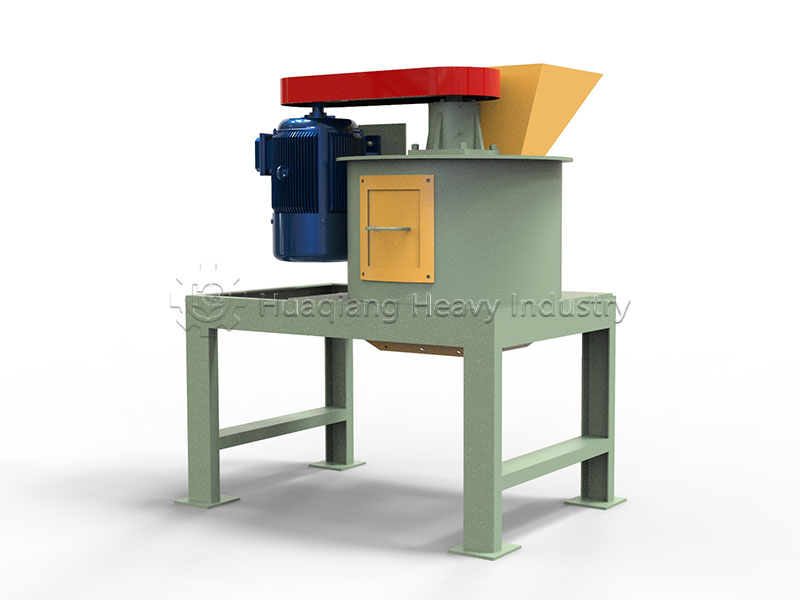
New type two in one organic fertilizer granulator: A powerful tool for reducing costs and increasing efficiency

With the continued expansion of market demand for organic fertilizers, fertilizer companies are increasingly demanding higher efficiency, energy consumption, and space utilization in their production equipment. The emergence of new type two in one organic fertilizer granulators addresses these pain points, making them a key option for organic fertilizer manufacturers upgrading their equipment.

The core advantage of this type of new type two in one organic fertilizer granulator lies in its integration. It combines the functions of at least two pieces of equipment in the traditional granulation process into one, with common designs such as “mixing + granulation” or “granulation + preliminary drying.” For example, the “mixing + granulation” system simultaneously mixes raw materials such as pulverized straw and livestock manure with auxiliary materials. The integrated granulation mechanism then produces granules in one go. This not only reduces material loss by 15%-20%, but also saves approximately 30% of workshop space, making it particularly suitable for small and medium-sized manufacturers or production lines with limited space.

The new type two in one organic fertilizer granulator also offers improved process adaptability. It can process raw materials with a moisture content of 18%-30%, eliminating the need for excessive drying pretreatment. This reduces initial energy consumption and prevents nutrient loss from over-drying.

Furthermore, through optimized internal structure, the equipment ensures a stable pellet formation rate above 90%, resulting in highly uniform pellets with moderate hardness, meeting mainstream market demand for organic fertilizer pellets. Against the backdrop of green agricultural development, this type of highly efficient and energy-saving integrated equipment is driving organic fertilizer production towards greater efficiency and cost-effectiveness.

Controlling pellet strength in ring die pelleting machines: Key to fertilizer transportation and storage

Pellet strength is a core performance indicator for fertilizer products. Ring die pelleting machines require multi-step control to ensure pellets can withstand the pressure of transportation and stacking, minimizing breakage and loss.

First, consider the raw material ratio. If the organic matter content in production is too high (over 60%), binders such as clay and bentonite should be added (control the amount to 3%-5%) to increase the viscosity of the raw materials and lay the foundation for pellet strength.

If the proportion of inorganic fertilizer is high, the moisture content of the raw materials should be controlled between 14% and 16% to avoid pellet brittleness caused by too low a moisture content and easy sticking to the ring die pelleting machine due to too high a moisture content.

Selecting the ring die pelleting machine compression ratio is also crucial. The compression ratio (the ratio of the ring die aperture to the effective thickness) should be adjusted according to the fertilizer type. For organic fertilizers with high fiber content, a low compression ratio of 1:8-1:10 is recommended to prevent pellets from being too hard and easily broken. For compound fertilizers, a high compression ratio of 1:12-1:15 is recommended to enhance pellet density. During production, regular spot checks can be performed using a pellet strength tester. If the strength is insufficient, the steam supply to the conditioner can be temporarily increased (by 10%-15%).

In addition, the gap between the roller and the ring die should be controlled within a range of 0.1-0.3mm. A gap too large will cause the raw material to slip, resulting in insufficient pellet density; a gap too small will increase wear and affect pellet consistency. By synergistically controlling these three factors, the compressive strength of fertilizer pellets can be stabilized at above 20N, meeting transportation and storage requirements.

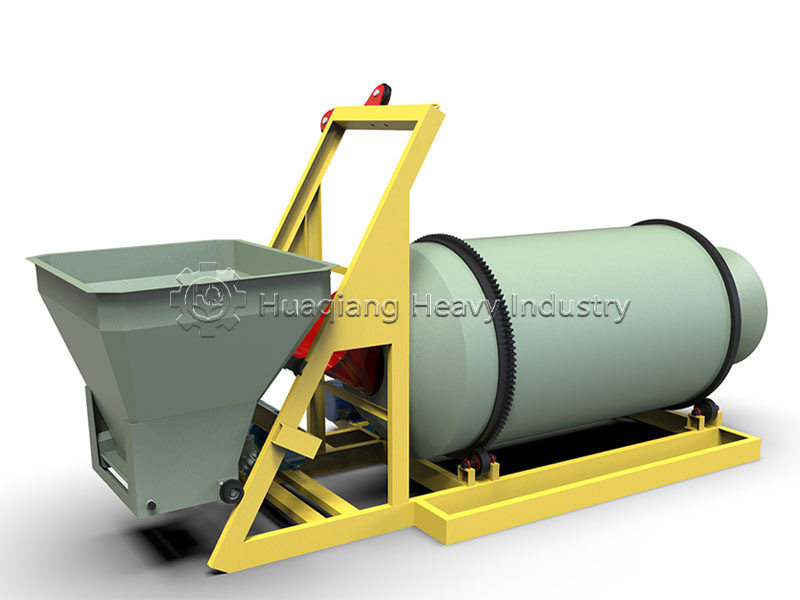
Rotary drum granulator: Core equipment for continuous granulation and multi-product compatibility

In large-scale fertilizer production, the rotary drum granulator, with its continuous and stable operation and compatibility with multiple fertilizer types, serves as a critical link between raw material mixing and pellet forming. It is particularly well-suited to the efficient production needs of medium- and large-scale enterprises, ensuring consistent pellet quality while reducing manual intervention costs.

Its core advantages lie in its “continuous operation” and adaptability. Firstly, the rotary drum granulator can operate continuously 24 hours a day, processing 5-50 tons/hour without frequent downtime adjustments, perfectly matching the batch production rhythm of fertilizer production lines.

Secondly, by adjusting the binder dosage, drum speed (low speed is suitable for sticky raw materials, high speed is suitable for loose raw materials), and tilt angle (to control material residence time), it can accommodate a variety of fertilizer types, including organic fertilizers, compound fertilizers, and organic-inorganic mixed fertilizers. It can even process organic fertilizers containing small amounts of fiber (the lifting plate design prevents fiber entanglement). In addition, the granule forming rate of the rotary drum granulator can reach over 85%, and the granules are highly rounded and of moderate hardness. No complicated crushing and screening are required afterwards, and they can directly enter the drying stage, which greatly simplifies the production process and provides a cost-effective solution for fertilizer companies to balance “capacity increase” and “quality stability”.

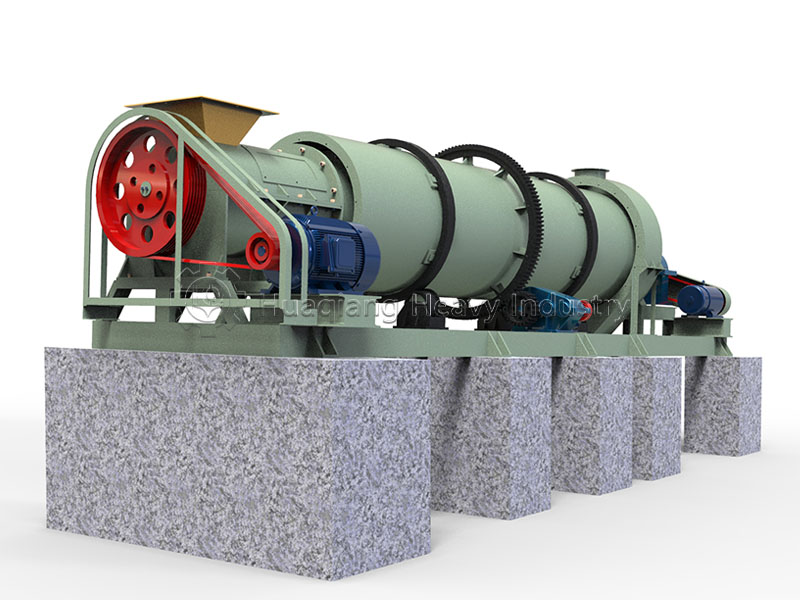
Common drum fertilizer dryer failures and solutions

Drum fertilizer dryers operate frequently during the fertilizer drying process. Improper operation or untimely maintenance can easily lead to problems such as uneven drying, decreased efficiency, and equipment blockage, directly impacting production progress.

  1. Uneven Moisture Content of the Material After Drying

One problem is large fluctuations in hot air temperature, resulting in uneven heat transfer. Another problem is that the feed rate fluctuates, resulting in uneven material accumulation thickness within the drum. To address this, first stabilize the heating system and control hot air temperature fluctuations within ±5°C. Then, use a variable frequency feed valve to control uniform feed and ensure a stable material thickness within the drum.

  1. Sudden Drop in Drying Efficiency

This is often caused by severe wear of the drum’s internal lifter plates or dust accumulation and blockage in the hot air ducts. To address this, stop the drum fertilizer dryer and inspect the lifter plates. If wear exceeds 1/3, replace them. Clean dust from the hot air ducts to ensure the hot air volume meets the standard. Furthermore, if the drum’s exterior is scaled, perform regular acid cleaning to improve heat transfer efficiency.

  1. Drum Blockage

This is mainly caused by the drum tilt angle being too small or residual material hardening and clumping at the discharge port. In this case, the drum fertilizer dryer should be stopped to clean the accumulated material inside the drum. Subsequently, the drum tilt angle should be adjusted to 4°-5°. After each production run, the discharge port should be thoroughly cleaned of any residual material to prevent hardened material from clogging.

How can you use new type organic fertilizer granulators more efficiently and save energy and materials?

Many organic fertilizer plants are concerned about costs. However, when using new type organic fertilizer granulators, paying attention to two small details can significantly save energy and materials.

To save energy, most new type organic fertilizer granulators are equipped with variable-frequency motors. Avoid running them at maximum speed all the time. For example, when initially feeding, use a low speed of 15 rpm. Once the raw materials have stabilized in the granulation chamber, gradually increase the speed to 20-25 rpm. This prevents the motor from exerting sudden force, saving 10%-15% of energy per hour. Additionally, avoid idling the machine. Do not start the machine until the raw materials are ready. The energy wasted in idling for one hour is enough to generate granules for 20 minutes.

To save materials, the key is to reduce waste. New type organic fertilizer granulators have a return device. Instead of discarding the crushed granules, they are directly returned to the granulation chamber through the return port, where they are mixed with new raw materials and granulated again. This can reduce the waste rate from 10% to less than 3%. Also, do not mix impurities such as stones and iron wire into the raw materials. Impurities will wear out machine parts and crush good particles. Use a sieve before feeding each time to avoid a lot of material waste.

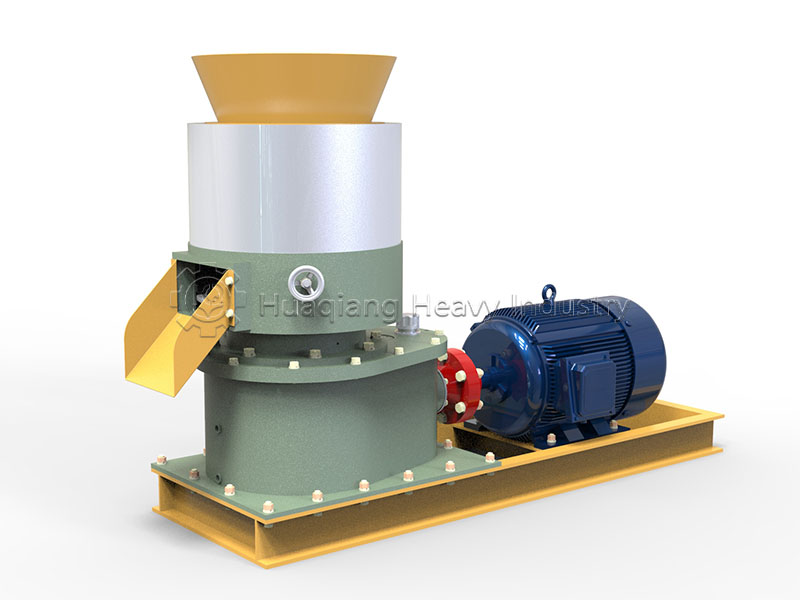
Daily maintenance of flat die granulators to extend the life of consumable parts

The replacement cost of the consumable parts (flat die and roller cover) of a flat die granulator accounts for over 70% of the total equipment operation and maintenance costs. Proper daily maintenance directly impacts the life of these consumable parts.

  1. Precise Maintenance of the Flat Die

After each production run, the surface of the flat die granulator and the die holes must be cleaned of any residual raw material. Compressed air can be used to blow out the die holes, followed by a soft-bristled brush to clean the surface of the flat die to prevent scratches caused by hardened raw material during the next machine start-up. If one side of the flat die is severely worn, the die can be flipped over and used. Minor chipping of the die holes can be repaired with a grinding wheel to reduce the frequency of replacement.

  1. Regular Inspection and Adjustment of the Roller

Check the roller cover weekly during flat die granulators shutdown to check for wear. Replace any noticeable grooves or cracks. Also, adjust the gap between the roller and the flat die using a 0.2-0.4mm feeler gauge inserted between the two to ensure a uniform gap. Excessive gaps can lead to loose pellets, while too small a gap increases friction between the roller and the flat die, shortening their lifespans.

  1. Drive and Lubrication System Maintenance

Check the drive belts between the motor and roller monthly. If the belts are loose, adjust the belt tension. Lubricate the roller bearings with special grease every two weeks. The amount of grease should be sufficient to allow a small amount to overflow from the bearing gap. Excessive grease will result in poor heat dissipation from the bearings.

Ring Die Granulators: How to Reduce Costs and Increase Efficiency Through Routine Maintenance?

Ring die granulators are high-value equipment in organic fertilizer production lines. Routine maintenance not only extends their service life but also reduces downtime, indirectly increasing production capacity.

First, ensure precise maintenance of the ring die and roller. After each production run, clean any remaining raw material from the die hole to prevent it from hardening and caking the die during the next run. Check the gap between the roller and the die weekly. If the gap exceeds 0.5mm, adjust it promptly to prevent insufficient extrusion and loose pellets. Check the ring die surface monthly for wear. If cracks appear along the die hole edge, repair or replace them promptly to prevent degradation of pellet appearance.

Second, ensure maintenance of the transmission system and lubrication. The gearbox and bearings are the core of the transmission. Check the gearbox oil level monthly. If the oil level is below the mark, add special gear oil to prevent gear wear. Fill the roller bearings with high-temperature resistant grease every two weeks to prevent overheating and damage from lack of oil. Be careful not to over-lubricate, as this will result in poor heat dissipation.

The third aspect is raw material pretreatment control: The core of maintenance is prevention. Before raw materials enter the ring die granulator, they must be screened to remove impurities to prevent hard impurities from scratching the ring die and rollers. At the same time, the raw material moisture content (18%-22%) and particle size (≤1mm after crushing) are strictly controlled to minimize equipment overload and component wear caused by unsuitable raw materials, thus reducing maintenance costs from the source.