Common troubleshooting and solutions for double screws compost turning machines

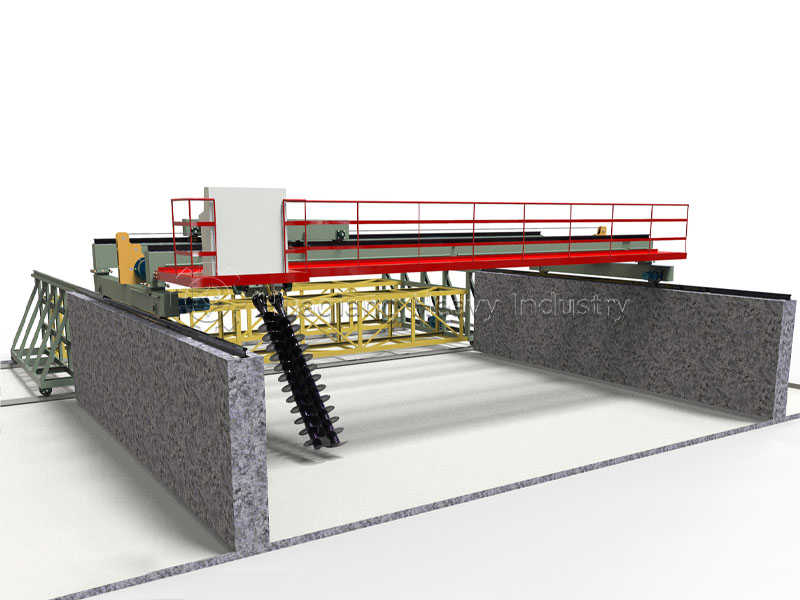
Double screws compost turning machines operate frequently in organic fertilizer fermentation workshops. Improper operation or untimely maintenance can easily lead to problems such as uneven turning, insufficient power, and equipment jamming, impacting fermentation progress.

1.Dead corners remain after turning, and some areas remain uncomposted

The main cause is excessive clearance between the spiral blades and the sidewalls of the fermentation tank (over 10 cm), or the double screws compost turning machine is moving too fast, preventing material from being turned over the edges. To address this, adjust the position of the spiral blades to reduce the clearance to within 5 cm. Also, reduce the double screws compost turning machine’s speed to ensure that every area is thoroughly turned.

2.Motor overload and tripping, insufficient power

This is often caused by excessive moisture content (over 70%) in the raw materials, resulting in increased friction on the spiral blades due to high viscosity, or by large impurities in the raw materials that may be blocking the blades. To address this, adjust the moisture content of the raw materials to 60%-65% before clearing impurities from the fermentation tank. If the compost tank is frequently overloaded, check the tightness of the motor belt and tighten or replace it.

3.Rapid wear of spiral blades, reducing turning capacity

This is primarily due to the presence of hard impurities (such as sand and gravel) in the raw materials, or the blade material not being suitable for wear resistance. To address this, install a screen to filter out hard particles before the raw materials arrive. Regularly inspect the blades for wear. If the blade thickness has decreased by 1/3 or cracks appear, replace them promptly.

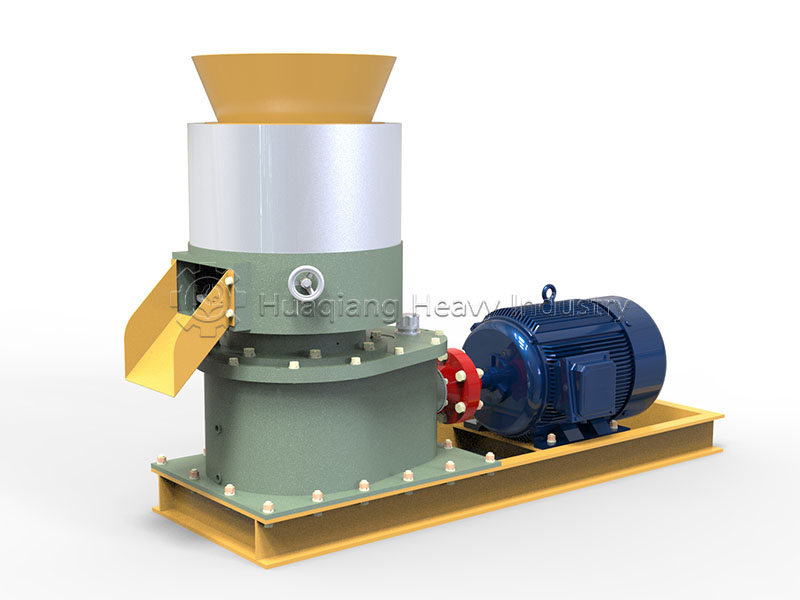
Flat die pelleting machine: Protecting the activity of microbial agents in low-temperature granulation

The core challenge in biofertilizer production lies in ensuring that the granulation process does not destroy the activity of the microbial agent. Most functional bacteria (such as Bacillus subtilis and Trichoderma harzianum) are significantly inactivated at temperatures above 45°C. The flat die pelleting machine, with its low-temperature granulation capabilities, is a suitable choice for biofertilizer production. Its core advantage lies in its low-friction, no-additional-heat granulation process.

The flat die pelleting machine utilizes a vertical extrusion process, with the rollers and the die in contact with each other over a surface area rather than at points. This results in more uniform force per unit area, less frictional heat generation, and a temperature within the granulation chamber typically maintained at 35-40°C, well below the inactivation threshold of the microbial agent.

Furthermore, the machine does not rely on high-temperature conditioning or hot air conditioning; instead, it achieves granulation solely through the viscosity of the raw material and moderate extrusion, eliminating the need for additional heat input.

Furthermore, the flat die granulator’s speed is adjustable (typically 30-50 rpm). For biofertilizer raw materials with high microbial content, the speed can be reduced to below 30 rpm to further reduce frictional heat generation and ensure a microbial survival rate above 85%.

In practical applications, it is even more effective when used with a “room-temperature binder.” This eliminates the need for heating and dissolving the pellets, while also improving the pelletizing efficiency and complementing the flat die pelleting machine‘s low-temperature characteristics. This ensures the biofertilizer’s core function (microbial activity) while producing uniform pellets, meeting the dual requirements of “functionality” and “commerciality.”