When choosing an organic fertilizer production line, how to judge its quality and performance?

Organic fertilizer production line is an indispensable facility in modern agricultural production, which directly affects the yield and quality of organic fertilizer. Selecting the right organic fertilizer production line requires comprehensive evaluation from multiple perspectives.
 

  1. Raw material adaptability: We must first consider the adaptability of the production line to raw materials. High-quality Organic Fertilizer Production Line can adapt to a variety of raw materials, including livestock manure, straw, food industry by-products, etc. The diversity of raw materials directly affects the nutritional value and production cost of organic fertilizers.
Organic-Fertilizer-Production-Line1
  1. Production capacity: The production capacity of the production line should match the scale and needs of the farm. For example, for large-scale farms, you may need to choose a production line that produces hundreds of tons per day, while for small-scale farms, you may need to choose a production line that produces tens of tons per day.
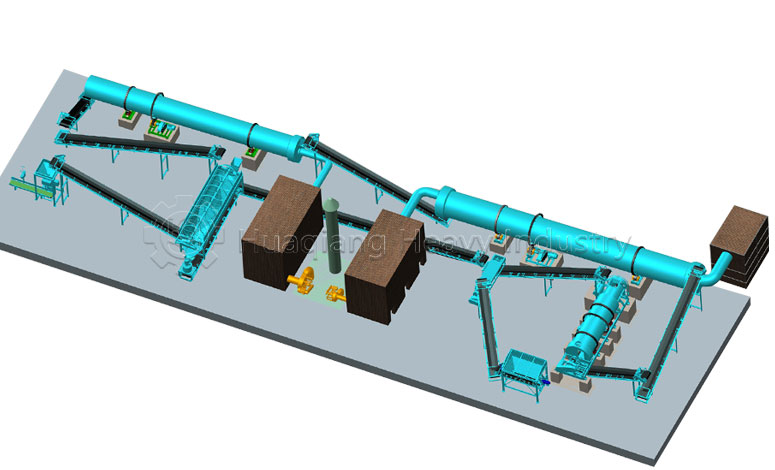
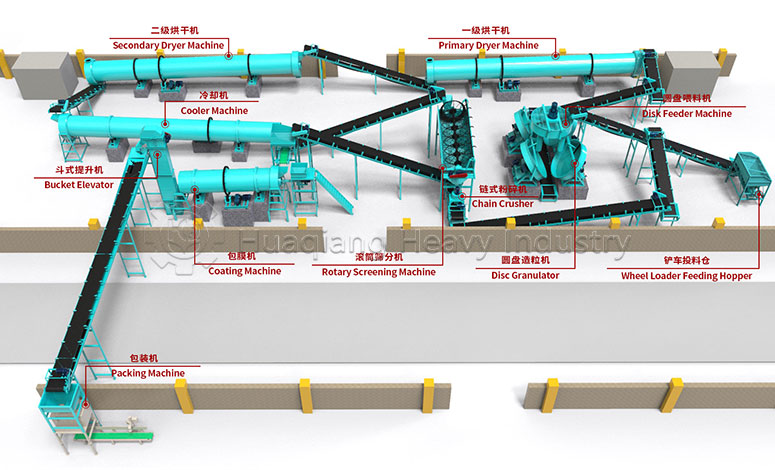
  1. Equipment composition: Organic fertilizer production line usually includes grinding, mixing, granulation, drying, screening and packaging and other links. The equipment performance of each link will affect the quality of the final product. For example, the Disc Granulator is able to produce uniform particles, which helps to improve fertilization efficiency.
18_1
  1. Environmental performance: In the production process, the production line should meet the environmental requirements and reduce the impact on the environment. This includes emission reduction, noise control, waste disposal and more.
  1. Degree of automation: modern organic fertilizer production lines are increasingly inclined to automation, which can reduce labor costs and improve production efficiency. Production lines with a high degree of automation can more accurately control various parameters in the production process.
  1. Energy consumption: The energy consumption of the production line is also an important indicator to measure its performance. Energy efficient production lines can reduce production costs while also meeting the requirements of sustainable development.
  1. After-sales service: It is important to choose a production line with good after-sales service. This includes services such as installation, commissioning, maintenance and upgrading of equipment.
  1. Return on investment: Finally, you need to consider the return on investment of the production line. This includes equipment acquisition costs, operating costs and maintenance costs. A high-quality production line should be able to recover the investment cost in a relatively short time.

 
Through the comprehensive evaluation of the above aspects, the quality and performance of the organic fertilizer production line can be judged, so as to make a reasonable choice.

Malaysia Oil palm special compound fertilizer: the secret of increasing production

Malaysia, a tropical country in Southeast Asia, is famous for its rich palm oil resources. Oil palm trees thrive here, producing fruits that not only bring prosperity to the local economy, but also become an important pillar of Malaysian agriculture. The innovative application of special compound fertilizer for oil palm has brought revolutionary changes to the production improvement of this green gold.
 

NPK Fertilizer Production Line: A filling station where oil palm grows

 
In Malaysia, the NPK Fertilizer Production Line is playing its big role. This line can formulate a specific proportion of NPK compound fertilizer according to the needs of oil palm trees at different growth stages. Nitrogen fertilizer promotes leafy growth, phosphate fertilizer enhances root development, and potassium fertilizer enhances fruit quality. The synergistic effects of the three provide comprehensive nutrient support for the growth of oil palm.

Organic Fertilizer Production Line: Guardians of soil health

 
The application of Organic Fertilizer Production Line in Malaysia not only improves the quality of oil palm, but also contributes to the long-term health of the soil. By converting organic waste into organic fertilizer, these production lines promote microbial activity in the soil and improve soil structure, allowing oil palm trees to grow in a healthier environment.

Fertilizer Granules Compaction Machine: The key to improving fertilizer efficiency

 
In the process of Fertilizer production, the use of Fertilizer Granules Compaction Machine greatly improves the utilization efficiency of fertilizer. This type of granulator makes fertilizer raw materials into pellets through high pressure extrusion, which is not only convenient for fertilization operation, but also reduces the loss of fertilizer and improves the utilization rate of fertilizer.

Fertilizer drying and cooling machine: the guardian to ensure the quality of fertilizer

 
Rotary Dryer machines and Rotary Cooler machines play an important role in fertilizer production. They ensure that the quality of the fertilizer will not be affected by excessive humidity during the production process, and also ensure the stability and durability of the fertilizer. This is crucial for the production of oil palm special compound fertilizers as they need to remain stable in Malaysia’s humid climate.
 
Through the application of these advanced fertilizer production technologies and equipment, Malaysia’s oil palm industry is achieving a double improvement in yield and quality. This is not only a victory for agricultural technology, but also a strong demonstration of environmentally friendly farming practices. With the continuous optimization and popularization of these technologies, the sweet flavor of Malaysian oil palm will be more mellow and the yield will be higher.

Fertilizer plant construction essential: core equipment selection and production line layout planning

In modern agricultural production, fertilizer is one of the key factors to increase crop yield. With the progress of science and technology, the construction of fertilizer plants is no longer a simple stacking equipment, but the need for careful planning and selection of core equipment to ensure production efficiency and product quality. This article will take you into the world of fertilizer plant core equipment, explore how to improve production efficiency through scientific layout.
 

1. Fertilizer production line: the cornerstone of production efficiency

 
If you think of a Fertilizer plant as a precise clock, the Fertilizer Granulating Production Line is the cog system of that clock. The Fertilizer Granulating Production Line is a critical part of fertilizer production. It includes extrusion, flat mold, disc, roller and other methods of granulating, each with its own unique advantages and application scenarios. For example, Rotary Drum Granulator is favored for its efficient production capacity and consistent product quality.

2. Fertilizer granulator series: Shape perfect particles

 
In the fertilizer production line, the fertilizer granulator series plays a crucial role. They are like tools in the hands of sculptors, shaping raw materials into perfect particles. The Fertilizer Granules Compaction Machine is the first choice for many fertilizer plants because of its compact design and efficient granulation capacity. The Flat-Die Pellet Machine, with its stable performance and easy maintenance, meets the needs of different scale fertilizer plants.
K500-1_1

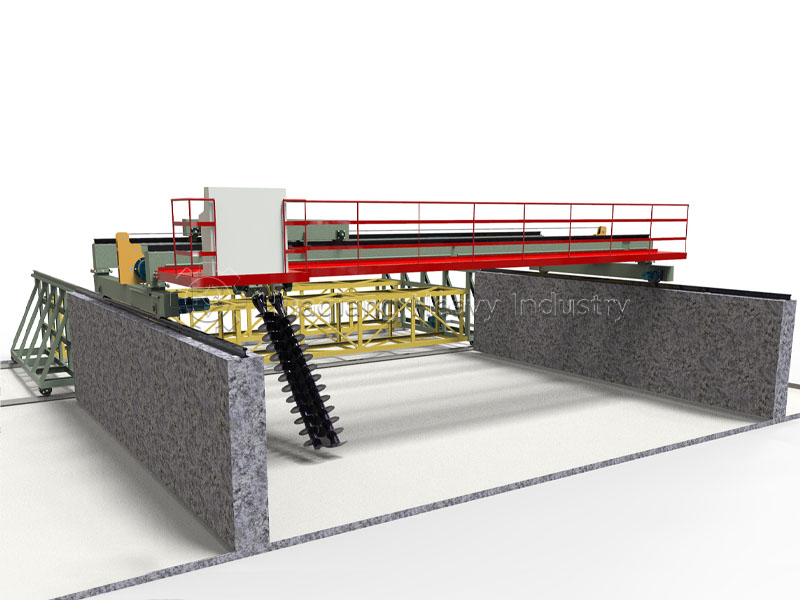
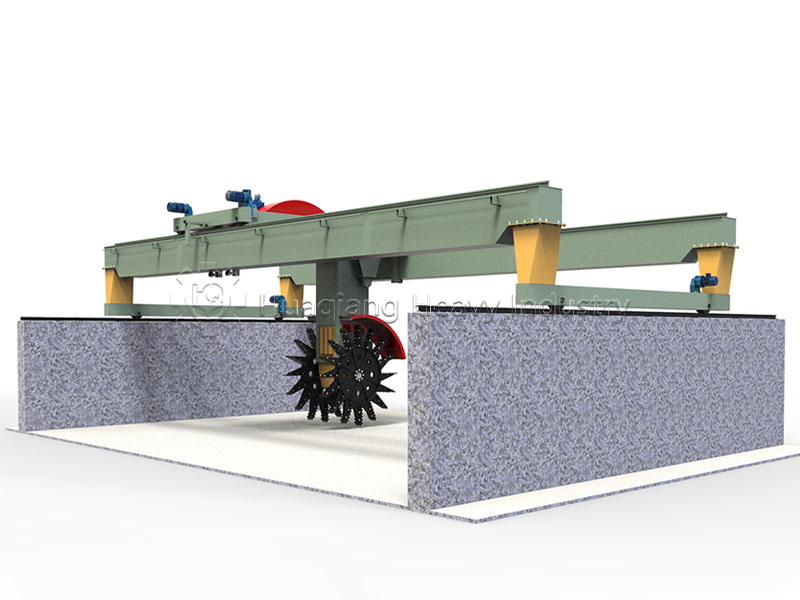
3. Windrow Compost Turning Machine: Combination of environmental protection and efficiency

 
In the production of organic fertilizers, the Windrow Compost Turning Machine is an indispensable equipment. It accelerates the fermentation process of compost by turning the pile, while reducing odors and harmful gas emissions. This not only improves the quality and effect of fertilizers, but also reflects the importance of modern agriculture to environmental protection.

4. Fertilizer drying, cooling machine machinery: the key to quality control

 
Last but not least is fertilizer drying, cooling machine machinery. Rotary Dryer Machine and Rotary Cooler Machine are the key equipment to ensure the quality of fertilizer. By precisely controlling temperature and humidity, they ensure that the drying and cooling process of the fertilizer is both efficient and environmentally friendly.
 
In the construction of chemical fertilizer plant, the key to ensure production efficiency and product quality is to choose the appropriate core equipment and rationally plan the layout of production line. Through the introduction of the above science knowledge, we can see that every step is crucial from the fertilizer production line to the fertilizer pelletizing machine series, to the strip compost tiller and fertilizer drying, cooling machine machinery. The selection and layout of these equipment is not only related to the production efficiency of the fertilizer plant, but also directly affects the quality of the final product. Therefore, investing in these core equipment is a wise choice for fertilizer plant construction.

How to balance production efficiency and pellet quality in rotary drum granulators?

In compound fertilizer, organic fertilizer, and NPK fertilizer production lines, the rotary drum granulator is a core piece of equipment. Balancing its production efficiency with pellet quality is crucial.

1.Optimize Raw Material Formula

Moisture Control: Too much moisture causes particles to stick together; too little makes pellet formation difficult. Generally, aim for 25%-35% (adjust based on material).

Fineness Adjustment: Coarse material lowers pellet formation rate; overly fine material increases energy use. An 80-100 mesh range is recommended.

Binder Selection: Add binders like bentonite, humic acid, or liquid binders appropriately to improve pellet strength, but avoid excessive use.

2.Adjust Equipment Parameters

Rotation Speed Optimization: Too high a speed breaks pellets; too low reduces output. Typically, 15-25 rpm works well.

Tilt Angle: This affects material dwell time. An angle of 1°-3° usually balances output with pellet density.

Liquid Spray System: Use atomizing nozzles for even wetting, preventing local over-wetting or dryness, improving uniform pellet formation.

3.Control Drying and Cooling Processes

Drying Temperature: Too high a temperature can cause pellets to crack. Stepwise drying at 80-120°C is suggested to avoid sudden heating.

Cooling Rate: Use the cooler properly for gradual cooling, reducing internal stress and improving hardness.

4.Regular Maintenance and Process Monitoring

Clean Buildup: Regularly remove material caked on the drum’s inner walls to prevent uneven granulation.

Screening Feedback: Use online screening equipment to monitor pellet qualification rate in real-time, allowing dynamic adjustment of process parameters.

The key to balancing the rotary drum granulator’s efficiency and quality lies in raw material pre-treatment, optimizing equipment settings, and coordinating with post-processing. By fine-tuning these scientifically, you can achieve high output while producing strong fertilizer pellets with low dust levels.

Controlling the rotary drum granulator to improve the particle roundness

The time and frequency of material rolling in the rotary drum granulator are the primary factors to determine the pelletizing rate and particle roundness. The roundness of granular product in fertilizer production line can be improved by controlling the drum granulator.

rotary drum granulator

Production principle of rotary drum granulator

Materials rely on surface tension, proper amount of liquid phase, extrusion force generated by rolling between materials, and correct movement direction of materials in the granulator, with small particles as the core, they absorb and adhere to each other and form balls in rolling. In a certain period of time, the higher the rolling frequency is, the higher the spheroidization rate is, and the rounder the particles are.

In the process of production, we have encountered two kinds of situations due to the different friction between materials and the wall of granulator.
1. The internal surface finish of granulator is large, so that the friction force between material and cylinder wall is reduced, and the upward movement force of material is weakened. If the material does not roll, it will not produce particles. In view of this situation, we can solve this problem by adjusting the speed of the granulator and installing a small plate inside.
2. The material in the drum granulator is severely stuck to the wall, and the friction between the material in the granulator and the wall of the barrel is increased, which raises the material in the machine too high, causing the material to fall from the top, so that the formed particles are not Rounding and excessive large particles, we think there are two reasons for this situation: on the one hand, the material is caused by too much viscous material, in this case, we change the formula of the npk production line to reduce the amount of viscous material; on the other hand , The inside of the granulator is not smooth. In this case, we change the internal material to increase the smoothness of the granulator.

On the other hand, we should also control the reasonable amount of material returned to the whole fertilizer production line. The process of rotary drum steam granulation is different from that of general fertilizer granulator, the relative pelletizing rate is lower, and the amount of returned material is higher. The amount of returned material directly affects the output and quality. The product has less particles, more powder and larger amount of return material, which directly affects the output. Large particles return more materials, directly affect the smoothness and roundness of the product.

Water control of drum granulator during granulation

In chemical processing industry, rotary drum granulator is widely used in organic fertilizer production line and NPK fertilizer production line. In the granulation process of the drum granulator, the coarsening in the pellet is mainly in the form of cladding, so the material circulation volume should be larger, so as to provide a coarser core for the cladding process, and the water injection volume should be smaller, so as to reduce the water absorption of the core.

When pelletizing by bonding or “gathering”, the materials are smaller, because the materials in the drum are mainly composed of fresh materials with small particle size and mutual bonding. The liquid ratio required for bonding should be large, because the space between the fine powder particles to be bonded with each other should be filled with water.

Read More

Features of rotary drum granulator for processing compound fertilizer granules

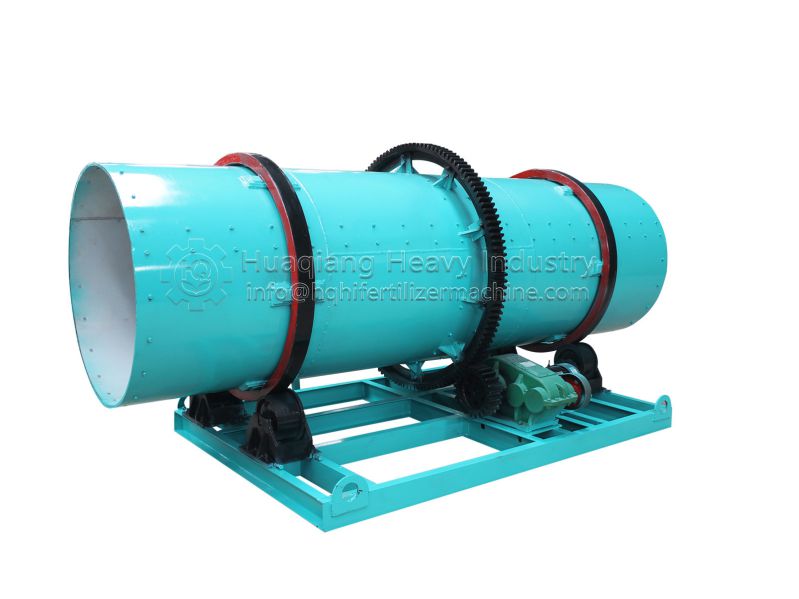
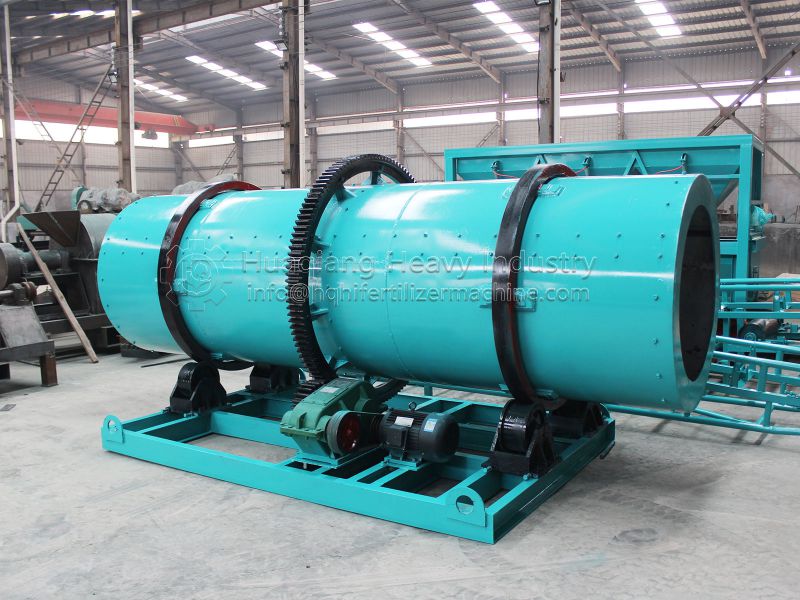
The reducer of the drum granulator is driven by a belt driven by a motor. There is a pinion on the reducer shaft, which is exactly in line with the teeth on the ring gear outside the body. The cylinder and the reducer move in opposite directions. In organic fertilizer production line, the materials are sent to the cylinder end of the machine by the silo or conveyor. The granulator makes the materials into granular materials in the cylinder, and the materials conforming to the finished products are discharged from the discharge port at the other end. The continuous operation of the rotary drum granulator can realize the large-scale production of the organic fertilizer production line.

Features of rotary drum granulator

1. Rotary drum granulator can rotate the cylinder with less power. The outside of the machine is made of wear-resistant steel, which effectively prolongs the use time of the equipment.

2. The granulation principle of drum granulator is different from that of roller press granulator, it can make materials roll through chemical reaction. Under the action of certain liquid, using the rolling of cylinder, a sphere is formed by extrusion between material and small particles. Roller granulator is used to extrude particles by external force
rotary drum granulator
3. The machine is supported by the most energy-saving supporting wheel bracket, which is made of high-quality carbon steel and can fully bear the weight of the cylinder. Considering the large friction between the cylinder and the supporting wheel, we specially use more wear-resistant materials in this part. On the one hand, it can improve the safety of the equipment, on the other hand, it can also improve the stability.

4. The transmission device is an important part to provide the main power for the machine. The gear ring on the cylinder is driven by the motor and reducer on the rack. The rack is welded with professional high-quality channel steel which is not easy to deform. The transmission device of the machine is more safe and stable.

Fertilizer Machine Manufacturer Introduces How to Produce Compound Fertilizer Granules

The common granulation processes of compound fertilizer include tower granulation, rotary drum granulation (NPK fertilizer production line), spray granulation and so on. As fertilizer machine manufacturer, let’s introduce these production processes from the perspective of fertilizer production.


  1. High tower granulation process is mainly used for the production of high concentration nitro compound fertilizer. It can directly use concentrated ammonium nitrate solution, eliminating the links of spraying granulation, and granular compound fertilizer eliminates the process of crushing operation. At the same time, the compound fertilizer granules produced by the high tower granulation process are very uniform, the qualified rate is very high, the quality is good, easy to dissolve, and the caking phenomenon will not occur.


  1. Rotary drum granulator has little restriction on compound fertilizer formulation, high production yield, low investment and construction speed. It is favored by investors of small and medium-sized compound fertilizer plants and widely used in compound fertilizer production. The complete drum granulation process is a NPK compound fertilizer production line, which includes fertilizer granulator, automatic batching system, mixer, crusher, drum dryer, drum cooler, coating machine, packaging machine and other equipment.

NPK compound fertilizer production line


  1. The spray granulation process adopts the slurry method. The slurry is sprayed into the equipment by heating and pumping, so that the moisture in the slurry is vaporized and separated, and the retained solid forms a granular compound fertilizer. This kind of process is widely used in large-scale compound fertilizer production. Its advantages are that it can be used to produce NPK compound fertilizer, and can also be used to produce ammonium phosphate compound fertilizer. At the same time, it has less energy consumption, large production scale and low production cost. The quality and strength of the products are very good.


Tianci fertilizer machine manufacturer with many years of experience. The drum granulation NPK compound fertilizer production line is our main equipment product. Among the equipment sold, it is highly praised by many fertilizer factories internationally.

How to Choose Suitable Fertilizer Granulator Machine

Granulating fertilizer with granulator makes it easy to store and sow. It is beneficial to the even distribution of nutrients and slow release the fertilizer efficiency. Different types of fertilizers, different sizes and shapes of fertilizer particles, and different granulators are used.

We can choose the right fertilizer granulator machine according to the specific function of the machine.


Rotary Drum Granulator

Drum Granulator is a larger production version of the disc granulator, make the fertilizer powder into round particles. It is suitable for hot and cold granulation and high, medium and low concentrations of mass production of fertilizer. The shell of the machine uses special rubber slab lining or acid-resistant stainless lining board which realizes auto scar removal and de-tumor instead of traditional drawknife equipment.

fertilizer granulator machine

Disc Fertilizer Granulator

Disc Granulator, also called pan granulator, not only produce organic fertilizer, but also compound fertilizer. The disc bottom adopts multiple steel plates which are firm, durable, not deforming. The granulator’s main gears adopt high temperature quenching technology, doubling the service life. Granulation rate reaches above 93%.

Flat Die Extrusion Pelleting Machine

Flat die extrusion pelleting machine is used for granulation to all kinds of organic matter after fermentation, break through the conventional organic prilling before granulation needs not to dry and crush the raw materials. Pelleting machine can direct burdening to work out cylindrical grain, has better granulation effect on fertilizers containing more straw, can save a lot of energy.

New Type Organic Fertilizer Granulator

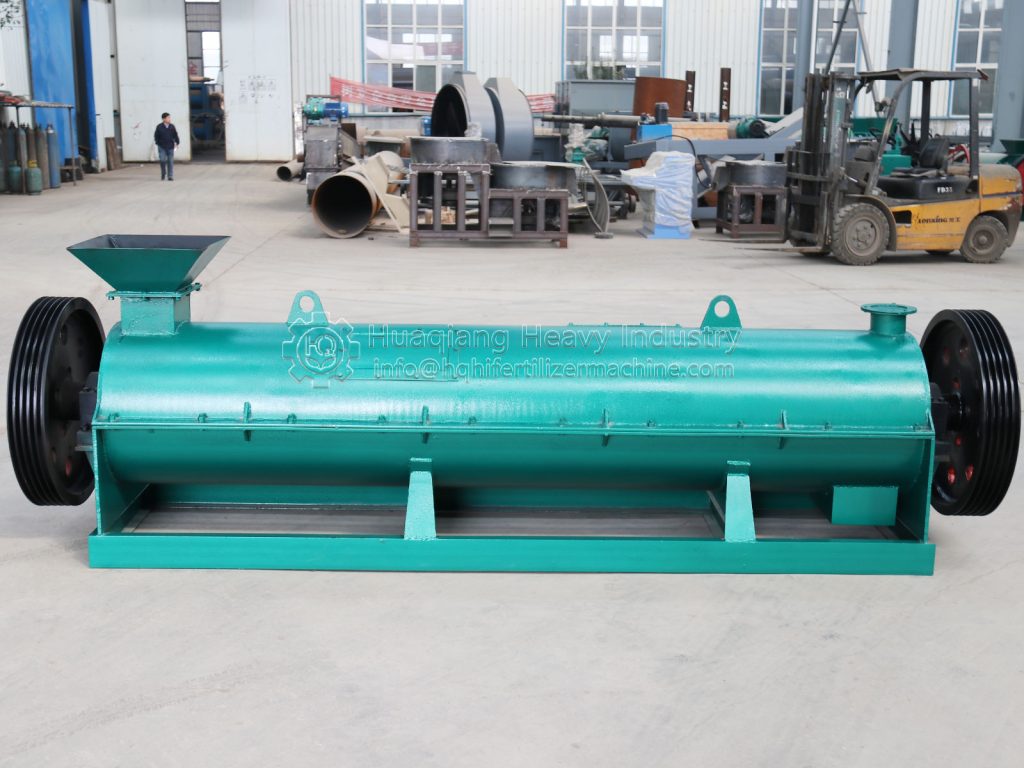
This Organic Fertilizer Granulator is used for making granulation of organic matter after fermentation, dedicated to the production of organic fertilizer granules. After fermentation organics don’t need to dry, it process fertilizer powder into granules, the organic content can be high to 100%. The granulator have the feature of simple machine structure, easy operation and maintenance, low power consumption.

Double Roller Press Granulator

Double roller press granulator is often used to manufacture NPK compound fertilizer, such as ammonium choride, ammonium sulphate, ammonium nitrate, diamonium phosphate, potassium Sulphate, magnesium sulfate, magnesium silicate, zinc sulphate, phosphorus pentoxide, etc. This machine diameter of the ball can be made according to the requirement of the customers. The roller press granulator machine have two shaft with one fixed and the other can move, which can adjust the distance between the two shafts, the materials will be extrude between the shafts.

Double Roller Press Granulator

For more information on how to choose granulator machine, please contact us. We are a well-known fertilizer machine manufacturer in China. We have many years of rich experience and we will try our best to give you a detailed answer.

How to Preventing Caking from the NPK Fertilizer Production Process

NPK compound fertilizer is prone to cake because of its strength, moisture content, storage and so on. This article will introduce how to prevent caking from the process operation of NPK fertilizer production process.

NPK fertilizer production equipment produce products with smooth and uniform particles

Non-uniform particles, too many fine particles, non-smooth fertilizer, the compressive resistance, wear resistance is also poor, easy to be compressed and deformed in storage and transportation. The contact area between particles increase, which is easy to agglomerate. In order to produce products with uniform and smooth particle size, appropriate fertilizer granulator machine should be selected. Disc granulator and rotary drum granulator can produce moderate size particles and meet the requirements. If there is a higher requirement for the shape of the particles, it can also be combined with the ball shaping machine to polish the particles to ensure that the shape is qualified.

NPK Fertilizer Production Process

Strengthening the control of screening machine

In order to ensure the consistency of particle size and reduce the caking of powder, the product needs to be screened. According to the particle size of the product, different screens can be selected, and secondary screening can be selected in the process. Pay attention to the material screening in production, timely clean the screen.

Dryer reduces product water content

NPK compound fertilizer has a high water content, which will lead to salt reaction and cause hardening. The higher the water content, the easier the particles to agglomerate. Therefore, the NPK compound fertilizer production line must use a dryer to reduce the moisture content to the allowable range.

After the particle is dried by the dryer, the temperature is higher and the hygroscopicity effect will appear, so it needs to be cooled. The cooler reduces the material temperature to room temperature, and the product can be saved.

Coating treatment is used in NPK fertilizer production process

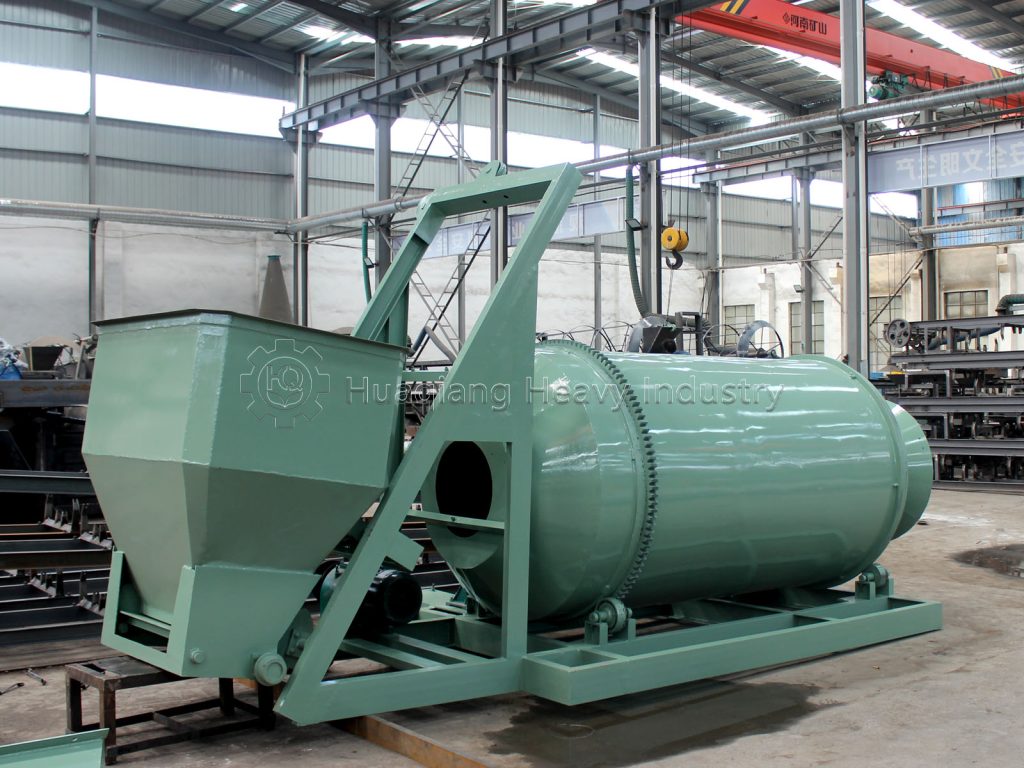
Choose the suitable material and use the coating machine to coat the particles. At the same time, pay attention to the amount of wrapping agent added. The amount of wrapping agent added is small, the particles are not wrapped completely, the effect is poor; the amount of adding is large, the wrapping oil will infiltrate into the inside of the NPK fertilizer, and the product is easy to cake.