The disc granulator, with its adaptability to organic fertilizer materials and process advantages, can optimize the production process from multiple dimensions, including efficiency, quality, and cost. It is the preferred equipment for small and medium-sized organic fertilizer production lines, and its optimizing effect spans the entire granulation process.
Optimized molding efficiency and raw material utilization. Organic fertilizer raw materials are mostly fermented and decomposed animal manure and crop residues, which are loose in texture and have uneven viscosity. The disc granulator allows the materials to quickly roll and aggregate into granules, with a molding rate of over 85%. It does not require a large amount of binder, reducing the impact of exogenous additives on the purity of organic fertilizer, while reducing raw material waste and improving production continuity.
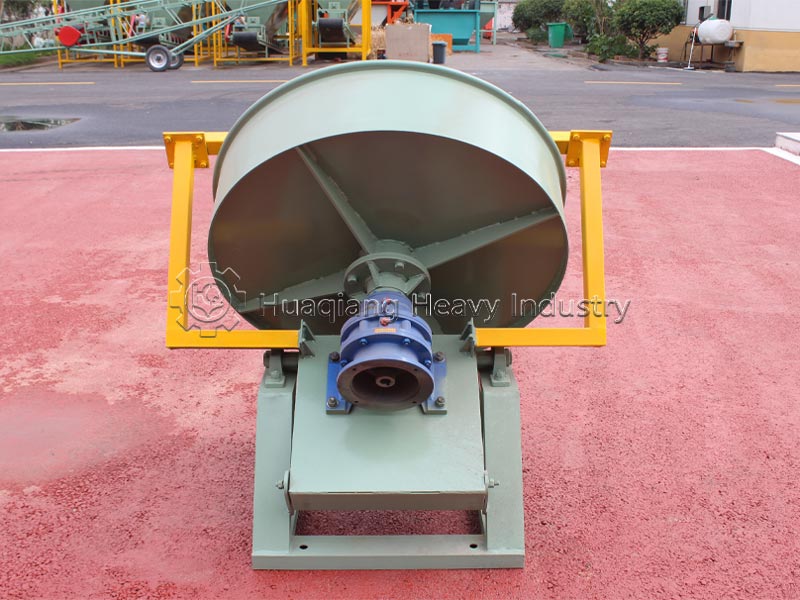
Significantly improved quality of finished organic fertilizer. The finished granules produced by the disc granulator are uniform, round, and have moderate strength, avoiding the problems of easy breakage and dust generation during transportation, and ensuring even nutrient release during application. In addition, trace elements can be mixed simultaneously during the granulation process, making the organic fertilizer more comprehensive in nutrients.
Adaptable to the flexibility and cost control needs of organic fertilizer production. Its equipment structure is simple and easy to operate, and parameters can be quickly adjusted to adapt to different organic fertilizer raw materials. It can efficiently process both pure organic materials and organic-inorganic mixed materials. Furthermore, the equipment occupies a small area and has low energy consumption, making it suitable for small and medium-sized production lines and effectively reducing initial investment and subsequent operating costs.
In summary, the disc granulator can accurately match the characteristics of organic fertilizer production, achieving synergistic optimization of efficiency, quality, and cost, providing reliable support for organic fertilizer production.