Double roller press granulators: A key force driving green upgrades in the fertilizer industry

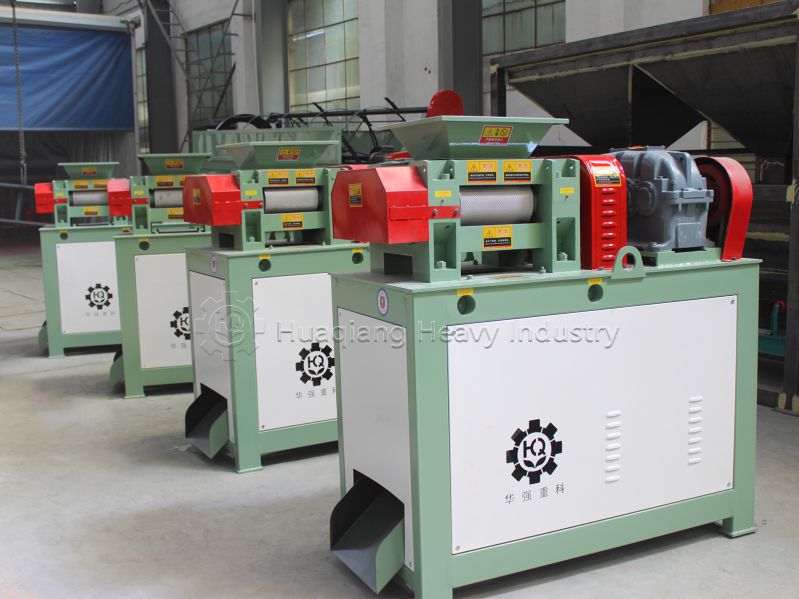
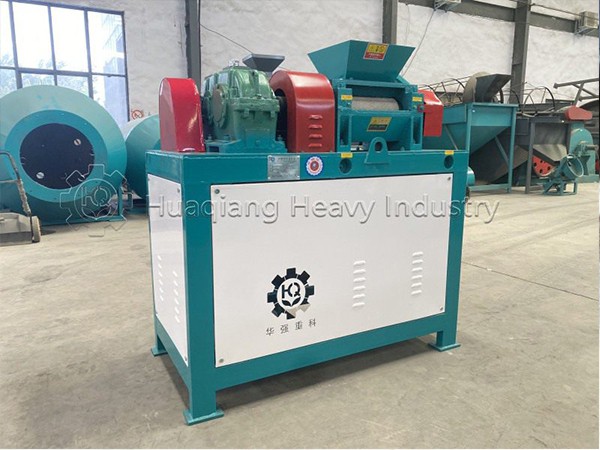
The application of double roller press granulators(fertilizer compaction machines) is reshaping the fertilizer production landscape in multiple dimensions and becoming a crucial support for sustainable agricultural development. Their most significant value lies in their waste resource utilization, transforming organic waste such as livestock and poultry manure and straw into granular fertilizer, significantly reducing reliance on chemical fertilizers.

On the production side, this double roller press granulator offers particularly outstanding environmental advantages. The ambient temperature granulation process eliminates the need for fuel oil or gas drying, eliminating the three wastes emitted throughout the process and eliminating the secondary pollution associated with traditional composting. Furthermore, granulation results in a more uniform nutrient distribution and optimal bulkiness in the fertilizer, increasing plant absorption by over 15% compared to traditional bulk fertilizers and reducing dust loss during transportation and storage.

Equally crucial is its industrial adaptability: A single unit can be used for small production lines, or it can be combined into large-scale units with an hourly output of 50 tons, flexibly meeting diverse scale requirements. From rare earth fertilizers and potash fertilizers to bio-organic fertilizers, double roller press granulators can accommodate a wide range of formulations and even fills a technological gap in the granulation of some specialty compound fertilizers. This combination of flexibility and environmental protection accelerates the transformation of traditional fertilizer production towards green and efficient production.

BB fertilizer mixers: Key equipment for ensuring uniform nutrient distribution in blended fertilizers

In BB fertilizer (blended fertilizer) production, the BB fertilizer mixer is a key piece of equipment that determines product quality. Its core function is to evenly blend multiple raw materials of varying density and particle size into a nutrient-consistent fertilizer, directly impacting subsequent fertilization effectiveness.

In terms of equipment structure, mainstream BB fertilizer mixers mostly adopt a closed-cylinder design with an internal mixing assembly. The cylinder is typically positioned horizontally, with the mixing assembly driven by a motor. Some BB fertilizer mixers also feature forward and reverse rotation to reduce residual material in the cylinder. The feed inlet is typically located at the top of the cylinder, and the discharge outlet at the bottom. Some models feature an observation window for easily monitoring the mixing status.

During operation, raw materials such as urea, monoammonium phosphate, and potassium chloride are introduced into the mixing cylinder according to the formulated ratio. The rotating mixing assembly propels the raw materials: the screw conveys the raw materials from both ends toward the center, the paddles shear and stir the raw materials, and the guide plates facilitate convection, ensuring full contact between raw materials with density differences of 30%-50%. The entire process does not require the addition of adhesives, and mechanical force is used to achieve “small particles filling gaps and large particles colliding with each other”, ultimately achieving a uniform mixing effect.

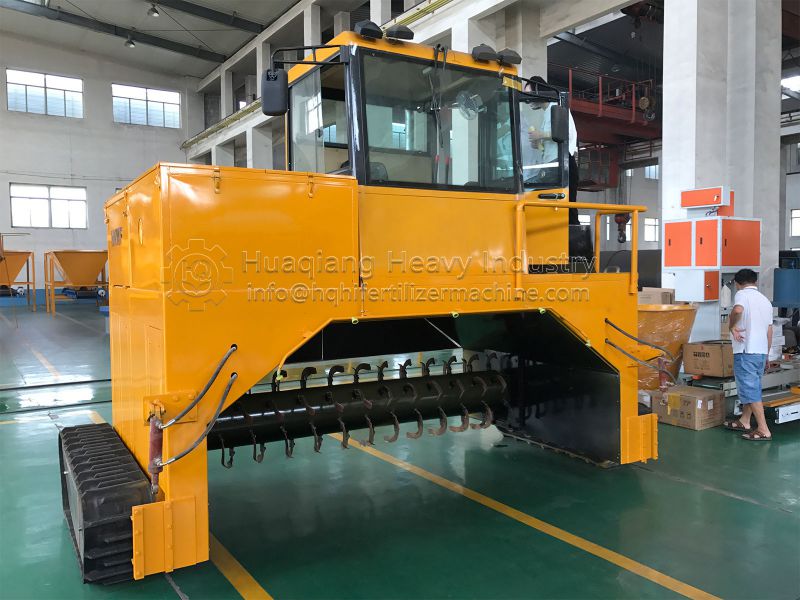
Windrow compost turning machines: Breaking site constraints and adapting to flexible fermentation

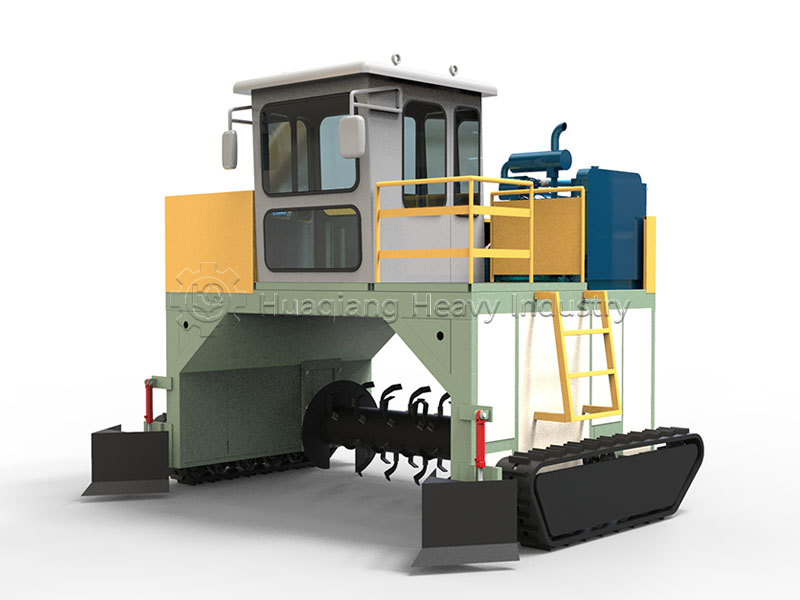
The core of aerobic fermentation of organic fertilizers lies in uniform oxygen supply and temperature-controlled composting. The site adaptability of compost turning equipment directly determines fermentation efficiency and production flexibility. Windrow compost turning machines, with their trackless mobility and all-terrain adaptability, are a perfect fit for the diverse fermentation scenarios in the fertilizer industry.

From a structural perspective, the core advantage of windrow compost turning machines lies in the synergy between their crawler chassis and flexible turning mechanism. Their wide rubber tracks provide a large contact area and low ground pressure, preventing the vehicle from getting stuck even in muddy composting areas or gravel surfaces after rain, eliminating the need for pre-leveling. The chassis’ steering system supports 360° steering, making it easy to navigate obstacles such as raw material piles and equipment around the fermentation area.

In terms of the turning mechanism, most windrow compost turning machines are equipped with double-auger or blade-type turning components, capable of turning compost up to 1.2-2 meters deep and covering compost piles up to 3-5 meters wide. During operation, the equipment slowly moves along the fermentation pile. The turning components throw the bottom material upward and disperse it to the sides, creating a “rolling up and down, mixing side to side” effect. This not only provides sufficient oxygen for aerobic bacteria but also quickly dissipates the heat generated by fermentation.

For fertilizer companies, the value of a windrow compost turning machine lies not only in its flexibility but also in its ability to accommodate multiple fermentation batches. For example, the same site can simultaneously process both a “fresh feed pile” and a “mature compost pile,” allowing the equipment to flexibly switch between different piles, resulting in fermentation efficiency improvements of over 30% compared to track-type compost turners.

Fertilizer granulators: How to adapt to the special production requirements of functional fertilizers?

As the fertilizer industry upgrades toward “precision and functionalization,” demand for functional fertilizers such as slow-release fertilizers, biofertilizers, and trace element compound fertilizers has surged. The production of these fertilizers places special demands on granulators, balancing functional retention and granule formation.

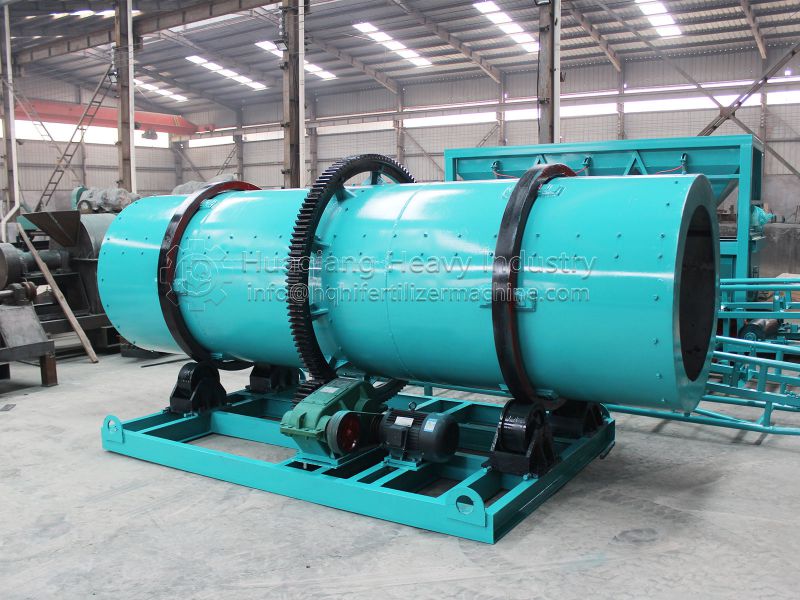
For slow-release fertilizer production, fertilizer granulators must meet the dual requirements of “granule formation” and subsequent coating. For example, when producing sulfur-coated slow-release fertilizers, the granulation process requires producing base granules with a smooth surface and uniform hardness. The “rolling forming” feature of a rotary drum granulator is perfectly suited for this purpose. By controlling the drum speed (8-12 rpm) and the amount of binder used, the granules are naturally rounded and smooth. Some granulators also feature a “pre-cooling section” at the discharge port to reduce the granule temperature to below 30°C, paving the way for subsequent coating and preventing the coating material from melting and becoming ineffective due to high temperatures.

For compound fertilizers containing trace elements, fertilizer granulators must address the issue of uneven trace element distribution. These fertilizers contain low concentrations of trace elements such as zinc, boron, and iron. Inhomogeneous mixing can lead to nutrient deficiencies in some granules. In this case, the low-speed extrusion design of a flat die granulator is optimal. After thoroughly mixing the trace elements with the base raw materials in a twin-shaft premixer, the low-speed rollers slowly extrude the granules into shape, minimizing material separation and ensuring a trace element content variation of ≤0.1% per granule, thus preventing functional deficiencies.

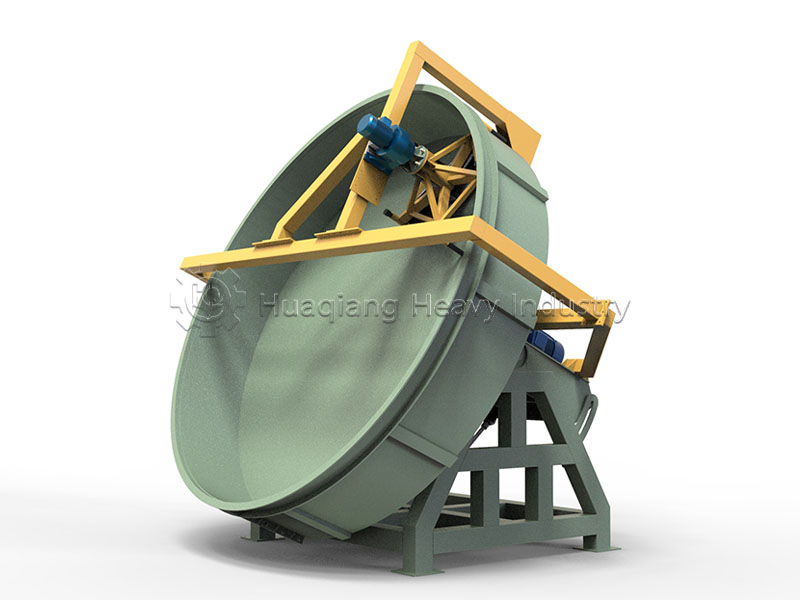
For biofertilizers, the granulator’s low-temperature performance is crucial. Flat die and disc granulators utilize a low-friction, no-high-temperature extrusion design to maintain a temperature within the granulation chamber below 40°C, ensuring the survival rate of the microbial inoculant.

New type organic fertilizer granulator: Empowering green production in the fertilizer industry

Amid the rise of ecological agriculture and the continued surge in demand for organic fertilizer, new type organic fertilizer granulators, leveraging technological innovations from traditional equipment, have become key equipment for the fertilizer industry, addressing challenges in organic fertilizer granulation and promoting green production.

The most prominent advantage of the new type organic fertilizer granulator is its adaptability to organic fertilizer raw materials. Organic fertilizer raw materials, primarily derived from livestock and poultry manure, straw, and food waste, often exhibit large moisture fluctuations, high fiber content, and prone to clumping. By optimizing the conditioning system and granulation structure, the new equipment can flexibly adjust the raw material moisture and temperature. This allows for uniform granulation even with high-moisture, high-fiber raw materials, significantly improving granulation efficiency and effectively reducing raw material waste.

The new type organic fertilizer granulator is also known for its “green and efficient” design. By upgrading its transmission system and adding a dust collection device, the new equipment achieves low energy consumption and low pollution while improving production efficiency.

Furthermore, the new type organic fertilizer granulator can help enhance the competitiveness of organic fertilizer products. The organic fertilizer particles it produces have uniform density, moderate hardness, and are not easy to break; more importantly, the low-temperature granulation process of the new equipment can maximize the retention of beneficial microorganisms and active ingredients in the organic fertilizer, ensuring a longer-lasting fertilizer effect.

Fertilizer granulators contribute to efficient agricultural development

With the agriculture and fertilizer industries deeply intertwined, fertilizer form directly impacts fertilization effectiveness and industry efficiency. As the core equipment connecting fertilizer raw materials and finished products, fertilizer granulators are becoming a key driver of industry upgrades.

Fertilizer granulators transform powdered raw materials into uniform fertilizer granules through processes such as physical extrusion and conditioning. These granulated fertilizers are not only highly stable, making them suitable for long-term storage and long-distance transportation, but also enable a slow release of nutrients, extending the fertilizer’s effective lifespan and enabling more efficient crop absorption, thereby boosting agricultural production returns from the source.

Furthermore, the adaptability of fertilizer granulators meets the diverse needs of the industry. Whether producing organic fertilizers, compound fertilizers, or customized fertilizers for specific crops, the equipment can adapt to different raw material ratios by adjusting parameters. More importantly, modern fertilizer granulators continuously optimize energy efficiency, improving production efficiency while reducing energy consumption.

For fertilizer companies, fertilizer granulators are a powerful tool for enhancing product competitiveness. Against the backdrop of growing demand for high-efficiency fertilizers in agriculture, fertilizer granulators will undoubtedly drive fertilizer production towards greater efficiency, higher quality, and greater environmental protection.

Double roller press granulators are an efficient and stable choice for fertilizer granulation

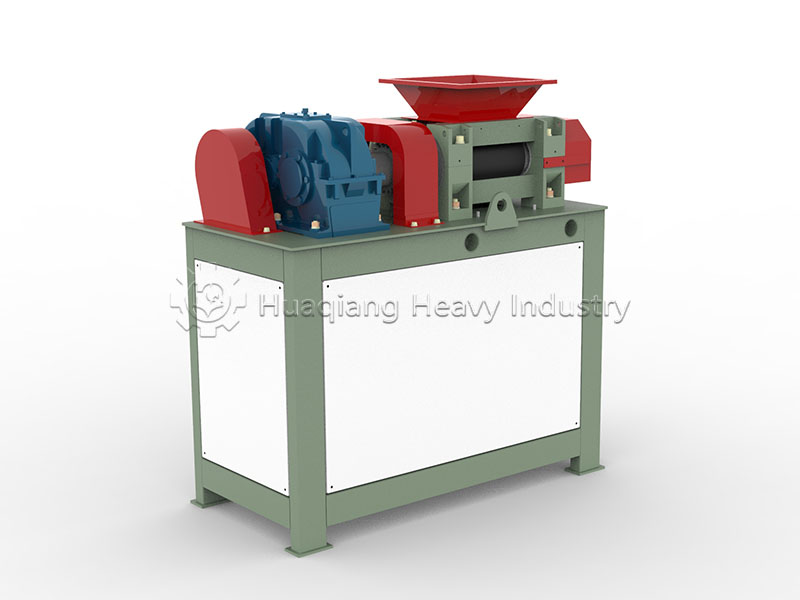
In fertilizer production, the granulation process directly impacts fertilizer application convenience, storage stability, and nutrient utilization. Due to its unique technological advantages, double roller press granulators (commonly known as fertilizer compaction machines) are the preferred equipment for many production scenarios. They can transform a variety of fertilizer raw materials into uniform granules without complex pretreatment, offering both adaptability and practicality.

The operating principle revolves around “physical extrusion.” Crushed and mixed fertilizer raw materials are conveyed between two pairs of counter-rotating extrusion rollers at the core of the equipment. Under pressure from the roller surfaces, the raw materials are compressed into continuous flakes. These flakes then enter a crushing unit, breaking them into irregular particles. Screening equipment then selects the finished product that meets the required particle size.

The core advantages of double roller press granulators lie in their flexibility and energy efficiency. Requiring no binders, granulation relies solely on the raw materials’ inherent physical properties, preserving the natural properties of organic fertilizers or the nutrient purity of compound fertilizers. This eliminates the high-temperature drying step required in traditional granulation. Whether processing organic fertilizer, compound fertilizer, or functional bio-fertilizer, stable granulation can be achieved by simply adjusting parameters such as extrusion pressure and roller speed, providing an efficient solution for fertilizer production.

Rotary drum granulators optimize the nutrient content and application experience of organic fertilizer granules

The core value of organic fertilizer lies in nutrient supply and convenient application, and granule shape directly impacts these two properties. Insufficient nutrient retention reduces fertilizer efficiency, while uneven granules increase the difficulty of field application. By optimizing process details, rotary drum granulators can reduce nutrient loss during the granulation process while creating granule shapes that meet field needs.

In terms of nutrient retention, the rotary drum granulator’s low-temperature granulation is particularly advantageous. Relying on physical tumbling to form granules, the granulator eliminates the need for high pressure and maintains an internal temperature below 35°C, maximizing the retention of active ingredients in the raw materials. Its nutrient retention rate is 5%-8% higher than that of traditional equipment.

In terms of granule application experience, granules produced by rotary drum granulators better meet field needs. On the one hand, the equipment can produce uniform granules with a diameter of 2-5mm by adjusting the drum speed and die aperture, making it easier for farmers to apply fertilizers using seed drills and reducing the unevenness of manual spreading. On the other hand, the moderate hardness of the granules (compressive strength of 10-15N) prevents them from breaking down during transportation and slowly disintegrates in the soil, achieving “slow-release fertilizer supply” and avoiding the root burn caused by concentrated nutrient release.

For organic fertilizer companies pursuing “high quality and low price,” the high-nutrient, easy-to-apply granules produced by the rotary drum granulator can significantly enhance their product’s market competitiveness.

Bio-organic fertilizer equipment selection and maintenance: Helping reduce costs and increase efficiency

For bio-organic fertilizer manufacturers, selecting and effectively utilizing bio-organic fertilizer equipment is crucial for achieving sustainable profitability.

When selecting equipment, consider your production capacity and the characteristics of your raw materials. If your company uses livestock manure as its primary raw material, you should prioritize equipment with strong pretreatment capabilities to avoid high moisture content that could affect fermentation. If your production capacity is under 5,000 tons/year, you can choose small or medium-sized complete sets of equipment to reduce initial investment. If your production capacity exceeds 10,000 tons, you should consider highly automated production lines to reduce labor costs.

Secondly, pay attention to the bio-organic fertilizer equipment’s durability. Equipment for core processes like fermentation and granulation should be constructed of corrosion and wear-resistant materials to withstand the corrosive nature of organic fertilizer raw materials and extend their service life.

Daily maintenance is equally crucial. After use, promptly clean any residual material from components like fermentation tanks and granulators to prevent it from clumping and becoming moldy, potentially contaminating the raw materials during the next use. Regularly check the lubrication of the equipment’s transmission components. Oil depletion can lead to increased wear and tear, increasing the likelihood of failure.

Scientific selection and operation and maintenance can not only reduce the downtime of bio-organic fertilizer equipment and ensure production continuity, but also reduce maintenance costs and improve product qualification rate.

Bio-organic fertilizer equipment: A key link to unlocking green fertilizer production

With the growing adoption of green agricultural development, market demand for bio-organic fertilizer continues to rise due to its ability to improve soil quality and crop quality. Bio-organic fertilizer equipment has become the core link between raw materials and qualified products, directly determining production efficiency and quality.

In the bio-organic fertilizer production process, equipment plays a crucial role throughout. During the raw material pretreatment stage, crushing and mixing equipment refines and evenly distributes raw materials like livestock manure and straw, laying the foundation for subsequent fermentation. The fermentation stage is crucial. Specialized fermentation equipment can maintain a stable fermentation temperature within a range suitable for microbial activity through temperature, humidity, and ventilation control. This not only shortens the fermentation cycle but also effectively eliminates insect eggs and pathogens in the raw materials, reducing the risk of farmland diseases.

Subsequent granulation, drying, and screening equipment determine the product’s form and purity. Granulation equipment can convert loose fermentation materials into granules, facilitating storage and transportation while minimizing nutrient loss. Drying equipment can control the product’s moisture content to below 15%, preventing clumping and mold. Screening equipment can remove impurities and ensure uniformity of organic fertilizer particles.

In addition, high-quality bio-organic fertilizer equipment incorporates environmentally friendly features, such as deodorization and dust removal devices, to reduce exhaust and dust emissions during production, helping companies achieve green production.