Why are double screws compost turning machines the preferred choice for large-scale organic fertilizer production?

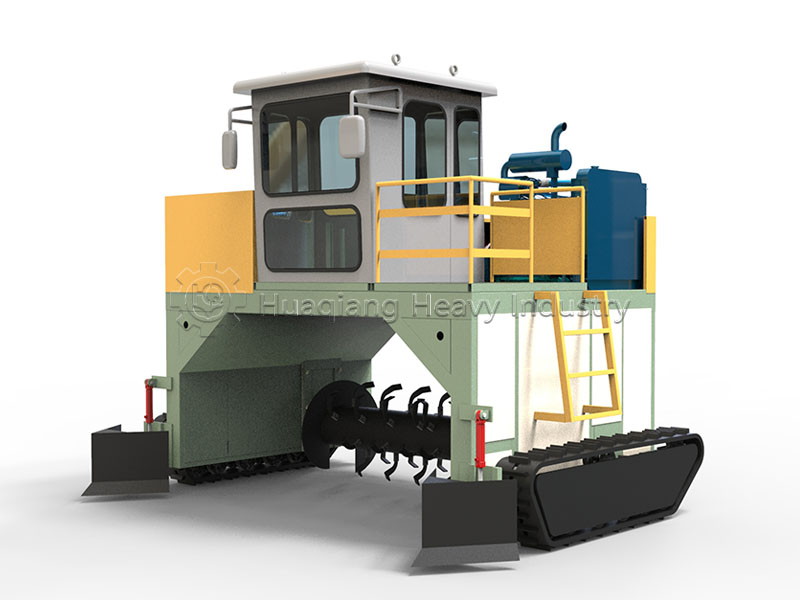
The fermentation process of large-scale organic fertilizer production (processing over 500 tons of raw materials daily) faces the challenges of high processing volume, tight fermentation cycles, and high labor costs. The double screws compost turning machine’s design features perfectly meet these requirements, making it a core piece of equipment for large-scale production.

1.Efficient and Continuous Operation

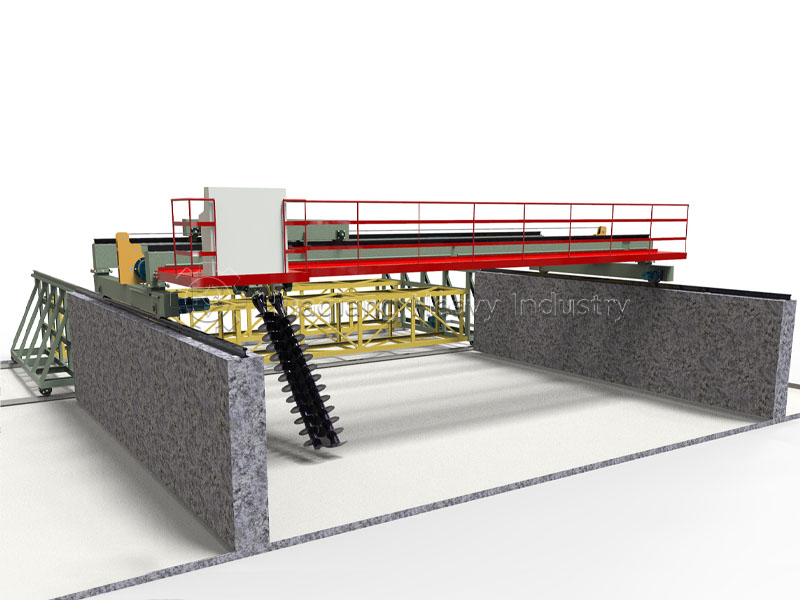
The double screws compost turning machine continuously moves along the fermentation tank, turning the compost without frequent downtime and adjustments. A single unit can process up to 100-200 tons per hour, meeting the continuous fermentation needs of large-scale production lines and ensuring timely composting.

2.Stable and Uniform Compost Turning Quality

Large-scale production requires high consistency in fertilizer quality. The double screws compost turning machine’s two spirals work in tandem, ensuring uniform mixing of the material, both vertically and horizontally, and ensuring even oxygen exposure. Fertilization temperature fluctuations are controlled within ±3°C, preventing uneven fermentation and causing uneven fertilizer quality.

3.Significantly Reduced Labor Costs

Traditional manual compost turning can only process 5-10 tons of material per person per day. A single double screws compost turning machine can replace 20-30 workers. The machine operates without human intervention (it supports automatic movement and compost turning), eliminating the efficiency fluctuations associated with manual operation.

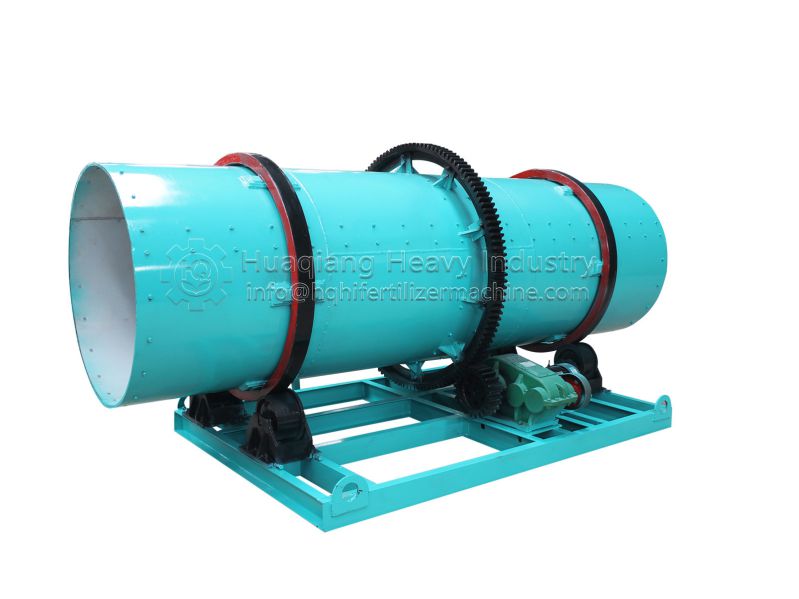
How can routine drum fertilizer dryer operation and maintenance achieve energy savings and cost reduction?

Drum fertilizer dryers account for 25%-30% of a fertilizer production line’s total energy consumption. Whether routine operation and maintenance are effective directly impacts a company’s operating costs.

  1. Accurate Maintenance of Thermal Efficiency

Hot air is the core energy source of a drum fertilizer dryer. The pipes connecting the hot air furnace and the drum must be regularly inspected. Damaged pipe insulation can lead to heat loss (up to 10% or more) and require prompt repair or replacement. Clean accumulated slag in the hot air furnace to ensure complete fuel combustion, increase thermal efficiency to over 75%, and reduce fuel waste.

  1. Dynamic Adjustment of Drum Operating Parameters

Adjusting operating parameters based on changes in raw material moisture content can avoid inefficient energy consumption. When the moisture content of the wet material is low, appropriately reduce the hot air temperature and increase the drum fertilizer dryer speed (shortening the dwell time). When the moisture content is high, adjust the opposite direction. This ensures that every unit of energy consumed is used for effective dehydration, avoiding the waste of high energy consumption processing low-moisture materials.

  1. Preventive Replacement of Wear Parts

Worn drum seals (such as the seals at the feed and discharge ports) can cause cold air to infiltrate and hot air to leak, increasing the heating load. Check the seals monthly and replace any signs of aging or deformation. Also, regularly inspect the lift plate. If loose or worn, tighten or replace it promptly. Simple preventive maintenance can significantly reduce future failures and energy costs.

Drum fertilizer dryers: Why can they adapt to the different drying requirements of organic and compound fertilizers?

In the fertilizer industry, the drying requirements of organic and compound fertilizers differ significantly. Organic fertilizers require rapid dehydration and fiber clumping prevention, while compound fertilizers require gentle drying to prevent particle breakage.

For drying organic fertilizers, drum fertilizer dryers offer two key design advantages: First, they utilize a “high-speed + multiple lifter” combination. High speed combined with dense lifters effectively lifts fibrous materials, preventing entanglement and clumping. Hot air also directly penetrates the material layer, quickly removing moisture. Second, an anti-stick coating on the inner wall of the drum reduces wet organic fertilizer from sticking to the wall, reducing cleaning frequency and ensuring continuous production.

For drying compound fertilizers, the drum fertilizer dryer emphasizes “gentle temperature control + low speed”: steam heating is used, keeping the temperature between 120-150°C to avoid direct contact with high temperatures that could cause cracking on the particle surface. Furthermore, a reduced drum speed reduces particle friction within the drum, keeping the particle breakage rate below 3%.

Even when processing temperature-sensitive biofertilizers, the drum fertilizer dryer can adapt to these needs through a “low-temperature hot air modification.” This reduces the hot air temperature to 60-80°C, prolonging the material’s residence time. This allows for slow dehydration while maintaining a microbial survival rate above 85%, truly achieving “one device, multiple fertilizers.”

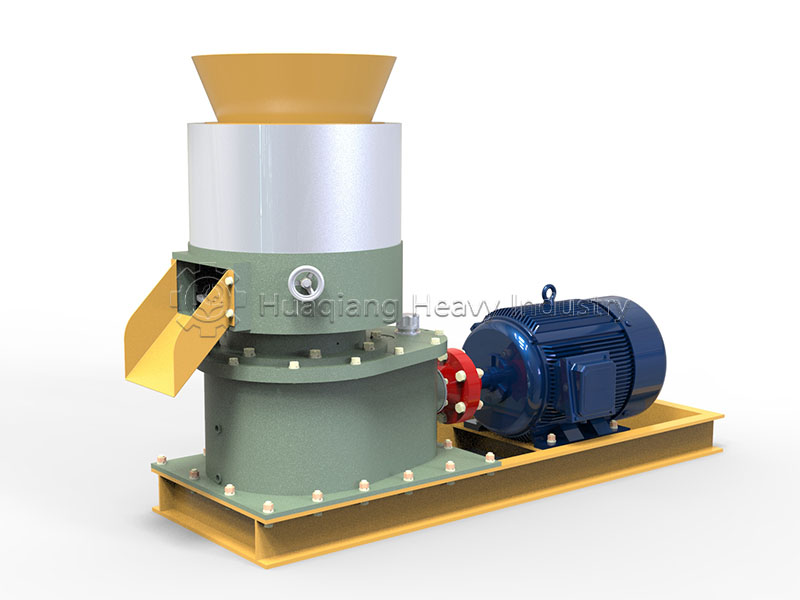
What are the advantages of flat die granulators in specialty fertilizer production?

As the fertilizer industry moves toward precision and functionalization, demand for specialty fertilizers such as organic-inorganic compound fertilizers, functional biofertilizers, and fertilizers for fruits and vegetables has surged. With its unique design, flat die granulators have become a powerful tool for specialty fertilizer production.

  1. Suitable for the granulation of multi-component raw materials

Specialty fertilizers often require the mixing of multiple raw materials, each with significantly varying density and viscosity. The flat die granulator’s low-speed extrusion prevents raw material separation caused by high-speed rotation, allowing the multi-component raw materials to fully blend during the extrusion process, ensuring uniform nutrient content in each granule.

  1. Low-temperature granulation ensures the preservation of functional ingredients

The core requirement for functional biofertilizers (such as those containing Bacillus subtilis) is to preserve the activity of the inoculum, which can be inactivated by high temperatures. The flat die granulator generates minimal frictional heat during the extrusion process, enabling low-temperature granulation without the need for additional cooling equipment, thus ensuring the fertilizer’s functional effects.

  1. Flexible Adaptation to Special Particle Shape Requirements

Specialty fertilizers often require customized granule shapes (for example, fruit and vegetable fertilizers require oblate granules to prevent rolling during watering). The flat die granulator can be customized with various die hole shapes (round, oblate, and square). Changing the die takes only 30 minutes, eliminating the need to adjust the drive system. This allows for quick changes in granule shape to meet diverse market demands.

Flat die granulator: Proper raw material pretreatment increases granulation efficiency by 30%

For small and medium-sized fertilizer companies using flat die granulators, poor granulation results and frequent malfunctions are often not due to equipment issues, but rather to inadequate raw material pretreatment. Flat die granulators are more sensitive to raw material conditions than other granulation equipment. Proper pretreatment not only improves pellet formation efficiency but also reduces equipment wear and tear.

  1. Precise Control of Particle Size

The die holes of flat dies typically have a diameter of 2-5mm. If there are still lumps larger than 1mm in the raw material, they can easily become stuck in the die holes, causing blockage and interrupting discharge. It is recommended to add a “fine screening” step before feeding to ensure uniform raw material particle size. This not only reduces the risk of die blockage, but also ensures more complete compression of the raw material within the die holes, resulting in more stable pellet hardness.

  1. Dynamic Control of Moisture Content

The flat die granulator is optimally suited for raw material moisture contents of 18%-22%. However, in actual production, the moisture content of fermented organic fertilizers often fluctuates seasonally. If the moisture content is too high, the raw material will easily stick to the flat die surface, requiring frequent machine stops for cleaning. If the moisture content is too low, the pellets will be loose and fragile. During the pretreatment stage, the moisture content can be monitored in real time. If it is high, hot air drying can be used; if it is low, a small amount of spraying can be used to replenish moisture to ensure the stability of the raw material.

  1. Targeted Optimization of the Conditioning Stage

Adding conditioning agents tailored to the specific characteristics of the raw material can significantly improve pelletizing results. For example, when processing pure straw fiber raw material, adding 3%-5% bentonite as a binder can enhance the raw material’s viscosity. When producing organic-inorganic compound fertilizers, adding 1%-2% humic acid can improve moldability and increase the added value of the fertilizer.

Key Points for Green Operation of Ring Die Granulators Under Environmental Protection Requirements

With increasingly stringent environmental protection policies, fertilizer companies must not only maintain production capacity but also meet the green requirements of “low dust, low noise, and low energy consumption.” As the core equipment in the production line, the ring die granulator’s operation directly impacts environmental performance.

First, dust source control. The ring die granulator’s fully sealed feed and discharge structure reduces dust spillage. The feed inlet utilizes a “soft-connected sealing sleeve” to prevent raw material leakage during conveying; the discharge outlet connects to a “sealed cooler,” ensuring pellet cooling within a sealed space.

Second, effective noise reduction is required. Mechanical friction and raw material impact during operation of the ring die granulator can easily generate noise, impacting the workshop environment. During routine maintenance, regularly checking the lubrication of the roller bearings and tightening the bolts connecting the ring die to the frame can reduce operating noise to below 75 decibels.

Third, optimizing energy consumption is essential. Green operation of the ring die granulator can be achieved through variable frequency speed regulation. Adjust the ring die speed according to the raw material characteristics and production needs to avoid the motor idling at full load; at the same time, regularly clean the residual raw materials in the ring die hole to ensure that the equipment always operates in the “high efficiency and low consumption” range.

Ring Die Granulator: How to Improve the Commercial Quality of Granulated Fertilizers?

For fertilizer companies, the commercial quality of granular fertilizers directly impacts their market competitiveness. Uniform particle size, a full appearance, and stable hardness make products more attractive on shelves and reduce breakage and loss during transportation. The ring die granulator, with its targeted design, is a key piece of equipment for improving the commercial quality of fertilizers.
First, precise control of particle size uniformity is crucial. The ring die of the ring die granulator utilizes a precision drilling process, ensuring that all die holes have a diameter tolerance within ±0.1mm. This results in highly consistent granule diameters after extrusion. Furthermore, the precise matching of the machine’s blade pitch and die speed ensures uniform granule length, fundamentally eliminating the problem of “mixed large and small granules.”

Second, optimization of granule appearance and gloss is crucial. Ring die granulators precisely control the amount of steam added (or ambient temperature binder) to achieve a “wet and sticky” state before extrusion. This results in a smoother pellet surface after extrusion. Some equipment also briefly polishes the pellets, giving them a fuller, glossier appearance and significantly improving market quality.
Finally, the ring die granulator ensures consistent pellet hardness. The ring die granulator’s adjustable roller pressure design allows for adjustments in extrusion force based on fertilizer type. Combined with the appropriate ring die compression ratio, pellet hardness tolerance is controlled within ±10%, meeting transportation requirements while ensuring optimal disintegration during application.

How can a horizontal crusher “flexibly adjust” to address fluctuations in fertilizer raw materials?

Raw material fluctuations are common in fertilizer production. For example, the raw material for organic fertilizer may switch from “dry straw” to “wet bacterial residue,” or the raw material for compound fertilizer may change from “phosphate rock powder” to “potassium sulfate granules.” These fluctuations in raw material hardness, moisture content, and viscosity can lead to decreased pulverization efficiency and substandard particle size if the horizontal crusher cannot flexibly adjust.

  1. Speed Adjustment to Adapt to Hardness Changes

When switching from “soft fibrous materials” (such as dry straw, which has low hardness) to “hard mineral materials” (such as phosphate rock, which has high hardness), the variable frequency motor can adjust the impeller speed to avoid excessive pulverization and dust generation. For hard materials, high speeds enhance impact and shear forces, ensuring effective pulverization. This allows adaptation to different hardness levels without changing equipment.

  1. Gap Adjustment to Address Viscosity Differences

When processing high-viscosity raw materials (such as wet mushroom residue with a moisture content of 28%), a small gap between the impeller and the chamber wall can easily cause the material to stick to the wall. When processing low-viscosity raw materials (such as dry cake), a large gap will reduce grinding efficiency. A horizontal crusher can adapt to different viscosities, reducing sticking and ineffective grinding.

  1. Screen Replacement to Adapt to Particle Size Requirements

Different fertilizer products require different particle sizes (organic-inorganic compound fertilizers require 3-5mm, powdered fertilizers require 0.8-1.2mm), and fluctuations in raw material quality may make the original screen size unsuitable. A horizontal crusher can quickly change screens with different apertures (commonly 0.5-10mm), flexibly meeting the particle size requirements of different raw materials and products.

Daily maintenance of horizontal crushers in the fertilizer industry

As the core power equipment of a fertilizer production line, a horizontal crusher requires adequate daily maintenance, which directly impacts its operating efficiency and service life.

  1. Regular Inspection of Core Components

Stop the horizontal crusher weekly to inspect the condition of the impellers. If the wear-resistant teeth at the end of the impellers are worn more than 1mm or cracked, they should be replaced promptly. Check the main shaft bearings monthly by touching the bearing seat. If the temperature exceeds 60°C or there is any abnormal noise, disassemble and clean the bearings and refill with high-temperature resistant grease. Check the grinding chamber liner quarterly. If the liner is severely worn or dented, replace it to ensure a tight seal.

  1. Thorough Cleaning

After each production run, the pulverizing chamber must be cleaned of any residual material (especially after handling high-moisture materials). Compressed air or a special scraper can be used to prevent material agglomeration and corrosion of the chamber walls and impellers. The horizontal crusher casing and motor cooling holes should be cleaned monthly to prevent dust accumulation that could affect motor heat dissipation and cause overload and burnout. Quarterly, the seals at the feed and discharge ports should be inspected. If any seals are aged or deformed, they should be replaced promptly to minimize dust leakage.

  1. Standardized Operations to Reduce Losses

Adjust the feed rate strictly according to the characteristics of the raw materials to avoid overloading. If the raw materials to be pulverized need to be changed (for example, from fibrous to hard materials), the residual material in the chamber must be cleared before adjusting the impeller speed and screen. Spare parts should be kept on hand to avoid prolonged downtime due to a shortage of parts in the event of a malfunction.

Chain crusher: Suitable for processing a variety of fertilizer raw materials

In the fertilizer industry, raw materials used for different fertilizer types vary significantly. Organic fertilizers require the processing of straw and fermented livestock and poultry manure, while compound fertilizers often involve hard particles such as phosphate rock and potassium chloride. Chain crushers, with their versatile adaptability, can easily handle the crushing needs of these diverse raw materials.

For fibrous raw materials such as straw and rice husks, common in organic fertilizer production, the chain of a chain crusher uses high-speed impact to sever the fibers, eliminating the “fiber entanglement” problem common in traditional hammer mills. The resulting pulverized material is loose and easy to mix with other raw materials for fermentation. For cake-based raw materials (such as soybean meal and rapeseed meal), the chain’s shear force effectively breaks up lumps and produces uniform crushed particles, eliminating excess powder and reducing raw material waste.

Even for hard mineral raw materials used in compound fertilizer production, chain crushers with high-strength alloy chains can achieve crushing through continuous impact, and the equipment’s lining is made of wear-resistant material, extending its service life.

In addition, it has a higher tolerance for the moisture content of raw materials. Wet materials with a moisture content of about 20% can be directly crushed without additional drying, which greatly simplifies the organic fertilizer production process and reduces the company’s initial investment.