Core characteristics of raw materials processable in bio-organic fertilizer production lines

The core raw materials for bio-organic fertilizer production lines are various organic wastes. Their efficient conversion into high-quality organic fertilizer hinges on the core characteristics of the raw materials themselves.

1.Pure Organic Properties and No Pollutants

Processable raw materials must be composed primarily of natural organic matter, such as poultry and livestock manure, straw, mushroom residue, distiller’s grains, and garden leaves, free from excessive heavy metals and toxic chemical residues. Pure organic properties ensure that the resulting organic fertilizer is free from secondary pollution, while providing a pure nutrient substrate for beneficial microorganisms, preventing harmful substances from affecting microbial activity and the final fertilizer’s effectiveness.

2.High Decomposability and Suitable C/N Ratio

Raw materials must contain sufficient amounts of organic matter that can be decomposed by microorganisms, such as cellulose, hemicellulose, and protein. These substances can be decomposed into humus during fermentation, becoming nutrients that crops can absorb. Simultaneously, the raw materials must have an adjustable C/N ratio, adjusted to a suitable fermentation ratio of 25-30:1 to ensure efficient aerobic fermentation.

3.Abundant Nutrient Potential and Stable Source

The raw materials for processing must naturally contain basic nutrients such as nitrogen, phosphorus, and potassium, as well as micronutrients such as calcium, magnesium, and sulfur. After fermentation, these nutrients can be converted into long-lasting, slow-release organic nutrients to meet the needs of crop growth. Simultaneously, the raw materials must have large-scale supply capabilities, such as livestock manure from the poultry industry and straw waste from agricultural production. These sources are stable and concentrated, suitable for the continuous production requirements of bio-organic fertilizer production lines.

These core characteristics make organic waste a high-quality raw material for bio-organic fertilizer production, solving the environmental problem of waste disposal and, through scientific transformation in the production line, allowing “waste” to realize its fertilizer value.

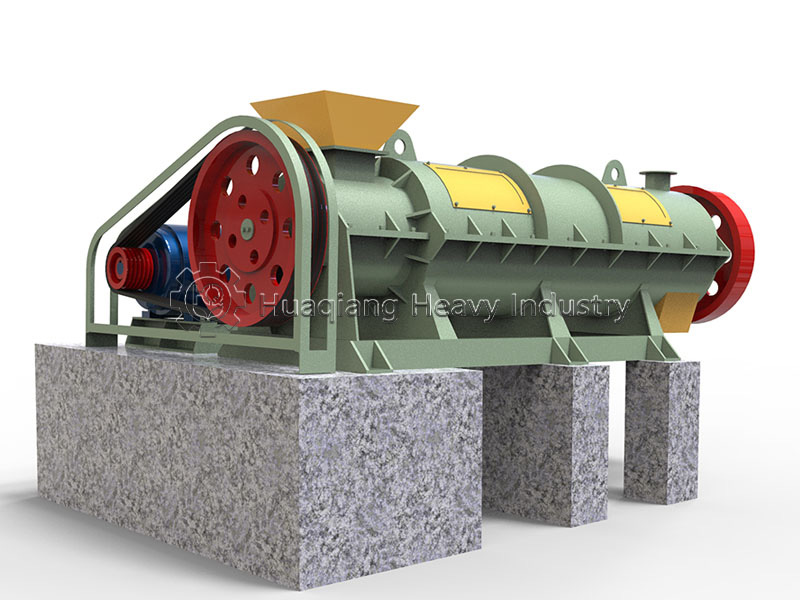
New type organic fertilizer granulator: Unlocking unique advantages of multi-dimensional upgrades

As the organic fertilizer industry transforms towards high efficiency and green practices, the new type organic fertilizer granulator has developed unique advantages over traditional equipment through technological upgrades. It addresses the pain points of traditional granulators while meeting the demands of modern production and the market.

1.Versatile Raw Material Compatibility

The granulator is compatible with not only conventional raw materials such as livestock manure and straw, but also efficiently processes high-fiber (oil palm empty fruit bunch, mushroom residue) and high-moisture (30%-40%) raw materials that are difficult to form. Optimized extrusion structure and die design prevent blockages caused by fiber entanglement and material adhesion.

2.Low Energy Consumption and Environmental Protection

The new type organic fertilizer granulator uses an energy-saving motor and optimized transmission structure, resulting in low energy consumption. Simultaneously, the fully enclosed design, coupled with a dust recovery device, keeps dust generation during the granulation process to extremely low levels, reducing the impact on the workshop environment and operators.

3.Intelligent and Precise Parameter Control

The granulator incorporates a simple intelligent control system that automatically adjusts parameters such as roller pressure and speed based on raw material characteristics (humidity, particle size, viscosity). This eliminates the need for frequent manual adjustments, ensuring stable production of uniform granules with the required hardness.

4.Improved Granule Quality and Production Efficiency

By optimizing the contact method between the rollers and the die, the new type organic fertilizer granulator increases the material forming rate, reducing raw material waste. The formed granules are not only dense and less prone to breakage, but also form a uniform porous structure, facilitating the slow release of nutrients. Simultaneously, the equipment’s anti-clogging design and easy-to-clean structure reduce downtime for maintenance.

Core features of bio-organic fertilizer equipment: Focusing on activity protection and high-efficiency adaptation

As a key carrier for ensuring product quality, bio-organic fertilizer equipment is designed and functions around the core needs of bio-organic fertilizer: “preserving activity, promoting composting, and ease of application.”

1.Strong Activity Protection Orientation

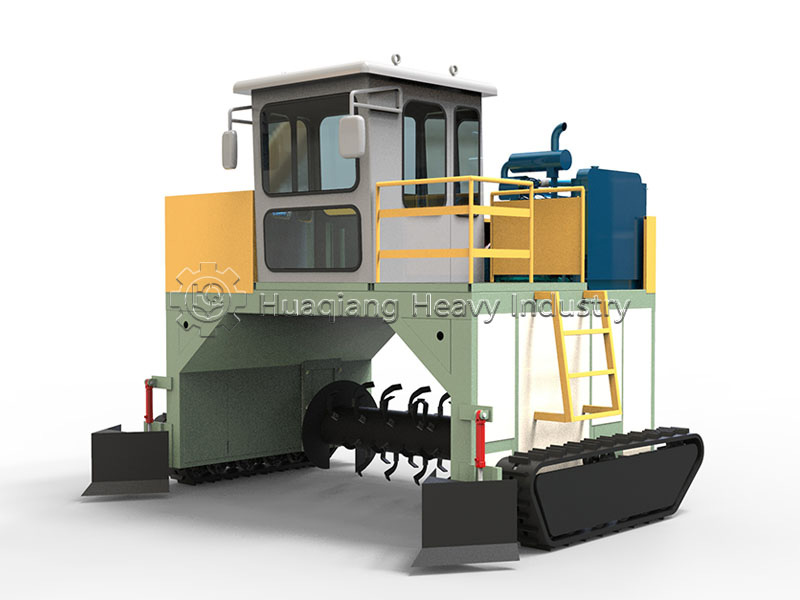
The core value of bio-organic fertilizer lies in the activity of beneficial microorganisms. The equipment avoids high-temperature damage throughout the entire process. In the fermentation stage, precise temperature control through a compost turning machine and fermentation tank satisfies both sterilization and composting requirements while preventing microbial inactivation. Granulation employs a low-temperature extrusion process, and cooling equipment quickly lowers the material to room temperature, reducing damage to the microbial community from high temperatures.

2.Controllable Composting Process

The equipment achieves precise control of fermentation conditions through mechanical design: the compost turning machine can adjust the turning frequency to ensure sufficient oxygen in the pile; the fermentation tank adopts a closed design, monitoring and adjusting temperature, humidity, and oxygen content in real time, shortening the composting cycle while ensuring uniform material composting and reducing odor emissions.

3.Wide Range of Raw Material Compatibility

The bio-organic fertilizer equipment is highly adaptable to various organic raw materials such as poultry and livestock manure, straw, mushroom residue, and distiller’s grains. The crushing equipment can adjust the particle size according to the hardness of the raw materials; the mixing equipment can evenly blend raw materials with different moisture content and specific gravity to ensure precise carbon-to-nitrogen ratio.

4.High Modularity and Flexibility

The equipment adopts a modular design, allowing for flexible combinations based on production scale. Small production lines can be equipped with simple compost turners and manual packaging equipment to reduce investment costs; large-scale production can be configured with automated fermenters and continuous granulation units to improve production efficiency.

The “Core Support” in the fermentation of oil palm empty fruit bunch organic fertilizer

Oil palm empty fruit bunch(OPEFB), rich in crude fiber and with a loose structure, are a high-quality raw material for organic fertilizer processing. However, these materials are prone to problems such as accumulation and oxygen deficiency, and uneven temperature during fermentation. The application of a compost turning machine provides crucial support for solving these problems, significantly improving the decomposition efficiency and quality of the oil palm empty fruit bunch.

In the fermentation stage of processing oil palm empty fruit bunch organic fertilizer, the crushed oil palm empty fruit bunch are first mixed with livestock and poultry manure, microbial agents, etc., in a certain proportion to form fermentation material. Because of the low density of oil palm empty fruit bunches, if left to stand for a long time after mixing, a closed space easily forms inside the material, leading to a decrease in the activity of aerobic microorganisms. This not only prolongs the decomposition period but may also produce unpleasant odors.

At this stage, the oil palm empty fruit bunch compost turning machine can periodically turn the fermentation pile, breaking up material clumps with mechanical force and introducing air into the pile to provide sufficient oxygen for microbial reproduction. Simultaneously, the turning process allows for thorough exchange of material throughout the pile, preventing localized overheating or underheating and maintaining the pile at a suitable composting temperature of 55-65℃, thus accelerating the decomposition and transformation of coarse fibers in the oil palm empty fruit bunch.

Furthermore, the compost turning machine can flexibly adjust the turning frequency according to the moisture content of the fermentation material. If the material is too moist due to the high hygroscopicity of the oil palm empty fruit bunch, increasing the number of turns can promote moisture evaporation; if the material is too dry, it can be turned simultaneously with the water replenishment process to ensure uniform moisture content.