The core purpose of granulation: Why is it a key production process?

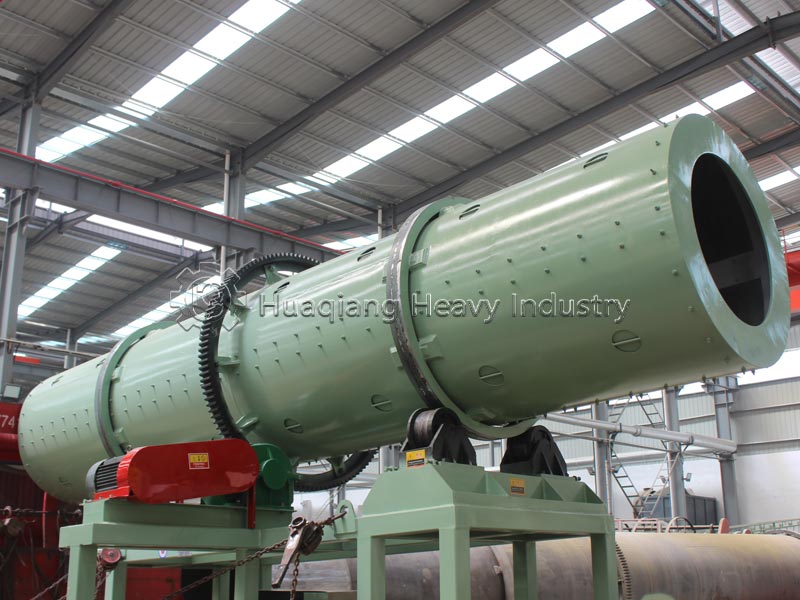
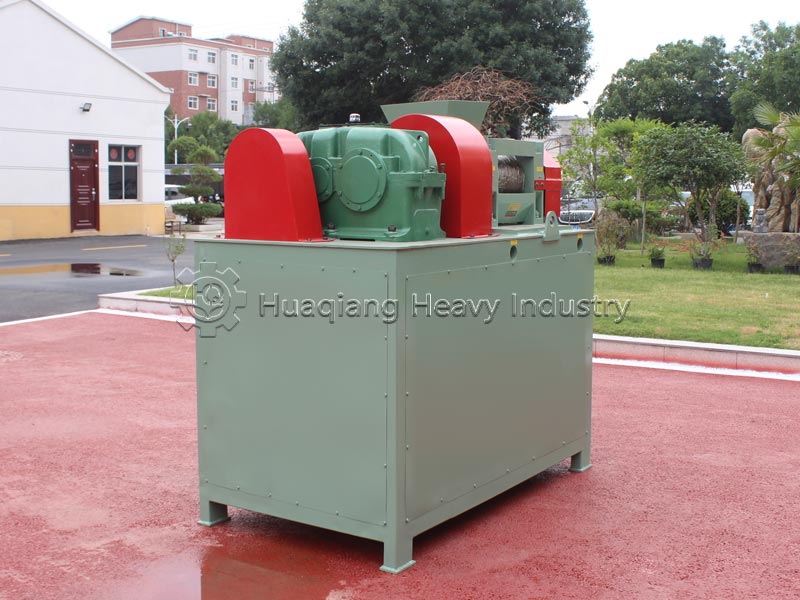
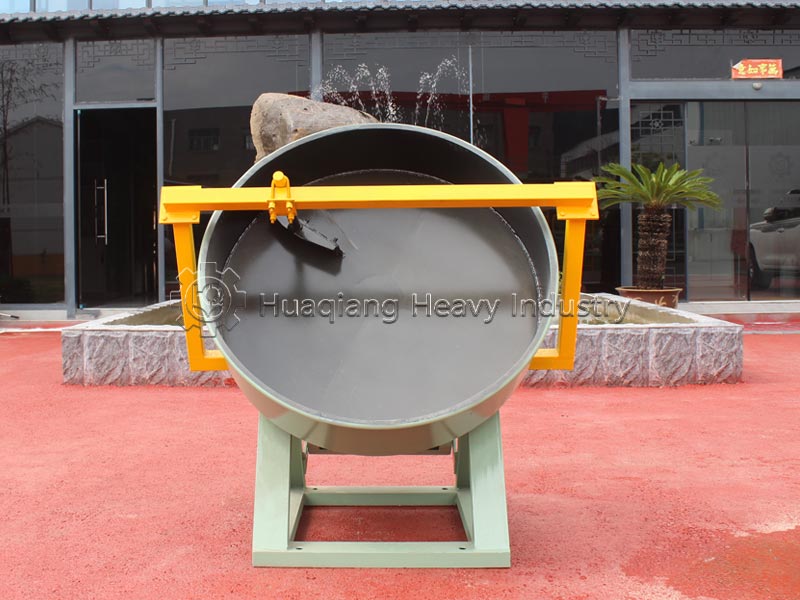
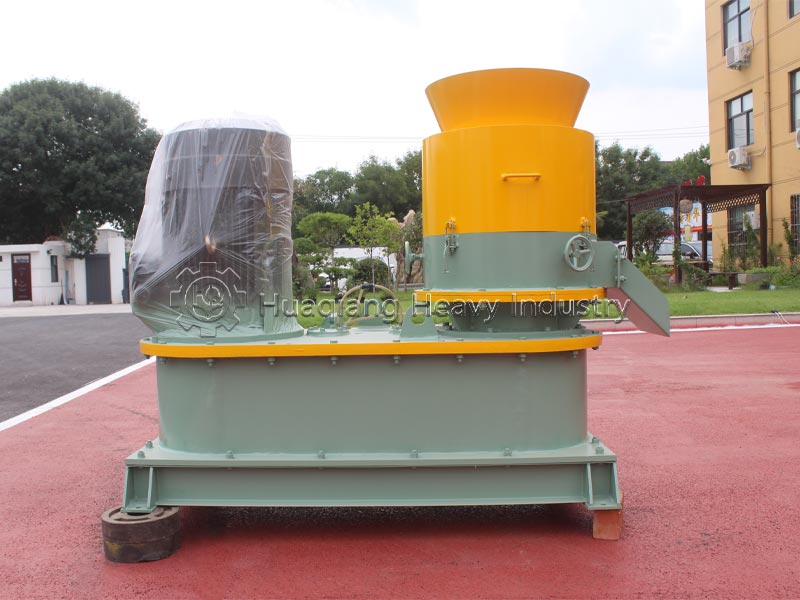
Granulation is not simply the transformation of powder into granules; it is a core method for upgrading material value through morphological reshaping, utilizing equipment such as rotary drum granulators and disc granulators.

It addresses the inherent defects of powdered materials. Powdered materials are prone to severe dusting and clumping, leading to wasted raw materials and safety hazards. After processing with disc granulators and rotary drum granulators, the granules have improved sealing properties, significantly reducing dusting and clumping problems, lowering transportation and storage losses, and creating a safer working environment, meeting the environmental protection requirements of industries such as fertilizers and chemicals.

It allows for precise control of material properties. By adjusting the parameters of the fertilizer granulator, the size and strength of the granules can be controlled, optimizing the dissolution and release efficiency of the material. In agriculture, granular fertilizers produced by rotary drum and disc granulators can achieve slow-release of nutrients; in the chemical industry, double roller press granulators can customize granule morphology to improve reaction rates.

It achieves component homogenization. Granulators allow multi-component materials to be tightly combined, preventing imbalances in proportions during use. Granular products have regular shapes and controllable quality, making it easy to create standardized products and increasing market acceptance.

In summary, granulation, relying on various specialized equipment, solves production pain points through morphological optimization, giving materials better performance and economic value. This is the fundamental reason why it has become an indispensable part of many industries.

Understanding the essence, value, and applications of granulation technology

Granulation technology is a processing technique that transforms powdered, lumpy, or liquid raw materials into granular products of specific size, strength, and shape through physical, chemical, or biological methods. Its core purpose is to optimize the characteristics of raw materials and solve problems such as dust generation, difficulty in storage and transportation, and uneven mixing of powdered materials.

The core value of granulation technology lies not only in improving the physical form of materials but also in enabling precise control of nutrients or components. In the agricultural field, powdered fertilizers, after granulation, become uniform in size and have moderate strength, preventing scattering during application and improving utilization. It also allows for the proportional mixing of multiple nutrients during granulation, enabling balanced fertilization.

Mainstream granulation technologies are divided into two categories: physical granulation and chemical granulation, with physical granulation being the most widely used. Physical granulation relies on mechanical force or physical action for shaping. Common types include rotary drum granulation,double roller press granulation, and disc granulation technology. For example, rotary drum granulators use centrifugal force and friction to roll and shape the material, while double roller press granulators use high pressure to densify powdered materials without requiring excessive binders. Chemical granulation, on the other hand, utilizes chemical reactions to produce granular products from raw materials and is mostly used in the production of specific chemical products.

In addition to agricultural fertilizer production, granulation technology is also widely used in pharmaceutical tablet formation, food and feed pellet processing. With technological advancements, granulation technology is increasingly focused on environmental protection and efficiency, further improving processing stability and product quality.

How to better utilize double roller press granulators in fertilizer granulation?

Double roller press granulators, with their advantages of dry granulation, no drying required, and low energy consumption, are commonly used equipment in fertilizer production lines. Achieving a high molding rate and stable particle strength is crucial, and this depends on controlling raw material suitability, parameter adjustment, and standardized operation.

Raw material pretreatment is fundamental. The moisture content of the raw materials should be controlled between 8% and 12%; too high a moisture content can lead to roller sticking and clumping, while too low a moisture content makes molding difficult. After crushing and screening, ensure the particle size is ≤2mm, and thoroughly mix the materials using a fertilizer mixer machine to avoid uneven composition. Coarse fiber and high-hardness raw materials need to be softened in advance to reduce the extrusion load.

Precise parameter adjustment is key. Adjust the roller gap (0.5-2mm) according to the target particle size; a gap that is too large results in loose particles, while a gap that is too small leads to high energy consumption and easy wear of the roller surface. Match the appropriate roller pressure and rotation speed according to the characteristics of the raw materials—increase the roller pressure and decrease the rotation speed for high-hardness materials, and vice versa for lightweight materials, ensuring a molding rate of ≥90%.

Standardized operation and maintenance are essential. Before starting, check the flatness of the roller surface and the lubrication of the transmission system to avoid idling wear; during operation, observe the particle morphology in real time and fine-tune the parameters; after shutdown, clean the residue on the roller surface, regularly polish the roller surface and tighten the connecting parts, and strictly prevent metal impurities from scratching the roller surface.

By mastering these techniques, you can fully utilize the advantages of the double roller press granulator, produce high-quality and stable fertilizer granules, extend equipment life, and adapt to various granulation needs such as NPK compound fertilizers, contributing to improved quality and efficiency in fertilizer production.

How to choose the right fertilizer granulator based on your production needs?

The selection of a fertilizer granulator directly impacts production efficiency, product quality, and overall costs. The key is to match the granulator to your specific production needs. Consider key dimensions such as fertilizer type, production capacity, and finished granule requirements.

Prioritize based on fertilizer type. For organic fertilizers, rotary drum granulators or disc granulators are recommended. Both are suitable for fermented and composted organic materials such as livestock manure and straw. Rotary drum granulators are better suited for large-scale production, while disc granulators are suitable for small to medium-sized production capacities and scenarios requiring high granule uniformity. For compound fertilizers, consider rotary drum granulators or double roller press granulators. Rotary drum granulators are suitable for multi-material mixing and granulation, while double roller press granulators do not require additional water and are suitable for heat-sensitive and water-soluble raw materials.

Refine your selection based on production capacity. For small to medium capacities (50-200 tons per day), a disc granulator is a good choice due to its small footprint, simple operation, and low investment cost. For medium to large capacities (over 200 tons per day), a rotary drum granulator is recommended due to its strong continuous production capacity and high stability, and it can be integrated into a complete production line for automated operation. For small-batch trial production or processing of special materials, the flexibility of a double roller press granulator is more advantageous.

Consider finished granule requirements and costs. If high granule strength and uniform particle size are required, rotary drum granulators and double roller press granulators perform better; for high granule roundness requirements, a disc granulator is the preferred choice. Also consider energy consumption and environmental requirements, prioritizing models with good sealing and effective dust control to reduce future environmental investment. By considering all these dimensions, you can select a granulator that perfectly matches your production needs.

Double roller press granulator and roller press granulation production line: The synergy of core equipment and system

In the field of particle preparation, the double roller press granulator and the roller press granulation production line form a core combination. The former is the key granulation equipment, while the latter provides the system support for efficient mass production. Their synergistic operation ensures stable particle quality and improves production efficiency, making them a core configuration in the granulation process for industries such as fertilizers and chemicals.

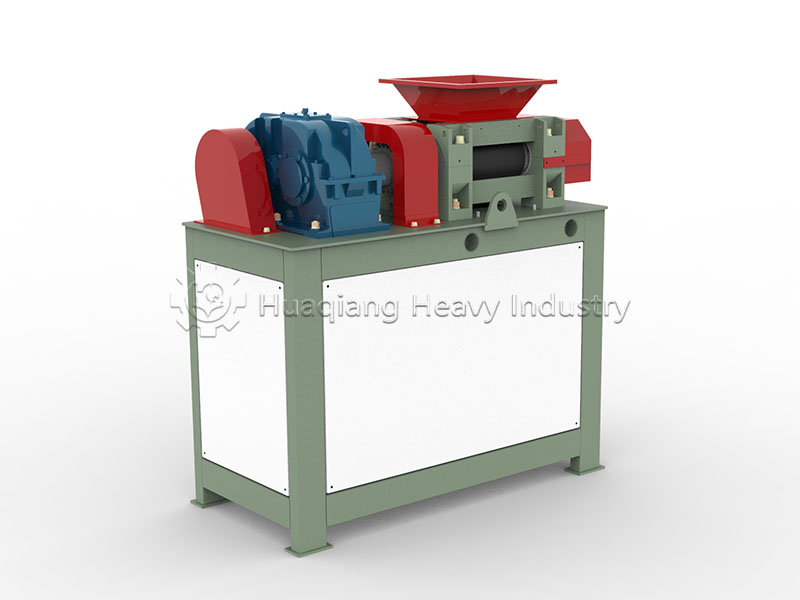
The double roller press granulator is the “heart” of the roller press granulation production line, with its core function being high-pressure extrusion and molding of raw materials. Its advantages lie in high granulation strength and wide adaptability to raw materials; it can handle both organic fertilizer fermentation materials and chemical dry powder raw materials without the need for excessive binders, ensuring the purity of the finished product.

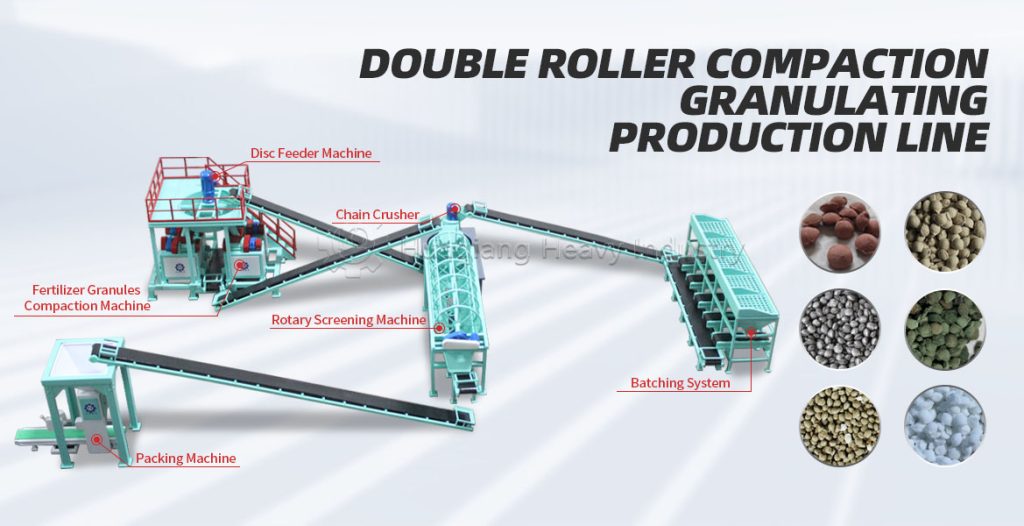
The roller press granulation production line is a complete system built around the double roller press granulator, encompassing the entire process from raw material pretreatment, core granulation, post-treatment, and intelligent control. Pretreatment ensures that the raw materials meet the required particle size and moisture content; post-treatment (crushing, screening, and drying) optimizes particle quality. Compared to a single piece of equipment, the fertilizer production line significantly reduces manual intervention, improves mass production capacity, and its fully enclosed design controls dust pollution, meeting environmental protection requirements.

The two complement each other: the performance of the double roller press granulator determines the baseline of particle quality, while the configuration of the roller press granulation production line determines the upper limit of production efficiency. In practical applications, it is necessary to match the appropriate equipment and production line based on raw material characteristics and production capacity requirements to achieve both quality and efficiency improvements.

Comparison of flat die, double roller press, and rotary drum granulators: Choosing the Right equipment

Flat die pelleting machines, double roller press granulators, and rotary drum granulators are the mainstream granulation equipment in fertilizer production. These three types differ significantly in core dimensions such as molding principle, raw material suitability, and production capacity and quality. Choosing the right equipment requires considering production scale, raw material characteristics, and product requirements.

Molding Principle and Raw Material Suitability: Flat die pelleting machines form granules through mold extrusion, suitable for both wet and dry raw materials, especially suitable for organic fertilizers and NPK compound fertilizers with moderate viscosity, and have low requirements for raw material particle size; double roller press granulators use double rollers to extrude dry materials for granulation, requiring no water addition, suitable for low-viscosity dry powder raw materials, and can save the drying process; rotary drum granulators form granules through drum rolling and spraying conditioning, more suitable for high-humidity, easily agglomerating fermented organic fertilizer raw materials.

In terms of production capacity and quality, flat die pelleting machines have medium production capacity, suitable for small and medium-scale production, producing granules with high strength and uniform particle size, but the molds are easily damaged; double roller press granulators have adjustable production capacity, suitable for small and medium-scale production, producing granules with high strength and high molding rate, but the shape is less regular; rotary drum granulators have large production capacity, suitable for large-scale continuous production, producing granules with good roundness and excellent appearance, but the strength is low and prone to pulverization.

Selection Suggestions: For small and medium-scale production, prioritizing granule strength and adaptability to multiple raw materials, choose a flat die pelleting machine; for dry material granulation, needing to save on drying costs, and prioritizing hardness, a double roller press granulator is preferred; for large-scale continuous production, focusing on granule appearance, a rotary drum granulator is more suitable.

Overcoming the challenges of traditional granulation: Roller press granulation production lines drive industry upgrades

In the field of granular product manufacturing, traditional granulation often faces challenges such as insufficient particle strength, uneven particle size, high energy consumption, and failure to meet environmental standards. Roller press granulation production lines, with their optimized design, have become the preferred solution to these problems, widely adaptable to the granulation needs of various industries, including fertilizers, chemicals, and feed.

Traditional fertilizer granulation equipment suffers from limited raw material adaptability and low finished product yield. This is especially true for organic fertilizer granulation, where complex raw materials and fluctuating moisture levels can lead to sticking and clumping. The double roller press granulator utilizes a drying-free, room-temperature granulation technology, eliminating the drying process and resulting in lower energy consumption. It can handle a variety of powder raw materials with moisture content ranging from 8% to 20%, stably granulating both organic fertilizer fermentation materials and special chemical powders.

Balancing environmental protection and efficiency is its core advantage. The dust and noise pollution problems of traditional granulation can be solved by the fully enclosed structure and dust collection device of this production line, effectively controlling dust emissions. Combined with a variable frequency speed control motor and PLC intelligent control system, it enables automated continuous production, reducing manual intervention, improving efficiency, and minimizing operational errors.

Its industry adaptability is extensive: the fertilizer industry can produce organic-inorganic compound fertilizer granules, ensuring uniform nutrient distribution; the chemical industry can process heat-sensitive and corrosive raw materials, preventing deterioration; and the feed industry can produce high-strength granules of additives, preventing breakage during transportation.

Roller press granulation production line: The preferred solution for high-efficiency granulation

In the chemical, fertilizer, pharmaceutical, and food industries, the demand for granular products is increasing due to their ease of storage, transportation, and use. The roller press granulation production line, with its unique technological advantages, has become the ideal choice for producing high-strength, uniform granules.

This production line utilizes high-pressure extrusion technology to transform powder or fine-grained raw materials into high-quality granules. The equipment is scientifically designed and includes raw material pretreatment equipment, the core double roller press granulator, and optional fertilizer crushers, screening machines, packaging equipment, and a PLC control system. Pretreatment ensures suitable raw material particle size and freedom from impurities; the double roller press granulator extrudes the raw materials into strips or sheets before cutting them into granules; subsequent crushing and screening ensure uniform particle size; the packaging equipment provides automated weighing and packaging; and the PLC control system monitors and adjusts parameters to ensure efficient and stable production.

The granulation process is standardized: from raw material pretreatment, optional mixing and humidity adjustment, to roller press extrusion granulation, crushing and screening, and then optional drying and cooling, and finally packaging and monitoring, every step is precise. The process features are significant: it produces high-density, high-strength granules, meeting high mechanical strength requirements; the granules have uniform particle size, improving product consistency; it has wide raw material adaptability, capable of processing various raw materials such as fertilizers and pesticides; and it boasts low energy consumption, high efficiency, simple operation, and a high degree of automation, reducing manual intervention and ensuring stable product quality.

Whether it’s producing organic fertilizer granules in the fertilizer industry or processing special chemical granules in the chemical industry, the roller press granulation production line plays a vital role, providing efficient and reliable solutions for granular production in various industries.

Requirements for raw materials in double roller press granulator: How to choose suitable materials?

Double roller press granulators are efficient and energy-saving equipment widely used in producing granular fertilizers like organic fertilizer, compound fertilizer, and bio-fertilizer. However, not all raw materials are directly suitable for extrusion granulation. The physical and chemical properties of the material directly affect the granulation results.
Physical Property Requirements
1.Appropriate Particle Size
Raw materials must be crushed, generally to 80-200 mesh (0.074-0.2mm). Particles that are too coarse make forming difficult, while particles too fine can affect flowability and cause the material to stick to the rollers.
2.Moderate Moisture Content
Excessive moisture (>15%) causes material to stick to the rollers and affects demolding. Insufficient moisture (<8%) makes forming difficult, and the granules become brittle. The optimal moisture range is usually 8%-12%, though this may vary based on material characteristics.
3.Good Plasticity
Materials need some stickiness and plasticity (like humic acid, composted manure, bentonite) to help improve granule formation rate and hardness.

Chemical Property Requirements
1.Moderate Organic Matter Content
For organic fertilizer materials (like compost, humic acid), an organic matter content of 30%-70% is recommended. Too high can lead to loose granules; too low affects fertilizer efficiency.
2.No Corrosive Components
Strong acids, strong alkalis, or high-salt substances should be avoided in the raw materials to prevent equipment corrosion or harm to crops.
3.No Hard Impurities
Hard objects like stones or metal fragments can damage the double roller press granulator die. Screening or magnetic separation is needed before granulation.
Double roller press granulators have strict requirements for raw material particle size, moisture, and binding properties. Selecting suitable materials and optimizing process parameters are essential for producing high-strength, qualified granular fertilizer.

Precise matching, no waste! Configuring fertilizer production lines based on raw materials

The core of fertilizer production line configuration is “raw material adaptation.” Different raw materials (moisture content, particle size, and composition) require significantly different choices of pre-treatment, fermentation, and granulation equipment. Blindly copying generic solutions easily leads to low capacity, poor product quality, and high energy consumption.

If the raw material is high-moisture livestock and poultry manure (such as chicken manure, pig manure, with a moisture content of 60%-80%): the pre-treatment stage requires a solid-liquid separator and crushing and screening equipment to reduce moisture to 55%-60%, remove impurities, and finely process the material; the fermentation stage uses a trough-type or crawler-type compost turning machine to ensure ventilation and oxygen supply, accelerating decomposition; the granulation stage prioritizes an organic fertilizer disc granulator (wet granulation), paired with a dryer and cooler, to adapt to the molding needs of high-moisture raw materials, followed by a screening machine and packaging machine to complete the entire process.

If the raw material is dry, loose organic material (such as straw, sawdust, with a moisture content of 10%-20%): the core of pre-treatment is crushing and mixing, using a high-speed crusher to refine the raw material to 2-5 centimeters, and then mixing it with livestock and poultry manure and fermentation agents to adjust moisture and carbon-nitrogen ratio; the fermentation stage can use a windrow compost turning machine, adapting to the turning needs of loose materials; the granulation stage is suitable for a double roller press granulator (dry granulation), requiring no additional water, directly extruding and forming the material.

If the raw material is industrial organic waste residue (such as mushroom residue, pharmaceutical residue, with complex composition): a pre-treatment screening stage needs to be added to remove heavy metals and other harmful impurities, and then a special mixer is used to precisely adjust nutrients; the fermentation stage uses a closed trough-type compost turning machine to control odor diffusion; the granulation stage selects a flat die or ring die pelleting machine based on the viscosity of the waste residue.

Core adaptation principle: First, clarify the three key indicators of raw material moisture content, particle size, and composition, and then sequentially match the core equipment for pre-treatment, fermentation, etc.