From raw materials to granules: The journey to the birth of modern NPK fertilizer

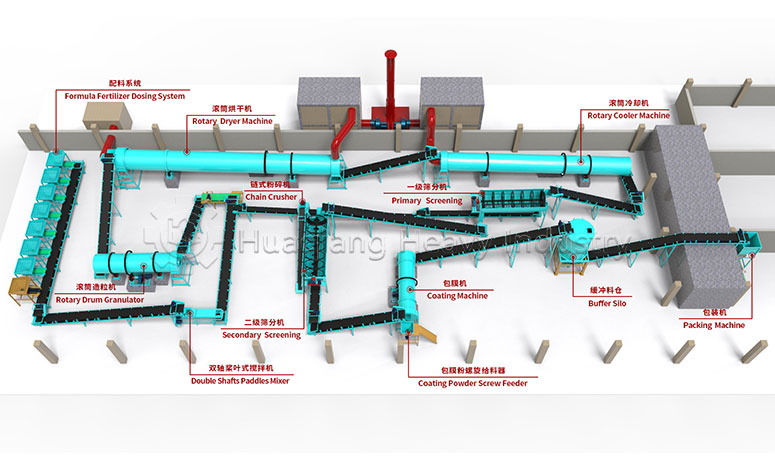
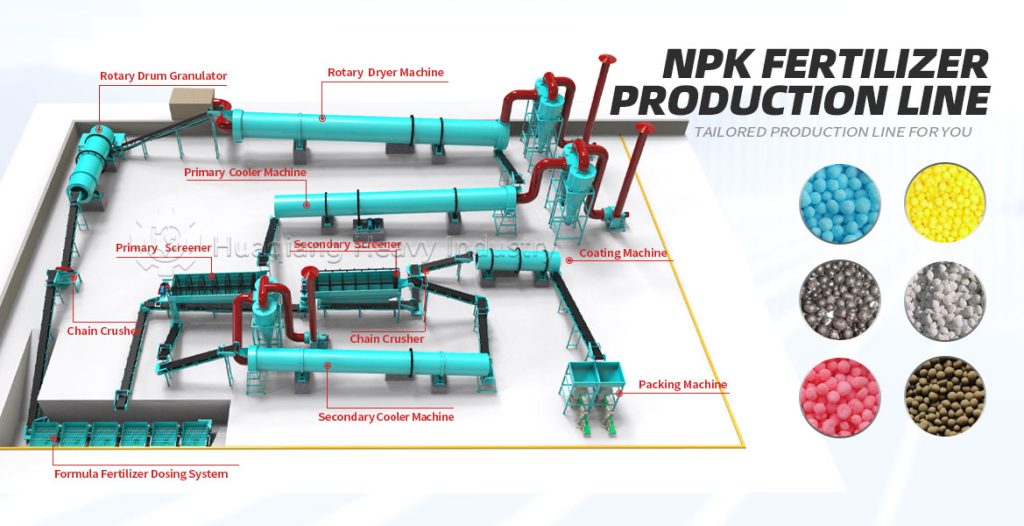
NPK compound fertilizers, widely used in modern agricultural production, undergo a precise and systematic industrial processing procedure. From basic chemical raw materials to uniformly shaped granules, this NPK fertilizer production line integrates chemical synthesis and physical processing technologies, forming a standardized manufacturing system.

Production begins with the precise measurement and synthesis reaction of raw materials. Different proportions of nitrogen, phosphorus, and potassium base materials undergo chemical reactions under controlled conditions to generate a complex containing the target nutrients. This chemical stage establishes the core nutrient content and ratio of the product.

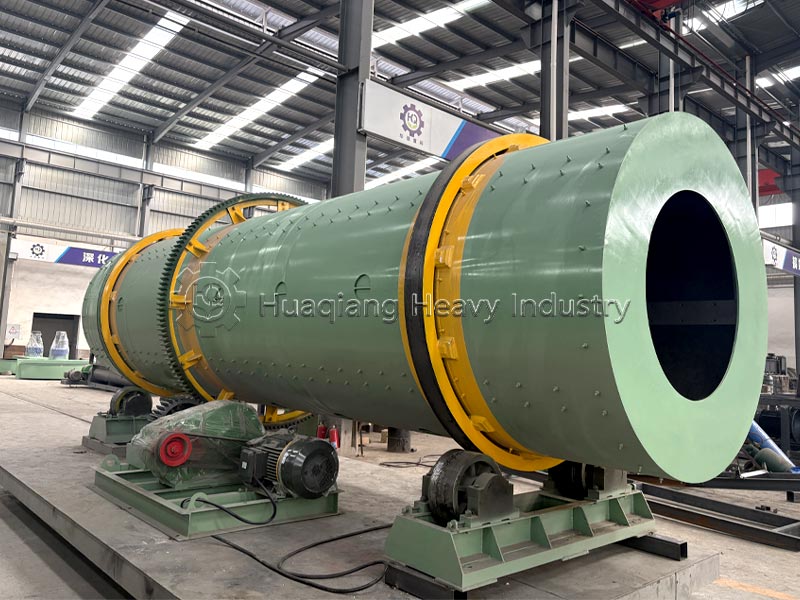
The synthesized slurry then enters the crucial physical molding stage. The rotary drum granulator plays a vital role in this process. By precisely controlling temperature and humidity, these granules achieve a stable physical morphology, preparing them for subsequent processing.

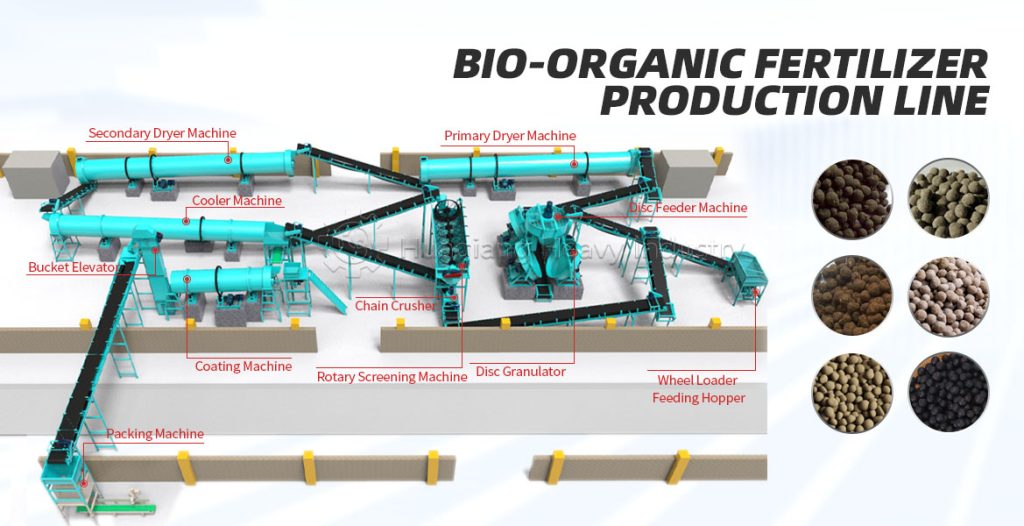
The newly generated granules require complete post-processing. After drying and cooling, the sieving process grades the granules according to their specifications. At this point, lumps with excessively large particle sizes are returned to the previous process, re-crushed in a fertilizer crusher, and then re-granulated. This cycle ensures high raw material utilization and uniform product particle size.

It is worth mentioning that some of the large-particle base fertilizers obtained after drying and screening can be used as raw materials to directly enter another flexible production path—through bulk blending fertilizer machines, they can be quickly and physically mixed with other single-element fertilizers or micronutrients according to actual field needs to produce customized blended fertilizers.

NPK compound fertilizer additives: The key to quality improvement in the production process

In NPK compound fertilizer production, although additives account for a small proportion of the total volume, they directly affect product quality, storage stability, and application effectiveness. Different types of additives need to be precisely matched to each stage of the NPK fertilizer production line. Scientific application can effectively solve problems such as caking, loose granules, and nutrient loss, thereby enhancing product competitiveness.

Anti-caking agents are a core category, mostly added during the raw material mixing stage in the fertilizer mixer machine or after granulation in the granulator. Common types include hydrophobic (mineral oil, silicones) and adsorbent (zeolite powder, diatomaceous earth). The former forms a protective film on the surface of the granules to isolate water and oxygen, while the latter adsorbs free moisture. Both can reduce the risk of caking, especially suitable for NPK fertilizers with high nitrogen and high humidity formulations.

Binding and conditioning agents are suitable for the granulation stage, ensuring molding quality. Binders (starch, lignin sulfonate) increase material viscosity, improving the molding rate of NPK fertilizer granulators and reducing powdering; conditioning agents optimize granule strength and smoothness, adapting to different granulation processes such as rotary drum granulator. The amount of additive needs to be adjusted according to the characteristics of the raw materials to avoid excessively hard granules or slow dissolution.

Nutrient efficiency enhancers need to be added during the mixing stage in the fertilizer mixer machine to improve fertilizer utilization. For example, urease inhibitors delay nitrogen volatilization, phosphorus activators reduce phosphorus fixation, and trace element chelating agents improve nutrient stability. Strict adherence to the formula ratio is necessary to ensure synergy with the main nutrients and avoid affecting fertilizer efficiency.

In summary, the core of additive application is “functional matching to the process stage and precise dosage.” Scientific selection based on raw materials and product requirements is essential to maximize their value and consistently produce high-quality NPK compound fertilizers.

How to process DAP/MAP compound fertilizers using an NPK fertilizer production line?

DAP (diammonium phosphate) and MAP (monoammonium phosphate) compound fertilizers, due to their high phosphorus content, have stringent granulation requirements. Using an NPK fertilizer production line for granulation requires careful adaptation and control throughout the entire process, focusing on raw material characteristics while balancing granule quality and equipment wear to achieve stable production.

Pre-treatment before granulation is fundamental. DAP/MAP raw materials must be crushed to 80-100 mesh, with moisture content controlled at 8%-12%; nitrogen, potassium, and other auxiliary materials are precisely measured according to the formula and fed into the fertilizer mixer machine of the NPK production line along with the DAP/MAP raw materials for thorough mixing. The mixing speed must be strictly controlled to prevent frictional heat from causing nutrient decomposition, laying the foundation for a uniform material.

Equipment adaptation and parameter adjustment during granulation are crucial. The rotary drum granulator or flat die pelleting machine of the NPK production line should be prioritized: for rotary drum granulation, adjust the inclination angle to 3°-5°and the rotation speed to 20-30 r/min, and precisely control the moisture content to 15%-18% through spraying; for flat die granulation, adjust the die hole diameter and roller pressure to match the raw material viscosity. Additionally, DAP requires a slight increase in ammoniation to maintain strength, while MAP requires strict control of the conditioning liquid to prevent moisture absorption.

Post-granulation quality verification is essential. The granules must be dried promptly (temperature 80-100℃) and screened to ensure the finished product has a moisture content of ≤2% and a particle size of 2-4.75mm; unqualified granules are returned to the fertilizer mixer machine for reprocessing. Granule strength and nutrient uniformity are monitored throughout the process, and equipment parameters are fine-tuned to ensure consistent quality.

The key to nutrient balance! The synergistic operation of core equipment in NPK fertilizer production lines

The core competitiveness of NPK compound fertilizers lies in the precise proportioning and uniform distribution of nitrogen, phosphorus, and potassium nutrients. This advantage is achieved through the synergistic operation of the fertilizer mixer and NPK fertilizer granulator in the NPK fertilizer production line. These two pieces of equipment respectively undertake the core tasks of uniform nutrient mixing and precise shaping and solidification, jointly ensuring the efficacy and quality of the finished fertilizer.

The fertilizer mixer machine is the “first line of defense” for nutrient balance. The pre-treated nitrogen, phosphorus, and potassium raw materials, fillers, and enhancers must first be efficiently mixed to break down particle aggregation, ensuring full nutrient integration and controllable nutrient deviation in the mixed materials.

The NPK fertilizer granulator undertakes the critical mission of “nutrient solidification and shaping.” After the uniformly mixed materials are fed into the NPK fertilizer granulator, the equipment transforms the loose materials into granular form through wet rolling or dry extrusion. Based on the characteristics of the NPK raw materials, the granulator can precisely control the particle size and strength, firmly locking the nutrients inside the granules and preventing nutrient stratification and loss during transportation and storage.

In the NPK fertilizer production line, the synergistic connection between the fertilizer mixer and the NPK fertilizer granulator forms the core link of “precise mixing – stable shaping.” The former ensures nutrient uniformity, and the latter ensures product stability.  Together, they enable NPK compound fertilizers to meet the nutrient needs of different crops and adapt to the efficient application requirements of large-scale agricultural production.

Organic fertilizers vs. Chemical fertilizers: A comprehensive analysis of their differences and applications

In agricultural production, organic fertilizers and chemical fertilizers are two core types of fertilizers. They differ significantly in nutrient composition, fertilizer efficiency, and impact on soil. Understanding their characteristics is crucial for their scientific and effective use.

In terms of nutrient composition, organic fertilizers originate from the decomposed remains of plants and animals. After processing through organic fertilizer production lines and shaping by organic fertilizer granulators, they retain the advantage of comprehensive and balanced nutrients, containing macronutrients such as nitrogen, phosphorus, and potassium, as well as micronutrients such as calcium, magnesium, and iron, and are also rich in organic matter. Chemical fertilizers are mostly industrially synthesized, with compound fertilizers produced by NPK fertilizer production lines being a typical example. Chemical fertilizers generally have a single, concentrated nutrient composition, usually focusing on one or a few elements, such as nitrogen fertilizers, phosphorus fertilizers, and NPK compound fertilizers, with high nutrient purity.

Regarding fertilizer efficiency, organic fertilizers have a mild and long-lasting effect, with nutrients released slowly after microbial decomposition and absorption by crops, providing long-term nutrition. Chemical fertilizers have a fast and strong effect, with nutrients easily absorbed directly by crops, quickly alleviating nutrient deficiency symptoms. However, their effect is short-lived, and excessive application can lead to nutrient loss.

In terms of application scenarios, organic fertilizers are suitable as base fertilizers, applicable to various crops such as fruits, vegetables, and grains, and are especially suitable for green and organic agricultural product cultivation. Chemical fertilizers are suitable as topdressing fertilizers, used to quickly supplement nutrients during critical growth stages to increase yield. In actual production, a reasonable combination of the two can quickly meet the nutrient needs of crops while also protecting the soil and achieving sustainable farming.

Anti-Caking agents: The key solution to solving the problem of NPK fertilizer caking

NPK fertilizers are prone to caking during storage and transportation, which not only affects ease of application and leads to uneven nutrient distribution, but also interferes with subsequent operations on the NPK fertilizer production line, increasing the burden of secondary processing on core equipment such as NPK fertilizer granulators and fertilizer mixer machines. The core causes are moisture absorption and deliquescence on the particle surface, crystal bridging, and inter-particle pressure. Anti-caking agents can block the caking pathway through scientific mechanisms, ensuring the loose state and stable quality of the fertilizer.

Anti-caking agents mainly work through three mechanisms: firstly, physical isolation, where inert powders or hydrophobic substances uniformly coat the particle surface to form a protective film, isolating water and oxygen and preventing particle adhesion; secondly, moisture control, where some anti-caking agents preferentially adsorb environmental moisture, reducing the water content of the particles and inhibiting crystal bridge formation at the source; and thirdly, improving particle characteristics, increasing surface smoothness, reducing inter-particle friction and adhesion, and alleviating extrusion and adhesion under stacking pressure.

The application of anti-caking agents needs to be integrated into the core process of the NPK fertilizer production line, considering both compatibility and dosage. It is recommended to add them simultaneously during the mixing and conditioning stage in the fertilizer mixer to ensure uniform blending with the particles; at the same time, the parameters of the NPK fertilizer granulator machine should be considered, and the type should be selected according to the characteristics of the granulated particles, such as hydrophobic types for monoammonium phosphate-based fertilizers, and composite types for high-nitrogen fertilizers.

The core of NPK fertilizer production line quality: The suitability and value of flat die pelleting machines

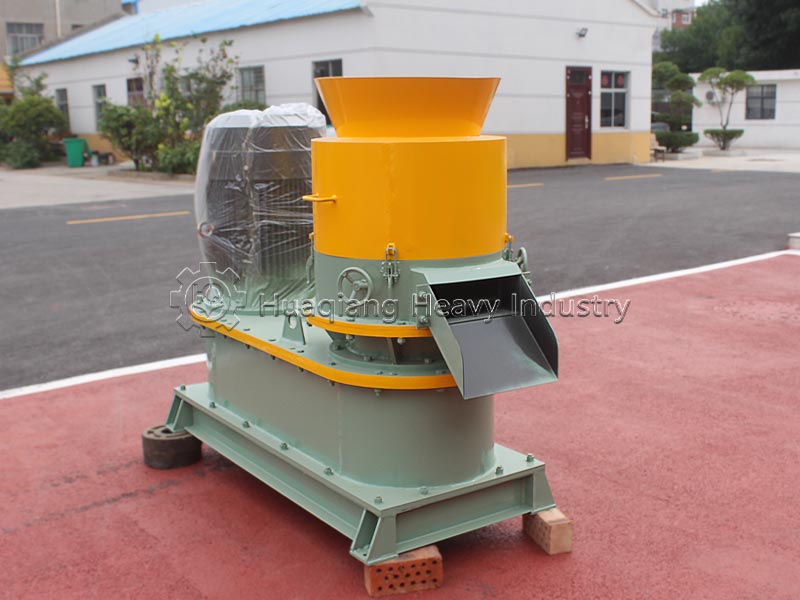
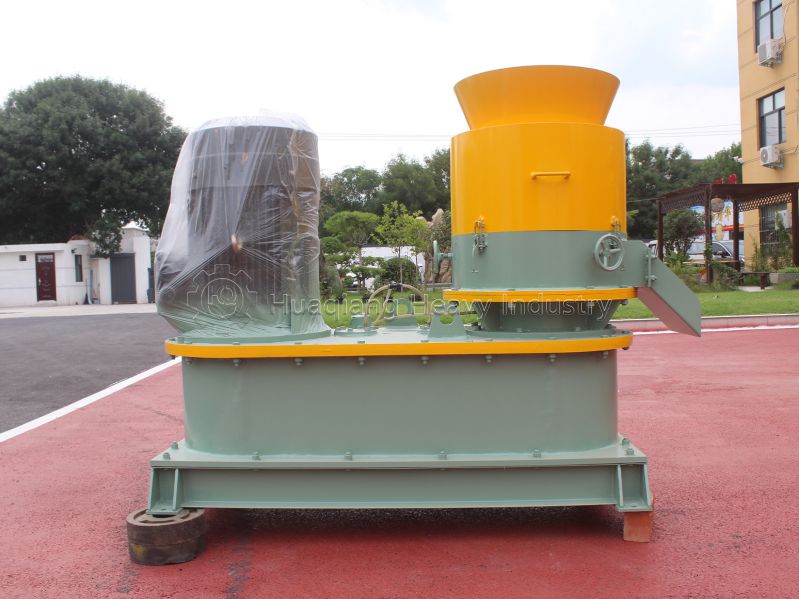
The granular quality of NPK fertilizers directly determines their fertilization effect and market acceptance. The NPK fertilizer granulator machine, as the core equipment of the production line, plays a crucial role in quality control. Among the many types of NPK fertilizer granulators, the flat die pelleting machine, with its unique advantages, has become the preferred equipment for small and medium-sized NPK fertilizer production lines.

The flat die pelleting machine is well-suited to the raw material characteristics of NPK fertilizers and meets the diverse needs of the production line. NPK fertilizer raw materials have complex compositions and varying particle sizes and viscosities. The flat die pelleting machine, through its die extrusion molding principle, can effectively adapt to different NPK raw material ratios. Whether it’s high-nitrogen, high-phosphorus, or balanced ratio raw materials, it can achieve stable granulation, producing granules with high strength and uniform nutrient distribution, preventing powdering or caking. At the same time, its simple structure and convenient adjustment allow for flexible adjustment of particle size according to production line needs, adapting to different crop fertilization scenarios.

The synergistic operation of the flat die pelleting machine and the NPK fertilizer production line requires attention to core details. On the one hand, it is necessary to ensure uniform mixing of raw materials at the front end to lay the foundation for granulation; on the other hand, it is necessary to accurately adjust the pressure and speed of the granulator according to the moisture content of the raw materials to avoid particle adhesion due to excessive moisture or difficulty in molding due to insufficient moisture.

In summary, in an NPK fertilizer production line, the rational selection of a high-quality NPK fertilizer granulator like the flat die pelleting machine, and the control of the synergistic details between the equipment, raw materials, and processes, is the core path to improving product quality and enhancing the competitiveness of the production line.

Double roller press granulator: Granulation equipment for NPK fertilizer production lines

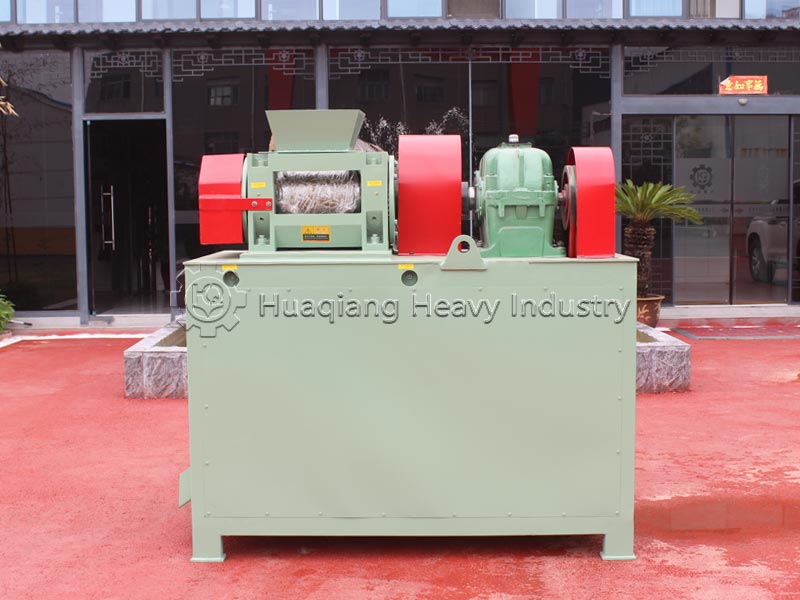
NPK compound fertilizers, due to their balanced nutrients and suitability for various crops, have become the mainstream fertilizer in agricultural production. The core efficiency of an NPK fertilizer production line largely depends on the selection of the fertilizer granulator. Among them, the double roller press granulator, with its unique advantages, has become the preferred granulation equipment for many NPK production lines, helping to achieve efficient and low-cost granulation.

In an NPK fertilizer production line, the double roller press granulator is at the core. Pre-treated nitrogen, phosphorus, and potassium raw materials and fillers are uniformly mixed by a fertilizer mixer machine and then fed into this equipment. The pressure generated by the relative extrusion of the double rollers directly forms the material into granules, without the need for additional water or binders. This dry granulation method eliminates subsequent drying and cooling steps, significantly simplifying the NPK production line process and reducing energy consumption and production costs.

As one of the mainstream fertilizer granulators, the double roller press granulator has significant advantages in NPK production. It has strong adaptability to raw material moisture content, capable of processing materials with a moisture content of 8%-15%, avoiding the clumping problems that often occur in wet granulation; it has a high granulation rate, and the granules have high strength and are not easily broken, meeting the needs of NPK compound fertilizer storage, transportation, and mechanized fertilization. In addition, the equipment has a simple structure and is easy to operate, and can be easily connected with supporting equipment such as fertilizer screener machines and packaging machines, adapting to NPK fertilizer production lines of different scales.

Whether for small and medium-sized NPK production projects or large-scale production lines, the double roller press granulator can adapt to the needs with its flexible capacity adjustment capabilities. It not only improves the production efficiency of NPK fertilizers but also ensures the quality stability of the finished fertilizer, becoming an important equipment support for promoting the high-quality development of the NPK compound fertilizer industry.

Double axis paddle mixers: A powerful mixing tool for efficient production across multiple industries

In production processes across industries such as chemicals, pharmaceuticals, food, and building materials, the uniformity and efficiency of material mixing directly impact the quality of the final product. Double axis paddle mixers, with their superior performance, have become the preferred equipment for many companies.

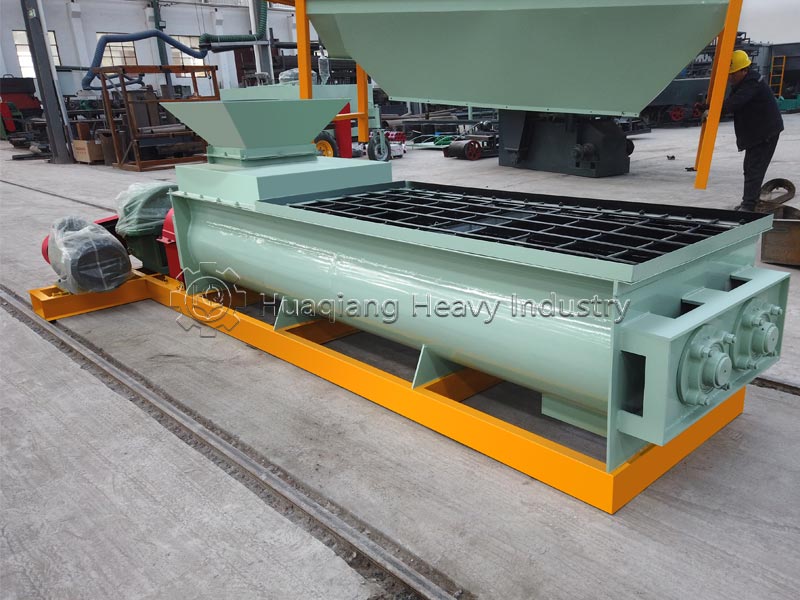
As a high-efficiency mixing device, it uses two independent, counter-rotating mixing shafts as its core. Through paddle-type or other types of mixing blades, it shears, crushes, and diffuses materials, easily achieving deep mixing. It is particularly suitable for scenarios requiring the mixing of high-viscosity materials and solid particles, solving the problems of uneven mixing and low efficiency associated with traditional mixing equipment.

In the fertilizer production field, NPK fertilizer production lines have extremely high requirements for material mixing precision. NPK blending machine needs to uniformly mix raw materials such as nitrogen, phosphorus, and potassium. Double axis paddle mixers, with their stable mixing effect, ensure uniform distribution of raw materials, laying a good foundation for subsequent granulation, drying, and other processes, significantly improving the quality of fertilizer products. Furthermore, it is not only an important component of fertilizer mixer equipment but can also work in conjunction with fertilizer mixer machines and other equipment, adapting to the needs of different production lines such as organic fertilizers and bio-organic fertilizers.

Beyond industrial applications, double axis paddle mixers also play a crucial role in food additive mixing and pharmaceutical raw material pretreatment. For companies pursuing high-efficiency, high-quality production, selecting suitable high-efficiency mixing equipment is undoubtedly a key step in improving production efficiency and reducing costs, injecting strong momentum into the sustainable development of the industry.

High-efficiency material mixing solutions for multiple industries

In the production processes of chemical, pharmaceutical, food, and building materials industries, the uniformity and efficiency of material mixing directly affect product quality. Horizontal ribbon mixers, with their unique advantages, have become the preferred equipment for many companies.

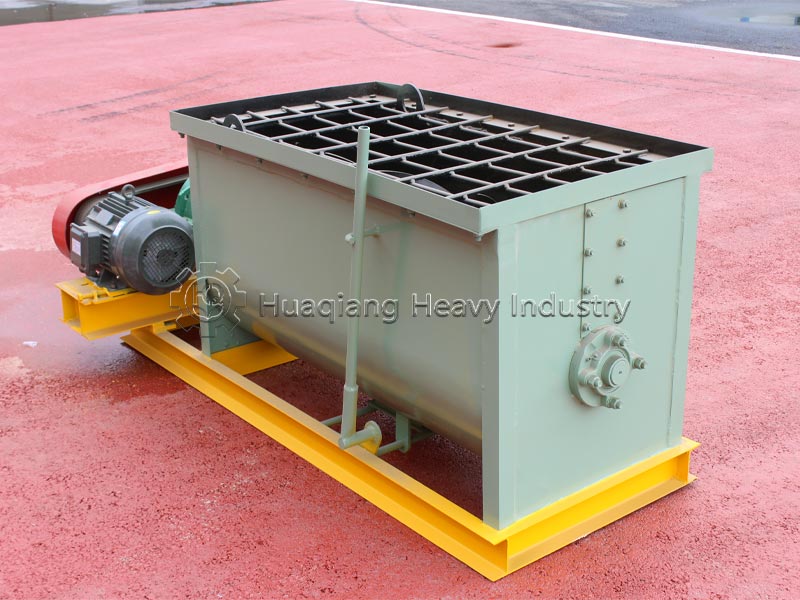
As a professional material mixing equipment, the core highlight of the horizontal ribbon mixer lies in its horizontally arranged mixing drum design. This structure not only accommodates large volumes of materials, meeting the needs of large-scale production, but also adapts to the mixing of high-viscosity materials or materials containing solid particles, solving the problem of insufficient uniformity in traditional mixing equipment when handling special materials.

From an application perspective, the horizontal ribbon mixer is extremely versatile. In the chemical industry, it can precisely mix various chemical raw materials, ensuring reaction stability; in the pharmaceutical field, the strict sealing device prevents material leakage and contamination, meeting industry hygiene standards.

Notably, horizontal ribbon mixers are also often used in conjunction with NPK fertilizer production lines and NPK blending machines, undertaking critical material pretreatment work in the fertilizer production process. By uniformly mixing nitrogen, phosphorus, and potassium components, it improves fertilizer quality. Whether for single-material mixing or production line integration, the horizontal ribbon mixer, with its efficient and stable performance, has become an important piece of equipment driving quality improvement and efficiency enhancement across multiple industries.