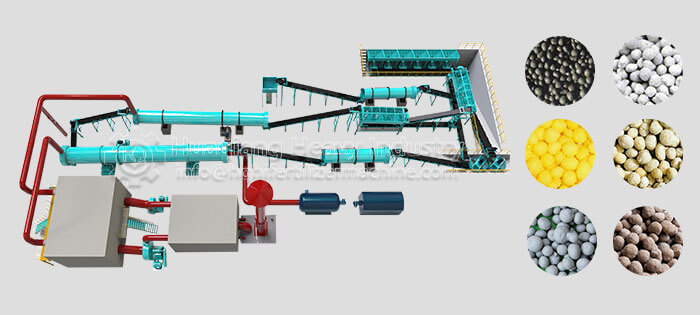
Disc granulation production line: A new solution for low-energy, circular organic fertilizer formation

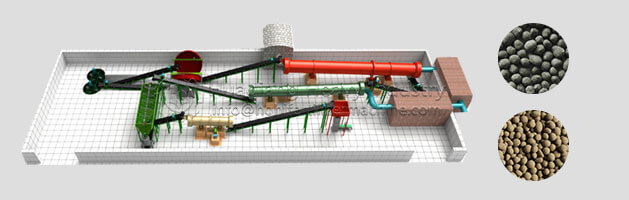
The innovative value of the disc granulation production line lies not only in the pellet forming itself, but also in its core design logic of “low-energy circulation,” perfectly meeting the needs of modern agricultural waste resource utilization.

Its core advantage lies in “highly efficient energy utilization.” The disc granulation production line utilizes the natural forces of gravity and centrifugal force to achieve agglomeration and forming, eliminating the need for additional high-intensity mechanical pressure and significantly reducing motor load. Simultaneously, the frictional heat naturally generated during the material’s rotation within the disc helps evaporate excess moisture, reducing energy consumption in subsequent drying stages.

In terms of raw material recycling, this production line demonstrates strong ecological compatibility. It can efficiently process various agricultural wastes such as straw, livestock manure, and mushroom residue. Especially for “non-standard raw materials” with high moisture content (25%-40%) and low viscosity, stable pelleting can be achieved simply by adjusting the disc’s tilt angle and rotation speed, without complex dehydration or the addition of large amounts of binders.

“Lightweight” operation and maintenance are also unique highlights. The disc granulation production line has a simple structure with no complex transmission or enclosed components. The material flow path is clear, reducing the likelihood of blockages or material residue. Daily cleaning and maintenance require only simple operations, lowering labor costs.

Furthermore, the formed granules, due to their natural agglomeration, have a rich porous structure. When applied to the soil, they quickly integrate into the topsoil, enhancing water and fertilizer retention while promoting soil microbial activity, perfectly aligning with ecological planting principles.

Oil palm empty fruit bunch: “Green Raw Materials” for organic fertilizer production lines

As a major waste product of the oil palm processing industry, oil palm empty fruit bunch, with their rich organic matter and unique physical properties, have become a high-quality raw material for organic fertilizer production lines. Their deep integration with various stages of the production line not only realizes waste resource utilization but also optimizes the organic fertilizer production process.

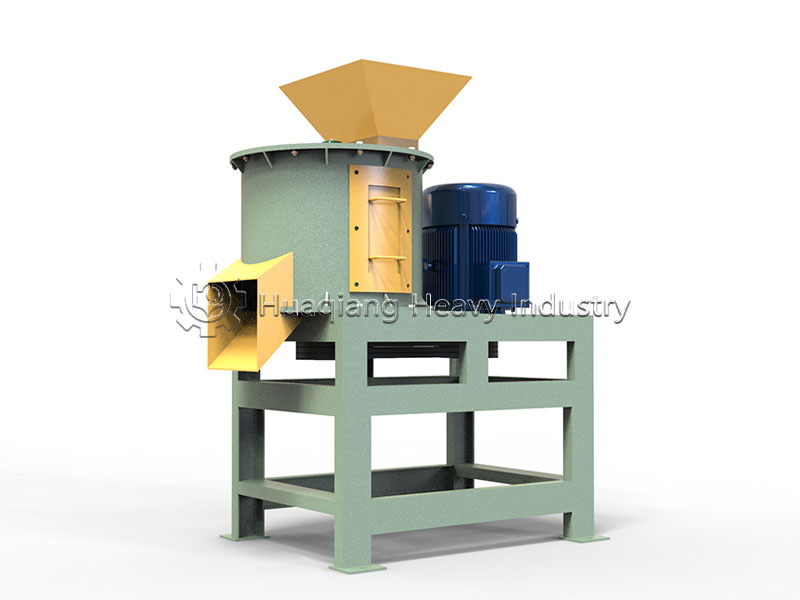
In the raw material pretreatment stage, oil palm empty fruit bunch need to be processed by crushing equipment to break them into 1-3 mm granular materials. This removes coarse and hard impurities while retaining an appropriate amount of fiber structure. The crushed material is then mixed with livestock and poultry manure, microbial agents, etc., in a specific ratio. Its loose properties naturally adjust the carbon-nitrogen ratio of the mixture while improving its permeability, laying the foundation for subsequent fermentation.

In the fermentation stage, oil palm empty fruit bunch a highly efficient combination with a compost turning machine. During the composting and fermentation of the mixed materials, the fibrous structure of the oil palm empty fruit bunch prevents the pile from compacting, while the periodic turning by the compost turner further enhances aeration, allowing aerobic microorganisms to multiply rapidly and maintaining the composting temperature at a stable 55-65℃.

In the post-processing stage, the composted oil palm empty fruit bunches are suitable for the forming requirements of organic fertilizer granulators. Their residual fiber toughness enhances granule cohesion, preventing breakage due to compression during granulation and avoiding die clogging, thus improving granulation efficiency. The formed granular organic fertilizer, retaining some of its fibrous structure, possesses both long-lasting fertilizing effects and soil-improving functions.

The deep integration of oil palm empty fruit bunch with the organic fertilizer production line solves the waste disposal problem and optimizes the production process through the characteristics of the raw materials.

Organic fertilizer production line processing chicken manure: A comprehensive analysis of key considerations

Chicken manure, rich in nutrients and widely available, is a high-quality raw material for organic fertilizer production. However, due to its high moisture content, susceptibility to fermentation and spoilage, and the presence of impurities, key processes must be carefully controlled to ensure product quality and smooth production.

Pretreatment is fundamental. Fresh chicken manure typically has a moisture content of 70%-80%. It needs to be reduced to 55%-60% using organic fertilizer production equipment to prevent anaerobic putrefaction during fermentation. Simultaneously, impurities such as stones, plastics, and feathers must be removed manually or mechanically to prevent damage to subsequent equipment. If the chicken manure is severely clumped, it needs to be crushed to ensure uniform particle size, laying the foundation for fermentation.

The fermentation stage is crucial. Chicken manure has a high nitrogen content and needs to be mixed with straw, sawdust, and other carbon source materials in a specific ratio to adjust the carbon-to-nitrogen ratio to 25-30:1, promoting microbial activity. During fermentation, the compost pile needs to be turned regularly using a compost turning machine to ensure aeration and maintain a high temperature of 55-65℃ for 7-15 days to achieve sterilization, insect control, and decomposition.

Subsequent processing must be standardized. The decomposed chicken manure needs to be crushed and screened again to ensure there are no large pieces of uncomposted material, with a particle size controlled within 2 mm for easy granulation. During granulation, the material moisture content must be controlled at 20%-30% to avoid clogging the die holes; the drying temperature should not exceed 80℃ to prevent damage to organic matter and beneficial microorganisms. Simultaneously, the entire organic fertilizer production line must be properly sealed and deodorized to reduce odor diffusion and meet environmental protection requirements.

The connecting process of flat die granulator in organic fertilizer production line

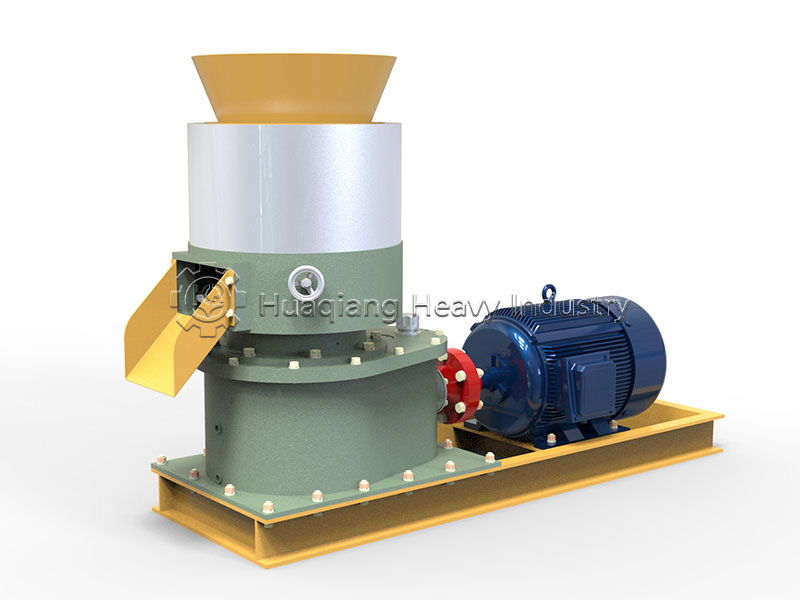
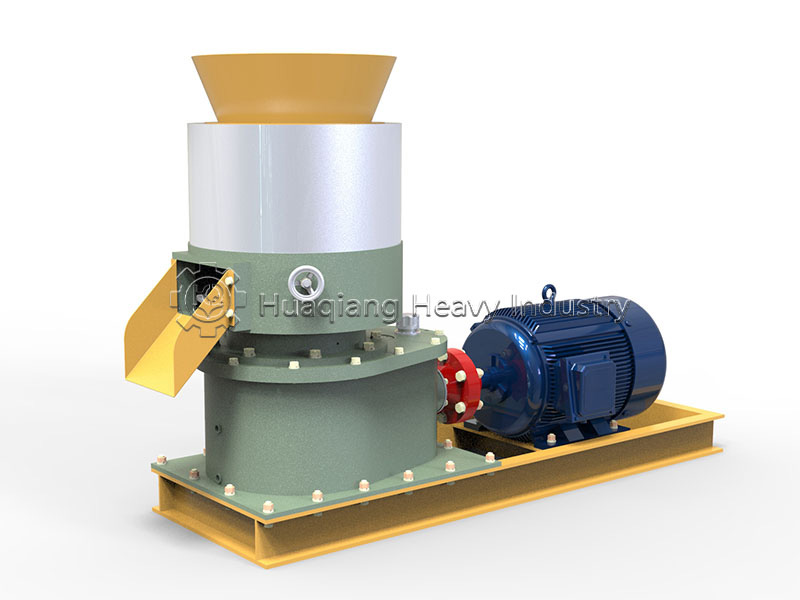
In the overall process of an organic fertilizer production line, the flat die granulator plays a crucial “bridging” role. It receives the organic fertilizer raw materials from the preceding processes, after fermentation, crushing, and mixing, transforming the loose, powdery material into structurally stable granules, laying the foundation for subsequent drying, cooling, and packaging stages.

From a working principle perspective, the flat die granulator uses a motor-driven transmission mechanism to rotate the pressure rollers. When the raw material enters the machine, the pressure rollers exert extrusion force on the material, forcing it through pre-set die holes on the flat die, ultimately forming cylindrical or other shaped granules. This process requires minimal binders, relying primarily on the material’s own viscosity and extrusion force to achieve shaping, thus preserving the nutritional components of the organic fertilizer while avoiding the potential impact of chemicals on the soil.

For organic fertilizer production, the flat die granulator not only solves the problems of dust and caking during raw material transportation, but also controls the diameter and hardness of the granules by adjusting the die size and pressure roller pressure, meeting the needs of different crops and different fertilization scenarios. It is one of the indispensable core equipment in the production line.

Intelligent control: Improving the stability of organic fertilizer production lines

With the large-scale development of organic fertilizer production, intelligent control has gradually become a core means of improving organic fertilizer production line stability. Compared to traditional manual monitoring, intelligent systems can precisely control key parameters, reduce operational errors, and ensure consistent finished product quality.

Intelligent control is primarily applied in three key areas: First, fermentation process monitoring. By deploying temperature, humidity, and oxygen concentration sensors, the system collects real-time data from the fermentation chamber. When parameters deviate from the appropriate range, the system automatically triggers an alarm and adjusts the turning frequency and ventilation volume to prevent under- or over-roasting of the material. Second, granulation process control. Based on changes in material moisture content, the system automatically adjusts the fertilizer granulator machine speed and binder dosage to minimize problems such as granule clumping and breakage. Third, production data management. The system automatically records operational data from each stage, creating a production ledger that facilitates process traceability and allows for optimization of process parameters through data review.

This intelligent transformation of organic fertilizer production lines does not require replacing core equipment; it is often achieved through the addition of sensors and upgraded control systems. This reduces labor costs and improves the yield of finished products, making it suitable for small and medium-sized production enterprises to implement gradually.

Applicable to multiple industries, disc granulators offer a wide range of applications

Disc granulators are not limited to fertilizer production. Their outstanding granulation capabilities make them a valuable tool for a variety of industries, including metallurgy, building materials, and chemicals.

In the metallurgical industry, metal ore powders such as iron ore and manganese ore are processed into granules by disc granulators, facilitating subsequent sintering and smelting processes. This not only improves resource utilization, but also reduces production waste and lowers production costs.

In the building materials industry, disc granulators are used to produce cement raw material granules, ceramsite sand, and other building material granules. The granulation of cement raw materials improves their combustion properties, thereby enhancing cement quality.

In the chemical industry, disc granulators can granulate a variety of chemical raw materials, including catalysts, pigments, and detergents. The resulting chemical products exhibit improved flowability and stability, significantly enhancing product performance and meeting the high standards of chemical production.

Tracked design and efficient turning! Technical advantages of the windrow compost turner

The windrow compost turner’s widespread use in organic fertilizer production stems from the significant advantages offered by its unique technical design. The tracked design is a key advantage. Compared to traditional wheeled equipment, it effectively reduces ground pressure, typically to just 0.05-0.1 MPa. This allows for flexible maneuverability even on muddy, soft surfaces, or complex terrain with slopes up to 15°, eliminating the need for dedicated tracks. This significantly improves site utilization, exceeding that of trough-type compost turning machines by over 30%.

The machine also excels in turning performance. Its hydraulic arm allows for flexible adjustment of turning height and width, accommodating windrows ranging from 0.5-2.5 meters in height and 2-6 meters in width. A single unit can process 50-150 tons of material per hour, achieving an efficiency 1.5-2 times that of a single-screw compost turning machine. The turning teeth and spiral blades are forged from alloy steel. Combined with a bottom-up turning mechanism, this achieves a material turning rate of over 95%, preventing localized compaction and uneven fermentation. Material temperature deviation is kept within 3°C, ensuring stable fermentation quality.

Furthermore, the equipment’s electronic control system monitors operating parameters in real time. In the event of abnormal conditions such as overload or excessive hydraulic oil temperature, it automatically issues an alarm and shuts down the machine for protection, ensuring safe and efficient operation.

Synergistic application of NPK fertilizer production lines and BB fertilizer mixers

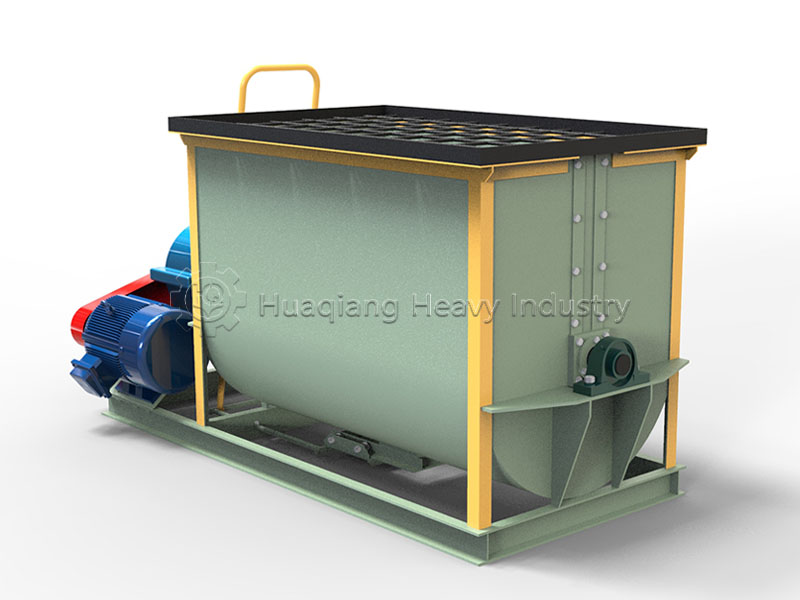
NPK fertilizer production lines are crucial for compound fertilizer production. As a key piece of equipment, BB fertilizer mixers, when integrated with the production line, significantly improve overall production efficiency and product quality. NPK fertilizer production involves processes such as raw material crushing, mixing, granulation, and drying. The mixing stage directly impacts the nutrient balance of the final product, and BB fertilizer mixers are a perfect fit for this requirement.

In the production line, raw materials processed by the fertilizer crusher are delivered to the BB fertilizer mixer via a fertilizer conveyor. Upon startup, the drive system drives the mixing shaft and blades, evenly mixing nitrogen, phosphorus, and potassium, laying a solid foundation for the subsequent granulation process. Inhomogeneous mixing can result in significantly different nutrient distributions in the granulated fertilizer, impacting product quality.

The BB fertilizer mixer’s control system can be linked with the overall production line control system to synchronize parameters such as mixing speed and time, ensuring a smooth production process. After mixing, the uniform raw materials are discharged through the discharge port and sent to the granulator by conveyor. It works efficiently with subsequent equipment such as dryers and coolers to form a complete NPK fertilizer production chain, helping companies achieve large-scale, high-quality production.

Why is the large wheel compost turner considered an “accelerator” for efficient organic fertilizer production?

In today’s pursuit of efficient production, the large wheel compost turner, with its superior performance, has become an “accelerator” for organic fertilizer manufacturers. Its efficiency advantages are reflected in multiple aspects.

In terms of processing capacity, the equipment utilizes a large wheel structure with a main wheel diameter of 5-10 meters, providing a wide turning coverage area in a single turn. It can process 100-200 tons of material per hour, 3-5 times the capacity of traditional windrow compost turners. For example, a base with an annual production capacity of 10,000 tons of organic fertilizer, which previously required multiple units, can now be met by a single large-wheel compost turner, significantly improving production efficiency.

In terms of fermentation efficiency, it uses centrifugal force to thoroughly turn the material to a depth of 1.5-2 meters, evenly mixing the upper and lower layers of the material, and maintaining a temperature distribution difference of ≤2°C, thus avoiding uneven fermentation. The equipment also accelerates the contact between materials and air, regulates temperature and humidity, and shortens the fermentation cycle to 20-30 days, nearly half the time of traditional equipment.

Furthermore, the equipment boasts a high degree of automation, with an electronic control system and touchscreen operation, allowing one or two people to operate it, reducing labor input. For organic fertilizer companies seeking efficient production, the large wheel compost turner is undoubtedly an ideal choice for enhancing competitiveness.

How does a rotary drum granulator work in an organic fertilizer production line?

In organic fertilizer production lines, a rotary drum granulator is the core equipment for raw material formation. It has become a mainstream choice because it meets the cohesiveness and granularity requirements of organic fertilizers such as livestock and poultry manure and composted straw. Its operation revolves around “raw material mixing – granule agglomeration – screening and output,” resulting in an efficient and stable mechanism.

The equipment primarily consists of an inclined drum (3°-5° inclination), a transmission system, a spray system, and a scraper assembly. Scrapers on the inner wall of the drum drive the material to tumble, while the spray system regulates moisture. The scraper removes material adhering to the drum wall to prevent clogging.

The first step is “raw material pretreatment and feeding.” Composted and crushed organic fertilizer raw materials (25%-35% moisture) are mixed with auxiliary materials such as clay in a suitable proportion and then fed into the drum through the feed port. The motor drives the drum to rotate at a low speed of 10-15 rpm. The scrapers repeatedly lift and drop the material, forming a uniform layer.

The second step is the core “granule agglomeration and formation” phase. A spray device applies a metered amount of water or adhesive, depending on the moisture content of the raw materials, to create a sticky surface. As the drum rotates continuously, the material particles agglomerate into small particles through collision, friction, and compression. These small particles further absorb the raw materials and grow to qualified granules of 2-5mm. The tilted design of the drum allows the particles to naturally move toward the discharge end, enabling continuous production.

The final step is “granule screening and optimization.” The formed granules are screened to separate fine powder from bulky material. The fine powder is returned to the granulator, while the bulky material is crushed and reused to ensure acceptable yields. Furthermore, a scraper cleans the drum wall of any residue in real time to ensure efficiency and prevent hardened residue from affecting subsequent production.

In short, the rotary drum granulator uses gentle physical agglomeration to adapt to the characteristics of organic fertilizer raw materials, efficiently producing uniform granules and providing a key guarantee for the stable operation of organic fertilizer production lines.